Have you ever felt that sinking feeling when the lights suddenly flicker and die during a bad storm? It leaves families stuck in the dark and costs local shops serious money. Many people want steady electricity that is both safe and clean. We all worry as aging power lines threaten our daily comfort. Microgrid energy resilience, decentralized power, offers a fresh, reliable way forward. In fact, the Department of Energy expects US microgrid capacity to reach 10 gigawatts in 2026.
They are popping up in cities, towns, and schools because they keep the lights on when bigger grids fail. I am going to walk you through the exact steps of how they work, and I think you will be surprised at how easy it can be. Grab a cup of coffee, and let’s go through it together.
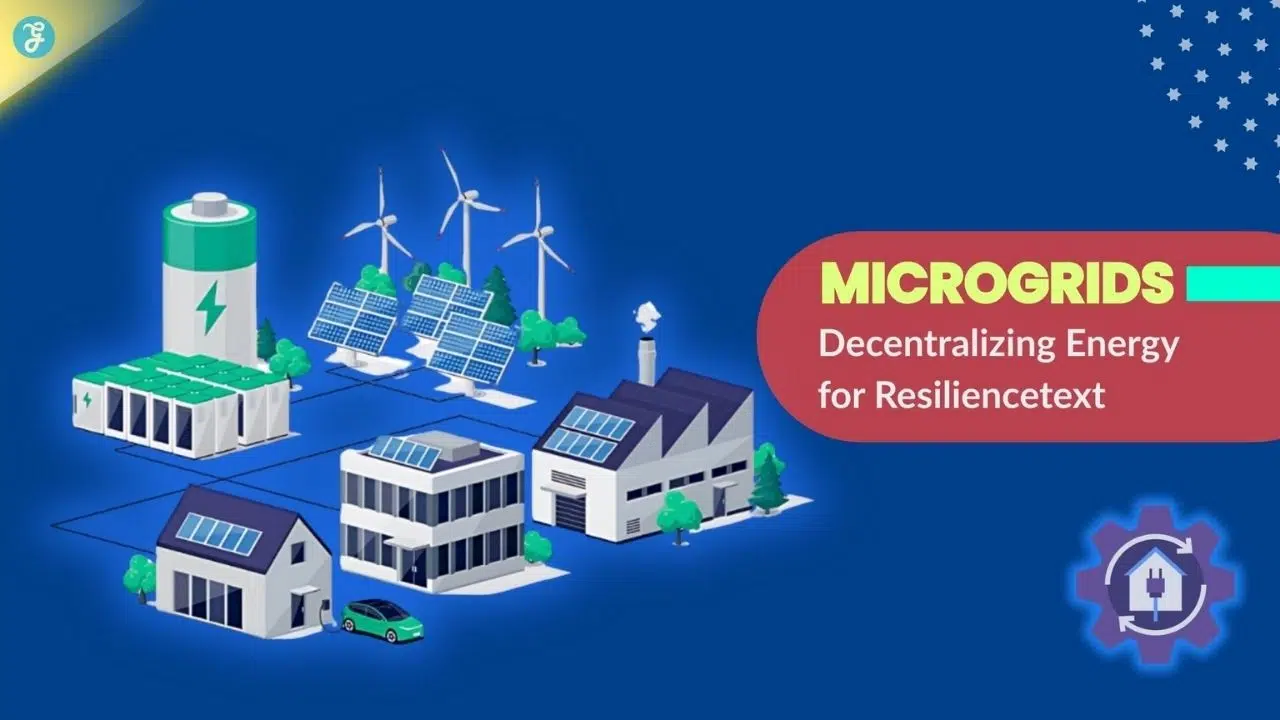
What is Microgrid Energy Resilience: Decentralizing Power?
Microgrids are small power systems that work like tiny neighborhoods for energy. They can run with or without the main grid, giving people more control over their electricity.
Definition and key components
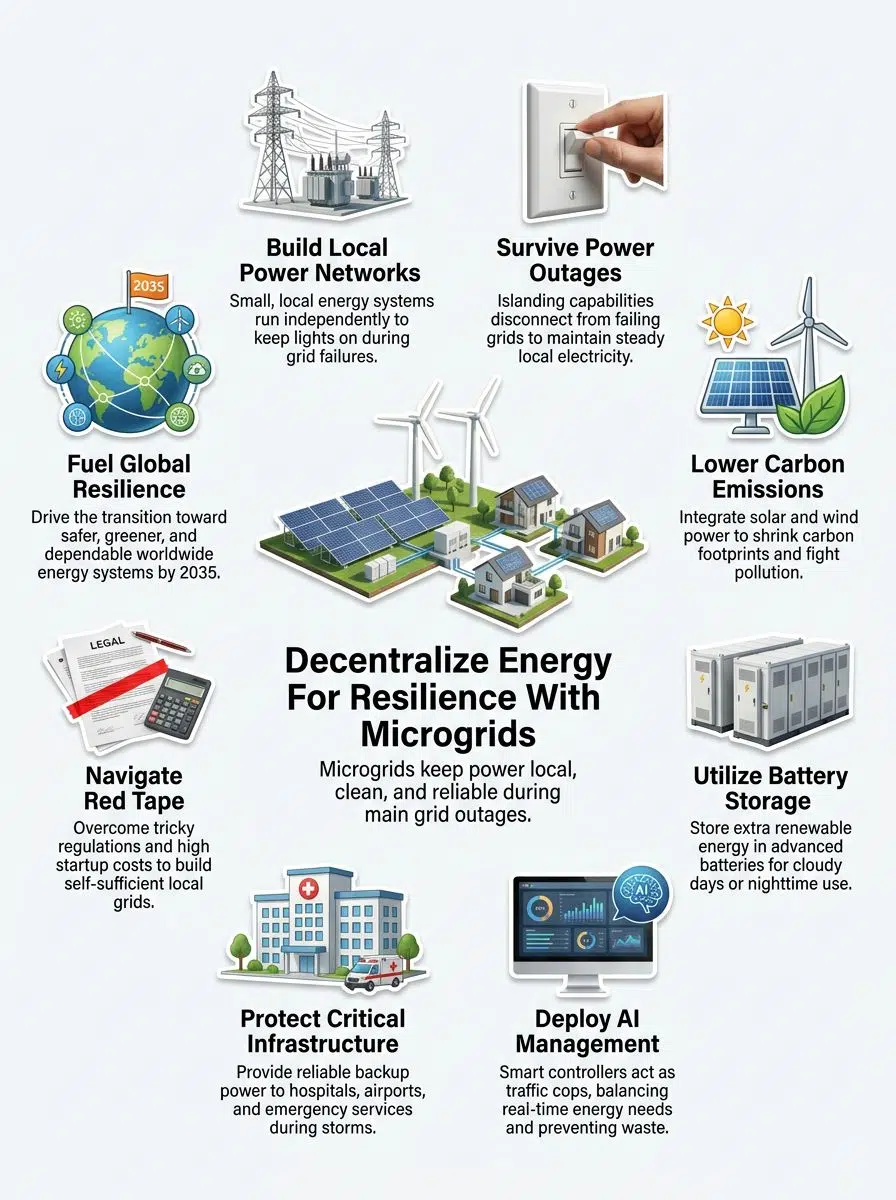
A microgrid is a small and localized energy system. It works with or without the main power grid. These systems use solar panels, wind turbines, and battery storage to generate and hold power.
The US Department of Energy expects national microgrid capacity to reach 10 gigawatts by the end of 2025. That is a massive jump from just 4.4 gigawatts in 2022.
Key components include clean power sources and smart controllers. These controllers follow strict guidelines like the IEEE 1547 standard to ensure they connect safely to the main grid.
“Think of it as a neighborhood that brings its own lunch to the picnic, ready to eat even if the cafeteria closes,” an energy planner noted recently.
How microgrids differ from traditional grids
Traditional grids send power from massive central plants across miles of long wires. This makes them highly vulnerable to storms and cyberattacks. In fact, the US saw over $800 billion in climate-related financial impacts from power outages and damages in 2025 alone.
Microgrids break this old pattern completely. They generate and use electricity right where people need it.
If a tree falls on a main line, traditional homes go dark. Homes in a microgrid can keep their lights on by relying on their own local sources. They operate alone during emergencies through a process called islanding.
Here are a few ways they stand out:
- Local Generation: They make power onsite instead of importing it from miles away.
- Quick Isolation: They cut ties with the main grid instantly during a blackout.
- Clean Focus: They heavily favor solar and wind over coal or gas.
The Benefits of Decentralizing Energy with Microgrids
Microgrids put power closer to the people, giving neighborhoods more control over their own lights and comfort. They help households skip long waits during blackouts, making energy both smarter and steadier.
Enhanced energy resilience
Power outages can happen at any moment. Aging wires and severe weather constantly threaten our comfort. Decentralized energy keeps neighborhoods and hospitals running smoothly even if the main grid fails entirely.
California recently launched a $43 million Microgrid Incentive Program in 2025. These funds support nine new community-driven projects to protect vulnerable areas from sudden power shutoffs.
These self-sufficient setups save homes and lives during emergencies. Each part works together seamlessly. Solar panels generate the electricity, and smart controls balance the supply so nobody loses power.
Reduced reliance on centralized grids
Microgrids give communities the power to make their own electricity. People no longer have to depend completely on massive power plants located hundreds of miles away.
Military bases actually lead the charge here. They account for about 30% of US microgrid deployments. Over 130 Department of Defense sites currently run systems capable of sustaining operations for 14 straight days without any outside connection.
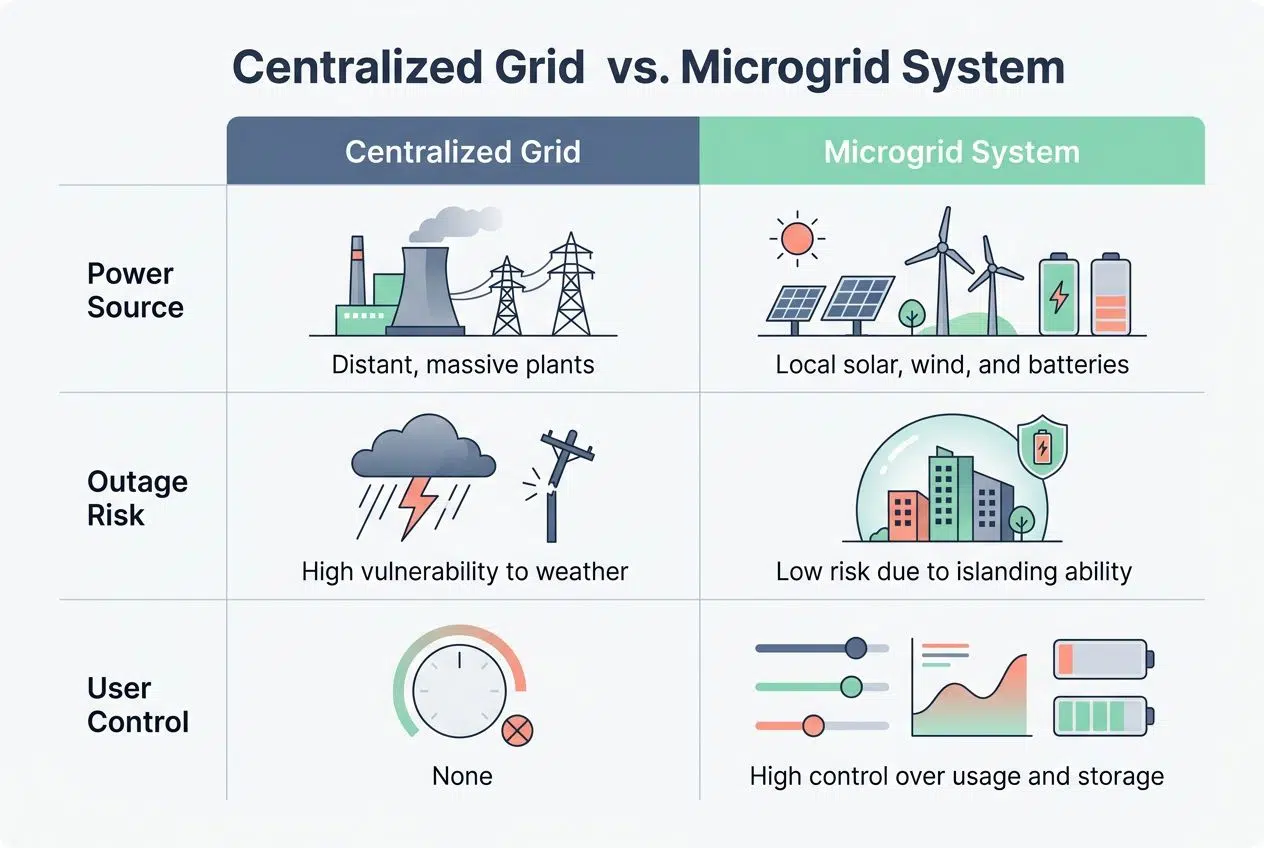
This shift means fewer frustrating blackouts. We can clearly see the differences between the two approaches.
| Feature | Centralized Grid | Microgrid System |
|---|---|---|
| Power Source | Distant, massive plants | Local solar, wind, and batteries |
| Outage Risk | High vulnerability to weather | Low risk due to islanding ability |
| User Control | None | High control over usage and storage |
Lower carbon emissions
Switching to localized power cuts down heavily on pollution. These systems rely heavily on clean sources to shrink our carbon footprint.
In 2025, a staggering 93% of new power generation capacity installed in the US came from renewables like solar and wind. Microgrids use these exact clean technologies to replace dirty fossil fuels.
Cleaner air means kids can play outside without worrying about smog. Every kilowatt produced from local renewables helps cities meet strict decarbonization goals. You can see and breathe this progress every single day.
Applications of Microgrids
Microgrids step up as a power player in many settings, keeping the lights on when you need them most. Their use now stretches from big factories to busy neighborhoods and lifeline services alike.
Industrial and commercial use
Factories and large office buildings use local grids to keep their operations moving. They make their own electricity onsite to avoid lost sales or spoiled products during a storm.
A great example is the New Terminal One at JFK Airport. They recently built a massive 12-megawatt solar array microgrid. This ensures the terminal keeps running and travelers stay safe, regardless of what happens to the New York grid.
Companies install these systems to gain true energy independence. Smart management software lowers their monthly bills while helping them meet strict sustainability targets.
Community and residential applications
Families and local neighborhoods also win big with this technology. Small towns use solar panels tied into batteries to beat back long winter nights with clean electricity.
In Highland Park, Michigan, the Parker Village development is designing a smart neighborhood powered entirely by a solar-plus-storage microgrid. They want energy sovereignty so residents control their own power and costs.
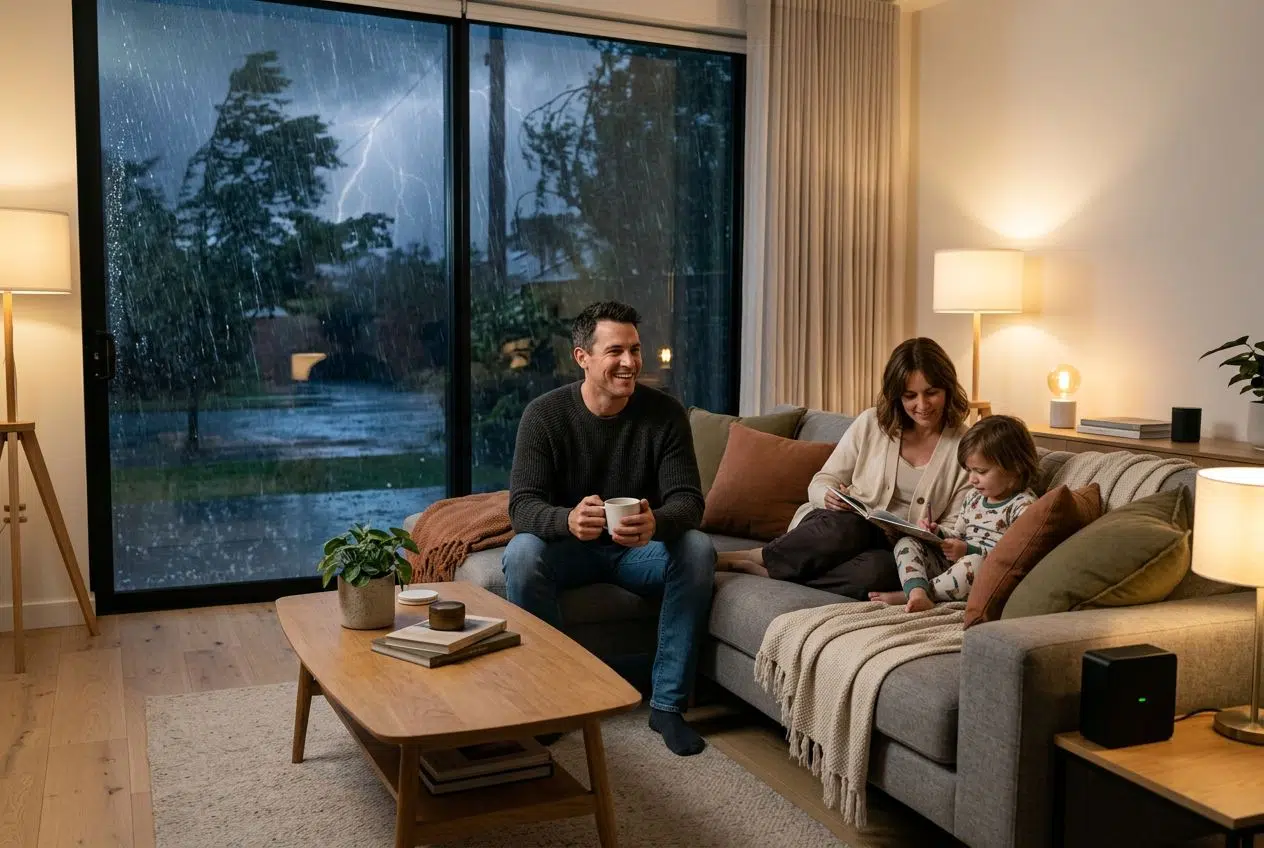
Storms often knock out main lines, but these residential setups kick in instantly. Communities stay warm, and food stays cold. Nobody misses their favorite show just because the wider grid went down.
“Energy sovereignty means residents control their own power and costs, keeping the lights on no matter what happens to the main grid,” shared a local advocate.
Microgrids for critical infrastructure
Critical infrastructure requires a nonstop, reliable power supply. Local grids offer the smartest backup for these vital services. In 2025, over 60% of new microgrid deployments included high-capacity battery storage specifically to keep these sites online.
- Hospitals rely on local power for lifesaving services during blackouts. After Hurricane Sandy, New York’s NYU Langone Medical Center stayed open thanks to its dedicated setup.
- Water treatment plants stay online through power swings to protect public health.
- Police stations and emergency call centers use nonstop energy to serve people in every crisis.
- Airports avoid travel chaos by bringing solar panels and batteries directly onsite.
- Communication towers keep phone lines and the internet working when storms hit.
- Fire stations use battery storage to roll out trucks fast during city-wide outages.
- Data centers protect vital files using advanced smart grids and real-time monitoring tech.
- Government offices keep key city buildings open for shelter and aid distribution.
How Microgrids Enhance Resilience
Microgrids keep the lights on, even if the main grid trips up. Keep reading to see exactly how they pull off this magic!
Energy storage solutions
Solar panels and batteries capture extra power during sunny days or windy nights. You simply use this stored electricity when the main grid struggles.
Battery technology is improving rapidly. By 2025, lithium-ion technology represented more than 85% of installed storage units. These modern batteries now provide two to eight hours of solid discharge time, a huge upgrade from just a decade ago.
These flexible tools give you total peace of mind. You keep your lights on while surrounding neighborhoods sit in the dark.
Islanding capabilities during grid failures
Islanding lets your local system work entirely alone during a massive blackout. If the utility company fails, your setup disconnects and uses its own batteries to keep your house running.
“Modern digital controllers can process over 10,000 data points per second, allowing a microgrid to island itself in less than 0.1 seconds,” tech experts confirm.
This lightning-fast ability helps people keep medical machines running and food fresh. Because islanding cuts ties with outside problems, critical services never miss a beat.
Integration of renewable energy sources
After switching to island mode, clean power steps up to do the heavy lifting. Solar panels and wind turbines feed clean electricity straight into your home or shop.
The numbers reflect this massive shift. Global solar photovoltaic capacity integrated directly into microgrids exceeded 20 gigawatts by 2024. That makes up more than 60% of the generation assets inside these systems.
Clean energy fights pollution and brings highly stable bills. It turns a scary blackout into a minor inconvenience. You might even find it is the perfect excuse for kids to play flashlight tag indoors.
Innovations in Microgrid Technology
Fresh ideas shape how microgrids work and grow smarter each day. These systems now think fast, save money, and keep the lights on even when trouble hits.
AI-powered microgrid controllers
Artificial intelligence acts as the sharp new brain for these systems. Smart software uses real-time data to balance your batteries, solar input, and daily usage.
Companies like Siemens Energy and Schneider Electric rolled out advanced AI platforms in 2025 and 2026. These tools forecast weather patterns and optimize renewable energy on the fly. AI acts like a brilliant traffic cop, choosing exactly where each watt should go every single second.
This instant decision-making restores power much faster. It saves money and supports reliable urban infrastructure planning.
Smart energy management systems
Smart management systems track how much power comes in and goes out of your building. They spot problems instantly and switch over to backup batteries during an outage.
These systems must follow strict rules to talk to the wider electrical world. They use mandatory standards like IEEE 1547-2018 and communication protocols like SunSpec Modbus to operate safely.
This invisible teamwork keeps homes powered quietly behind the scenes.
- They cut energy waste by up to 30% in commercial buildings.
- They manage rooftop solar without overloading local wires.
- They provide homeowners with a simple app to track their daily savings.
Advanced energy storage solutions
Better batteries now store massive amounts of extra energy for later use. Lithium-ion cells and flow batteries keep everything running smoothly at night.
The demand for these big batteries is skyrocketing. Corporate buyers signed a record 29.5 gigawatts of clean energy contracts in the US in 2025 alone. Tech giants need these advanced storage solutions to safely power their massive new AI data centers.
You get fast, clean backup power with very little fuss. Hospitals and schools count on this steady electricity without blinking an eye when the main grid trips up.
Microgrids and Environmental Impact
Microgrids help shrink our carbon footprint, almost like switching from a gas-guzzler to an electric scooter. They encourage cleaner habits, making greener living much easier for everyone.
Supporting decarbonization goals
Distributed generation combines solar, wind, and storage to cut down fossil fuel use right at the source.
The US microgrid market expects a massive 18.8% annual growth rate from 2026 to 2033. This boom directly supports federal decarbonization mandates and the recent Inflation Reduction Act, which pushed hundreds of new clean energy projects forward.
Every watt produced from local wind means less need for a dirty coal plant. This saves money over time while fighting pollution head-on.
Reducing energy waste
Smart power management watches exactly how much electricity you use. It sends only what is needed, stopping overproduction in its tracks.
Because distributed generation puts power right next to your home, extra heat and electricity do not vanish into thin air across miles of transmission lines.
Battery systems save leftover power for a rainy day. Less wasted energy means more money in your pocket and significantly cleaner air for your community.
Promoting sustainable energy practices
Clean power choices let you use sunlight during the day and store energy at night. This simple mix shrinks your carbon footprint bit by bit.
The Redwood Coast Airport Microgrid in Northern California serves as a brilliant example. It is a multi-customer system proving that local communities can share sustainable energy successfully and safely.
Digital helpers keep waste low and let people see their savings grow. Each step supports cleaner air and increased energy independence for towns everywhere.
Challenges in Implementing Microgrids
Rolling out microgrids brings bumps like policies, price tags, and tricky tech. Keep reading for more bright ideas on how communities overcome them.
Regulatory and policy hurdles
Rules and laws often slow down these exciting projects. Many states still use outdated policies that heavily favor big central utility companies.
Sharing power between homes or selling extra electricity back to the utility gets tricky. States are slowly adapting to help solve this problem. California created fast-tracked permits and the Microgrid Incentive Program to bypass traditional red tape for vulnerable communities.
Still, support often lags behind the urgent need for upgrades. This patchwork of rules makes it tough for people to build self-sufficient systems quickly.
High initial costs
Money matters consistently slow down new projects. Setting up batteries, solar panels, and smart controllers requires a big investment upfront.
The US microgrid market generated over $27 billion in revenue in 2025. While the technology is valuable, startup costs for a small community system often reach $2 million to $4 million.
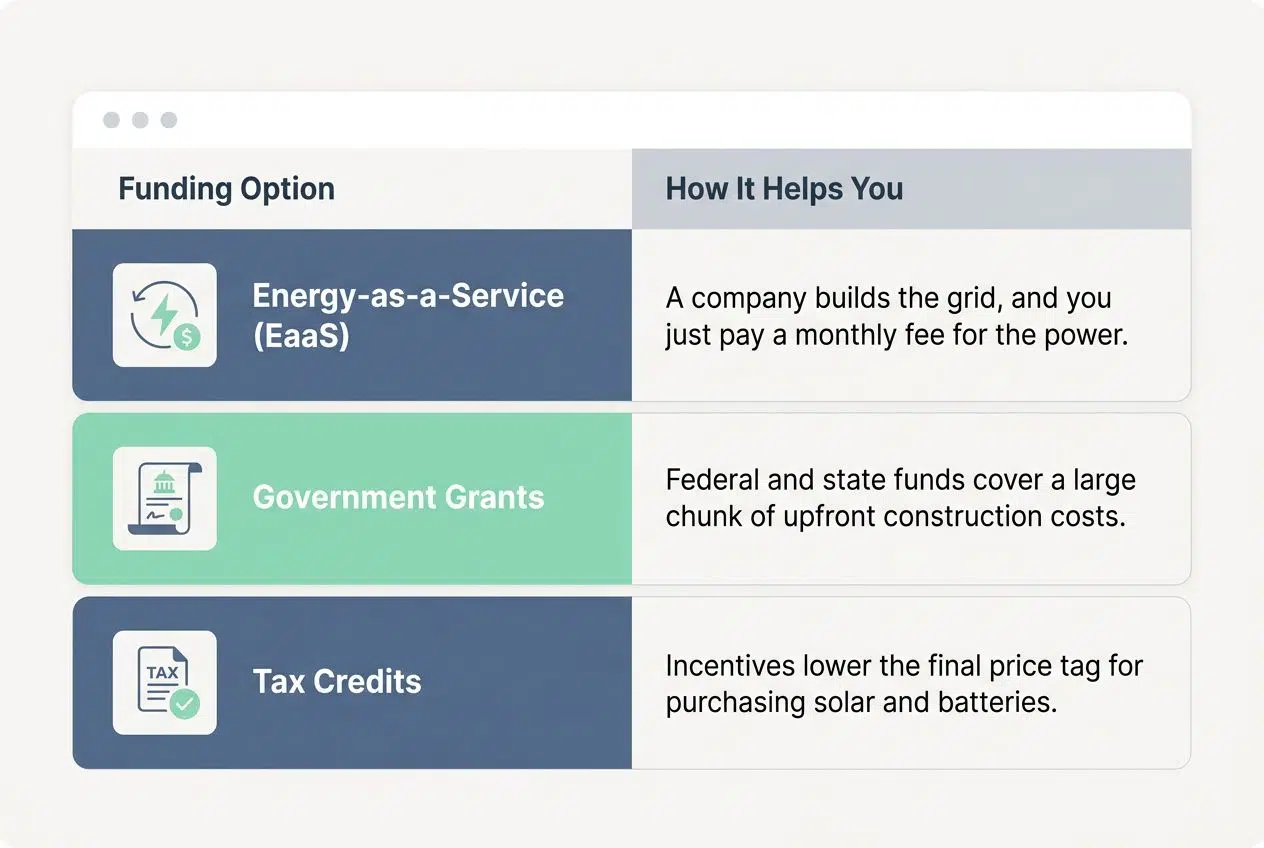
Thankfully, new financial models make this easier for everyone.
| Funding Option | How It Helps You |
|---|---|
| Energy-as-a-Service (EaaS) | A company builds the grid, and you just pay a monthly fee for the power. |
| Government Grants | Federal and state funds cover a large chunk of upfront construction costs. |
| Tax Credits | Incentives lower the final price tag for purchasing solar and batteries. |
Technical challenges
Connecting lots of small energy sources can get highly complicated. Solar panels and wind turbines all speak different digital languages.
System engineers use advanced monitoring software to force these devices to work together. Power from the sun comes and goes, making supply and demand a tricky puzzle to solve.
Installing these systems means putting more wires in the ground and planning for strict safety rules. Teams work incredibly hard to protect these local networks from cyber attacks and basic equipment failures.
The Future of Microgrids
Microgrids will shape how we use and share energy, opening doors to smarter cities and stronger communities. Keep exploring with us to see where this road leads.
Growth in adoption across industries
Factories, grocery stores, and schools across the United States now rely on local generation to keep their lights on.
Industry experts expect total US microgrid capacity to more than quadruple to about 32.5 gigawatts by 2030. Hospitals, military bases, and massive data centers drive this explosive growth to ensure their energy continuity.
Retail chains see instant savings and better backup power. Sectors everywhere value the reliability and cleaner electricity these smart networks provide.
Role in achieving global energy resilience 2035
Local generation lays a strong foundation for a safer, greener power supply by 2035. They allow homes to stay powered even if the main utility fails completely.
Replacing diesel-only generators with hybrid systems is an absolute game-changer.
- Island communities achieve over 80% renewable energy use.
- Towns reduce their annual fuel consumption by more than 60%.
- Less energy is wasted during peak demand hours.
Advancements in microgrid technology
Engineers continue to push the boundaries and create smarter systems every day. AI controllers learn from past data to predict power surges before they happen.
Modular designs are also simplifying how we build these grids. Standardized setups reduce engineering complexity and make financing much easier to secure. Some companies even link their building batteries directly with electric vehicle fleets, sharing that stored electricity exactly when it is needed most.
These upgrades keep the lights on during severe storms by smoothly separating from unstable main grids.
The Bottom Line
Embracing microgrid energy resilience, decentralizing power helps keep the lights on during scary power outages. Schools, hospitals, and neighborhoods rely on them for complete energy independence. These systems use renewable sources like solar or wind to support a much healthier environment.
Cities turn to this technology for better reliability because the weather is getting much less predictable. Homeowners and companies save money over time using clever battery storage. As technology gets smarter, you will see the benefits of this localized power right in your own neighborhood.
They are quickly becoming the strong backbone for modern energy infrastructure across America.