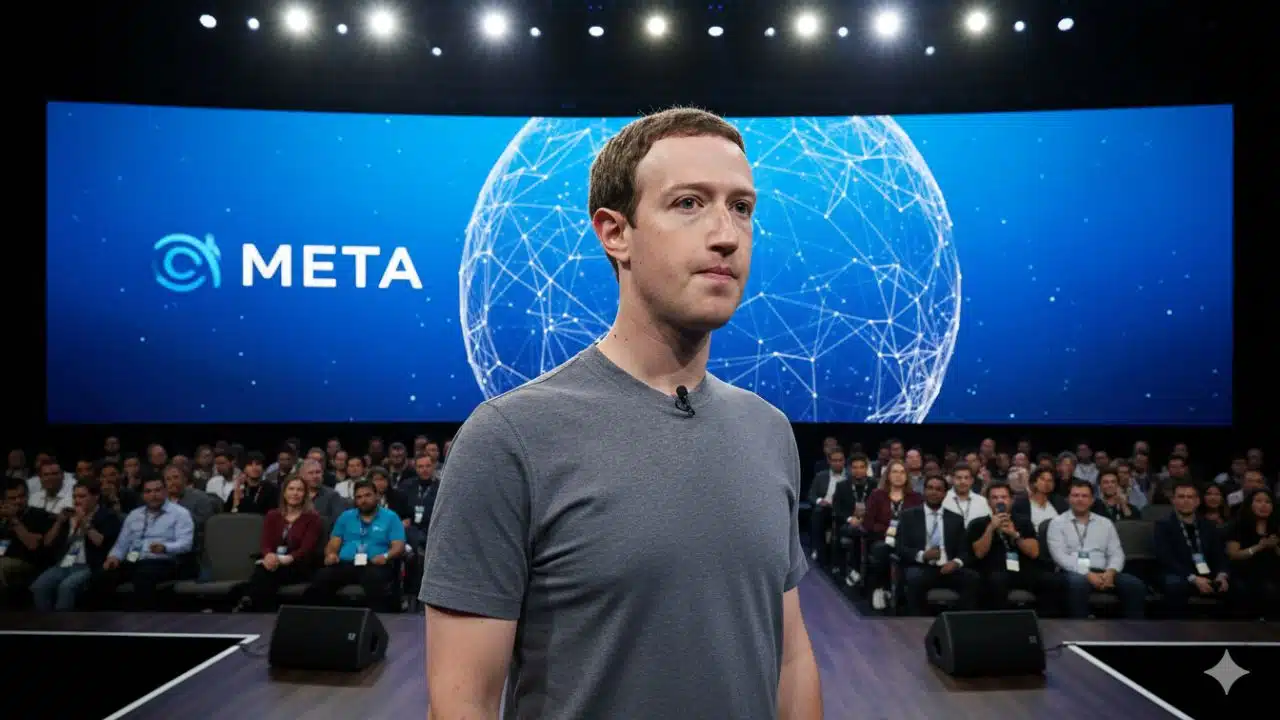
Meta’s annual Meta Connect 2025 event, held on September 17, marked one of the company’s most ambitious showcases yet. CEO Mark Zuckerberg introduced a lineup of next-generation wearable devices designed to bring artificial intelligence (AI) and augmented reality (AR) into everyday life. The event highlighted Meta’s ongoing effort to expand beyond social media and VR headsets, pushing toward a future where computing becomes wearable, discreet, and always accessible.
The spotlight was on three major product launches:
-
The Meta Ray-Ban Display, a pair of smart glasses with a built-in transparent heads-up display.
-
The Neural Wristband, a device that interprets subtle muscle signals to enable gesture-based controls.
-
The Oakley Meta Vanguard, a sport-focused model created in partnership with Oakley, targeting athletes and outdoor users.
While the announcements underscored Meta’s long-term vision of integrating AI into physical life, the event was also marred by high-profile glitches during live demonstrations, sparking debate over whether the technology is ready for mass adoption.
Ray-Ban Display: Meta’s First Glasses With Built-In HUD
The Meta Ray-Ban Display was presented as the company’s most advanced smart glasses yet. Unlike previous Ray-Ban Meta models, which were limited to cameras, microphones, and voice assistants, the Display integrates a heads-up display (HUD) on the right lens.
This feature allows users to see notifications, navigation directions, video call prompts, calendar alerts, translations, and captions directly in their line of sight. By embedding information in real-world vision, the Display aims to reduce reliance on smartphones.
Key specifications include:
-
Display: Adjustable brightness, visible indoors and outdoors.
-
Camera: 12MP camera with 1080p video recording.
-
Audio: Open-ear speakers and beamforming microphones.
-
Battery: Around six hours of mixed use, with a charging case for extended life.
-
Controls: Compatible with both voice commands and the Neural Wristband.
The Display glasses will be priced at $799 and ship in the U.S. from September 30, 2025, with a gradual rollout to other markets in 2026.
Neural Wristband: Turning Subtle Gestures Into Digital Commands
The Neural Wristband is designed to be the ultimate controller for Meta’s wearable ecosystem. The device reads tiny muscle and nerve signals in the forearm through surface electromyography (sEMG). These signals allow users to perform digital actions with minimal physical movement, such as pinching fingers together to type, swiping to scroll, or tapping to select.
Meta promoted the wristband as a discreet and natural way to interact with AR glasses, avoiding the awkwardness of using only voice commands in public. The technology is still in its early stages, but Meta views it as a critical step toward creating ambient computing, where interactions with AI and digital services are seamless and almost invisible.
Oakley Meta Vanguard: A Sport-Focused Alternative
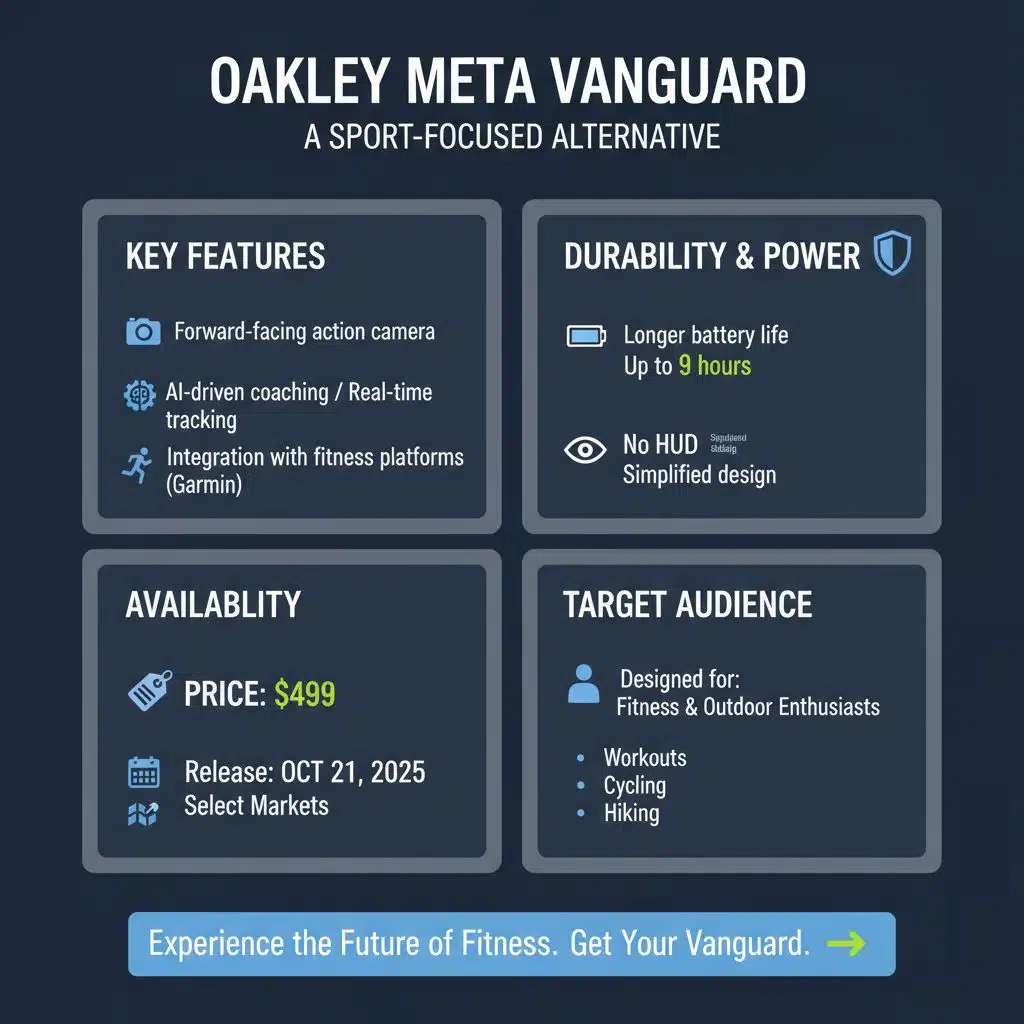
In partnership with Oakley, Meta launched the Meta Vanguard, a pair of smart glasses tailored for fitness and outdoor enthusiasts. Unlike the Ray-Ban Display, the Vanguard does not feature a HUD. Instead, it emphasizes:
-
A forward-facing action camera for recording workouts.
-
AI-driven coaching and real-time performance tracking.
-
Integration with fitness platforms such as Garmin.
-
A longer battery life of up to nine hours.
Priced at $499, the Oakley Meta Vanguard will be available from October 21, 2025 in select markets.
Demo Glitches: A Reality Check
Despite the ambitious product lineup, Meta Connect 2025 was overshadowed by technical mishaps during live demonstrations.
-
Gesture Call Failure: Zuckerberg attempted to use the Neural Wristband to initiate a video call with Meta CTO Andrew Bosworth. The system failed to respond after several attempts, forcing Bosworth to appear on stage manually.
-
AI Cooking Misstep: During a live cooking demo with food creator Jack Mancuso, the AI assistant guiding him through a recipe skipped crucial steps. Instead of starting from the basics, it jumped to later instructions and repeated them, leaving the process incomplete and confusing.
Both failures were attributed to connectivity issues, but the glitches raised broader concerns about the readiness of Meta’s wearable AI ecosystem. Clips from the event quickly went viral, sparking skepticism about whether the devices can reliably perform in real-world conditions.
Public Reaction and Industry Context
The mixed response to Meta’s event highlights the challenges of delivering futuristic technology that works flawlessly outside controlled environments. While some praised the innovation of embedding a display in stylish eyewear, others expressed doubts about battery life, connectivity, and the real usefulness of gesture-based controls.
Meta faces stiff competition in the wearable and AR market. Apple’s Vision Pro remains a benchmark for immersive experiences but is bulky and costs $3,499, while Google and Samsung are still working on consumer-ready AR devices. By pricing the Display at $799, Meta is positioning itself as a more accessible option, but it must overcome reliability concerns to win trust.
Meta’s Push for Ambient Computing
Despite the stumbles, Zuckerberg framed the product launches as part of Meta’s long-term vision. The company wants AI and AR to be embedded into everyday objects, shifting computing away from handheld devices toward wearables that feel natural to use.
The Ray-Ban Display represents an attempt to normalize digital overlays in daily life. The Neural Wristband is a bold bet on gesture-based control. And the Oakley Vanguard shows that Meta is experimenting with specialized markets.
For consumers, the potential is significant: wearable devices that provide instant access to information, help navigate the world, and support productivity — all without reaching for a phone. But the execution gap remains a critical hurdle.
Meta Connect 2025 underscored both the promise and the pitfalls of wearable AI. The new Ray-Ban Display, Neural Wristband, and Oakley Vanguard glasses show how far Meta is pushing to integrate AI into physical life, offering a glimpse of a future where notifications, navigation, and assistants live in front of our eyes.
Yet the live demo glitches reminded everyone that futuristic visions are fragile when tested in real time. For Meta, the challenge will be transforming these bold prototypes into reliable consumer products that people can trust in their daily routines.