
Worried about keeping your crypto safe and legal? Cryptocurrency regulations shift often, and taxes still apply to digital assets like bitcoin. This guide breaks down five legal risks you should understand, from scams to tax reporting rules.
Stick around so you do not get blindsided by avoidable legal trouble.
Key Takeaways
- As of November 2024, U.S. rules remain unclear, and agencies like the SEC and CFTC still dispute who oversees cryptocurrencies and exchanges.
- You must report crypto gains and losses to the IRS each year. Keep detailed records for every trade, or risk audits and penalties.
- Fake offers, phishing sites, and social tricks are common. There is no FDIC insurance for stolen or lost crypto.
- Custodial services can be hacked or mishandle funds. Most exchanges offer limited legal recourse and little true insurance for digital currency.
- Smart contracts can contain coding flaws that attackers exploit. Losses are usually irreversible without official oversight.
What are the legal implications of regulatory uncertainty in crypto investing?
Shifting rules create a real risk for investors. In November 2024, U.S. agencies still argue over who regulates cryptocurrency exchanges and digital assets, which leaves investors guessing on compliance.
A small tax mistake can snowball if guidance changes midyear or remains vague. In some countries, a central bank can restrict crypto payments or even outlaw certain tokens. If that happens, holders may face sudden limits or legal exposure.
Some nations provide clear boundaries. Others keep investors walking on eggshells with little protection from price swings or fraud. Decentralized exchanges often sit outside traditional laws, so stolen funds may be gone for good.
Even centralized platforms can run into trouble. Weak guidance can let platforms misuse user funds or mishandle data with few consequences. In April 2024, the U.S. Treasury paused parts of a digital asset proposal, which showed how fast compliance plans can shift, confusing both taxpayers and wallet owners.
How can crypto investors ensure tax compliance?
Taxes still apply to crypto. The IRS treats most tokens like property, so trades can trigger capital gains tax.
- Keep a log for every transaction, including date, asset, price, fees, and quantity. Screenshots and receipts help.
- Report all capital gains and losses on your annual return. Since crypto is property, trading profits may be taxable.
- Track any cryptocurrency payments for work or services. They count as income at fair market value on the day received.
- Watch for changing reporting rules. For example, Form 8938 covers certain foreign financial assets. As of November 2024, many cryptocurrencies are excluded, but that could change.
- File FinCEN Form 114 if your foreign accounts exceed $10,000 in total value. Monitor guidance on when virtual currency accounts are included.
- Work with a tax attorney who understands crypto, especially if you use offshore custodians or self-directed IRAs.
- Record trading-related expenses accurately. Good records reduce surprises during an audit.
- Swapping one token for another can still be a taxable event, even if no dollars change hands.
- Use secure crypto wallets and back up seed phrases. Clear proof of ownership helps if tax authorities ask for details.
- Policies from the IRS and Treasury can change quickly. Check for updates before tax season.
What common frauds and scams should crypto investors watch out for?
Scammers promise huge returns to pull you in. They pose as crypto advisors or run fake initial coin offerings, asking for payment by credit card or bitcoin. After they collect, they vanish.
Phishing sites copy real exchanges or wallets to steal your private keys. Enter your details, and your crypto can disappear in minutes. Social cons use hacked accounts or fake family appeals to push you into sending funds.
Peer-to-peer trades carry risk if there is no trusted middleman. Once coins move, reversing the trade is rare. Even regulated exchanges often insure only against their own breaches, not theft from your personal wallet.
Recovering stolen tokens is extremely hard unless thieves make mistakes on the blockchain. There is no FDIC coverage for crypto, unlike deposit insurance on bank cash or protections that sometimes apply to stocks and bonds.
What are the risks of custodial services and how to secure your crypto assets?
Leaving your crypto with a custodian, like an exchange, is convenient. It also adds new risks you should weigh.
- Centralized platforms can misuse funds or leak personal data, exposing you to cryptocurrency theft and privacy harm.
- No single authority fully protects digital assets. Getting legal relief for lost bitcoin or tokens is tough, especially if a custodian fails.
- Some exchanges have crime insurance, but it may cover only internal hacks, not attacks on your individual account.
- Holdings in certain retirement platforms, including services like AltoIRA, are not FDIC insured. Crypto values can drop, and bank deposit insurance usually applies to cash only.
- Better tools exist for private key protection, yet even strong hardware wallets cannot reverse a bad transaction.
- High fees at some custodians eat into returns. Hidden costs can also change your tax basis calculation.
- Keeping large balances on any exchange creates a tempting target for cybercrime. Manage risk with careful position sizing and secure storage.
- Reporting rules still apply, even if your provider says it will handle taxes. Falling short on AML obligations can trigger audits or quick penalties.
- Some new platforms skip strong know your customer checks. Weak screening invites crypto scams.
- FDIC insurance usually covers only U.S. dollar deposits at banks. It does not protect your crypto balances, so read the fine print on any “insured” claims.
Smart Contract Vulnerabilities
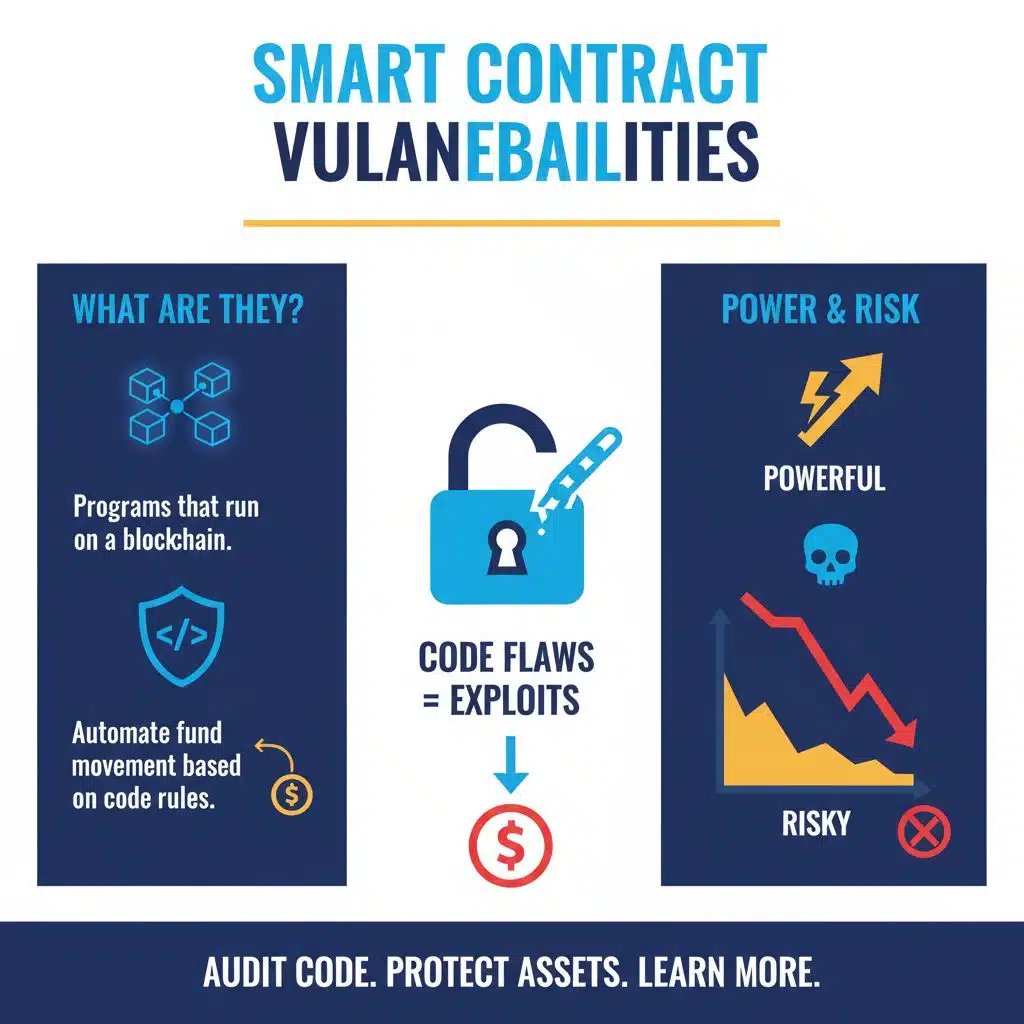
Smart contracts are programs that run on a blockchain. They move funds automatically based on rules in code, which is powerful and risky.
What are the common vulnerabilities in smart contracts?
Bugs and logic errors can turn a contract into a trap. Networks like Ethereum, Cardano, and Solana use complex designs, so coding mistakes are more common than on bitcoin’s simpler system.
A single flaw can let an attacker drain a pool or freeze money. Major network upgrades can also shake loose new problems in the code.
There is no central bank or FDIC safety net to restore funds lost due to a bug. Without formal oversight, weaknesses may sit unpatched for months.
These failures leave investors stranded with limited legal help. Developers work to fix issues, but no one catches every bug before release.
How can investors protect themselves from smart contract risks?
You can cut risk with a few careful habits.
- Research before you invest. Review the team’s track record and look for audits by trusted firms.
- Talk with financial and legal pros who understand crypto rules. They can spot red flags in both code and terms.
- Use well-known, regulated platforms to limit exposure to coding flaws and cryptocurrency theft. Check for AML controls.
- Match any project to your goals and risk tolerance. If you cannot explain the mechanism, skip it.
- Diversify. Spread funds across assets and platforms, knowing that it still does not guarantee returns.
- Store long-term crypto in secure custodial solutions or cold wallets. Guard private keys and your seed phrase from phishing.
- Know that private securities, alternative investments, bitcoin, and many smart contracts are only for investors comfortable with high risk, including code failure and price volatility.
- Track tax laws and reporting requirements for capital gains. A quick chat with a tax attorney can save headaches later.
- Be wary of “guaranteed” profits or flashy rewards. These are classic signals of crypto scams run by crime groups.
Careful prep will not remove every code risk, but it can prevent the most painful losses.
Legal Risks of Initial Coin Offerings (ICOs)
Initial coin offerings sell new tokens to raise money. They can expose you to legal risk because rules vary by country and change often.
What legal challenges do ICOs present to investors?
U.S. agencies like the SEC and CFTC still debate which one regulates digital assets, including ICOs, as of November 2024. That uncertainty raises the chance of buying into something that later violates securities laws.
Rules also differ across borders. You could buy a token that breaks local laws without realizing it. Even tax experts and investment advisors can get confused by shifting standards.
Many offerings lack operating history or liquidity. Some fail or disappear, locking up funds while agencies argue jurisdiction or investigate AML issues. Selling out later is rarely as easy as selling shares after an initial public offering.
How can investors evaluate the legal safety of an ICO?
Use this quick checklist before sending money to any new sale.
- Confirm the ICO follows local rules, such as SEC guidance for U.S. buyers or EU standards in Europe.
- Verify any placement agent through FINRA BrokerCheck. If you cannot find them, walk away.
- Read the whitepaper for AML controls and reporting details. Missing pieces are red flags.
- Check risk disclosures for price volatility, tax impact, fees, and investment risk.
- Look for independent audits of smart contracts to reduce the chance of cryptocurrency theft from buggy code.
- Review the team’s background. Anonymous founders raise the risk of exit scams.
- Scan the fine print. Claims that tokens are FDIC insured or guaranteed by a central bank are misleading.
- Speak with a tax attorney to learn how to report any token sales or income under current tax laws.
- Seek independent investment advice instead of following buzz from a credit card company, banks, or social media.
- Use a plan that includes diversification, traditional IRAs when appropriate, and dollar-cost averaging for long-term goals.
These steps help filter out shaky projects and improve your odds of safer participation.
Takeaways
Crypto can feel like a rollercoaster, with quick moves and rule changes. Tax authorities still expect accurate reporting on capital gains, even if your crypto sits on a foreign platform.
Smart contracts offer new tools, yet bad code can eat your funds. Scams are constant. Losing private keys, paying high fees, or chasing hype can do real damage.
Before you trade bitcoin or back an initial coin offering, slow down. Verify the details, ask direct questions, and talk with a tax attorney who follows cryptocurrency regulations closely. Strong choices today protect your digital assets when price volatility hits.
This article is for education only, not legal, tax, or investment advice. Seek a qualified professional for guidance on your situation.
FAQs on Legal Risks For Every Crypto Investor
1. What are the main legal risks with digital assets like bitcoin?
Digital assets face regulatory uncertainty, shifting cryptocurrency regulations, and strict reporting requirements. Price volatility can also cause headaches when it comes to valuation for taxes.
Tax authorities treat most cryptocurrencies as property, not cash. You may owe capital gains tax on profits from trading or selling bitcoin and other coins. If you skip reporting, expect trouble down the road.
3. Can central banks or credit card companies block my crypto transactions?
Yes, some central banks limit access to digital asset platforms or restrict banking services for crypto users. Credit card companies might charge high fees or even deny purchases linked to certain exchanges.
4. What should I know about cryptocurrency fraud and theft?
Crypto scams come in many forms; phishing emails, fake investment offers, and smart contract bugs all pose threats. Losing your private keys means losing your funds forever—no customer service line will save you.
5. Do I need a tax attorney if I invest in cryptocurrencies?
If you’re unsure about regulatory compliance or confused by complex rules around capital gains tax based on price fluctuations, talking with a tax attorney is wise advice before things get messy with the IRS.