


Getting packages fast in big cities is tough. Traffic jams, slow deliveries, and high costs make logistics a headache. Many Latin American cities are stepping up with smart solutions to fix these problems.
Urbanization in the region is near 80%, pushing demand for better supply chain systems. E-commerce growth also fuels this need, with Brazil expecting $66 billion in online sales by 2025.
This blog lists the top 10 Latin American cities leading in smart logistics. Each one uses tech like route tracking and electric trucks to cut delays and pollution. Keep reading to see who’s ahead!
Key Takeaways
- Santiago, Chile uses 50 electric heavy trucks from Foton for clean deliveries. The city cuts pollution with smart parking and bike-sharing programs. Over 8 million people benefit from these green logistics solutions.
- Medellín’s Smart Mobility System (SIMM) slashes traffic using real-time bus tracking and cable cars. It links bikes, metros, and apps to ease uphill travel. Renewable energy powers its transport network efficiently.
- Mexico City mixes air and truck routes to speed up shipments. Companies like Estafeta and 99Minutos achieve under 99-minute deliveries with route software. Cross-border trade is set to grow 47% yearly until 2027.
- São Paulo leads in scalable e-commerce logistics, aiming for $66 billion in online sales by 2025. DNATA’s $1.7M electric tugs cut emissions by 420+ tons per year while handling heavy cargo loads smoothly at ports nationwide through smarter urban planning backed always-on session cookies analytics insights too—proving growth can match sustainability goals when done right!
Santiago, Chile: Advancing Sustainable Urban Logistics
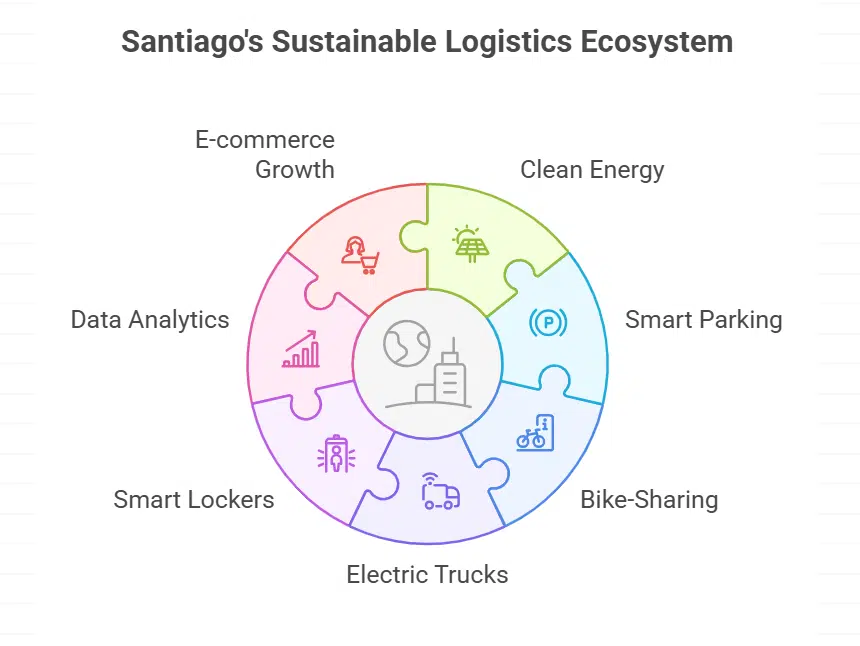
Santiago leads Latin America in smart logistics with sustainable urban solutions. The city has over 6 million people, and its metro area tops 8 million. Clean energy drives logistics here, cutting pollution while improving efficiency.
Smart parking and bike-sharing programs reduce traffic congestion, pushing for a car-free vibe. Companies use electric trucks and smart lockers for last-mile delivery, slashing costs and emissions.
One logistics firm bought 50 electric heavy trucks from Foton, showing real commitment to change. The economic boost is clear, and life quality keeps rising. Social media platforms buzz about these green shifts too.
Data analytics helps track progress while market intelligence sharpens supply chains. E-commerce platforms thrive thanks to better shipping options. Santiago proves tech and sustainability can boost urban planning without sacrificing growth.
Medellín, Colombia: Pioneering Smart Mobility Solutions
Medellín leads in smart mobility with its Smart Mobility System (SIMM). This system connects transport, infrastructure, and data to cut traffic jams and pollution. It uses real-time tracking for buses, metros, and bikes.
The city’s cable cars help people in hilly areas move easily. These efforts make travel faster and greener.
Public energy management here keeps costs low for residents. Early warning systems alert drivers about road issues before they happen. Emergency response teams use tech to act fast during accidents or delays.
Schools teach kids how digital tools improve transport. Data sharing between businesses and the city boosts logistics efficiency across Colombia’s garment industries and retail markets.
Medellín proves smart planning can transform urban life without hurting budgets or the planet.
Mexico City, Mexico: Integrating Technology for Logistics Efficiency
Mexico City leads in smart logistics with tech-driven solutions. E-commerce giants like MercadoLibre and Amazon Mexico push demand for fast, affordable shipping. Companies now mix truck and air routes to cut costs.
Estafeta balances ground and air transport for better efficiency.
Tech tools boost delivery speeds. 99Minutos uses route software to hit under 99-minute deliveries. Cross-border shipments to the U.S. will grow 47% yearly through 2027. Smart city planning helps reduce traffic and delays.
Digital tracking keeps goods moving smoothly. Mexico City proves innovation and scalability go hand in hand.
Buenos Aires, Argentina: Urban Freight Innovations
Buenos Aires is reshaping urban freight with smart solutions. The city uses digital tools to track deliveries in real-time, cutting delays. Electric cargo bikes and low-emission zones help reduce traffic and pollution.
Retailers benefit from better inventory management thanks to data-driven logistics. Buenos Aires also tests night-time deliveries to ease daytime congestion. These steps make freight faster, cleaner, and smarter.
The focus on sustainable transport aligns with global trends in urban planning.
São Paulo, Brazil: Enhancing Supply Chain Connectivity
São Paulo stands at the forefront of smart logistics in Latin America. The city tackles its complex supply chain demands with tech-driven solutions, connecting businesses seamlessly.
E-commerce sales here are booming, expected to hit $66 billion by 2025. To keep up, firms use flexible delivery options and hybrid models like truck-fly-truck to cut air freight costs.
Correios, a key player, balances ground and air transport for efficiency. With heavy traffic and sprawling urban areas, São Paulo’s logistics sector thrives on adaptability.
The push for smarter systems includes investments in electric vehicles and digital tools. DNATA recently spent $1.7 million on electric tugs, slashing emissions by over 420 tons yearly.
Urban planning integrates real-time data from Google Analytics and session cookies to track consumer behavior and reduce bounce rates. These efforts make São Paulo a hub for scalable logistics while addressing climate change concerns through low-carbon innovations like energy transition projects in port operations.
The city proves that smart cities can balance growth with sustainability effortlessly.
Bogotá, Colombia: Low-Carbon Logistics Transformation
Bogotá stands out as a leader in smart logistics across Latin America. The city’s Smart Mobility System (SIMM) tackles traffic and pollution with tech like energy management and fast emergency responses.
E-commerce growth pushes demand for better logistics, and Bogotá answers with electric vehicles for cleaner deliveries.
Data drives smarter urban planning, helping officials cut costs while keeping services sharp. Challenges remain in balancing quality and affordability, but innovations focus on low-carbon solutions.
Google Universal Analytics and market research tools track progress, making sure changes work for residents. Bogotá proves that smart cities can marry efficiency with sustainability.
Rio de Janeiro, Brazil: Smart Port Operations and Development

Rio de Janeiro stands out in smart logistics with its cutting-edge port operations. The city uses advanced tech like IoT sensors to streamline cargo handling, reducing delays and boosting efficiency.
The Port of Rio focuses on sustainability, adopting low-carbon solutions to cut emissions. Automated systems and real-time tracking improve supply chain transparency, making it a key hub in Latin America.
Urban planning plays a big role, integrating port activities smoothly into the city’s infrastructure. With strong human capital and digitalization efforts, Rio sets an example for smart cities in the region.
Lima, Peru: Digitalization in Logistics Infrastructure
Lima is stepping up its game in smart logistics. The city uses digital tools to track shipments, cut delays, and boost efficiency. Traffic jams used to slow deliveries, but real-time data now helps drivers find faster routes.
Warehouses have automated systems to sort packages quickly. This saves time and money for businesses across Latin America.
The port of Callao, near Lima, is a key player. It uses smart sensors to monitor cargo movement. Digital platforms connect shippers, truckers, and customs for smoother operations. Lima also invests in training workers for tech-driven logistics jobs.
With better urban planning and human capital, the city aims to be a leader in digital supply chains. These changes make trade faster and greener, keeping Lima ahead in the region.
Takeaways
Latin America is racing ahead with smart logistics, turning cities into hubs of efficiency. Santiago and Medellín show how tech and innovation can transform urban freight. From Mexico City’s fast deliveries to Bogotá’s green solutions, these cities prove smarter moves mean faster growth.
The future of logistics here is bright—packed with digital tools and fresh ideas. Keep an eye on this space as these ten cities pave the way forward.
FAQs on Top Latin American Cities Leading In Smart Logistics
1. Which Latin American cities are leading in smart logistics?
Santiago de Chile and Buenos Aires are among the top cities. They use smart tech for urban planning and logistics.
2. How do smart cities in Latin America improve logistics?
They rely on human capital and data. Outsourcing helps them optimize supply chains, like Shein and Temu do.
3. What role does tech play in these smart cities?
Tech tracks customer segments. It uses tools like browser cookies, including PHPSESSID, for better marketing strategies.
4. Why is Santiago de Chile considered a smart city?
It invests in urban planning. The city also uses third-party cookies to analyze traffic and improve services.
5. Can smart logistics help businesses grow in Latin America?
Yes. Better segmentation means faster deliveries. Cities with strong human capital attract more companies.






















