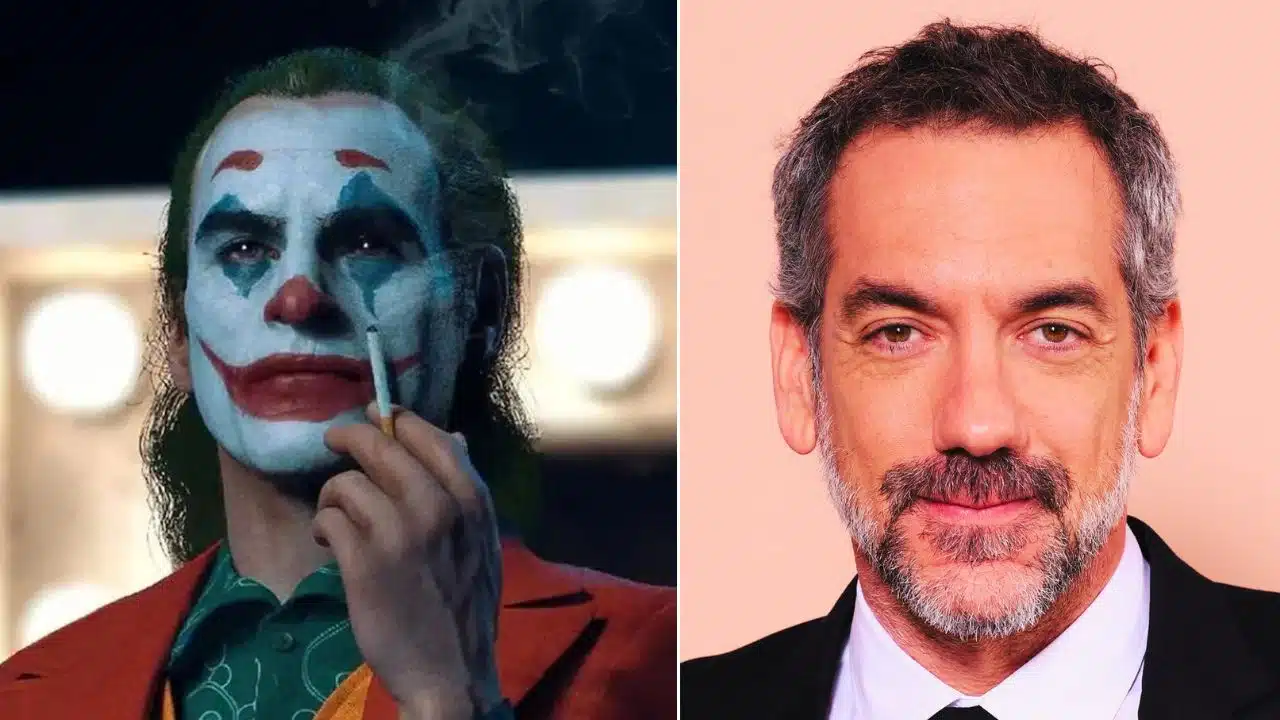
When Todd Phillips’s Joker first came out in 2019, it seemed like a film that was saying something straightforward yet chilling: “Don’t be mean to socially awkward men. You never know what they’re going through, and you might push them too far.” That was the basic message, but beneath it, the film hinted at a broader and more unsettling truth. What if the world’s most terrifying villains weren’t the genius masterminds plotting world domination, but rather, were ordinary people? What if they were just sad, broken individuals who, when pushed too hard by society, snap and become something monstrous? In Joker, that’s exactly what happens to Arthur Fleck (Joaquin Phoenix), a socially isolated, mentally ill man who eventually becomes the iconic Batman villain.
What made Joker stand out from other supervillain origin stories was how it portrayed the “banality of evil.” Instead of depicting the Joker as a brilliant but deranged mastermind, as he’s often portrayed in the comics, this version of the character was more tragic, even pitiable. He wasn’t a criminal genius; he was a man who had been abandoned by society, mistreated, and forgotten. His descent into madness was slow and sad, and when he finally broke, it wasn’t the result of some grand ideological plan. He wasn’t trying to change the world or destroy it. He was simply lashing out at a society that had pushed him to the brink.
In a sense, Joker was a new kind of supervillain origin story. It wasn’t about a villain trying to conquer the world or defeat a hero. It was about a man who was failed by society, and who, in turn, failed himself. The most interesting thing about the film was how it got to the core of this banality of evil. It suggested that the world’s biggest “boogeymen” aren’t necessarily masterminds with grand ambitions. More often than not, they’re ordinary, broken people who lash out in violent, senseless ways. And that’s not just terrifying — it’s also deeply sad.
Joker: Folie à Deux: A Retcon That Changes Everything
Then came the sequel, Joker: Folie à Deux. In many ways, this follow-up to Joker retconned much of what made the first film compelling. In fact, it did something even more shocking: it pulled the rug out from under the audience by revealing that Arthur Fleck wasn’t the Joker after all. In the film’s final moments, we learn that Arthur Fleck — the character we’ve been following for two films, for nearly five hours of screen time — was never destined to be the Joker, the infamous villain who fights Batman. Instead, Arthur was just a deeply troubled man who inspired the real Joker.
This twist is a major departure from what audiences expected. In the first Joker movie, Arthur’s story seemed to be building toward him becoming the iconic villain. His life was a series of tragedies and injustices that led to his transformation. His laughter, a result of neurological damage, his obsession with clowns, his failed career as a stand-up comedian, and his violent outbursts all pointed toward one conclusion: Arthur Fleck would become the Joker, the nemesis of Batman.
However, in Folie à Deux, it’s revealed that Arthur was never the Joker at all. In fact, he was just a man who was caught up in his own delusions. In the film’s final moments, Arthur is stabbed to death by a young inmate at Arkham Asylum, who then mutilates his own face to resemble the Joker’s infamous Glasgow Smile. It’s heavily implied that this young inmate is the real Joker — the one who will eventually go on to fight Batman. Arthur, it turns out, was just “some guy” who the Joker had a vendetta against.
Arthur Fleck’s Tragic Arc: From Villain to Victim
The first Joker movie presented Arthur Fleck as a tragic figure. His mental illness, compounded by his horrific upbringing and the abuse he suffered as a child, made him a sympathetic character. Even as he descended into madness and violence, the audience could understand how he got there. The world had failed him, and in return, he lashed out at it.
In one of the most pivotal scenes in Joker, Arthur murders three Wayne Enterprises employees who are bullying him on the subway. This act of violence becomes a catalyst for a larger movement in Gotham City, as people begin to rally against the rich and powerful. Arthur, unwittingly, becomes a symbol of rebellion against Gotham’s elite, particularly the Wayne family.
This connection to the Wayne family deepens when Arthur’s mother reveals that she once worked for Thomas Wayne, and she insists that Arthur is Wayne’s illegitimate son. Arthur, desperate for a connection, goes to Wayne Manor and interacts with young Bruce Wayne, calling him his brother. This scene establishes a direct connection between Arthur and Batman, setting the stage for the eventual clash between the two characters.
Arthur’s transformation into the Joker is solidified when he kills talk show host Murray Franklin (Robert De Niro) on live television. This act of violence, combined with the chaos that erupts in Gotham, positions Arthur as the Joker, the symbol of anarchy and madness that will eventually face off against Batman.
Folie à Deux: A Twist for the Sake of a Twist?
So why did Phillips decide to undermine all of this in Folie à Deux? Why spend nearly five hours building up Arthur Fleck as the Joker, only to reveal that he was never the Joker at all? Some fans have speculated that Phillips was simply bored with the character. Others believe he wanted to subvert audience expectations, offering a twist for the sake of a twist.
In Folie à Deux, Arthur is on trial for the murders he committed in the first film. His trial is televised, and he becomes a cult figure to a group of deranged followers, including Lady Gaga’s character, Harleen Quinzel. But during the trial, Arthur rejects the idea that he is the Joker. He insists that he’s just Arthur Fleck, a man with no grand plan or ideology. This revelation disappoints his followers, who had viewed him as a symbol of rebellion.
The film’s final moments see Arthur stabbed to death by a young inmate at Arkham Asylum, who delivers a twisted version of Arthur’s line from the first film: “You get what you fucking deserve.” As Arthur bleeds out, the young inmate mutilates his own face, creating the Glasgow Smile that is iconic to the Joker character. It’s heavily implied that this inmate is the real Joker, meaning that Arthur Fleck was never destined to be the villain we all thought he was.
The Bigger Picture: What Is Phillips Trying to Say?
This twist raises a number of questions. What was the point of the first film if Arthur was never going to become the Joker? Was Phillips trying to make a larger statement about how the Joker isn’t one person, but a symbol or a movement? Or was he simply playing a cruel trick on the audience, pulling the rug out from under them for shock value?
One interpretation is that Phillips is commenting on the nature of anarchy and chaos. The Joker, in this version of the story, isn’t a single person. He’s an idea — a spirit of rebellion and madness that can take hold of anyone. In this sense, Arthur was simply one of many people who could have become the Joker. But he wasn’t the one. The real Joker, the one who will eventually fight Batman, is the young inmate who kills Arthur.
But this explanation still leaves a lot of fans feeling frustrated. After all, much of the first film was spent building Arthur up as the Joker. His connection to the Wayne family, his role in sparking the riots in Gotham, and his transformation into a symbol of chaos all pointed toward him becoming the iconic villain. To suddenly pull the rug out from under the audience feels like a betrayal of the character — and of the story that Phillips spent two films telling.
Phillips’s Joker Trick: A Shocking Conclusion
In the end, the twist in Folie à Deux may not be about Arthur Fleck or the Joker at all. Instead, it could be about Todd Phillips himself. Throughout the two films, Phillips has been toying with the audience’s expectations, leading them down one path only to take a sharp turn in the opposite direction. In this sense, Phillips is the real Joker. He’s the one sowing chaos, playing tricks, and keeping the audience on their toes.
If the Joker represents anarchy, chaos, and rebellion, then perhaps Phillips is telling us that he, too, has embraced these ideals. By pulling off this twist, Phillips has become the Joker, using his films to create confusion and disorder. This, ultimately, may be the message he’s trying to convey.
In the world of Joker, nothing is as it seems. Arthur Fleck was never the Joker, but that doesn’t mean the Joker wasn’t there all along. He was hiding in plain sight — in the form of Todd Phillips, the filmmaker who has been playing a long con with his audience. That, in the end, may be the real punchline.
The Information is Collected from IMDb and Yahoo.