
Japan has once again broken its own record for the number of people aged 100 or older. As of September 1, 2025, official data from the Ministry of Health, Labour and Welfare shows that 99,763 Japanese citizens have reached the age of 100 or beyond. This figure represents an increase of 4,644 people compared with last year’s tally and highlights the continuing trend of remarkable longevity in the country.
This marks the 55th consecutive year that Japan has reported a rise in its centenarian population. When the government first began tracking these numbers in 1963, only 153 people nationwide had reached 100 years of age. Since then, the figure has expanded dramatically, growing tenfold by the 1980s and crossing several historic milestones in the decades that followed.
-
By 1981, the number exceeded 1,000.
-
By 1998, the figure passed 10,000.
-
By 2012, it crossed 50,000.
-
By 2025, it now stands just short of 100,000.
The speed of this growth underscores both medical progress and changing social conditions that have supported longer lives in Japanese society.
Women Outnumber Men Dramatically
A striking aspect of the statistics is the gender imbalance. Of the nearly 100,000 centenarians, about 88 percent are women. That means roughly 87,784 women in Japan are aged 100 or older, compared to around 11,979 men.
The oldest living woman is Shigeko Kagawa, who is 114 years old and resides in Nara Prefecture. The oldest living man is Kiyotaka Mizuno, aged 111, from Shizuoka Prefecture. Their longevity has drawn attention from researchers studying lifestyle and health habits among Japan’s seniors.
This gender divide is consistent with global patterns, where women generally live longer than men, but it is especially pronounced in Japan. Health experts attribute this to a mix of biological, cultural, and behavioral factors. Women in Japan have historically maintained healthier diets, engaged in strong community networks, and avoided some of the risk behaviors—such as high tobacco and alcohol use—that have historically been more common among men.
Why Japan Leads the World in Longevity
Japan is consistently ranked among the world’s top countries for life expectancy. According to the most recent global health data, average life expectancy in Japan is 84.5 years overall, with women averaging 87.13 years and men averaging 81.09 years. This places Japan second only to Hong Kong in global longevity rankings.
Several factors contribute to this exceptional life expectancy:
-
Dietary Habits: Traditional Japanese diets emphasize fish, rice, vegetables, soy products, and fermented foods. These meals are typically low in red meat, processed foods, and sugar, all of which are linked to chronic illnesses in other countries.
-
Healthcare System: Japan has a universal healthcare system that ensures access to preventive care, regular screenings, and treatments. Early detection of illnesses has played a vital role in keeping the elderly population healthy.
-
Low Obesity Rates: Compared with many Western nations, obesity is far less common in Japan, reducing risks of diabetes, heart disease, and other conditions.
-
Community and Lifestyle: Elderly people in Japan often remain socially active and engaged in their communities. Strong neighborhood ties, daily routines, and physical activity such as walking or gardening contribute to healthier aging.
-
Cultural Attitudes Toward Aging: Respect for elders is deeply embedded in Japanese culture. Unlike in some societies where aging is seen negatively, in Japan longevity is celebrated, which contributes to emotional and social well-being.
Government Recognition for Centenarians
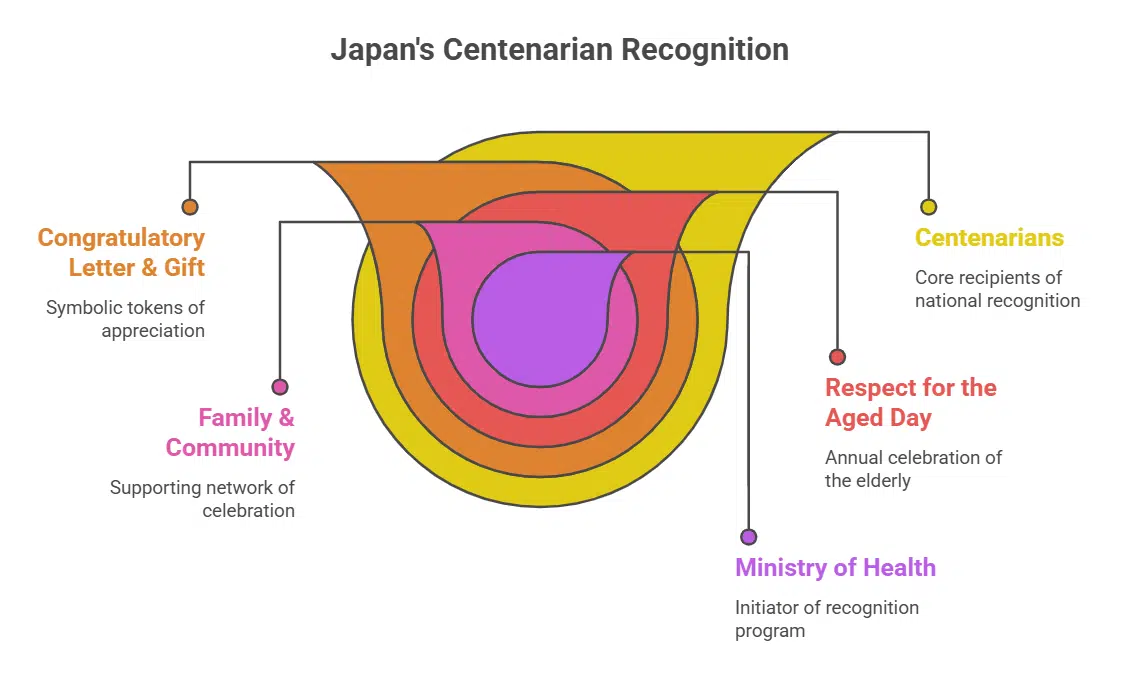
Japan not only records the number of centenarians but also actively celebrates them. Each year, individuals who turn 100 receive an official congratulatory letter and a commemorative gift from the Prime Minister. The Ministry of Health says this is a way of expressing national gratitude for their contributions to society while also encouraging public awareness about aging and elder care.
In 2025, more than 52,000 people became eligible for this special recognition. The honor is typically presented during Respect for the Aged Day, a national holiday held every September to celebrate the elderly. At commemorative ceremonies, seniors are celebrated not just by family but also by local communities and officials.
Challenges of an Aging Population
While Japan’s longevity is often praised, it also comes with profound social and economic challenges.
-
Declining Birth Rates: Japan recorded a drop in births for the 16th consecutive year in 2024, leaving fewer young people to support an expanding elderly population.
-
Shrinking Workforce: With one of the highest proportions of elderly people in the world, Japan faces increasing pressure on its labor market. Fewer workers mean slower economic growth and greater pressure on productivity.
-
Rising Healthcare and Pension Costs: Medical care and pensions for nearly 100,000 centenarians—and millions of elderly citizens overall—require massive public funding. This places strain on the government’s budget.
-
Social Care Demands: As more people live into advanced old age, the demand for nursing homes, in-home care, and support services continues to rise. Japan has had to innovate with robotics, AI tools, and community-based care programs to meet these needs.
Japan’s achievement in longevity demonstrates the success of its health system and cultural practices, but it also highlights urgent demographic questions. How will the country balance its celebration of long lives with the realities of a declining birth rate and shrinking working-age population? Policymakers are now looking at immigration reforms, family support policies, and workplace changes to adapt to this new demographic reality.
For now, the record number of centenarians stands as a testament to Japan’s unique success in promoting healthy aging. The figure, poised to cross 100,000 within the next year, reinforces Japan’s place as the world leader in longevity while reminding its citizens and government of the responsibilities that come with an aging society.