

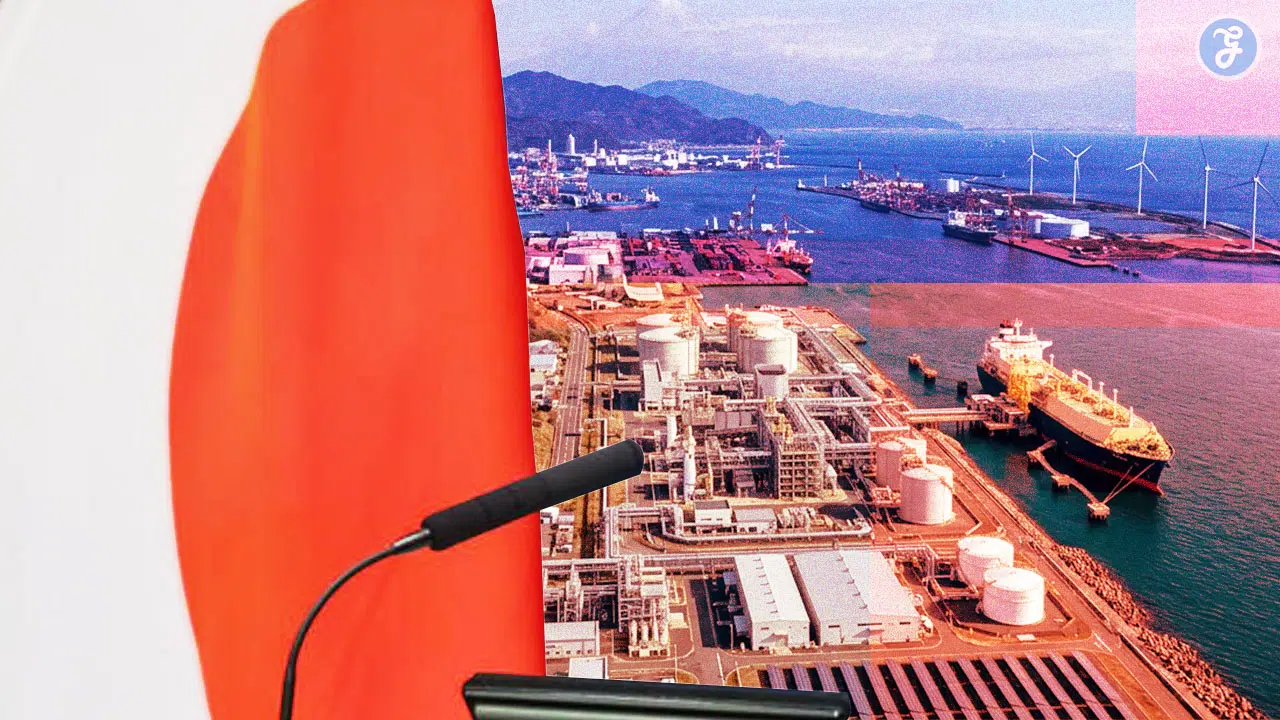
Tokyo in April 2026 feels like the eye of a global storm. While the world fixes its gaze on the volatility of the Middle East and the shifting sands of the Persian Gulf, a more quiet and calculated power play is unfolding in the heart of Japan. The Japanese government recently pledged $10 billion to support Asian nations currently reeling from a sharp spike in oil prices. This massive financial commitment is not merely a gesture of goodwill. It represents the most significant exercise in Japan energy security in recent history.
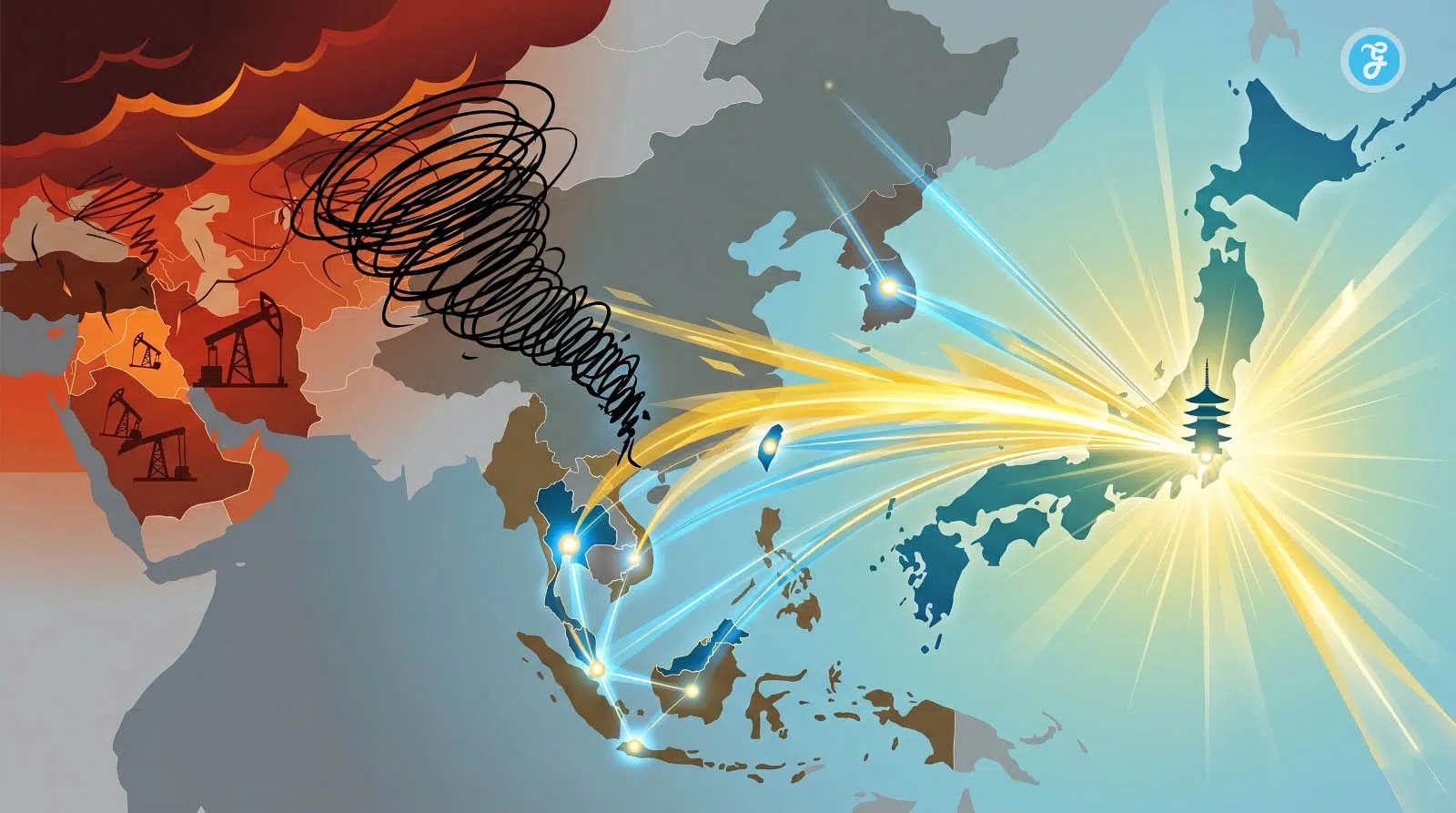
By stepping into this role, Tokyo is transforming immediate financial relief into a permanent geopolitical anchor. It is a masterclass in energy diplomacy, proving that in a world of supply shocks, the real superpower is the one that guarantees stability.
The Strategy of Self Preservation
Japan does not act out of pure altruism. Its latest $10 billion move is a calculated response to a fragile regional reality. Tokyo understands that in a global economy, no nation is an island. If a factory in Hanoi loses power or a shipping hub in Jakarta stalls, the ripple effects hit Japanese shores within days. This is about protecting a shared ecosystem where Japanese prosperity depends on Asian stability.
The Myth of Isolation
Japan relies on Southeast Asia for more than just trade. The region is the backbone of Japanese manufacturing and healthcare supply chains. Specialized medical plastics and automotive components often begin their journey in Thai or Vietnamese plants.
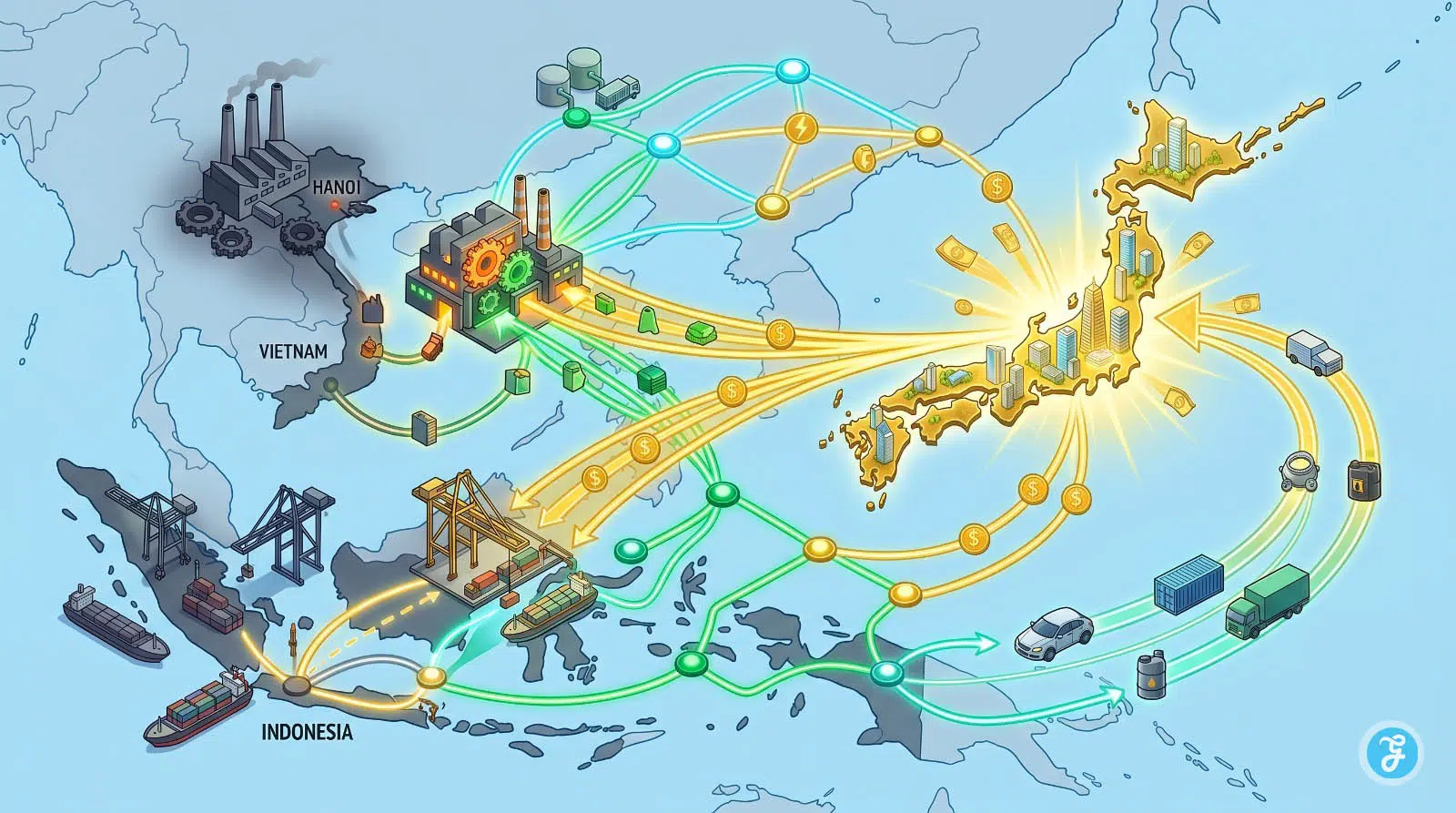
When energy prices spike, these factories face shutdowns. For Tokyo, a fuel shortage in Indonesia is not a distant problem. It is a direct threat to the hospitals and car dealerships in Osaka.
The Naphtha Connection: Why Hospitals Depend on Oil
While most of the world views oil through the lens of gasoline or diesel, Japan sees it as a raw material for survival. A significant part of this $10 billion play is the protection of naphtha. This petroleum byproduct is the building block for the petrochemical industry. It is used to create everything from the sterile syringes in Tokyo’s hospitals to the protective casings for semiconductors. Japan’s domestic manufacturers rely on Southeast Asian refineries to process this feedstock. By funding regional oil purchases, Tokyo is effectively subsidizing the production of its own essential medical supplies. It is a closed loop of security where $1 invested in a Vietnamese refinery protects a $100 Japanese medical device.
The vulnerability of this supply chain stems from its high specialization. Naphtha is not easily substituted in the production of medical-grade polymers required for high-precision instruments. Without a steady flow of this feedstock, the manufacturing of IV bags, catheters, and diagnostic equipment would grind to a halt. By securing the regional refining capacity, Japan ensures that its healthcare system remains immune to external energy shocks. This strategy transforms fossil fuel procurement into a public health insurance policy, guaranteeing that the invisible scaffolding of modern medicine remains available at a stable price.
A Tale of Two Reserves
The contrast in energy preparedness defines the current crisis. Japan operates from behind a massive defensive wall of oil. It maintains strategic reserves capable of powering the nation for over 230 days. This is a fortress of energy. Contrast this with the neighbors Tokyo is now funding. In the current 2026 market, Vietnam struggles with stocks that often cover barely 12 days of consumption. Indonesia holds enough for roughly three weeks. The $10 billion pledge acts as a financial bridge to close this dangerous gap in regional stability.
Japan Energy Security: The Structure of Power
Japan is not just throwing money at a problem. It is building the physical framework for regional survival. The $10 billion commitment focuses on tangible assets like storage terminals and logistics networks rather than just temporary subsidies. By investing in the hardware of energy, Tokyo ensures its influence lasts far longer than a single billing cycle. This strategy cements Japan as the central architect of a more resilient Asian energy map.
More Than a Digital Transfer
Writing a check is easy, but building a strategic reserve is permanent. Japan is directing funds through state-backed giants like the Japan Bank for International Cooperation (JBIC) to construct massive oil storage tanks across Southeast Asia. These facilities allow countries like Vietnam and Thailand to stockpile fuel when prices are low. It moves these nations away from “just-in-time” energy delivery toward a “just-in-case” security model. This physical infrastructure creates a lasting bond between Tokyo and its regional partners that goes deeper than simple trade.
Breaking the Hormuz Habit
The Persian Gulf has long been the primary artery for Asian energy, but it is an artery that can be easily blocked. A key pillar of the $10 billion play is helping neighbors diversify their suppliers. Japan is providing the credit support necessary for Asian firms to sign long-term deals with the United States and Australia. By funding the logistics needed to receive American crude and Australian gas, Tokyo is effectively shifting the region’s gaze across the Pacific. This move reduces the collective vulnerability to Middle Eastern shocks and strengthens the security ties of the Indo-Pacific alliance.
The Friction of Green Dreams and Oil Realities
The timing of the $10 billion pledge was almost ironic. It happened during the AZEC Plus Summit, a gathering originally designed to discuss a zero-emission future for Asia. Pumping billions into oil procurement while standing under a banner of decarbonization creates a glaring contradiction. It forces a difficult question about whether Japan is helping Asia transition or simply making the status quo more comfortable.
The AZEC Paradox
The contradiction was hard to ignore on the summit floor. Japan hosted leaders to discuss the Asia Zero Emission Community, yet the biggest headline was a massive investment in fossil fuels.

This irony highlights the desperate tension between long-term climate goals and the immediate need for survival. When a nation cannot afford to keep its lights on, the promise of a wind farm in 2030 feels like a luxury. Japan is betting that by stabilizing the present, they can protect the possibility of a green future.
Building Bridges or Paving Over
Critics worry this financial bridge might lead to a dead end. When a country builds a massive new storage terminal with Japanese funds, it creates a physical incentive to keep using oil. This is known as infrastructure lock-in. While the money solves the energy crisis of 2026, it might also slow down the adoption of solar and wind power across Southeast Asia. The danger is that these billions might pave over the transition with cheaper fossil fuels instead of building a ramp toward renewables. Tokyo must prove that this emergency relief does not become a permanent detour.
The Hydrogen Transition Pipeline
To answer the critics of “infrastructure lock-in,” Japan is promoting a “co-firing” strategy. Many of the storage facilities and pipelines being funded today are being designed with a dual purpose. Tokyo argues that these systems can eventually be repurposed to handle ammonia or hydrogen, which are centerpieces of Japan’s long-term green strategy.
By building this high-tech infrastructure now, Japan is laying the groundwork for a future hydrogen economy in Asia. The goal is to create a seamless transition where the same logistics networks that move oil in 2026 will move carbon-neutral fuels in 2040. Whether this technical pivot is truly feasible remains a point of intense debate among energy scientists. However, for the policymakers in Tokyo, it provides the necessary moral and economic justification to keep the oil flowing in the short-term while keeping the green dream alive for the next generation.
The Leverage of Strategic Trust
In the high-stakes theater of the Indo-Pacific, influence is rarely won with words alone. Japan’s move positions it as the most reliable partner in a crowded and competitive field. While other global powers focus on military posturing or inward-looking domestic politics, Tokyo is doing the unglamorous work of keeping the regional engine running. This creates a deep well of strategic trust that pays dividends far beyond the energy sector.
The Battle for Strategic Trust
In the Indo-Pacific, infrastructure is often used as a tool for political pressure. Many nations in the region have become wary of “debt trap” diplomacy, where massive loans for ports or railways lead to a loss of national sovereignty. Japan is consciously positioning its $10 billion energy fund as the antithesis to this model.
By using state-backed entities like the Japan Bank for International Cooperation (JBIC) to back these energy deals, Tokyo provides a stable, transparent alternative to predatory lending practices. When a nation like Malaysia or the Philippines accepts Japanese energy support, they are not just taking money. They are entering into a partnership based on shared technical standards and mutual resilience. This approach builds a version of Japan energy security that is collaborative rather than dominant, creating a “Strategic Trust” that is much harder for rivals to replicate with simple cash injections.
A Perimeter of Stability
Ultimately, this $10 billion play is about creating a Free and Open Indo-Pacific through economic resilience. Japan has realized that its own borders are not where its security ends. By ensuring that partners from Vietnam to India can weather energy shocks, Tokyo is building a regional perimeter of stability. This prevents internal unrest and keeps nations focused on growth rather than crisis management. In the game of modern diplomacy, the power to stabilize is the ultimate form of leverage. Japan is not just buying barrels of oil; it is buying a more secure and unified neighborhood.
This financial shield protects the entire supply chain from sudden price volatility and supply chain disruptions. By shielding emerging economies from the inflationary pressure of energy spikes, Tokyo maintains the purchasing power of its largest export markets. This creates a self-sustaining loop of regional prosperity. It transforms Japan from a mere trading partner into a vital guarantor of sovereignty. This strategic depth ensures that the Indo-Pacific remains a theater of cooperation rather than a collection of vulnerable states. It is a long-term investment in a regional order where economic health becomes the first line of collective defense.
The Anatomy of the $10 Billion Framework
- A Massive Equivalent: The $10 billion package is physically equal to approximately 125 million barrels of oil, providing a critical buffer capable of covering roughly three to four weeks of total crude consumption for all ASEAN nations combined.
- The POWERR Initiative: This financial surge is the centerpiece of a new diplomatic framework called the Partnership On Wide Energy and Resources Resilience (POWERR Asia), launched specifically to counter the 2026 Middle East supply crisis.
- Diversified Backing: While the Japan Bank for International Cooperation (JBIC) provides the capital, the program also uses Nippon Export and Investment Insurance (NEXI) to guarantee trade for private Asian firms. This mechanism works by dramatically lowering their financial risk when buying from non-Middle Eastern sources.
- Critical Feedstock Protection: A major portion of the funding is earmarked for naphtha procurement, a petroleum byproduct essential for creating the medical-grade plastics and sterile containers used in Japanese hospitals.
- Expanding the Circle: This energy security umbrella now extends beyond traditional ASEAN partners. For the first time, Japan has included observer nations like India, Bangladesh, and Sri Lanka. This expansion creates a unified energy front across the broader Indo-Pacific.
Japan Energy Security: The Long Game
The strategy unfolding across the Indo-Pacific is not fought with weapons. It is built with infrastructure and credit. Tokyo has realized that Japan energy security is no longer just a domestic issue confined to its own borders. It has officially become a regional export. Supplying financial relief to neighboring nations creates a deep well of geopolitical trust.
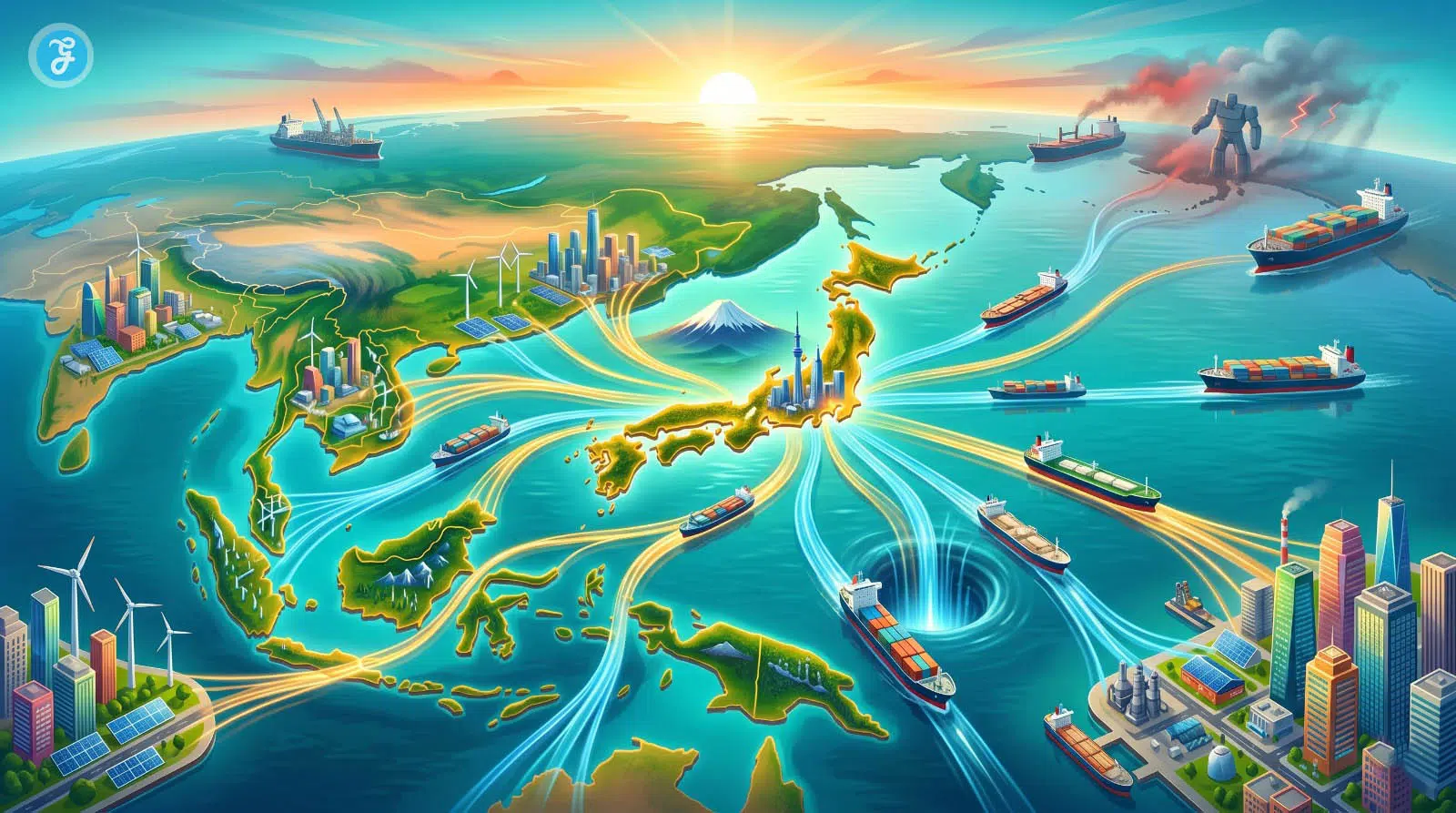
By securing the oil needs of the region today, Tokyo is doing more than preventing an immediate crisis. It is laying the groundwork for the next decade of power. The nation that stabilizes the current fossil fuel market will naturally dictate the transition to renewables. Through this calculated investment, Japan is actively ensuring its own leadership in the green economy of tomorrow.





















