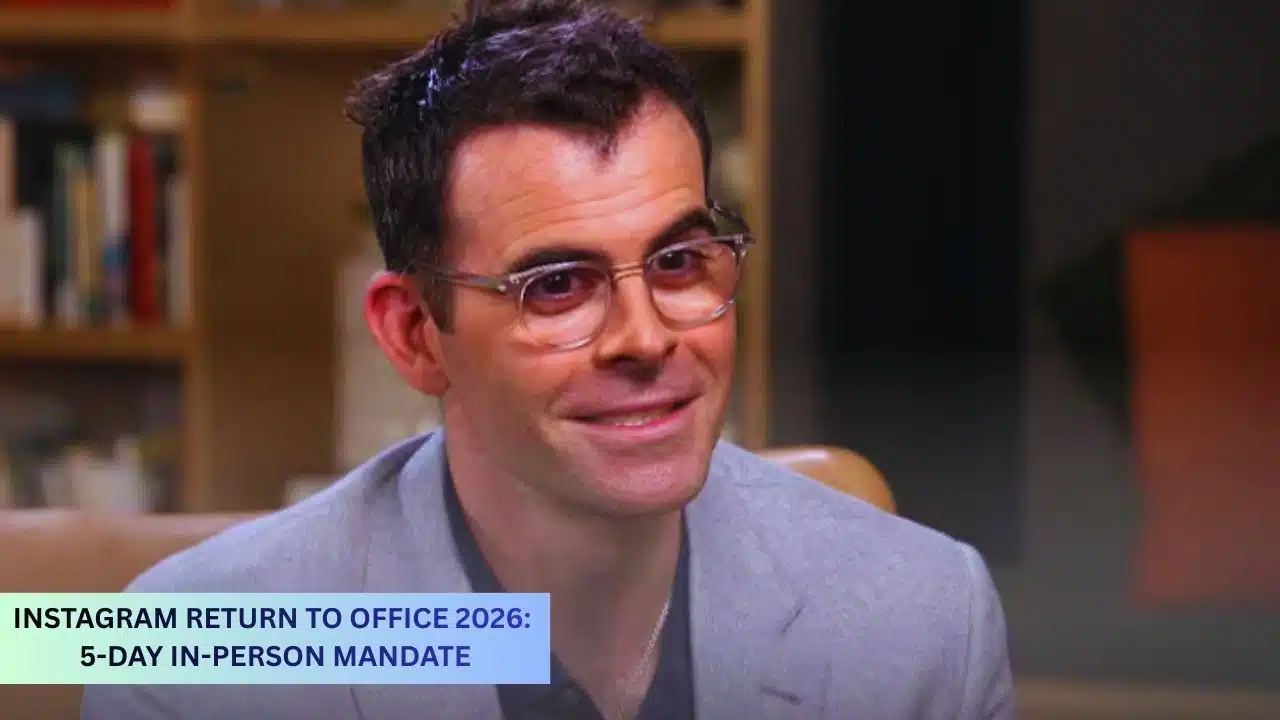
Instagram head Adam Mosseri has issued a firm directive mandating that most US-based employees under his organization with assigned office desks return to full-time in-office work—five days every week—beginning February 2, 2026. This key change appears in his detailed internal memo, “Building a Winning Culture in 2026,” which Business Insider obtained and Alex Heath’s Sources newsletter first highlighted, positioning it as a strategic response to make Instagram more agile and inventive against rivals like TikTok and evolving platforms such as Threads’ competitors. The full policy package addresses longstanding remote work drawbacks while preserving some flexibility, reflecting broader tech trends where leaders seek renewed energy through physical presence.
Setting the Stage: Progress and the Imperative to Evolve Further
Instagram achieved notable successes throughout 2025, strengthening its core identity around user creativity and positioning Threads effectively as a vibrant space for sharing perspectives on current events and discussions. Yet Adam Mosseri warns that claiming outright leadership in these competitive arenas requires sustained effort beyond current gains, blending robust strategy—which he views positively for the upcoming half—with refined operational habits. After deep consideration of agility and innovation needs, he concludes evolution is non-negotiable, rolling out targeted reforms to counter slowdowns observed industry-wide during prolonged hybrid periods. This memo arrives at a pivotal moment, as social media battles intensify, demanding faster cycles of creation and adaptation.
Full Return to the Office: Boosting Creativity Through Proximity
The cornerstone reform champions in-person collaboration, with Mosseri asserting unequivocally that physical togetherness unlocks heightened creativity and smoother teamwork—a belief rooted in pre-pandemic experiences and reinforced by the dynamic energy he observes consistently at Instagram’s New York office. Effective February 2, this applies directly to all relevant staff in his reporting structure located at US offices equipped with assigned desks, establishing five full days as the new standard to recapture that proven spark. While demanding commitment, the approach incorporates practical accommodations, allowing occasional work-from-home for legitimate reasons and empowering individuals to navigate their schedules judiciously.
Implementation details demonstrate thoughtful planning: New York operations pause full rollout pending resolution of capacity limitations, with timelines shared promptly; Menlo Park shifts seamlessly from MPK21 to the expanded MPK22 facility by January 26, guaranteeing personal workspaces for all, alongside transfer opportunities to San Francisco for commute-neutral or improved cases via personalized notifications. Cross-functional partners maintain their established rhythms, and designated remote roles remain untouched, ensuring focus stays on core office teams. Notably, this surpasses Meta’s company-wide three-day hybrid for apps like Facebook and WhatsApp, carving Instagram as a trailblazer in RTO aggressiveness.
Fewer Meetings: Streamlining to Eliminate Wasteful Time Sinks
Remote-heavy eras amplified a universal pain point—overabundant, low-value meetings eroding productivity—and Mosseri confronts it head-on to restore velocity across projects. The solution mandates a biannual purge: every six months, recurring meetings vanish entirely, resurfacing solely upon rigorous justification of necessity. Complementing this, one-on-one syncs standardize to biweekly cadence, while individuals gain explicit license to bypass conflicts with protected focus intervals.
Mosseri’s directive cuts straight to the priority: “I want most of your time focused on building great products, not preparing for meetings,” a sentiment resonating amid tech’s post-pandemic meeting fatigue critiques. By automating resets and normalizing declines, teams redirect hours toward substantive output rather than logistical overhead.
More Prototypes, Less Decks: Favoring Tangible Tests Over Theoretical Slides
Conventional product pitches lean too heavily on decks that obscure genuine social flows, yet prototypes deliver irreplaceable validation of concepts and behaviors—tools deployed far too sparingly until now. Mosseri elevates them as the primary format for overviews, harnessing their power to simulate real dynamics early and iteratively. Supporting docs streamline severely: strategy papers max out at three pages per a fixed template; any decks demand maximal brevity. Reviews launch with explicit agendas and pivotal issues flagged, minimizing ambiguity from the outset.
This represents a deliberate rupture from pandemic-fueled “deck culture,” urging builders to prototype boldly and gauge viability hands-on instead of theorizing via endless revisions. Such shifts promise quicker insights into features like enhanced DM sharing or Reels innovations central to Instagram’s strategy.
Faster Decision-Making: Structured Swiftness to Conquer Blockers
Lingering unresolved calls plague progress, prompting a rigorous new framework centered on Directly Responsible Individuals (DRIs) to champion and expedite fixes. Mosseri pledges weekly participation in the priorities unblocking forum, handing reins to trusted deputies during conflicts, capping open items at mere days maximum. This mechanism enforces accountability without rigidity, propelling stalled initiatives forward relentlessly.
Broader Industry Trends and Emerging Reactions
Echoing Amazon’s full-week corporate mandate from early 2025, Instagram joins AT&T, Boeing, Dell, and others escalating office pulls, while Alphabet, Apple, Microsoft hover at three days. Forums like Hacker News buzz with “boiling frog” worries—remote hiring curbs first, then proximity mandates—questioning net productivity gains amid hybrid drags like office Zooms. Meta affirms no platform-wide extension.
Forward Momentum Amid Projected Headwinds
Next all-hands unpacks these alongside peer insights on priorities. Facing 2026’s rigors akin to 2025’s, Mosseri radiates optimism: “I’m excited about our momentum… These changes are going to meaningfully help us move Instagram forward—with creativity, boldness, and craft.” Meta offered no added remarks.