
Instagram has officially launched a new Map feature designed to let users share their current or recent locations with selected friends, view others’ posts based on location tags, and discover local events or activities. While Meta — Instagram’s parent company — presents this as a “lightweight” way to connect with friends and communities, the rollout has sparked immediate discussion and concern. Privacy experts, lawmakers, content creators, and everyday users are debating whether the potential benefits outweigh the risks.
How the Instagram Map Works
The Map is located at the top of a user’s Direct Messages (DM) screen. By tapping it, users can see a geographic view of where their friends are — but only if those friends have enabled the feature.
When opening the Map for the first time, Instagram prompts users to decide whether they want to share their location and, if so, with whom. Options include:
-
All mutual followers
-
Close Friends list
-
A custom selection of specific accounts
If a user agrees to share their location, Instagram updates it whenever they open the app or post location-tagged content, such as Stories, Reels, or feed posts. This location data is not permanently visible; content linked to a tagged location appears for 24 hours before disappearing.
Meta emphasizes that the feature is disabled by default, meaning users must actively choose to turn it on. Additionally, people can adjust or revoke permissions at any time from the Map’s settings menu.
Additional Features Rolled Out with the Map
The launch also came alongside two other platform updates:
-
Repost Feature – Allows users to share public Reels and feed posts directly to their own profiles, with full attribution to the original creator. A new “Reposts” tab shows all shared content in one place.
-
Friends Tab in Reels – Displays Reels that a user’s friends have interacted with, along with more control over what activity is visible, such as hiding certain likes or interactions from public view.
Why the Map Has Caused Concern
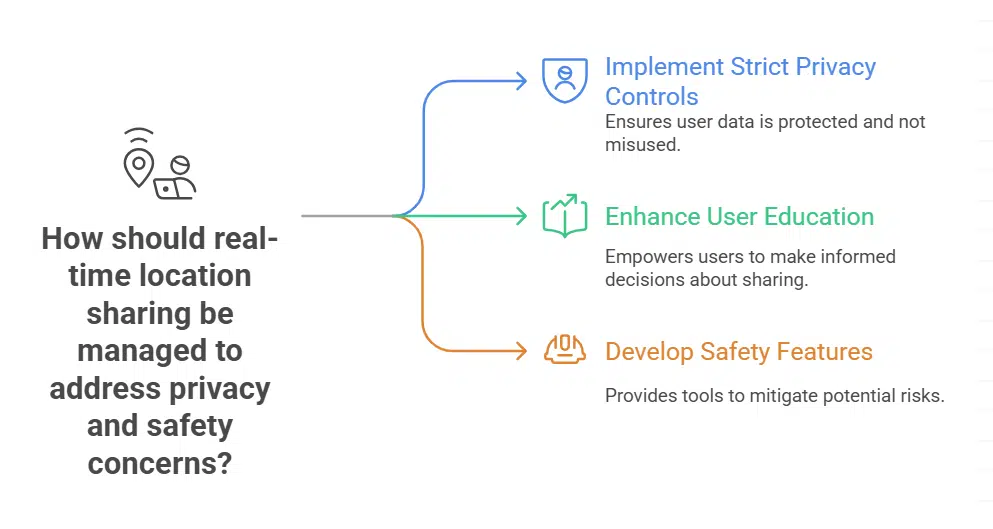
The instant reaction from some users has been skepticism, confusion, and alarm. Privacy and safety advocates are especially concerned about how real-time or near-real-time location sharing could be exploited.
Safety Risks for Women and Public Figures
Women, in particular, have raised concerns about the risk of stalking and harassment. Public figures and content creators with large audiences face additional vulnerabilities, as revealing a physical location can potentially lead to unwanted in-person encounters.
Risk to Survivors of Abuse and Vulnerable Individuals
People who have escaped abusive relationships, or who may still have digital connections with former abusers, fear the feature could be used to monitor their movements if they accidentally share their location.
Teen User Risks
For teenagers, location sharing brings another layer of complexity. While Meta’s parental controls allow parents to be notified if their teen enables the feature and to disable it remotely, tech-savvy teens can bypass these safeguards by using hidden or alternate accounts. Lawmakers in the United States had previously warned that location-tracking tools like this could expose minors to unnecessary risk, especially from strangers or predators.
Confusion Over Location Visibility
Some users have reported seeing their own posts appear on the Map without actively turning the feature on. In most cases, this is because they tagged a location in a Story or post. Instagram automatically displays that tagged content on the Map for 24 hours, even without enabling continuous location sharing. Additionally, the app may estimate a general location using network data, such as an IP address, to suggest nearby places for tagging.
Comparisons to Other Apps
Instagram’s Map concept isn’t entirely new. Snapchat introduced “Snap Map” in 2017, allowing friends to see each other’s locations in real time. That rollout also faced criticism over safety and privacy, particularly for younger users. Similarly, older services like Foursquare Swarm allowed people to “check in” at locations, making their whereabouts visible to friends. These precedents have shown that while location sharing can enhance social interaction, it also creates potential avenues for abuse.
Meta’s Position and Privacy Controls
Meta maintains that the Instagram Map is opt-in and designed with safety controls in place. Only people a user follows back — or those on a manually selected custom list — can see their location. The company also reiterates that live, continuous location tracking does not occur unless the user enables it.
For added control, users can:
-
Disable location sharing entirely.
-
Restrict visibility to a small, trusted list of friends.
-
Remove specific followers from their Close Friends list.
-
Avoid tagging locations in posts or Stories if they prefer not to appear on the Map.
Meta also advises checking phone settings to confirm whether Instagram has permission to access device location data.
Expert Warnings and Research Findings
Digital safety experts point out that even with safeguards, the feature could lead to unintended consequences. Location data, even if visible only to a small audience, can reveal patterns — such as home addresses, workplaces, schools, or frequent hangouts.
Research from Common Sense Media in 2023 found that automatic location sharing on social platforms can negatively impact young female users, with safety concerns and social pressure among the main issues. While some respondents noted positive aspects, such as feeling more socially connected, nearly half of girls surveyed reported a mostly negative experience.
Lawmaker Concerns
U.S. legislators have repeatedly scrutinized location-sharing features on social media. In 2024, after reports surfaced about Instagram’s plan to develop the “Friend Map,” members of Congress raised alarms about potential harm to minors. They described geolocation tracking of young people as an avoidable invasion of privacy. Past political criticism has also targeted similar features on other platforms, with warnings that location visibility could expose children to dangerous situations.
Best Practices for Staying Safe with Instagram Map
For users who wish to use the feature without compromising privacy:
-
Limit Your Audience – Choose Close Friends or a custom list rather than mutual followers.
-
Avoid Public Tags – Refrain from tagging precise locations in posts or Stories.
-
Review Permissions – Check Instagram’s in-app location settings and your device’s location settings.
-
Think Before You Share – Consider the long-term implications of showing patterns of movement.
The Instagram Map introduces a new way to interact and discover content based on location, but it also renews the long-standing debate about how much personal information users should share online. While Meta offers multiple privacy controls and insists the feature is off by default, confusion and concern suggest that educating users will be critical. The challenge for Instagram will be balancing engagement with safety — ensuring users understand exactly what they’re sharing, with whom, and what risks may come with it.