

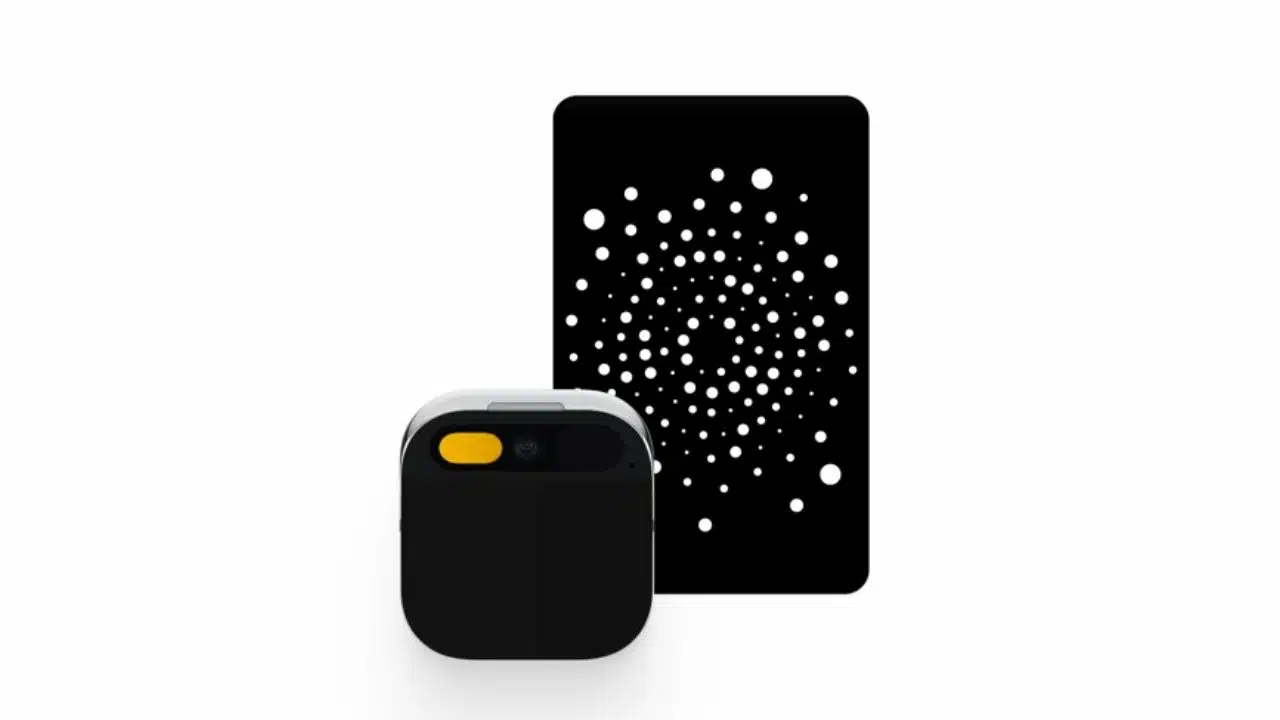
The Humane AI Pin, once heralded as a revolutionary product, was launched, crashed, and burned within just one month. Founders Imran Chaudhri and Bethany Bongiorno, former Apple employees, are now looking to sell the company.
A detailed report by The New York Times sheds light on the series of missteps that led to the product’s failure, offering a cautionary tale about the dangers of stifling internal criticism.
The Vision and the Reality
A Star-Studded Beginning
Founded in 2018, Humane attracted significant investment, raising $230 million from notable figures like OpenAI CEO Sam Altman and Salesforce CEO Marc Benioff.
The company’s valuation soared to $1 billion before the launch of its AI Pin, a device designed to function like a Star Trek communicator. Users could magnetically clip it onto their shirts, using it for voice commands without the need for traditional apps.
The device included a touch panel, battery, camera, and speaker/microphone, with a laser projector for a smartwatch-like UI.
Disappointing Performance
Despite its high hopes, the AI Pin was met with overwhelmingly negative reviews. Critics, including The Verge and tech reviewer Marques Brownlee, panned the product for its poor performance.
Issues included slow voice commands, a short battery life of two to four hours, heaviness that dragged down clothing, and an ineffective projector in various lighting conditions. Compounding these problems, Humane recently warned customers about a fire hazard associated with defective battery cases.
Sales Numbers and Company Valuation
The company’s sales figures are stark. As of early April, Humane had received only 10,000 orders for the AI Pin, far short of its goal of 100,000 units for the year.
This translates to roughly $7 million in revenue, a fraction of what was needed to sustain the company. Despite this, Humane is reportedly seeking a valuation of over $1 billion in potential sales talks with companies like HP.
Internal Culture and Management Failures
Positivity Over Criticism
The failure of the AI Pin can be traced back to the company’s internal culture. According to interviews with 23 current and former employees, advisers, and investors, the founders’ preference for positivity over criticism led to significant blind spots.
Warnings about the product’s battery life and power consumption were ignored. One senior software engineer was fired after questioning the product’s readiness for launch, leading to a chilling effect on honest feedback.
Retrospective Realization
After the product’s disastrous launch, Bongiorno acknowledged the need to embrace critical feedback, calling the negative reviews a “gift.”
However, by this point, the damage was done. The lack of a head of marketing until after the launch further compounded the company’s problems, as employees had repeatedly requested this role be filled to navigate the market better.
The Financial and Operational Impact
Humane’s $230 million in funding and the meager $7 million in sales must cover five years of product development, manufacturing costs, server expenses, and salaries for up to 250 employees. With the AI Pin still listed at $700–$800, a fire sale of the remaining inventory seems imminent.
Potential Sale and Future Prospects
Despite the bleak outlook, Humane is exploring the possibility of selling the company. Discussions with HP and other potential buyers are ongoing, though no formal sales process has begun.
The ambitious $1 billion valuation, following such poor sales performance, reflects a stark disconnect between the company’s expectations and market reality.
The story of the Humane AI Pin serves as a stark reminder of the importance of fostering a culture of open, honest feedback within a company. Failure to address internal criticisms can lead to disastrous product launches and significant financial losses.
As Humane looks to its next steps, whether through a sale or a pivot, the lessons learned from this experience will be crucial for future endeavors.
The information is taken from Ars Technica and The New York Times





















