Conflict is a natural part of any professional environment. Whether it’s due to differences in opinions, misunderstandings, or competing priorities, workplace disagreements are bound to happen. What sets successful teams and individuals apart is their ability to manage conflict effectively.
Emotional intelligence (EI) is a crucial skill that helps individuals navigate challenging situations with empathy, clarity, and composure.
In this article, we’ll explore how to use emotional intelligence to handle workplace conflict and foster a healthier, more productive work environment.
What is Emotional Intelligence?
Understanding emotional intelligence is the first step toward mastering conflict resolution in the workplace. Often abbreviated as EI, emotional intelligence is the ability to recognize, understand, and manage both your own emotions and those of others.
This foundational skill is essential for fostering positive interactions, resolving disagreements, and building stronger relationships with colleagues.
The Basics of Emotional Intelligence
Emotional intelligence refers to the ability to recognize, understand, and manage your own emotions, as well as the emotions of others.
It consists of five key components:
- Self-Awareness: Understanding your emotions and how they influence your behavior.
- Self-Regulation: Controlling your emotional responses to situations.
- Empathy: Understanding and sharing the feelings of others.
- Social Skills: Building and maintaining strong interpersonal relationships.
- Motivation: Staying focused and optimistic even in difficult circumstances.
Why Emotional Intelligence Matters in Conflict Resolution
In workplace conflicts, emotions often run high, leading to misunderstandings and miscommunications.
Emotional intelligence enables individuals to:
- Recognize their own emotional triggers and avoid reactive behavior.
- Empathize with others, fostering better understanding and collaboration.
- Communicate effectively, ensuring issues are addressed constructively rather than combatively.
Research highlights the importance of EI in professional success. Studies show that 90% of top performers have high emotional intelligence, underscoring its value in conflict resolution and leadership. Additionally, workplaces with emotionally intelligent leaders report higher team satisfaction and productivity.
The Role of Emotional Intelligence in Workplace Conflict
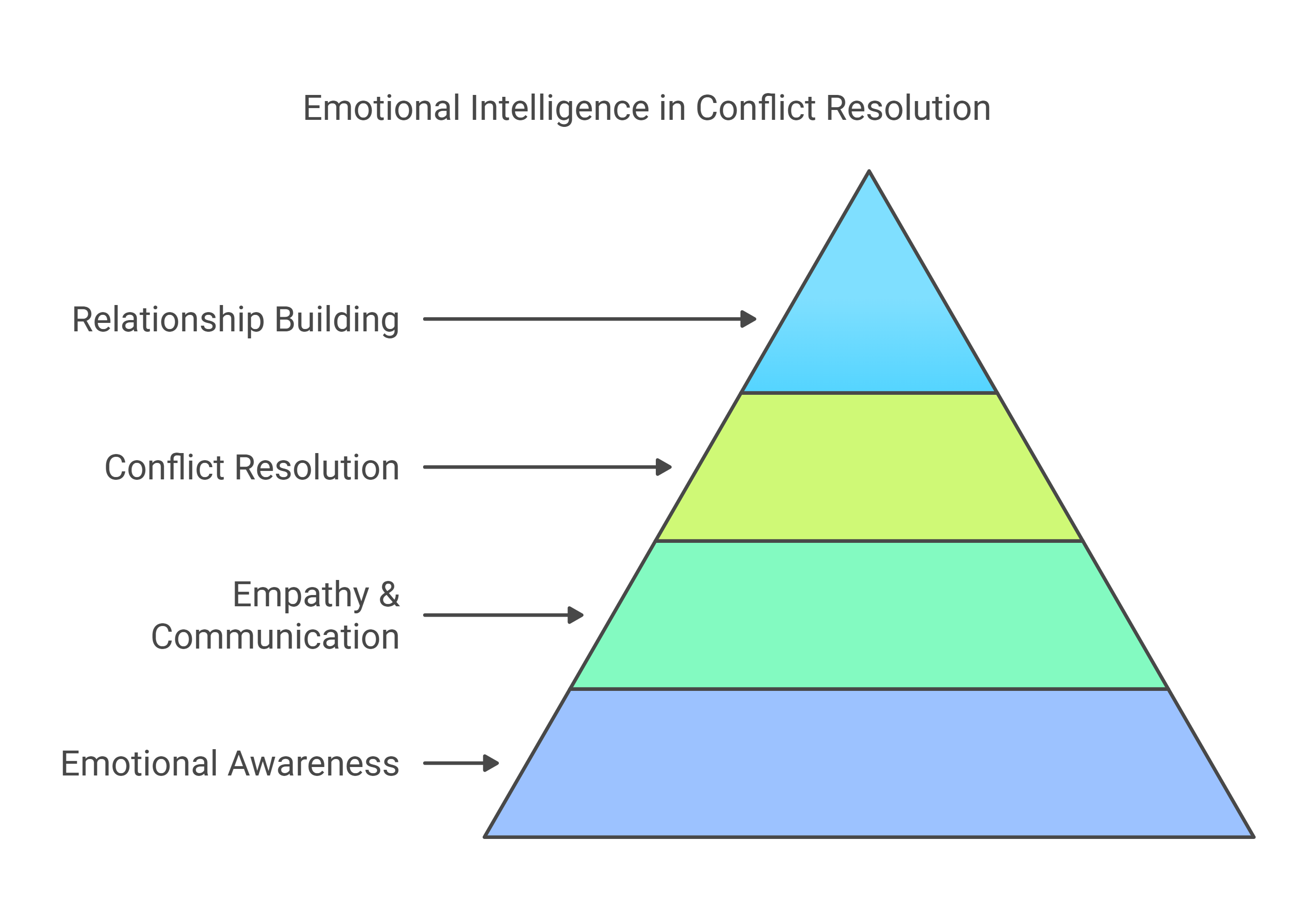
Emotional intelligence plays a pivotal role in addressing and resolving workplace conflicts. It equips individuals with the tools to manage their emotions, empathize with others, and foster open communication.
By leveraging EI, conflicts can be turned into opportunities for understanding and growth, creating lasting professional bonds, ultimately creating a more harmonious workplace where collaboration thrives.
Understanding the Emotional Side of Conflict
Imagine a scenario where a team member missed an important deadline, causing frustration among colleagues. Instead of reacting with anger, you recognize that the missed deadline might be due to personal struggles or a misunderstanding of expectations.
By using emotional intelligence, you could start a conversation with empathy, saying, “I noticed the deadline was missed. Is there something I can do to help moving forward?” This approach opens the door for honest communication and collaborative problem-solving, preventing the situation from escalating.
Emotions play a significant role in workplace disagreements. Anger, frustration, and stress can drive behaviors that escalate conflicts. By recognizing and addressing the emotional underpinnings of disputes, you can prevent misunderstandings from turning into larger issues.
Building Stronger Relationships Through EI
Using emotional intelligence during conflicts helps strengthen workplace relationships. When individuals feel heard and understood, trust and collaboration improve. Empathy, active listening, and respectful communication can turn conflicts into opportunities for growth and deeper connections.
How to Use Emotional Intelligence to Handle Workplace Conflict
Using emotional intelligence to address workplace conflicts can transform tense situations into opportunities for collaboration and growth.
By understanding and managing emotions—both yours and others—you can approach conflicts constructively and build stronger professional relationships.
This section provides actionable strategies to apply emotional intelligence effectively during challenging situations.
1. Practice Self-Awareness
The first step to managing conflict effectively is understanding your own emotions. Ask yourself:
- What am I feeling right now, and why?
- How might my emotions affect my response?
By recognizing your triggers, you can pause and choose a more constructive way to respond. Journaling or reflecting on past conflicts can also help identify patterns in your behavior.
2. Use Empathy to Understand Others

Picture this: during a meeting, a colleague reacts defensively to feedback on their work. Instead of taking their reaction personally, you pause and consider their perspective. Perhaps they’re feeling undervalued or overwhelmed.
By saying, “I can see that this feedback might feel challenging. Can we talk about how we can make this process easier together?” you demonstrate empathy, which can diffuse tension and foster trust.
Empathy is the cornerstone of emotional intelligence. To resolve conflicts, step into the other person’s shoes and try to see the situation from their perspective. Techniques include:
- Active Listening: Pay attention to what the other person is saying without interrupting.
- Clarifying Questions: Ask questions to ensure you understand their concerns.
This approach helps de-escalate tensions and shows that you value their perspective.
3. Communicate with Clarity and Respect
Clear, respectful communication is essential during conflicts. Focus on expressing your thoughts and feelings without assigning blame. For example:
- Use “I” statements instead of “You” statements: “I felt left out when I wasn’t informed about the decision,” rather than “You didn’t tell me about the decision.”
- Maintain a calm tone and body language to create a safe environment for discussion.
4. Manage Stress and Stay Calm
Conflict can be stressful, but staying calm is key to resolving it effectively. Sometimes, a deep breath can save your career and your keyboard from being an innocent victim of frustration. Practice stress management techniques such as:
- Deep breathing exercises to reduce tension.
- Taking a short break to collect your thoughts before re-engaging in the conversation.
- Focusing on the solution rather than dwelling on the problem.
5. Foster Collaborative Problem-Solving
Instead of viewing conflict as a battle to win, approach it as a problem to solve together. Use your emotional intelligence to:
- Identify common goals and interests.
- Brainstorm solutions that address everyone’s needs.
- Build consensus through open dialogue and compromise.
This collaborative approach fosters mutual respect and long-term harmony.
Common Challenges and How to Overcome Them
Even with emotional intelligence, navigating workplace conflicts can be tricky. Challenges such as high-conflict personalities or personal biases can make resolution difficult.
However, understanding these obstacles and applying targeted strategies can help you handle these situations with grace and effectiveness.
This section explores common difficulties and practical ways to overcome them.
Dealing with High-Conflict Personalities
Some individuals may be more difficult to work with due to their combative nature or unwillingness to compromise. In such cases:
- Stay calm and composed, avoiding emotional reactions.
- Focus on facts and solutions rather than personal attacks.
- Set boundaries to protect your emotional well-being.
Overcoming Your Own Biases
We all have biases that can affect how we perceive and respond to conflicts. To overcome them:
- Reflect on your assumptions and ask yourself if they’re influencing your behavior.
- Seek input from a neutral third party to gain a fresh perspective.
- Approach conflicts with an open mind, prioritizing fairness and understanding.
Takeaways
Emotional intelligence is a powerful tool for handling workplace conflicts. By practicing self-awareness, empathy, and effective communication, you can turn disagreements into opportunities for growth and stronger relationships.
The ability to manage emotions and foster collaboration not only resolves conflicts but also creates a more harmonious and productive workplace.
Start applying these techniques today and experience the transformative impact of emotional intelligence.