Workplaces can be stressful. Deadlines, meetings, and long hours leave little room for rest or mental clarity. This often leads to burnout and low job satisfaction.
Creating a mindfulness corner at work can help reduce stress and improve employee well-being. A calm space with soothing colors, natural lighting, and comfortable seating promotes relaxation and focus.
It encourages better stress management while boosting productivity.
This blog will guide you step-by-step in setting up your mindful corner. Discover simple ways to make your workspace more peaceful!
Choose the Right Location
Pick a quiet spot with little foot traffic. A corner away from busy desks or meeting rooms works best. Avoid noisy areas like cafeterias or entryways.
Ensure the space gets natural light during the day. If possible, set it near windows to include sunlight and fresh air. Choose a place that feels calm and welcoming for mindfulness exercises and stress relief activities.
Declutter and Keep the Space Minimal

Clear out extra items to create a peaceful corner. Remove clutter like old files, paperwork, or unused furniture. Too much stuff can overwhelm the senses and distract from mindfulness.
Use simple decor and natural elements such as wood furnishings or indoor plants. Focus on essentials that bring calm, like soft cushions or soothing colors. A clean and minimal space helps reduce stress and promotes mental clarity.
Simplicity is the ultimate sophistication. – Leonardo da Vinci
Add Comfortable Seating
Place cozy chairs or a small sofa in the mindfulness corner. Use soft cushions and throw blankets to make it more relaxing. Comfortable seating helps employees unwind, improving mental clarity and stress reduction.
Opt for furniture made of wood for a natural touch. Earth tones and soothing colors like beige or light gray can enhance tranquility. A comfy space encourages regular use, boosting employee well-being and job satisfaction.
Incorporate Natural Elements
Bring nature inside to create a calming atmosphere. Use simple changes to make the space feel fresh and peaceful.
Indoor plants
Indoor plants can boost mental clarity and reduce stress. Greenery adds life to any workspace while improving air quality. Plants like snake plants or peace lilies are low-maintenance and perfect for offices.
They bring natural elements inside, creating a calming vibe. Studies show that having plants in workspaces increases productivity and job satisfaction. Place them near comfortable seating for a relaxing mindfulness corner atmosphere.
Natural lighting
Sunlight boosts mood and energy while reducing stress. Position the mindfulness corner near windows. Use sheer curtains to let in soft, natural light without glare.
Bright spaces improve mental clarity and job satisfaction. Natural light creates a peaceful atmosphere for mindfulness exercises like meditation or breathing practice.
Use Calming Colors and Decor
Pick soft, soothing colors like light blue, pale green, or beige. These shades can lower stress and help thoughts stay clear. Avoid bright or harsh tones that may cause distraction.
Add simple decor to make the space feel peaceful. Wood furnishings bring natural elements indoors and create calm vibes. Use cozy rugs, soft pillows, or Zen gardens for extra comfort and focus.
Include Tools for Relaxation
Bring items that help calm the mind and reduce stress. These can create a peaceful setting to clear your thoughts.
Aromatherapy diffusers
Aromatherapy diffusers can help with stress relief and mental clarity. They fill the air with soothing scents like lavender or eucalyptus, which promote relaxation. Using essential oils in the workplace may enhance employee well-being and reduce tension.
These tools are small but mighty for creating a calm space. Choose an electric diffuser that’s easy to use. It will keep your mindfulness corner feeling fresh and inviting all day long.
Aromas can also improve focus, making them great for boosting productivity during busy workdays.
Noise-canceling headphones
Noise-canceling headphones help block distractions at work. They improve focus and mental clarity by reducing background noise. Employees can use them during mindfulness exercises or guided meditation.
These headphones are great for stress reduction, as they create a private and quiet space in noisy offices.
Choose high-quality models to ensure comfort for long hours of wear. Many options also play calming sounds like rain or soft music, boosting relaxation further. This small tool supports employee well-being while enhancing job satisfaction and productivity.
Personalize the Space
Add personal touches to make the corner feel inviting. Place photos, small decorative items, or a favorite book on a shelf. Use calming colors like soft blues and greens for pillows or rugs.
Include natural elements such as indoor plants in colorful pots for stress reduction.
Choose decor that suits your style but keeps the space simple. Try adding wood furnishings for a warm, natural vibe. Keep tools for relaxation like noise-canceling headphones neatly stored nearby.
Personalizing leads to better mindfulness and job satisfaction in the workplace environment.
Establish a Routine for Using the Corner
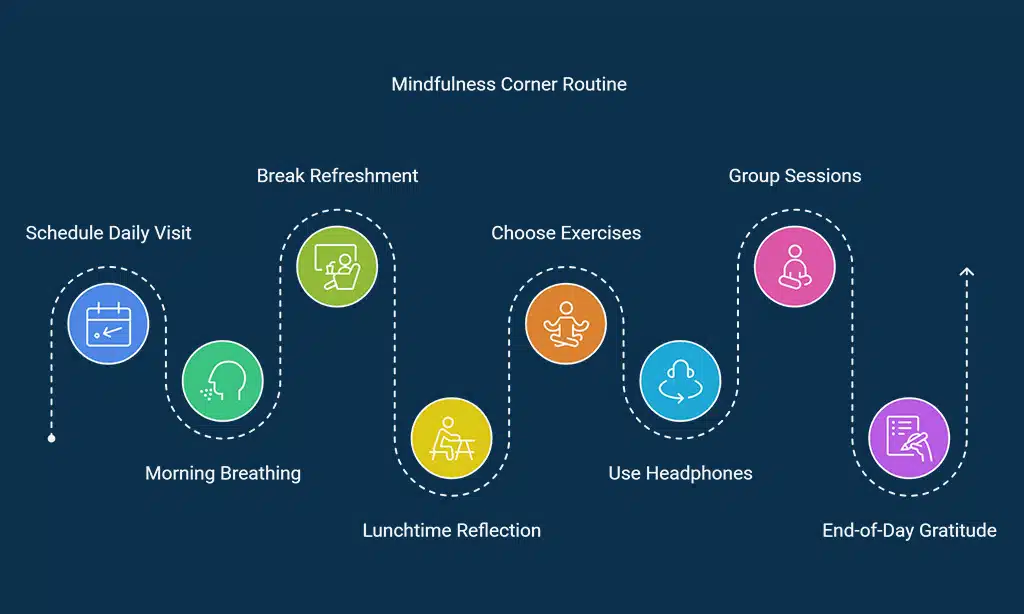
A routine helps make mindfulness a habit. It ensures the space is used regularly and effectively.
- Plan a specific time each day to visit the mindfulness corner. Make it part of your schedule like a meeting.
- Start the day with mindful breathing in the corner to set a calm tone for work. Practice deep breaths for 5 minutes.
- Use the space during breaks to reduce stress and refresh your mind. Even 10 minutes can help with mental clarity and focus.
- Spend lunchtime in the corner for quiet reflection or light stretching exercises to ease tension from sitting too long.
- Choose mindfulness exercises that suit your needs, like meditation or journaling, to enjoy stress relief benefits more deeply.
- Keep noise-canceling headphones handy to block distractions during relaxation sessions in busy times.
- Try group mindfulness sessions occasionally for team bonding and improved employee well-being.
- End your workday with 5 minutes here, focusing on gratitude or planning tomorrow, which boosts job satisfaction.
- Track how often you use this space weekly to build awareness of its importance for corporate wellness and balance.
Keep the Space Clean and Organized
Clean spaces help reduce stress and improve mental clarity. Wipe down surfaces daily to remove dust. Arrange items neatly to avoid clutter. Keep tools for relaxation, like noise-canceling headphones or aromatherapy diffusers, in their proper place.
Use storage bins or shelves for extra supplies. Add a small trash can and empty it often. Encourage everyone to tidy up after using the space. An organized area boosts job satisfaction and supports mindfulness exercises at work.
Encourage Team Participation
Involve everyone in using the mindfulness corner. Team participation increases employee productivity and boosts job satisfaction. Organize group mindfulness exercises like meditation or breathing sessions to reduce stress together.
These activities can help build trust and improve communication.
Invite team members to share ideas for the space. Let them suggest calming colors or recommend natural elements like indoor plants. Their input promotes ownership and ensures the area meets their needs, increasing usage.
A shared routine for its use creates a positive workplace culture focused on employee well-being.
Takeaways
Creating a mindfulness corner can boost calmness and focus at work. A cozy seat, soft colors, and gentle lighting make it inviting. Add plants and calming tools like diffusers or headphones for stress relief.
Keep it tidy and simple for a clear mind. Use the space often to feel its full benefits—better mood, less stress, and more energy!
FAQs on How to Create a Mindfulness Corner at Your Workplace
1. What is a mindfulness corner, and why is it important for the workplace?
A mindfulness corner is a quiet space designed to reduce stress and improve employee well-being. It helps with stress management, mental clarity, and work-life balance while boosting job satisfaction.
2. How can you design an effective mindfulness corner?
Use calming colors like soft blues or greens, add natural elements such as indoor plants, and provide comfortable seating. These create a soothing environment for relaxation and mindfulness exercises.
3. Can a mindfulness corner improve employee productivity?
Yes, it can! Stress relief through meditation benefits employees by improving focus, decision-making skills, memory retention, and overall mental clarity—all of which enhance productivity.
4. What are some features to include in a workplace meditation room?
Include noise-canceling headphones for quietness, nap pods for rest breaks, soothing lighting or candles for calmness, and tools for physical activity like yoga mats or light fitness equipment.
5. How does creating this space impact employee retention?
Providing areas that support stress reduction shows care about employees’ physical health and emotional needs. This increases job satisfaction—leading to better employee retention rates over time.