Listen to Podcast:
Family members can affect you in more ways than you might realize. Whether you’re close or not, the energy they put out can have effects, good or bad. As a result, it’s no wonder that your family can play a role in your mental health.
However, there are multiple ways family can contribute to the state of your mental well-being. Sometimes it’s hard to realize how someone is affecting you until you take a deeper look. Yet, this requires knowing what things to look for. Keep reading to learn some of the top ways family can influence your mental health.
1. Family Might Hold You Back from Getting Help
Unfortunately, not everyone has the most encouraging family members. Maybe your parents don’t believe in therapy or your siblings would tease you about it. These are continuations of old stereotypes about people who seek help for their mental health.
Lots of people still make jokes about going to the ‘loony bin’ or use derogatory names, like ‘shrink,’ to describe therapists. However, these are misunderstandings about treatment, which is proven to work. These jokes are often deeply rooted in insecurity, coming from a time when nobody wanted to be seen getting help.
Luckily, times are changing, and there are more supportive people out there. Some of your relatives might not be on board yet, but that shouldn’t be something you need to worry about. You need to do what’s best for you, and if that involves seeking mental health treatment, don’t let anybody stop you.
2. Mental Health Challenges Might Be Genetic
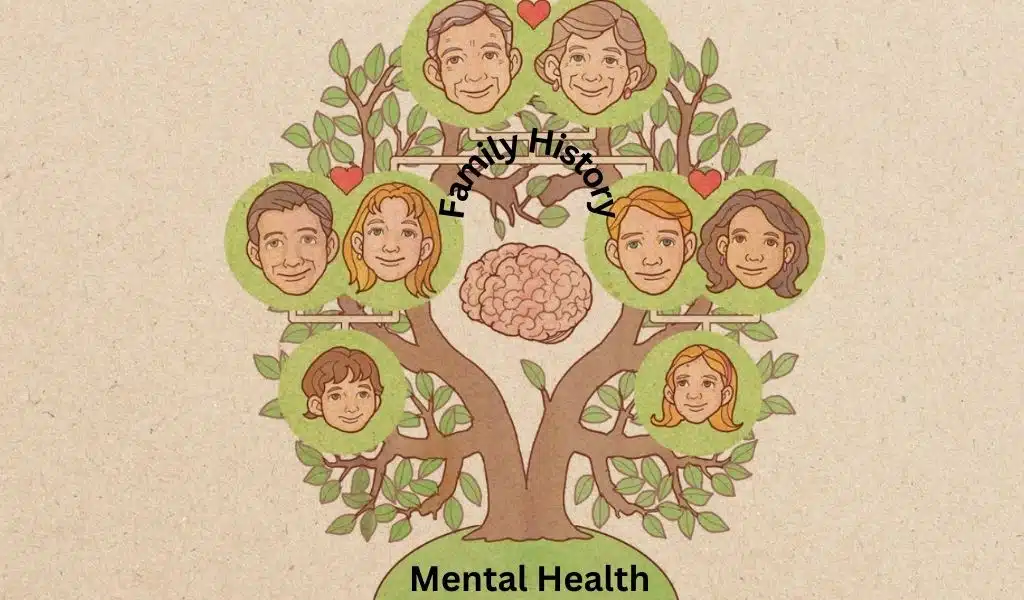
Sometimes, mental health disorders can be attributed to chemical imbalances. In other words, your hormones might be naturally off-balance. This doesn’t mean anything is wrong with you; it just means that you might have a higher risk of depression or anxiety. And, most of the time, these chemical imbalances are genetic.
A study from Stanford University found that people who have depressed relatives are two to three times more likely to also be depressed. Not everyone shares their personal struggles with their family, so you might not know if a relative has depression or anxiety. However, you might be able to pick up on patterns.
So what does this mean for you? Unfortunately, there’s no way to ward off a chemical imbalance. It just happens — and that’s okay. Finding some kind of treatment is a good idea, especially for situations where you might feel helpless. Seeing a therapist and potentially taking antidepressants could help significantly.
3. Your Environment Can Be Contributing
Ever heard that phrase, ‘sins of the father are sins of the son?’ It means that children often suffer from the bad things that their parents do. Yet, this is true for both positive and negative traits. For example, if one person grows up around a parent who loves to bake, they’re more likely to also love baking. However, taking this a step further, someone who grows up in an abusive household might not be able to easily distinguish unacceptable behavior.
This is linked to how people deal with their stressors. Someone who grows up around relatives who have unhealthy habits or coping mechanisms might inherit these strategies. Think about it like having a bad teacher in school. If the teacher doesn’t know the material, how are they supposed to help you learn it?
That doesn’t mean that you’ll end up just like your parents, for better or for worse. It just means that how you’re raised and what people you’re around could affect you. If this is similar to your situation, don’t fret. Luckily, you have free will, and you can choose to be different. You might need some help along the way. It can be tough figuring out how to be a good parent if you never had one. But, that doesn’t mean it’s impossible.
4. Your Family Might Give Bad Advice
It’s always good to have a support system, especially if those people truly understand what you’re going through. However, not all advice is good advice. As mentioned above, some people don’t know how to properly handle stress, and they might use unhealthy coping methods. When you ask for advice from someone like this, their answer might not be the best idea.
Finding out who to ask advice from can help with this. Surveying how your friends or relatives handle stressful situations is the key. If you have a gut feeling that what they’re advising you to do is not the right answer, don’t do it.
But remember, you have to cut them some slack. People aren’t usually aware of their bad habits. This is why seeking mental health treatment is so important. Without a fresh pair of professional eyes on the outside, it might end up like a big game of telephone. What one generation thinks is good advice will be passed on to the next, and the next, and so on. It’s not your responsibility to end the cycle, but it can help you in the long run.
It Can Be Complicated
There are many ways family members can pass on traits to each other, whether genetic or not. You might have gotten your mom’s eyes or your dad’s hair. And unfortunately, you might have gotten Grandpa’s bad temper. Or your aunt’s tendency to reach for the wine. It differs from person to person and family to family.
But, remember the bottom line — it doesn’t mean you’ll be a carbon copy. If you’re starting to notice any unhealthy habits you’ve picked up, it’s time to talk to a professional. This isn’t meant to be a scary thing, either. Being able to identify traits before they become a problem can be a lifesaver.
It’s also nice to know if you’re predisposed to act a certain way, or naturally have a higher risk for depression. Part of becoming the best version of yourself is by understanding yourself and your family history.