

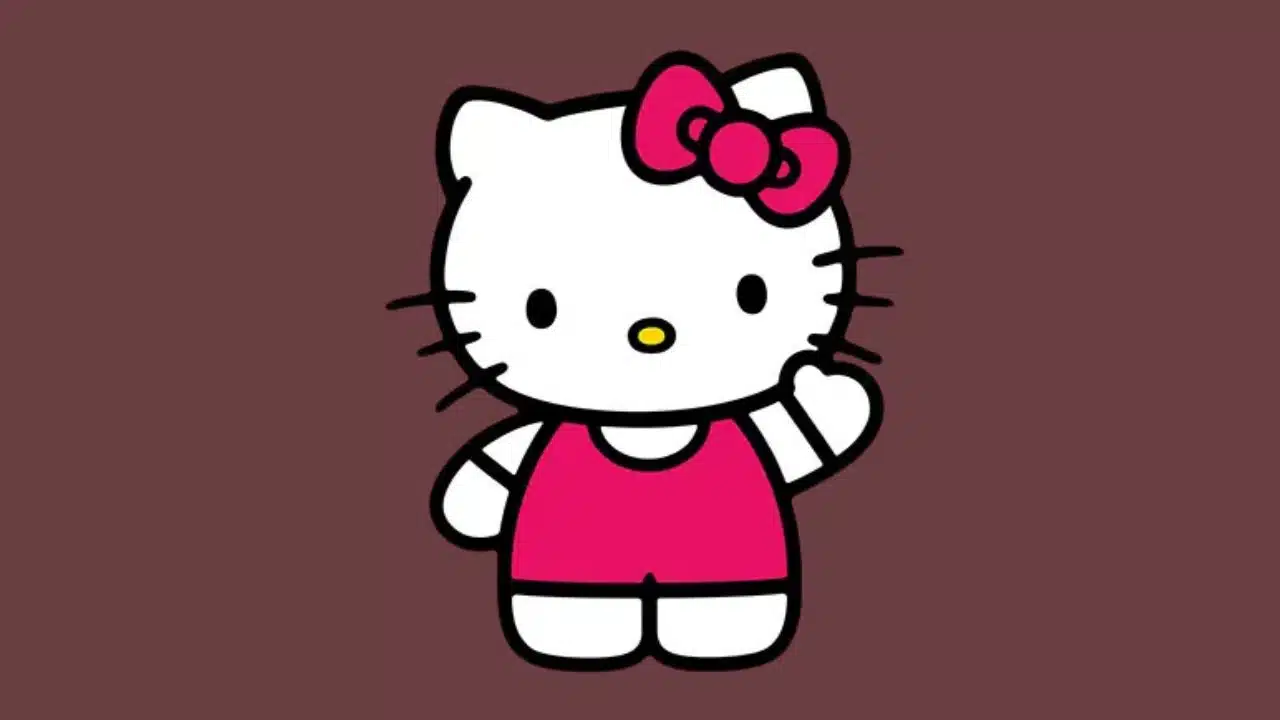
Warner Bros. Pictures and New Line Cinema have officially greenlit their cinematic future for a global icon, announcing that the ‘Hello Kitty’ movie sets July 2028 release date, landing on July 21, 2028. The announcement, made via a simple “Hello Hollywood” social media post, ends years of speculation and fires the starting pistol on what the studio hopes will be its next billion-dollar, IP-driven franchise, closely following its own record-shattering Barbie playbook.
The film, which will be an animated feature, marks the first-ever major English-language Hollywood debut for Sanrio’s flagship character, 51 years after her creation. The project is backed by high-profile talent, including producer Beau Flynn (FlynnPictureCo.)—who reportedly spent nearly a decade securing the complex rights—and a creative team led by director Leo Matsuda (Disney’s Oscar-nominated short Inner Workings) and screenwriter Dana Fox (Wicked, Cruella).
This 2028 release date positions Hello Kitty as a major summer tentpole. It signals a massive strategic pivot for Sanrio, moving its most valuable asset from a merchandise-first empire into a narrative-driven, cinematic universe, a high-stakes gamble that could redefine the brand for the next 50 years.
The ‘Barbie’ Blueprint: Replicating a $1.4B Success
The shadow of Barbie looms large over this announcement, and for Warner Bros., that is entirely the point. The 2023 cultural and financial juggernaut, which turned a Mattel doll into a $1.44 billion global phenomenon, provided a clear, replicable template: take a ubiquitous, female-centric consumer brand, attach high-level, prestige talent, and create a four-quadrant film that appeals to both nostalgic adults and a new generation of children.
The parallels are impossible to ignore. Like Barbie, Hello Kitty is a non-media-native IP that thrives on brand identity rather than a specific story. The hiring of Dana Fox, fresh off the success of Wicked and Cruella, suggests Warner Bros. is aiming for a sharp, witty, and visually spectacular narrative rather than a simple children’s cartoon.
The financial incentive is staggering, providing the first clear data point for this strategy:
- The Barbie (2023) Benchmark: Produced on a budget of approximately $145 million, Greta Gerwig’s Barbie went on to gross $1.447 billion worldwide. It became Warner Bros.’ highest-grossing film of all time.
By dating Hello Kitty for the prime summer 2028 corridor, Warner Bros. is signaling it expects a blockbuster of similar proportions. The three-year development runway allows ample time for meticulous production, animation, and a global marketing blitz.
However, the Hello Kitty project faces unique creative challenges Barbie did not. The central character is famously (and intentionally) silent, designed without a mouth. In an official studio statement accompanying the announcement, the film was described as one where “Hello Kitty and her friends embark on a cinematic adventure sure to delight audiences of all ages. This phrasing, and the lack of clarity on whether Kitty will speak, remains the central creative mystery.
Experts suggest the Barbie model allows for a “meta” approach, where the film could directly address her silence and brand identity. But the more likely path, given the animation format, is a more straightforward fantasy-adventure.
A Decade-Long Quest and a Potential ‘Sanrio Cinematic Universe’
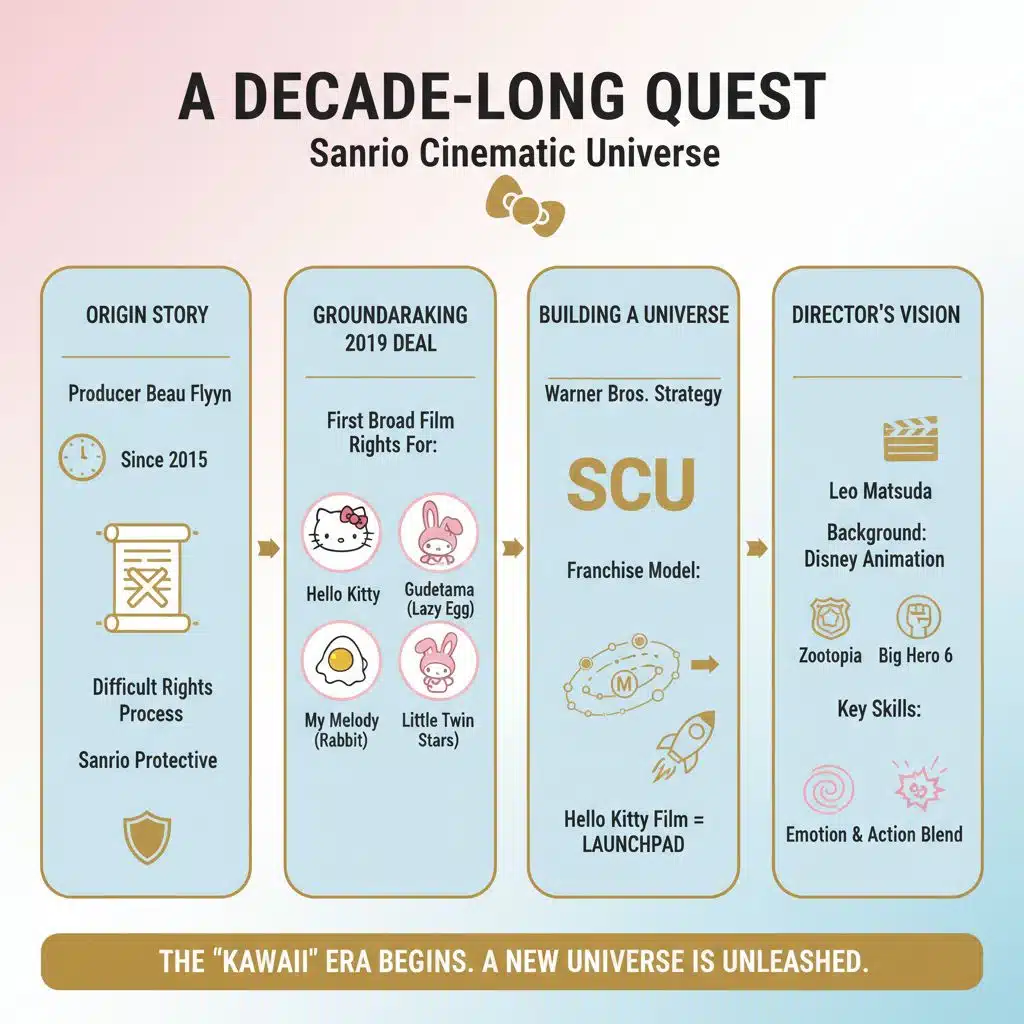
This film is not a knee-jerk reaction to Barbie’s success. Producer Beau Flynn has been on a persistent quest to bring Hello Kitty to the screen since at least 2015. Securing the rights from Sanrio was a famously difficult process, as the Japanese parent company has historically been fiercely protective of its flagship character, preferring to license her image for merchandise rather than risk a poor cinematic portrayal.
This 2019 deal, which has now borne fruit, was groundbreaking. It was the first time Sanrio had granted broad film rights to Hello Kitty, along with rights to its other popular characters, including:
- Gudetama (the lazy egg)
- My Melody (the rabbit)
- Little Twin Stars
This crucial detail suggests Warner Bros. is not just building a movie; it is building a universe. The studio is almost certainly planning a “Sanrio Cinematic Universe” (SCU), a cross-pollinated franchise model popularized by Marvel. This Hello Kitty film is the launchpad, the Iron Man for a multi-billion-dollar “kawaii” (cute) franchise.
The project’s director, Leo Matsuda, is a significant choice. His background at Disney Animation, particularly on hits like Zootopia and Big Hero 6, demonstrates a mastery of world-building and blending emotion with high-energy action—essential skills for launching a new animated universe.
The Data: Why Film is the Final Frontier for a Merch Empire
While Barbie is the creative model, other IP-based films provide critical financial data points—both as models for success and as cautionary tales.
Sanrio’s business is not movies; it’s merchandise. The Hello Kitty brand is one of the highest-grossing media franchises in history, estimated to have generated over $80 billion in lifetime retail sales, primarily from licensing. The movie, even if it grosses $1 billion, is secondary to its primary function: to act as a global, two-hour advertisement that will reinvigorate merchandise sales for decades.
This strategy is proven:
- The Cars (2006) Model: While Pixar’s Cars films were box office hits, their true value was in merchandise. In the five years following the first film’s release, the Cars franchise generated over $8 billion in global merchandise sales. This is the long-term prize Sanrio and Warner Bros. are chasing.
However, the path is not without risk. Success requires more than just a famous name.
- The Detective Pikachu (2019) Precedent: This Warner Bros. film is perhaps the most direct comparison: a hybrid adaptation of a beloved, non-speaking Japanese character. It was a solid success, grossing $450 million worldwide on a $150 million budget. It proved that kawaii culture can translate to a global audience, but it did not reach the billion-dollar heights of Barbie or Marvel.
- The Lightyear (2022) Caution: Pixar’s Lightyear serves as a stark warning. Despite being tied to the beloved Toy Story franchise, the film was a box office bomb, grossing only $226.4 million globally on a $200 million budget. It demonstrated that brand association alone is not enough; the core concept and execution must resonate with audiences.
What to Watch Next
With a July 2028 release date now locked, the production will move into high gear. The key milestones to watch for over the next 18-24 months will be:
- The Voice: The casting of Hello Kitty’s voice (if she has one) will be the single most-watched decision, defining the film’s tone.
- Format Confirmation: While announced as animated, any shift to a live-action/animation hybrid (like Detective Pikachu) will be significant.
- Supporting Cast: The announcement of which “friends”—My Melody, Keroppi, Badtz-Maru, or Gudetama—will appear will confirm the “SCU” ambitions.
Ultimately, Warner Bros. has secured one of the last great “white whale” IPs in the world. On July 21, 2028, the studio will find out if they have captured the next Barbie or a costly, beautifully animated misfire.
The Information is Collected from Variety and Yahoo.
























