The construction industry faces a big problem. Traditional portland cement concrete creates massive carbon emissions and hurts our planet. Every year, cement production pumps out 5-10% of all global greenhouse gas emissions.
That’s like having millions of extra cars on the road.
Here’s some good news: geopolymer concrete can cut carbon emissions by up to 80% compared to ordinary portland cement. This green building material uses industrial by-products like fly ash and blast furnace slag instead of traditional cement.
Our guide shows you eight key benefits of geopolymer concrete for US green projects. You’ll learn how this sustainable building material saves money, protects the environment, and builds stronger structures.
Ready to discover the future of concrete?
Key Takeaways
- Geopolymer concrete cuts carbon emissions by 80% compared to regular cement, producing only 117.5 kg CO₂/m³.
- This green material uses industrial waste like fly ash and slag instead of mining fresh limestone and clay.
- Geopolymer concrete lasts 10 times longer than regular concrete and reaches 4,060.8 psi strength in 28 days.
- Construction teams can remove forms faster because geopolymer concrete gains 2,420.5 psi strength in just three days.
- The material resists acids, chemicals, and extreme temperatures while keeping millions of tons out of landfills yearly.
How does geopolymer concrete reduce carbon emissions by up to 80%?
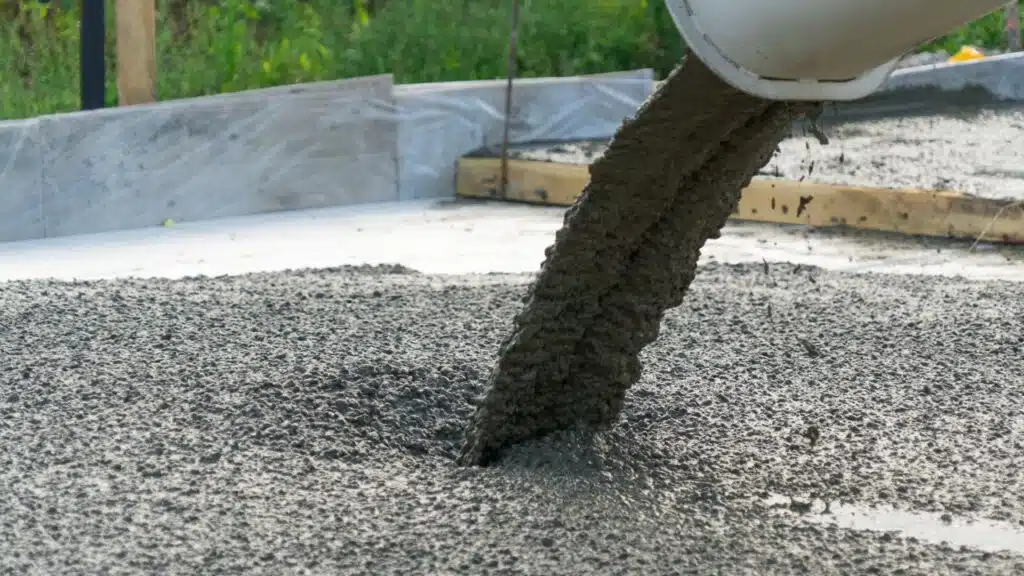
Geopolymer concrete slashes carbon dioxide emissions because it skips the energy-hungry cement kiln process. Traditional portland cement production burns limestone at scorching temperatures, pumping massive amounts of CO₂ into our atmosphere.
GPC takes a different path, using industrial by-products like fly ash and ground granulated blast furnace slag that would otherwise sit in landfills. These materials get activated with sodium hydroxide or potassium hydroxide at room temperature, cutting out the need for those carbon-spewing kilns entirely.
The numbers tell a compelling story about this green building material’s environmental impact. GPC produces just 117.5 kg CO₂/m³ compared to ordinary portland cement’s hefty 191.3 kg CO₂/m³, delivering a 38.6% reduction in carbon footprint.
Life cycle assessment studies show geopolymer concrete can slash embodied carbon by up to 45% compared to conventional concrete. This sustainable construction material transforms waste streams into valuable building components, creating a win-win situation for both the construction industry and our planet’s climate goals.
Why does geopolymer concrete use industrial by-products?
Industrial by-products form the backbone of geopolymer concrete production. Coal fly ash and ground granulated blast-furnace slag serve as the primary raw materials for this sustainable building material.
These by-products come from coal power plants and steel manufacturing facilities. Class F fly ash provides the aluminosilicate precursors needed for the chemical reaction. Ground granulated blast-furnace slag improves early strength and enables ambient curing conditions.
Manufacturing companies generate millions of tons of these materials each year as waste. Traditional disposal methods send these by-products to landfills, creating environmental problems.
Geopolymer concrete transforms this waste into valuable construction materials. Rice husk ash from agricultural processes also works as an effective ingredient. Red mud from aluminum production adds to the mix of available industrial byproducts.
This approach drives carbon-negative sustainable construction while solving waste management challenges. Using globally available minerals and industrial by-products makes geopolymer concrete production feasible worldwide.
How does geopolymer concrete conserve natural resources?
Geopolymer concrete (GPC) works like nature’s recycling champion. It uses industrial by-products instead of mining fresh limestone, clay, and sand from the earth. Traditional cement manufacturing drains these natural reserves at an alarming rate.
GPC flips this script completely. Fly ash, silica fume, and other recycled materials become the building blocks. This approach saves precious natural resources for future generations.
GPC’s production process sips water like a careful gardener. The water-to-binder ratio drops to just 0.18, which conserves water resources significantly. Superplasticizer dosage stays at 1.5% by binder mass, optimizing every drop of material used.
Local aggregates cut down transportation needs too. The dense microstructure forms through recycled mineral use, making each pound of material work harder. This green building material avoids extracting virgin raw materials that ordinary portland cement demands.
Every batch of GPC means fewer quarries, less mining, and more natural landscapes left untouched.
How does geopolymer concrete help minimize landfill waste?
Geopolymer concrete (GPC) transforms industrial waste into valuable building materials. Coal and steel manufacturing create massive amounts of fly ash and other by-products. These materials usually end up in landfills, taking up space for decades.
GPC uses these industrial by-products as main ingredients. This process keeps tons of waste out of landfills every year. Steel plants and power stations now see their waste become useful construction materials.
Green building projects benefit from this circular economy approach. On-site production and pre-mixed component shipping help construction teams manage waste better. Custom mixes reduce excess material waste on job sites.
Repair and restoration projects using GPC extend building lifespans, which cuts down demolition waste. This approach supports LEED environmental certifications. Research teams work to expand recyclable materials in GPC formulas, making landfill waste reduction even better.
What makes geopolymer concrete more durable?
Geopolymer concrete (GPC) creates a denser microstructure that makes it incredibly tough. Studies show green concrete can last over 10 times longer than traditional concrete. This happens because fly ash and other industrial by-products form stronger chemical bonds than ordinary portland cement (OPC).
The material shows better sulfate resistance due to low CaO content, with fly ash containing just 7.1% compared to 43.1% in other materials. This chemical makeup fights off degradation from harsh environments.
GPC exhibits high durability and minimal maintenance requirements throughout its lifespan. The concrete matches or exceeds OPC in compressive, tensile, and flexural strength at all measured ages.
At 28 days, GPC reaches 4,060.8 psi compressive strength while OPC hits 4,065.66 psi. More importantly, GPC shows lower strength variation and more consistent performance than traditional concrete.
The splitting tensile strength reaches 4.3 MPa compared to OPC’s 3.9 MPa. Flexural strength also wins at 4.81 MPa versus OPC’s 4.3 MPa. This superior mechanical performance means fewer repairs and longer-lasting structures for sustainable construction projects.
How does geopolymer concrete resist extreme conditions?
Geopolymer concrete (GPC) stands strong against harsh conditions that would damage regular concrete. This green building material resists chlorides, sulfates, acids, and freeze-thaw cycles with ease.
GPC shows superior resistance to sulfate and acid attacks compared to ordinary portland cement. The material also handles high temperatures better than traditional concrete. Its dense microstructure provides enhanced protection against chemical ingress, making it perfect for tough jobs.
Industrial applications love GPC because it works well in corrosion-prone areas. Offshore projects and chemical plants use this sustainable construction material for its chemical resistance.
GGBFS addition improves the microstructure even more. GPC exhibits low chloride ion penetration, which means longer service life in harsh environments. ASTM C1157 compliance testing proves GPC can handle acids, chlorides, sulfates, and extreme temperatures.
Fiber reinforcement makes the material even tougher against extreme conditions.
Why does geopolymer concrete gain strength faster to speed up construction?
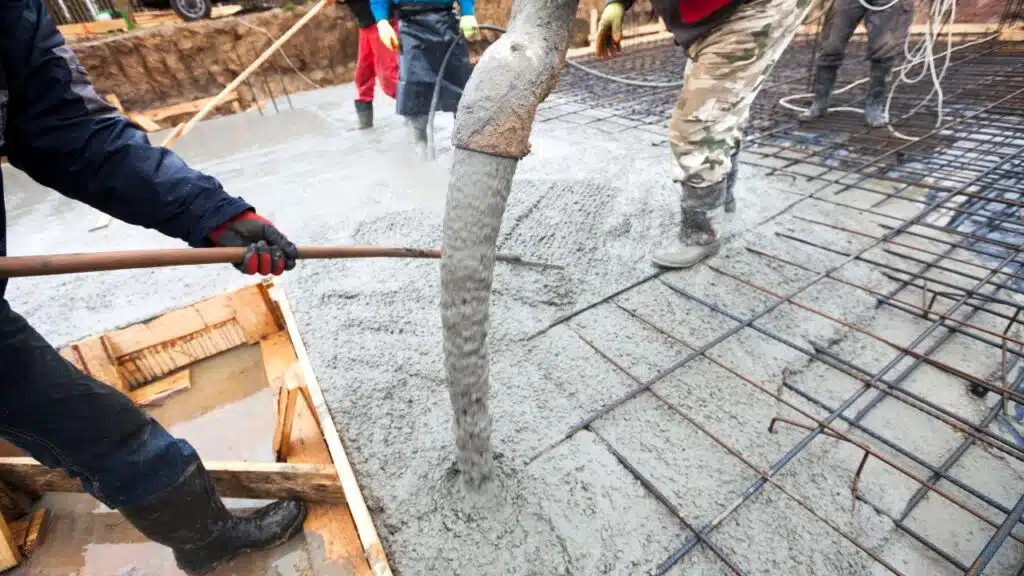
Geopolymer concrete (GPC) reaches impressive strength levels in just three days. Test results show GPC achieves 2,420.5 psi compressive strength by day three, while ordinary portland cement (OPC) only reaches 1,404.7 psi.
This rapid early strength development comes from the chemical reaction between alkaline activators like sodium hydroxide and aluminosilicate precursors. The low water-to-binder ratio of 0.18 helps create this fast strength gain.
Construction teams can remove formwork earlier and move to the next phase faster. The mix design includes naphthalene-based superplasticizer to maintain a 75-100 mm slump for easy placement.
Higher NaOH molarity increases early strength even more. Ground granulated blast furnace slag (GGBFS) addition improves early strength and allows ambient curing. This means no special heating or steam curing is needed.
Projects finish weeks ahead of schedule, saving money on labor costs and equipment rental. The sustainable construction material delivers both speed and environmental benefits for green building projects.
How does geopolymer concrete improve energy efficiency during production?
Geopolymer concrete (GPC) transforms the construction industry through its energy-efficient production process. Traditional portland cement requires extreme heat above 2,300°F during manufacturing, consuming massive amounts of energy.
GPC achieves strength without this extreme heat, dramatically cutting energy consumption. The production process uses low energy and water consumption compared to ordinary portland cement (OPC).
Manufacturing facilities can produce GPC using traditional ready-mixed facilities, eliminating the need for new plant construction that would consume additional energy.
Production flexibility makes GPC even more energy-efficient for sustainable construction projects. On-site production options minimize transportation energy while pre-mixed component shipping reduces fuel consumption.
Ambient curing with ground granulated blast furnace slag (GGBFS) can reduce or eliminate heat curing requirements of 60-80°C. Superplasticizers at 1.5% by binder mass optimize workability without additional energy input.
This energy efficiency supports green building certifications like LEED, helping projects meet sustainability goals while reducing their carbon footprint and environmental impact.
Takeaways
Green concrete transforms how America builds. This sustainable construction material cuts carbon dioxide emissions by 80% while using industrial waste products. Builders get stronger structures that last longer than ordinary portland cement options.
Fire resistance and chemical resistance make these materials perfect for tough projects. Construction teams finish work faster because the concrete gains strength quickly. The circular economy benefits when fly ash and other wastes become valuable building materials instead of filling landfills.
FAQs
1. What makes geopolymer concrete better than ordinary portland cement for green projects?
Geopolymer concrete cuts CO2 emissions by up to 80% compared to regular portland cement. It uses industrial by-products like fly ash and silica fume instead of energy-hungry materials. This switch helps fight climate change while building strong structures.
2. How does geopolymer concrete help reduce carbon footprint in construction?
This green building material slashes carbon dioxide emissions because it skips the high-heat process needed for ordinary portland cement (OPC). The production uses less embodied energy and turns industrial wastes into valuable construction materials.
3. What industrial by-products go into making geopolymer concrete?
Fly ash from power plants is the main ingredient, along with silica fume and rice husk ash (RHA). These industrial byproducts would otherwise sit in landfills, but geopolymer cement gives them new life in the circular economy.
4. Does geopolymer concrete (GPC) perform as well as traditional concrete?
Yes, it often beats regular concrete in compressive strength and mechanical performance. The material shows excellent chemical resistance, acid resistance, and fire resistance too. Some types even match ultra-high-performance concrete standards.
5. How do alkaline activators work in geopolymer concrete production?
Sodium hydroxide and potassium hydroxide mix with sodium silicate to activate aluminosilicate precursors. This chemical reaction creates strong bonds without needing the high temperatures that regular cement requires. The process is like baking a cake, but at room temperature.
6. Can artificial intelligence and machine learning improve geopolymer concrete for sustainable construction?
Smart technology helps optimize mix designs and predict long-term durability of these sustainable construction materials. AI can analyze how different combinations of recycled aggregates and activators affect heat resistance and environmental impact, making the construction industry more efficient.