


Leaders in major companies face growing pressure in today’s fast-paced business landscape. They must handle challenges that test their judgment, strategic planning, and people skills. Executive coaching has emerged as an essential resource for these leaders, which provides guidance that complements their accumulated experience and technical expertise. This practice refines leadership qualities and prepares executives for unforeseen obstacles and opportunities in dynamic markets. This article examines the reasons behind the growing investment in coaching among top-tier companies and the positive outcomes that can result from it.
Enhancing Leadership Skills
A central element of the best executive coaching programs is the focus on essential leadership qualities. Coaching sessions aim to sharpen skills such as communication, decision-making, and emotional understanding, which are crucial in the daily operations of a high-caliber leader. Coaches work closely with individuals to review personal strengths and identify areas that need attention. This interaction brings a deeper insight into leadership style and helps revise approaches when faced with demanding business situations. As a result, leaders are better prepared to navigate complex scenarios and lead their teams with clarity and resolve.
Promoting Self-Awareness
Self-awareness is a vital trait for those in leadership positions. Leaders who understand their strengths, weaknesses, and emotional responses are more likely to make sound decisions and nurture constructive relationships. Coaches engage in reflective conversations with executives, which invites them to look at their behaviors and interactions from new perspectives. Through candid feedback and regular reflection, executives better understand how their actions influence their surroundings. This newfound self-awareness supports thoughtful behavior in professional settings, which leads to improved relationships and a more balanced work atmosphere.
Driving Organizational Change
Business environments are in constant motion due to technological shifts, market trends, and consumer expectations. Leaders must remain prepared to guide their companies through change and uncertainty. Coaching provides a structured framework for understanding change as an ongoing process rather than a one-time event. Through personalized guidance, executives learn to communicate change initiatives in a way that inspires trust and cooperation among team members. In addition, coaching helps leaders recognize signs of potential disruptions, which enables them to adapt their strategies and maintain stability during transitions. This readiness to handle change plays a crucial role in the long-term stability of an organization.
Enhancing Development Processes and Outcomes
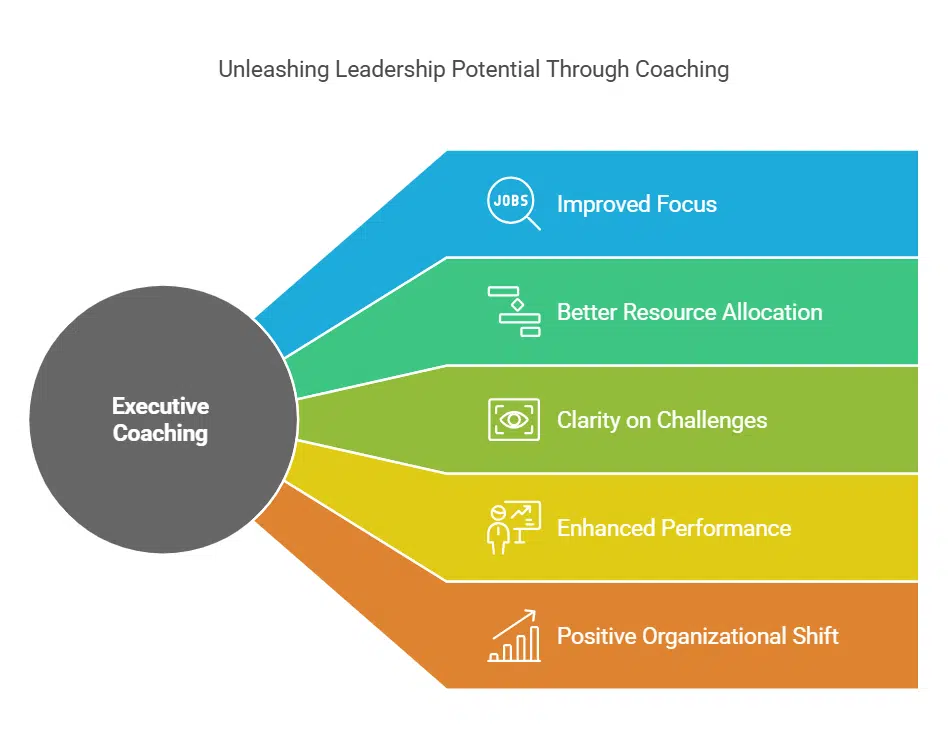
There is a constant quest for improved performance and productivity in the competitive business world. Executive coaching directs a leader’s focus toward what truly matters, which enables a more precise allocation of time and resources. Leaders gain clarity on which challenges require immediate attention and which they can address later. With guidance from a coach, they can identify obstacles that hinder progress and work on plans to remove these barriers. As the leader becomes more attuned to their personal and team performance, overall outcomes in the workplace show noticeable improvement—this targeted approach to development results in a positive shift in organizational performance.
Improving Emotional Intelligence
Understanding and managing one’s own emotions and the feelings of others is a cornerstone of successful leadership. A high level of emotional intelligence supports better communication, reduced workplace tension, and a smoother handling of conflicts. Coaching sessions focus on building this intelligence by exploring scenarios challenging a leader’s ability to remain calm and considerate under pressure. Through deliberate practice and reflection, leaders develop the skills necessary to build stronger personal connections within their teams. The increased focus on emotional understanding contributes to a more supportive work environment and higher employee commitment.
Encouraging a Culture of Lifelong Learning
Even the most prominent companies recognize that personal development does not end with a promotion. The commitment to continual learning ensures leaders remain knowledgeable about the latest industry trends and innovations. Executive coaching programs encourage a mindset of constant improvement, where learning becomes a natural part of professional life. Exploring new ideas and perspectives during coaching sessions reminds executives of ongoing growth. This dedication to learning helps leaders stay adaptable in an ever-changing business landscape, which prepares them for future challenges and opportunities.
Enhancing the Process of Succession Planning
A company’s strength ties closely to its ability to prepare the next generation of leaders. Coaching plays an essential role in this process by guiding promising talent to understand the demands of higher responsibilities. Rising leaders learn the skills necessary to transition into more senior roles through targeted sessions. Coaches work with these individuals to clarify career goals, pinpoint essential skills, and build the confidence needed for new challenges. This preparation benefits the individual and contributes to a smoother transition when key positions become available within the organization.
Encouraging Innovation and Creativity
Innovation is a key ingredient for long-term success in competitive markets. Executive coaching encourages leaders to think in new ways and challenge established routines. Instead of relying solely on traditional methods, leaders must consider alternative approaches and creative solutions that can lead to breakthrough ideas. This willingness to explore unconventional paths often results in fresh perspectives that can revitalize a company’s product, service, or internal process strategy. The influence of a coach in this area helps to create an environment where they welcome and practice creative thinking regularly.
Improving Your Decision-Making Skills
Decision-making remains at the heart of leadership—the challenges of modern business demand that leaders weigh multiple factors before making a choice. Coaching sessions prompt leaders to examine problems from various viewpoints and consider long-term consequences. The process encourages deeper analysis and a broader understanding of the situation. Leaders learn to balance risks with rewards and align their choices with the organization’s goals. This careful consideration during decision-making leads to more informed and balanced decisions that support business objectives.
Boosting Employee Engagement
Employees who feel recognized and involved show outstanding commitment to their work. Leaders who engage in coaching are better prepared to build a work environment where communication is clear, and relationships are strong. When leaders pay attention to the needs of their teams, employees are more likely to invest themselves in their roles. As the workplace becomes more connected, the organization’s overall performance improves through its people’s active involvement.
Conclusion
Fortune 500 companies invest in executive coaching to support and enhance the leadership qualities of their top talent. Through targeted guidance in communication, self-awareness, and decision-making, coaching provides a solid framework for personal and professional growth. Leaders learn to navigate change, cultivate continuous learning, and prepare for future responsibilities while creating an environment where new ideas and practical solutions thrive. This commitment to developing leadership qualities lays the groundwork for continued success and stability within these large organizations.






















