

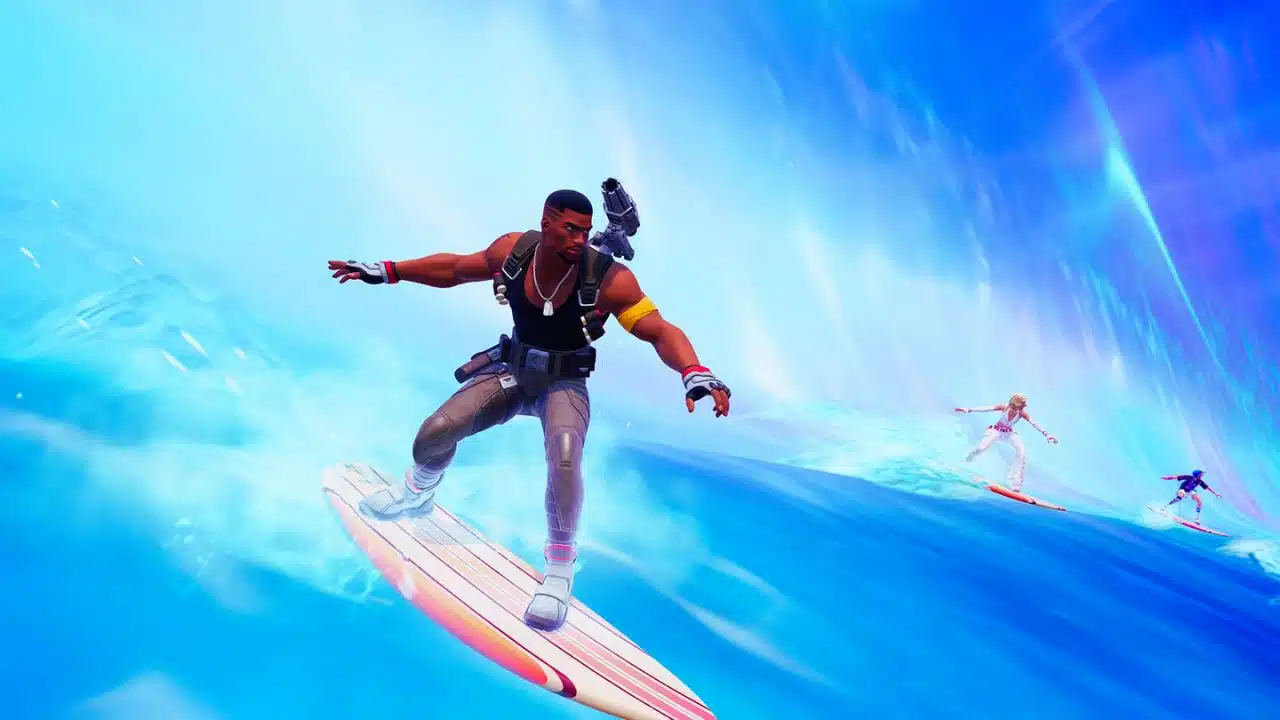
Fortnite’s newly launched Chapter 7 has sparked a backlash from parts of the community, with players accusing Epic Games of quietly filling the game with generative AI artwork and AI slop. The controversy has triggered boycott calls, debates over artistic integrity, and renewed scrutiny of Epic CEO Tim Sweeney’s recent comments downplaying the need for AI disclosure in games.
How the backlash began
Chapter 7 went live over the weekend with a new map, refreshed loot pool, and a battle pass stacked with big-name crossovers, but attention quickly shifted to strange-looking environmental art and cosmetics. On Reddit and social media, players began compiling screenshots of suspicious images and arguing that a billion‑dollar game should not be cutting corners by relying on generative AI instead of commissioning human artists.
A key rallying point was a viral thread urging fans to say no to AI slop, framing the issue as a line in the sand over the future of skins, posters, sprays, and even music tracks in the game. Some posts framed the use of alleged AI assets as disrespectful to artists and warned that if players accept this now, more core cosmetics could be automated in future seasons.
The images under suspicion
The most-circulated example is an in‑game poster showing a yeti lounging in a hammock, where one foot appears to have five toes and the other only four, a kind of anatomical glitch often associated with consumer AI art tools. Players cite this, along with other odd visual details and texture inconsistencies, as evidence that at least some of Chapter 7’s environmental art is machine‑generated rather than hand‑drawn.
Fans also flagged an anime‑style Marty McFly spray from the Back to the Future collaboration, arguing that its look resembles popular Ghibli‑style AI filters that circulated online earlier this year. In response, the illustrator behind that image publicly shared process evidence showing the layers and brushwork, insisting the character art was drawn by hand and suggesting that only some background elements—such as stock clocks—might have originated from AI‑tainted sources.
Epic’s silence and Sweeney’s AI stance
So far, Epic Games has not issued a clear statement confirming or denying whether any specific Chapter 7 assets were generated with AI tools, leaving the community to argue based on visual clues and speculation. That vacuum has magnified attention on Epic CEO Tim Sweeney’s recent stance that labeling games as made with AI on storefronts like Steam or the Epic Games Store makes no sense, because AI will be used in most future production anyway.
Sweeney has argued that disclosure tags are more relevant for art galleries and licensing marketplaces than for consumer game shops, a position that many Fortnite players now see as a signal that Epic is comfortable integrating AI behind the scenes without detailed transparency. Critics say that even if some AI use is inevitable in pipelines, players should at least be told where it appears, especially in paid battle‑pass cosmetics and high‑profile crossover content.
Community reaction: anger, doubt, and fatigue
The reaction inside the Fortnite community ranges from anger to skepticism to exhaustion, with some fans declaring they are done with the game if AI assets are being slipped into paid content. Others urge caution, warning that mislabeling genuine human work as AI‑generated is demoralizing for artists and could unfairly damage reputations, as seen in the Marty McFly case once the illustrator proved their authorship.
Despite disagreements over individual images, many players converge on one concern: they want assurances that human artists are still being paid and credited rather than quietly replaced to save time and budget on throwaway items like sprays and posters. Some threads call for boycotting certain cosmetics or stepping back from the game entirely until Epic commits to either avoiding generative AI in art or clearly disclosing when it is used.
What it means for AI in games
The Fortnite dispute has quickly become a flashpoint in the wider debate over how far AI should go in mainstream game development. For critics, the alleged AI posters and sprays symbolize a broader fear that live‑service games will gradually erode human craft in favor of cheap, rapidly generated content that players may not even recognize as machine‑made.
At the same time, studios across the industry are experimenting with AI for concept art, textures, and prototyping, arguing that it boosts productivity as long as final assets remain artist‑led, which makes the line between tool and replacement increasingly contested. Until Epic clarifies how AI fits into Fortnite’s art pipeline, Chapter 7 is likely to remain a case study in how quickly player trust can fray when fans suspect that a flagship live‑service title is quietly testing the limits of automation.






















