

In 2025, managing a small business has never been easier, thanks to the rise of fintech tools that simplify small business operations. From accounting to payroll, and expense tracking to payment processing, these tools are designed to save time, reduce costs, and improve efficiency.
Small businesses often face challenges such as limited resources and tight budgets. Fintech solutions step in to level the playing field, providing affordable, accessible, and innovative ways to manage essential tasks.
This article dives into 10 of the most effective fintech tools that simplify small business operations, empowering entrepreneurs to focus on growth and customer satisfaction.
Why Fintech is Essential for Small Businesses in 2025
The Role of Fintech in Streamlining Operations
Fintech—short for financial technology—has revolutionized how businesses handle financial tasks. For small businesses, this means automating repetitive processes, providing real-time data for decision-making, and enhancing security in transactions.
As the global economy becomes more digital, fintech tools that simplify small business operations have become indispensable for businesses of all sizes.
Key Benefits of Using Fintech Tools
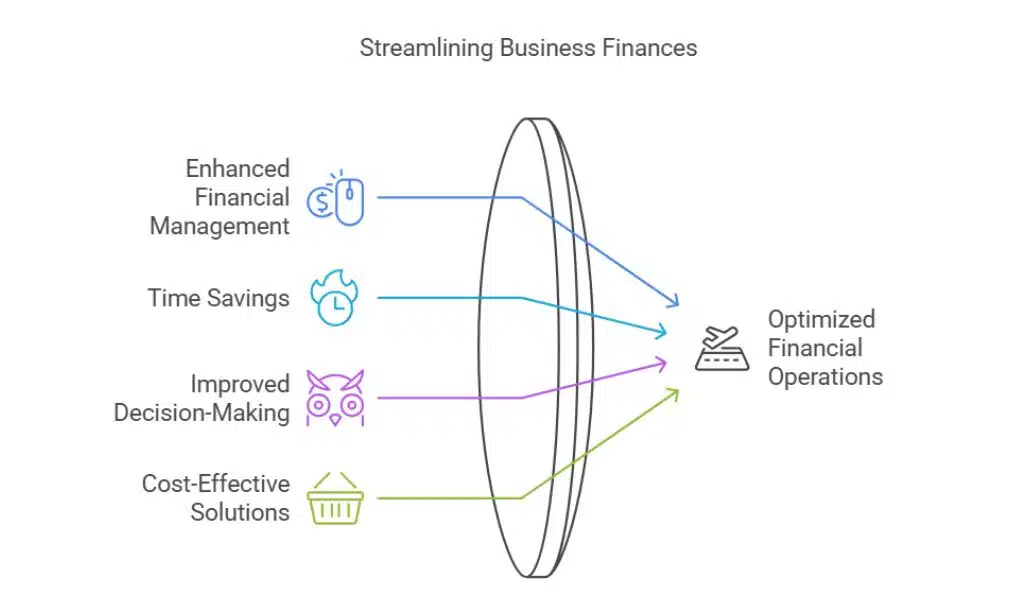
- Enhanced Financial Management: Real-time monitoring of cash flow, budgeting, and forecasting.
- Time Savings: Automation reduces manual input and administrative burdens.
- Improved Decision-Making: Advanced analytics and reporting provide actionable insights.
- Cost-Effective Solutions: Affordable tools tailored for small businesses.
Top 10 Fintech Tools for Small Business Operations
Let’s take a look!
1. QuickBooks Online
QuickBooks Online is a versatile accounting tool designed to meet the needs of small business owners. It offers automated invoicing, expense tracking, and seamless integration with bank accounts and other business apps. This cloud-based solution ensures that business owners can manage their finances from anywhere, making it a top choice for flexibility and efficiency.
| Feature | Description |
| Cloud-based Access | Manage accounts from anywhere. |
| Automated Invoicing | Create and send invoices automatically. |
| Integration | Connects with bank accounts and apps. |
- Pros:
- User-friendly interface.
- Scalable for growing businesses.
- Pricing:
- Multiple pricing tiers tailored to different business needs.
2. Stripe
Stripe stands out as a leading payment processing platform, especially for e-commerce and subscription-based businesses. It simplifies online transactions while supporting multiple currencies. Stripe’s robust API allows businesses to customize their payment systems, providing a seamless checkout experience for customers. As one of the fintech tools that simplify small business operations, Stripe ensures secure and efficient payment processes.
| Feature | Description |
| API Integration | Flexible and customizable payment flows. |
| Fraud Protection | Advanced security measures. |
| Multi-Currency Support | Accepts payments in various currencies. |
- Pros:
- Transparent pricing model.
- Easy to set up and manage.
3. Gusto
Gusto takes the hassle out of payroll and HR management for small businesses. Its features are tailored to ensure compliance with tax regulations and streamline employee benefits administration. By automating payroll, Gusto saves significant time and reduces errors, making it a favorite among small business owners. It is one of the key fintech tools that simplify small business operations by addressing HR complexities.
| Feature | Description |
| Automated Payroll | Ensures accurate and timely payments. |
| Benefits Management | Handles employee benefits seamlessly. |
| Tax Compliance Tools | Keeps your business compliant. |
- Pros:
- Comprehensive and user-friendly.
- Saves time with automation.
4. Brex
Brex is a fintech tool that provides business credit cards with dynamic limits and rewards tailored to your business spending. It simplifies expense tracking and offers real-time monitoring. Brex’s focus on startups and scaling businesses makes it particularly valuable for modern entrepreneurs. As one of the fintech tools that simplify small business operations, it emphasizes growth and scalability.
| Feature | Description |
| No Personal Guarantees | Does not require personal liability. |
| Business Rewards | Tailored to your spending categories. |
| Instant Approvals | Quick setup and credit approval. |
- Pros:
- Instant approvals.
- Great for scaling startups and growing businesses.
5. Square

Square is an all-in-one payment solution that excels in retail and on-the-go transactions. It’s ideal for businesses needing a reliable point-of-sale system. Square’s mobile-friendly options and inventory management make it a standout choice for small retailers. It is one of the most practical fintech tools that simplify small business operations by improving in-person sales processes.
| Feature | Description |
| Mobile POS | Easy-to-use mobile payment solutions. |
| Inventory Management | Tracks stock levels automatically. |
| Low Transaction Fees | Affordable pricing for small businesses. |
- Pros:
- Affordable and user-friendly.
- Perfect for small-scale operations.
6. FreshBooks
FreshBooks is a popular choice for small businesses, especially in the service industry. It offers features like time tracking, project management, and customized invoicing. This tool is ideal for businesses seeking professional-looking invoices with minimal effort. Among fintech tools that simplify small business operations, FreshBooks stands out for its focus on service-based enterprises.
| Feature | Description |
| Customized Invoicing | Create tailored, professional invoices. |
| Time Tracking | Monitor billable hours with ease. |
| Integration | Works with other tools like Gusto and Slack. |
- Pros:
- Affordable plans.
- Designed for service-based industries.
7. Wave
Wave offers a robust suite of tools for small business owners, including free accounting and invoicing capabilities. Its no-cost model is perfect for budget-conscious entrepreneurs who still need powerful tools to manage their operations. It’s a shining example of fintech tools that simplify small business operations without breaking the bank.
| Feature | Description |
| Free Accounting Tools | Budget-friendly without sacrificing features. |
| Mobile Receipt Scanning | Easy expense tracking on the go. |
| Tax Filing Assistance | Helps prepare for tax season. |
- Pros:
- Budget-friendly with free core functionalities.
- Ideal for startups and solo entrepreneurs.
8. PayPal
As one of the most recognized payment platforms, PayPal is trusted by millions worldwide. It offers secure payment processing and business loans, making it a versatile tool for small business owners. By integrating seamlessly with e-commerce platforms, it remains a key fintech tool that simplifies small business operations.
| Feature | Description |
| E-commerce Integration | Works with platforms like Shopify. |
| Working Capital Loans | Easy access to small business loans. |
| Multi-Currency Support | Enables international transactions. |
- Pros:
- High trust factor.
- Versatile payment options.
9. Expensify
Expensify automates the expense reporting process, making it easier for small businesses to manage finances. Its mobile-friendly interface ensures users can track expenses anytime, anywhere. This tool highlights the importance of fintech tools that simplify small business operations in managing day-to-day expenses efficiently.
| Feature | Description |
| Automated Approvals | Streamlines expense workflows. |
| OCR Receipt Scanning | Quickly captures and logs receipts. |
| Mobile Interface | User-friendly for on-the-go tracking. |
- Pros:
- Saves time for finance teams.
- Easy to use.
10. Xero
Xero offers a cloud-based accounting platform perfect for small businesses that need real-time updates and collaboration tools. It’s designed to handle complex accounting needs with simplicity and efficiency. Among fintech tools that simplify small business operations, Xero’s analytics and collaboration features stand out.
| Feature | Description |
| Advanced Analytics | Provides deep insights into finances. |
| Collaboration Tools | Enables teamwork between owners and accountants. |
| Real-Time Updates | Stay on top of cash flow and transactions. |
- Pros:
- Scalable and efficient.
- User-friendly interface.
How to Choose the Right Fintech Tool for Your Business
Assess Your Business Needs
Identify areas where you can benefit most, such as payroll, accounting, or payment processing. Look for fintech tools that simplify small business operations specific to your industry.
Budget Considerations
Evaluate the cost vs. benefits of free and premium options. Focus on tools that provide long-term value.
Ease of Use and Scalability
Choose platforms that are easy to implement and can scale with your business needs. This ensures that fintech tools that simplify small business operations grow alongside your company.
Security and Compliance
Ensure compliance with industry standards and invest in tools with robust security features to safeguard sensitive data.
Takeaways
In 2025, the right fintech tools can transform how small businesses operate. By automating processes, enhancing financial management, and improving decision-making, these tools allow entrepreneurs to focus on what matters most: growing their business.
Start exploring these fintech tools today to simplify your operations and gain a competitive edge in a rapidly evolving market.
Fintech tools that simplify small business operations are more than just trends—they’re necessities for success in the modern world.