


Wondering why homes cost so much—or so little—in your area? Many buyers struggle with sudden price changes without knowing why certain neighborhoods stay expensive while others drop fast!
The truth? Factors affecting real estate prices near you go beyond just house size or looks—things like school quality, transportation access, even nearby jobs shape costs too! This guide breaks down these influences clearly so you make smarter moves whether buying or selling…
Keep reading if saving money matters!
Economic Conditions
Economic health directly impacts real estate prices. A strong job market and high employment rates boost buyer demand—more people earn steady incomes, so they can afford homes. Areas with growing industries often see rising property value as workers move in.
Key economic indicators like gross domestic product [GDP] growth shape housing trends. Inflation rates play a role too—lower inflation keeps mortgage rates stable, making homebuying easier.
Local economic activity, such as oil revenues or tech jobs, also drives prices up or down.
Interest Rates and Financing
Interest rates directly impact how much you pay for your home—or earn if you are selling. Mortgage costs rise when central banks raise their benchmark lending fees. Loans become pricier, which can affect the housing market.
Buyers face tighter budgets when mortgage rates are high because monthly payments increase and can stall sales activity until market trends stabilize.
Lower borrowing costs boost demand through refinance deals and new purchases that increase buyer interest in the housing market.
Fixed-rate mortgages offer steady payments that protect property owners against future increases in mortgage rates. This option is common in real estate investment decisions.
Supply and Demand
Housing prices rise when demand outstrips supply. A tight housing supply with many buyers creates a seller’s market, pushing up property value. On the other hand, too many homes and fewer buyers lead to a buyer’s market, lowering prices.
Population growth and migration patterns impact demand. More people moving to an area means more competition for homes. Local amenities like public transit and local schools also drive demand.
Economic trends, such as high employment rates, boost buyers’ ability to afford homes. Home prices shift based on these forces.
Location Factors
Good schools and easy transit boost home values. Safe neighborhoods with parks and shops also attract buyers.
Houses near highways or busy streets often sell for less. Waterfront properties or scenic views can drive prices higher.
Proximity to schools and amenities
Homes near good schools often sell for more. Parents want their kids in top districts, boosting demand—and prices. Nearby parks, shops, or public transit also add value. People pay extra for convenience.
Crime rates and walkability impact property taxes and market value too. Safe neighborhoods with easy access to amenities attract buyers. Energy-efficient upgrades raise prices further, especially in areas with high housing demand.
Transportation and infrastructure
Good transportation and infrastructure boost property value. Homes near public transit, highways, or well-maintained roads often sell for more. People pay extra for easy access to jobs, local schools, and shopping areas.
Poor roads or long commutes can hurt prices
Crime rates drop when neighborhoods have better lighting and sidewalks. Government investments in bridges, trains, or bike lanes make an area more attractive.
Buyers check these details before choosing a home because they affect daily life and future resale value.
Government Policies and Regulations
Tax incentives and zoning regulations shape real estate prices. These rules can boost or limit property value in certain areas. Policies like affordable housing programs make homes more accessible, while stricter building codes may raise costs.
Property taxes directly impact what buyers pay each year. Cities with high rates often see lower demand—hurting home prices. Government incentives for energy efficiency encourage upgrades, increasing a house’s worth over time.
Changes in economic cycles also shift how much influence laws have on the housing market.
Demographics and Population Trends
Population growth and demographic shifts directly impact real estate prices. More people moving into an area means higher demand for homes. This often leads to rising property value.
Fewer residents can cause prices to drop due to lower demand.
Job markets and employment rates influence where people choose to live. Strong local economies attract more buyers, pushing up housing costs. Younger families may prefer neighborhoods with good local schools, affecting home values in those areas.
Migration patterns also play a role—cities with growing populations usually see property prices climb faster than those losing residents.
The age of the population affects housing needs too. Older homeowners might downsize, increasing supply for smaller homes. Younger buyers often look for starter houses or apartments closer to work hubs—these trends shape pricing across different property types.
Property Features
The age, size, and condition of a home—along with upgrades like energy-efficient appliances or a finished basement—can sway its price significantly.
Age, size, and condition
Older homes often need more repairs, lowering their value. Size matters—bigger properties usually cost more but must have usable space. The condition of a home affects its price, with well-maintained houses selling faster.
Upgrades like energy-efficient appliances or a finished basement can boost property value. A poorly kept home loses appeal even if the location is good. Buyers compare prices based on age and features.
Upgrades and renovations
Upgrades boost a home’s value—especially kitchens and bathrooms—and attract buyers looking for move-in-ready properties. Renovations, such as new flooring or updated electrical systems, make homes sell faster at higher prices.
A finished basement adds usable space too!
Modern features increase a house’s price, but over-improving beyond neighborhood comparisons may hurt returns. Small changes like fresh paint work better than costly projects if buyers do not pay extra.
Local Market Trends
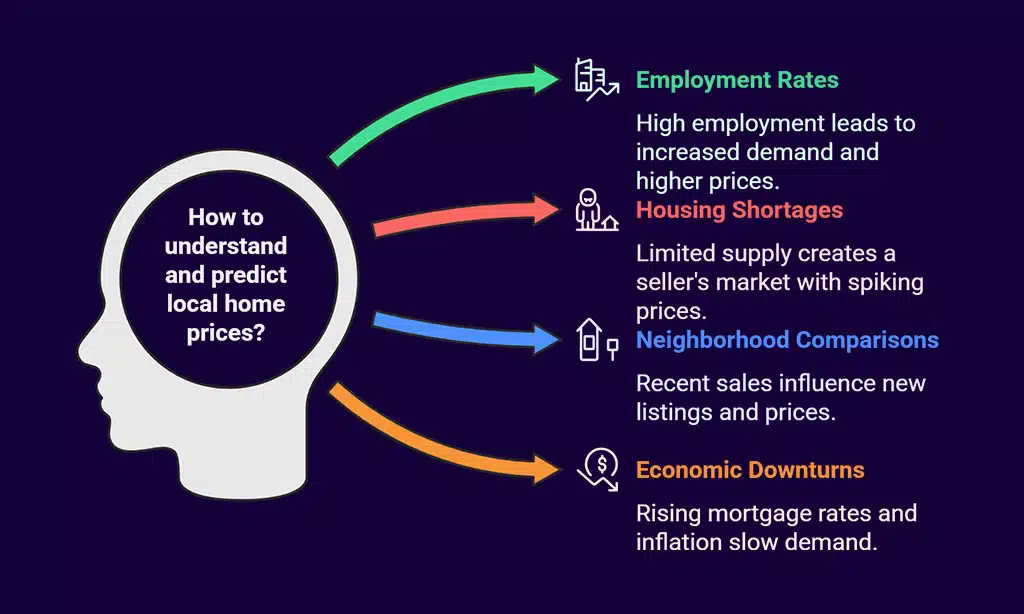
Local market trends shape home prices in big ways. Areas with high employment rates and a strong job market often see rising demand—more buyers compete for fewer homes, pushing values up.
Housing shortages can lead to a seller’s market, where prices spike due to limited supply.
Neighborhood comparisons, or recent sales of similar homes nearby, influence pricing too. If houses sell quickly for high amounts, new listings may follow suit. Economic downturns can slow demand when mortgage rates rise or inflation climbs.
Real estate professionals track these shifts closely to help understand the market.
Environmental and Climatic Factors
Environmental risks like flood zones can lower property values—homes prone to flooding often sell for less due to higher insurance costs or repair needs. Nearby energy industry sites may also deter buyers if pollution concerns exist.
Climate impacts house prices too. Areas facing extreme weather, such as hurricanes or wildfires, experience slower economic growth. Buyers prefer safer locations. Good public transit increases appeal since fewer cars mean less environmental harm. Green spaces and parks add value by improving quality of life.
Cultural and Lifestyle Preferences
People’s choices shape real estate prices. A neighborhood close to top-rated local schools often attracts families—raising demand and property value. Areas with good public transit, parks, and shopping centers also draw buyers willing to pay more.
Young professionals may favor lively urban spots with cafes and nightlife, while retirees favor quiet suburbs. Crime rates impact decisions too—safer areas usually cost more. Changing trends like remote work can shift interest from cities to towns with larger homes.
Cultural shifts influence housing markets as much as economic indicators do.
Takeaways
Real estate prices depend on many factors—such as supply and demand, and the local economy. Interest rates, home features, and nearby local schools play big roles. Awareness of these factors may help buyers and sellers understand market trends.
FAQs on key Factors Affecting Real Estate Prices In Your Area
1. What makes real estate prices go up or down?
Prices change based on supply and demand, interest rates, and economic growth. When more people want homes than are available, it becomes a seller’s market—prices rise. If homes sit unsold, it shifts to a buyer’s market, lowering prices.
2. How do mortgage rates affect home prices?
Higher mortgage rates make loans costlier, reducing buyer demand. Lower rates encourage buying, pushing prices up. Economic conditions, like job market strength, also influence rates and housing market trends.
3. Why does location matter in real estate value?
Good local schools, low crime rates, and public transit access boost property value. Flood zones or poor infrastructure can lower it. Migration patterns—like people moving into an area—also drive demand.
4. Can government policies change home prices?
Yes. Tax incentives, zoning regulations, and property taxes impact costs. Policies encouraging real estate investment—like REITs or bonds—can increase demand, raising prices in certain areas.
5. What role do jobs play in housing costs?
Strong employment rates attract buyers, lifting prices. If local jobs decline, demand drops. Economic indicators, like oil prices or consumer sentiment, also shape the job market and home values.
























