

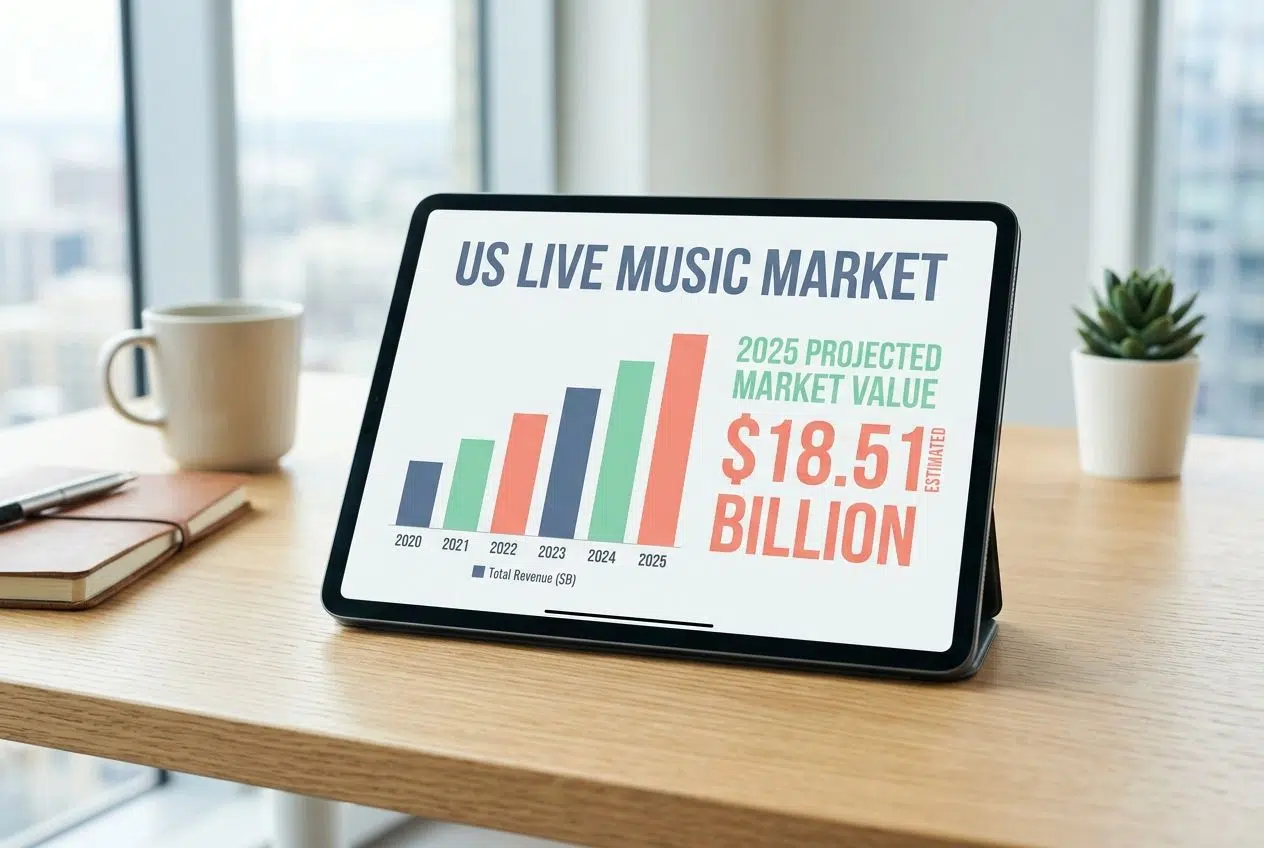
Music festivals bring people together for unforgettable nights of live music and fun. But many of you worry about what festivals look like now. The pandemic changed everything, and you wonder if these events still feel safe or if they have lost their spark. These questions matter because live events shape how we celebrate music and connect with others. Here is a fun fact to ease your mind. A 2026 report from AMW shows the US live music market reached a massive $18.51 billion in 2025.
The global music festival market is bouncing back strong by mixing in-person shows with online streaming options. This shift means more people can enjoy live music, whether they sit in a crowd or watch from their couch. Our content breaks down exactly How Music Festivals Are Evolving In A Post-Pandemic World. We will explore what safety measures they use and why smaller community-focused events are gaining real traction.
You will learn how technology, sustainability, and audience preferences are reshaping the evolution of music festivals in ways you probably haven’t considered. So, grab a cup of coffee, and let’s go through it together. I will show you everything you need to know.
The Pre-Pandemic Era of Music Festivals
Music festivals exploded across the globe before 2020. They drew millions of fans to massive outdoor venues and transformed entire cities into celebration zones. The industry thrived on innovation, with organizers constantly testing new sound systems and artist lineups to keep crowds coming back year after year.
Growth and popularity of global festivals
Festivals exploded across the globe over the past two decades. They transformed into massive cultural events that drew millions of attendees annually. Events like Coachella, Glastonbury, and Tomorrowland became household names. Each one pulled in hundreds of thousands of fans from every corner of the world.
These live events generated billions in revenue for local economies and put small towns on the map. Streaming platforms amplified this growth by broadcasting performances to audiences who could not attend in person. This expanded the reach far beyond physical venue capacity.
A 2026 industry analysis shows that by 2019, average ticket prices had already begun a steep climb to $144, proving that fans were eager to spend on these massive experiences.
Organizers packed festivals with diverse lineups, interactive installations, and immersive experiences. Festival culture shifted from simple music performances into sprawling social gatherings featuring art, food, and technology demonstrations.
Audience behavior changed, too. Attendees sought memorable moments they could share on social media apps like Instagram. Touring artists benefited enormously from this trend, securing lucrative festival slots that paid better than traditional concert dates.
Key trends shaping the industry before 2020
Music festivals exploded across the globe before 2020, drawing millions of fans and generating billions in revenue. The industry saw major shifts in how organizers built experiences and connected with audiences.
- Festival lineups became more diverse to attract wider crowds. Organizers booked pop stars alongside indie bands and hip-hop artists on the same stages.
- Mega-festivals grew bigger and bolder. Events like Lollapalooza in Chicago shaped global entertainment trends and drew hundreds of thousands of attendees.
- Technology started changing how audiences experienced concerts. Mobile apps like the official Coachella app let fans check schedules and find friends easily.
- Smaller regional festivals popped up in cities everywhere. Local communities wanted their own music industry events without traveling far.
- Wellness activities entered the festival grounds. Organizers added yoga sessions, meditation spaces, and healthy food options.
The Impact of the Pandemic on Music Festivals
The pandemic hit music festivals hard. Organizers had to cancel shows and postpone tours across the globe. Venues lost millions of dollars, artists lost income, and fans lost the live experiences they craved most.
Cancellations and postponements
Two thousand twenty brought the music festival world to a grinding halt. Festivals faced impossible choices between canceling events and risking public health. A 2026 AMW report noted that a shocking 15 percent of independent music venues permanently closed between 2020 and 2024.
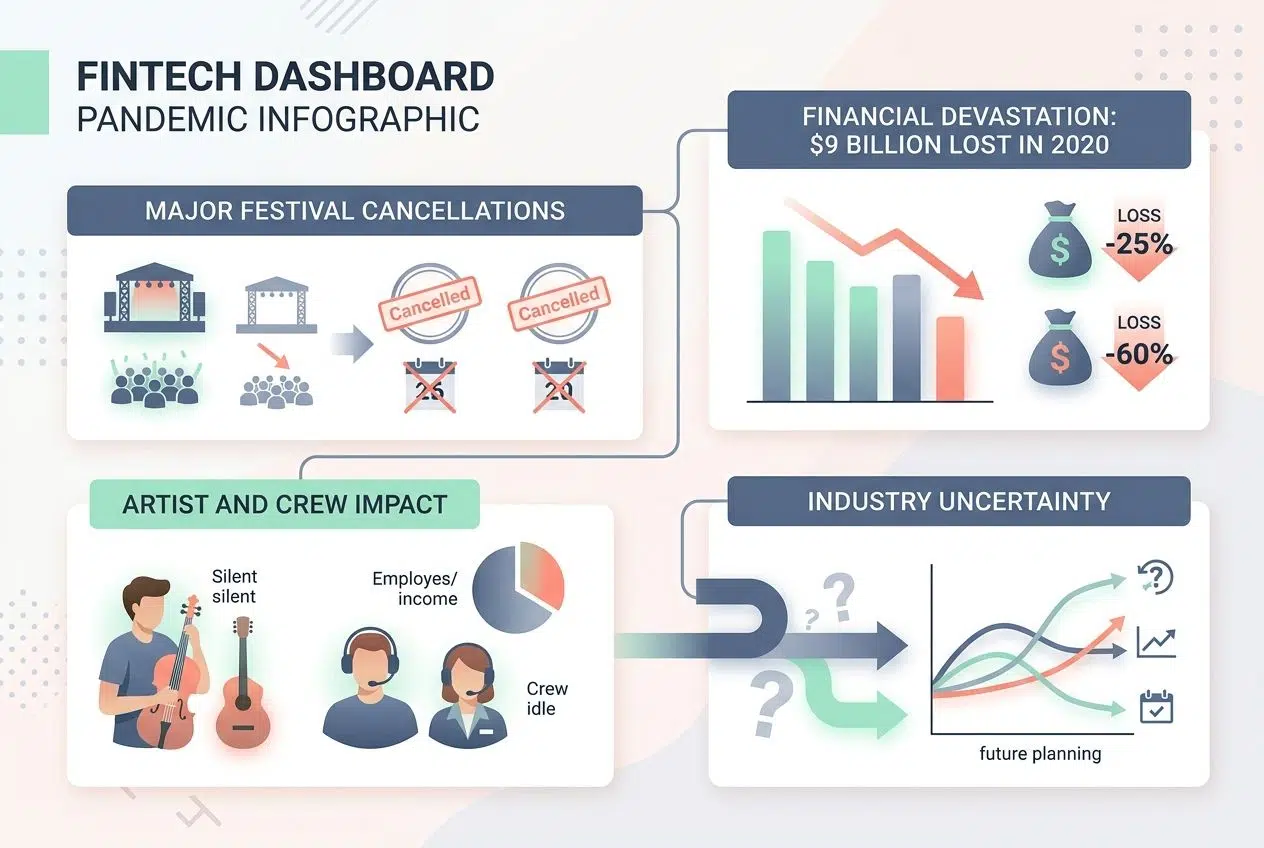
| Impact Category | What Happened |
|---|---|
| Major Festival Cancellations | Coachella, Lollapalooza, and Ultra Music Festival all canceled or postponed their 2020 events. South by Southwest (SXSW) in Austin, Texas, got wiped off the calendar entirely that year. |
| Financial Devastation | The live music industry lost over $9 billion in revenue during 2020 alone. Ticket refunds drained festival budgets, and many small festivals folded permanently. |
| Artist and Crew Impact | Musicians lost their primary income source overnight. Production crews, stage workers, and support staff faced immediate unemployment. |
| Industry Uncertainty | Promoters could not plan ahead with confidence. The National Independent Venue Association (NIVA) was formed simply to help local stages survive the financial freeze. |
Financial and cultural challenges
The pandemic hit the music industry hard, and the financial damage spread fast. Festival organizers lost millions of dollars when concerts stopped, and ticket sales vanished overnight.
Artists lost income streams they relied on for survival. Venues closed their doors, and many never reopened. The supply chain for sound equipment, stages, and lighting broke down, making it expensive to restart operations.
Sponsors pulled back their funding, too, leaving organizers scrambling to cover costs. The ticket sales that powered the industry simply disappeared, leaving a massive financial hole that took years to fill.
The pandemic shattered something precious that crowds had always shared. Strangers could no longer bond over shared musical experiences.
Music festivals create social gatherings where strangers become friends and communities bond over shared experiences. That magic vanished for months, leaving people isolated and hungry for connection.
Audience behavior shifted, too, as people questioned whether large gatherings felt safe anymore. These cultural wounds ran deep, affecting how people viewed concerts and festivals moving forward. These setbacks forced the industry to rethink everything about how festivals operate.
How Music Festivals Are Evolving In A Post-Pandemic World Through Technology
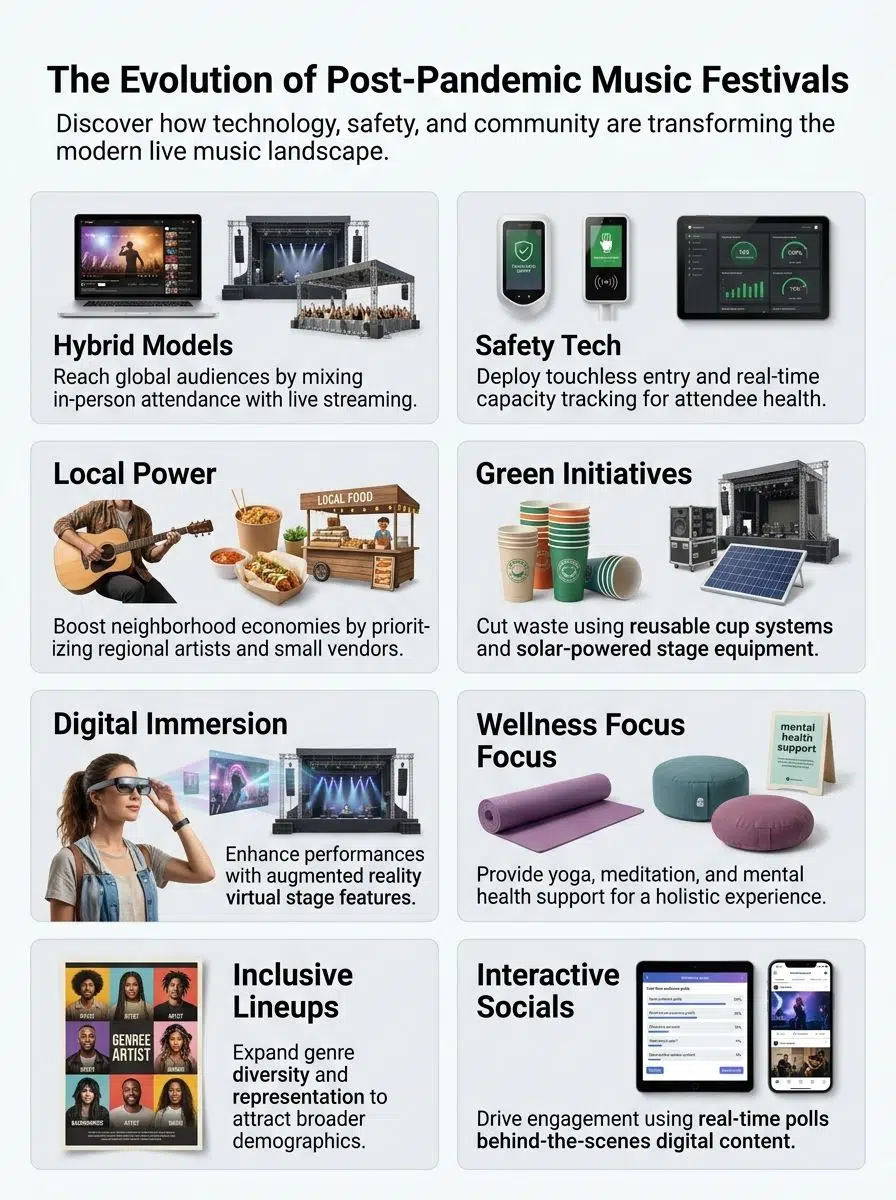
Music festivals are bouncing back with fresh ideas that blend the old concert magic with new technology. Festival organizers are mixing in-person crowds with online streams and smaller regional events to meet what audiences actually want today.
Hybrid events: Combining in-person and virtual experiences
Hybrid events have become the new normal for live events in the music industry. Festivals now stream performances online so fans can join from home, while others attend in person.
A 2024 report from YouTube revealed that connected TVs accounted for more than 50 percent of the watch time for their Coachella livestream. This approach lets organizers reach millions of people across the globe without limiting ticket sales to physical venues.
Virtual experiences give audiences the chance to watch multiple stages at once, rewind performances, and enjoy better camera angles. YouTube’s Multiview feature even lets fans watch up to four feeds at once on a smart TV.
- Streaming technology connects fans who cannot travel or face health concerns.
- The blend of in-person and virtual audience engagement creates fresh opportunities for community interaction.
- Fans at home can chat with each other, vote on performances, and participate in live polls during the show.
Organizers benefit too, since they can sell virtual tickets at lower prices while maintaining ticket sales from physical attendees.
Enhanced safety and health measures
Music festivals learned tough lessons from the pandemic. Organizers now prioritize health protocols at every turn, protecting both attendees and staff members.
- Venues install touchless entry systems like CLEAR. This eliminates the need for physical contact when guests arrive at the festival grounds.
- Hand sanitizing stations appear throughout festival areas. They are placed at strategic points near food vendors and stage entrances.
- Crowd management strategies limit the number of people in specific zones. This prevents dangerous overcrowding and keeps the crowd moving safely.
- Medical tents operate on-site with trained professionals. They stand ready to handle emergencies or health concerns that arise.
- Improved ventilation systems circulate fresh air through indoor festival spaces. This reduces airborne particles and creates safer environments.
Smaller, localized festivals are gaining popularity
Smaller festivals in local communities are taking center stage, and audiences love it. People want to skip the massive crowds and travel hassles of big festivals.
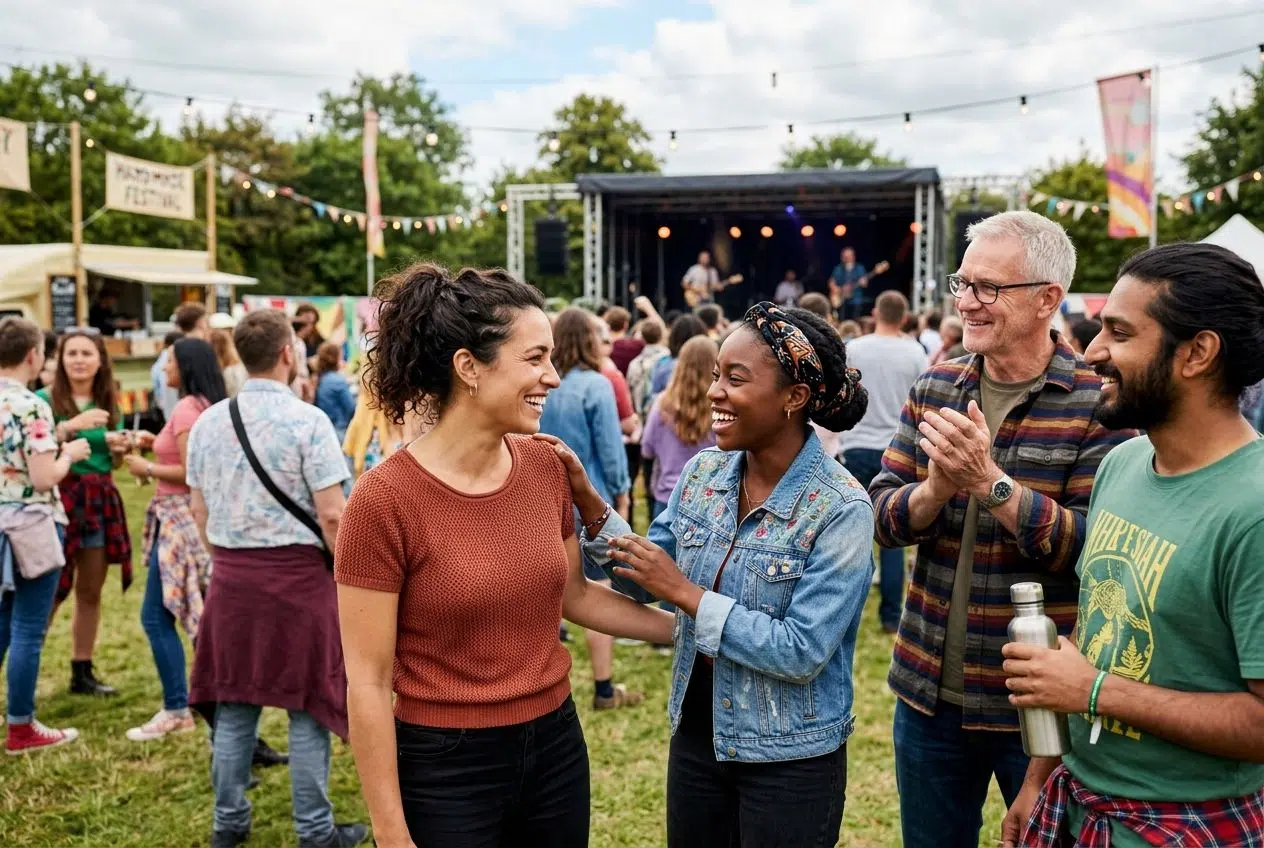
They crave genuine connections with their neighbors, real artists, and authentic entertainment experiences. Local festivals deliver exactly that, serving up intimate gatherings where everyone knows the vibe.
A prime example is the Bourbon & Beyond festival in Louisville, Kentucky, which drew 210,000 attendees in 2024 and pumped over $33 million into the local tourism economy.
These events support local artists and businesses, keeping money in the community. Ticket prices stay reasonable, making live events accessible to more people.
The crowd management becomes easier, and health protocols feel less intrusive when you celebrate with a few hundred friends rather than hundreds of thousands of strangers. Community engagement flourishes at these smaller social gatherings, where organizers can actually listen to audience feedback. Local festivals prove that bigger does not always mean better.
Use of technology for immersive experiences
These smaller, localized festivals spark real magic in their communities, and technology amplifies that magic even further. Festival organizers now layer digital tools into live events, transforming how audiences connect with music.
Virtual reality headsets transport attendees to different stages simultaneously. Augmented reality filters on apps like Snapchat let fans customize their festival experience through their phones. Projection mapping turns simple stages into visual spectacles that dance with the music.
Live streaming reaches people stuck at home or across the globe. These technological additions do not replace the in-person experience. They expand it, giving audiences more choices about how they engage with entertainment.
- Crowd management improves through mobile apps that show real-time stage schedules and food vendor locations.
- Wearable technology like RFID wristbands makes paying for food and merchandise completely contactless.
- Concerts feel more connected when fans can vote on setlists through apps or request songs via text.
These innovations make every attendee feel heard and valued. Festivals become places where streaming and in-person experiences combine seamlessly.
Sustainability in the Evolving Music Festival Landscape
Festivals now prioritize green practices, cutting waste and protecting our planet. Stick around to discover how organizers are making concerts better for the Earth.
Eco-friendly practices and waste reduction
Music festivals now lead the charge in protecting our planet. Organizers implement green strategies that cut waste and inspire attendees to care for the environment.
- Organizers partner with groups like REVERB to launch major decarbonization projects. The Camp Flog Gnaw Carnival replaced traditional diesel generators with modular battery systems in 2024.
- Composting stations scatter throughout festival grounds. The Deep Tropics EDM festival in Nashville banned single-use plastics entirely and only provides compost or recycling bins.
- Solar-powered stages and lighting systems reduce the carbon footprint significantly. These renewable energy sources power sound equipment without burning fossil fuels.
- Transportation initiatives encourage carpooling and bike parking. Festivals offer shuttle services from nearby train stations to reduce vehicle emissions.
- Sustainable merchandise replaces throwaway items. Vendors sell products made from organic cotton and recycled fabrics that attendees actually keep.
Promoting sustainable tourism through festivals
Festivals now shape how travelers explore new places responsibly. Organizers partner with local communities to create experiences that protect the environment while boosting the economy.
A 2025 Grand View Research report found that major tours act as massive economic anchors, with major concerts in Chicago driving hotel occupancy to a record-breaking 96.8 percent in a single day.
Tour operators offer packages that highlight regional attractions and cultural sites. Visitors spend money at small businesses, hotels, and shops throughout the area, transforming festivals into engines for positive change.
Attendees learn about conservation efforts, renewable energy, and waste management firsthand. They return home as ambassadors for sustainable practices in their own communities.
The live events industry recognizes that protecting destinations preserves future festival opportunities for everyone. Festival organizers craft itineraries that encourage guests to explore responsibly and stay longer in host regions.
The Rise of Community-Centered Festivals
Festivals now put local communities first, bringing neighbors together and lifting up artists from their own backyards. Keep reading to see how this shift changes everything.
Emphasis on inclusivity and diversity
Music festivals now open their doors wider than ever before. Organizers actively book artists from different backgrounds, cultures, and musical styles.
- They hire crew members from underrepresented groups and create accessible spaces for people with disabilities.
- Organizations like Diversify The Stage are working directly with promoters to ensure hiring practices are fair.
- Ticket pricing shifts to include affordable options, so more people can attend.
Community engagement becomes central to planning, with festival leaders asking locals what they want to see and hear. Local artists gain real opportunities to perform on bigger stages.
Supporting local businesses means hiring nearby vendors, sound technicians, and stage workers. Crowd management strategies now account for different needs, from quiet zones for people who get overwhelmed to accessible seating areas. Health protocols apply fairly to all attendees, regardless of background.
Supporting local artists and businesses
Festivals now champion local talent and small businesses like never before. This shift transforms concerts into community powerhouses.
- Events like the Treefort Music Fest in Boise, Idaho, use local 1,000-capacity venues instead of building temporary stages. This keeps all rental fees within the local economy.
- Local artists gain direct access to large crowds without needing major record labels. This opens doors that were previously closed to emerging talent.
- Food vendors from the community set up booths at live events. They sell their products directly to hungry audiences instead of handing profits to massive corporations.
- Ticket sales from festivals funnel money back into neighborhoods. This happens through local hiring and equipment rentals.
- Community engagement programs connect festival organizers with local nonprofits. This creates sponsorship opportunities that fund important social initiatives.
Adapting to Changing Audience Preferences
Audiences now crave experiences that go beyond basic music performances. Festivals are stepping up to offer wellness activities, curated lineups, and personalized touches that speak directly to what crowds actually want.
Demand for unique, curated experiences
Festivalgoers now crave experiences that feel special and personal. They skip the cookie-cutter lineups and search for festivals that tell a specific story.
Organizers respond by crafting smaller, more intentional events that celebrate specific genres, cultures, or themes, such as the BottleRock Napa Valley festival which pairs live music with live culinary demonstrations from celebrity chefs.
Ticket sales spike when festivals offer this kind of specificity. People pay more for entertainment that matches their exact interests because they want to feel like insiders.
Festivals now layer in wellness activities, art installations, and food experiences alongside music performances. Live events transform into full sensory adventures.
Organizers mix headliners with emerging local artists, creating discovery moments for the audience. The audience behavior data shows people prefer depth over size, and quality over quantity.
Focus on wellness and mindfulness activities
Music festivals have shifted their focus toward attendee health and mental well-being. Organizers now recognize that live events become spaces for personal growth and healing.
- Yoga and meditation sessions happen throughout the festival grounds. They offer attendees chances to center themselves between performances.
- Mental health professionals staff dedicated wellness tents. Visitors can talk through anxiety or simply find a quiet refuge from the crowd.
- Healthy food vendors replace traditional heavy festival fare. They provide nutritious meals that fuel bodies without the greasy options of past years.
- Fitness classes like pilates and dance cardio run during morning hours. This helps festival-goers start their day with movement and intention.
- Organizations like REVERB sell eco-bands to fund tree planting. This gives attendees a mental boost by participating in a good cause.
Technological Advancements Influencing Festival Experiences
Technology reshapes how fans experience music festivals today. From virtual reality stages to social media tools that connect thousands of people in real-time, these innovations transform the way you celebrate live music.
Exploring Virtual and Augmented Reality in Festivals
Festivals now blend digital tools with live experiences, creating something truly special for audiences everywhere. Virtual reality lets attendees explore festival grounds from their couches, while augmented reality overlays digital content onto real stages.
Imagine watching your favorite band perform while AR glasses show you song lyrics or interactive visuals floating in the air. Live events gain new dimensions when organizers layer these technologies into the experience.
- Streaming concerts reach people across the globe, so geographic boundaries no longer stop fans from joining the celebration.
- YouTube’s 4K streaming options have proven incredibly successful, bringing a crystal-clear festival experience right to the living room.
- Some festivals now offer VR headsets at the venue, letting attendees switch between multiple stages without moving an inch.
This innovation opens doors for those who cannot travel or afford expensive tickets. Ticket sales increase when festivals offer hybrid options, giving customers choices that fit their situations.
Festivals that embrace augmented and virtual reality stand out from competitors and attract younger, tech-savvy crowds seeking something different.
Leveraging Social Media for Enhanced Participant Interaction
Social media platforms have become essential for modern festival engagement. Festivals that use these digital channels see higher ticket sales, stronger community bonds, and greater audience participation.
- A 2026 AMW report notes that a massive 75 percent of concert tickets are now sold online. This makes digital presence a requirement, not an option.
- Live streaming concert performances on YouTube Shorts and TikTok allows people to experience the atmosphere from home.
- Interactive polls and question sessions on social media platforms help organizers gather real-time feedback from participants.
- User-generated content campaigns encourage attendees to share photos and videos from the festival. This creates authentic promotional material.
- Behind-the-scenes content posted on social channels builds anticipation before the festival starts. It gives followers a sneak peek at the stage setup.
Wrapping Up
As we look at How Music Festivals Are Evolving In A Post-Pandemic World, the path forward looks bright. Organizers now blend in-person gatherings with streaming options. This amazing shift makes concerts accessible to millions worldwide. They prioritize health protocols, environmental sustainability, and community engagement.
Audiences demand more than just performances. They crave wellness activities, diverse lineups, and meaningful connections. Ticket sales have rebounded as people hunger for live events again, proving that the desire for shared entertainment experiences runs deep.
Festival organizers continue adapting to audience behavior and shifting preferences. Technology reshapes how people interact with performances through virtual experiences and augmented reality features.
Local artists gain platforms they never had before, while smaller, localized festivals thrive alongside massive productions. The music industry has learned valuable lessons about flexibility and innovation. Those who embrace change, listen to their crowds, and invest in both people and planet will shape the future of live entertainment for years to come.
Frequently Asked Questions (FAQs) on Evolution Of Music Festivals
1. How have music festivals changed since the pandemic?
Music festivals now focus heavily on safety with hand-washing stations, spaced-out crowds, and digital tickets. According to a 2023 Eventbrite survey, 72% of US festival organizers adopted contactless entry systems. These changes make entry faster, too.
2. Are there new ways people enjoy live music at these events?
Yes! Festivals like Coachella now offer livestream passes so fans can watch performances from home, and some events set up drive-in concerts or small viewing pods in open fields.
3. What are organizers doing to keep everyone safe?
Organizers work with local health teams to set capacity limits and increase cleaning schedules. Lollapalooza reduced its capacity by about 25% when it returned in 2021.
4. Will food vendors and merchandise stands be different now?
Definitely! Most vendors now use mobile payment apps like Square for contactless ordering, so you can skip long lines and get back to enjoying the music.





















