Suffering a personal injury can be a distressing experience, whether it occurs at work, in a public place, or due to a motor accident.
The immediate actions you take can significantly impact your recovery, financial compensation, and legal standing. Understanding the essential steps to take immediately after a personal injury in Australia ensures you protect your health and rights.
This guide outlines 10 critical steps to follow, helping you navigate the legal and medical processes effectively. Each step is backed by practical advice, expert insights, and key details to maximize your claim and recovery.
1. Assess Your Injuries and Seek Immediate Medical Attention
When an injury occurs, your health should be the first priority. Immediate medical care ensures that any injuries, whether visible or internal, are diagnosed and treated as soon as possible. Some injuries, such as concussions, internal bleeding, or soft tissue damage, may not show symptoms immediately but can worsen over time if left untreated.
Seeking medical care also establishes an official record of your injury, which is essential for insurance claims and legal proceedings. Furthermore, prompt medical attention reduces the risk of long-term complications and ensures you receive the appropriate treatment to facilitate recovery.
Delaying treatment can weaken your case, as insurers and opposing legal teams may argue that your injuries were not severe or were caused by another event.
What to Do If Injuries Seem Minor
Even if you feel fine, you should still visit a doctor. Minor symptoms can mask underlying issues that may become serious over time. For example, whiplash, common in car accidents, may not present symptoms until days later but can cause chronic pain and mobility issues if untreated.
By getting checked immediately, you not only safeguard your health but also create medical documentation linking your injury to the incident. This strengthens your claim should you pursue compensation.
Key Actions and Their Importance
| Key Actions | Why They Matter |
| Seek medical care ASAP | Establishes an official record of injury. |
| Keep all medical documents | Serves as critical proof for legal and insurance claims. |
| Follow doctor’s orders | Ensures proper recovery and strengthens your claim. |
2. Ensure Your Safety and Prevent Further Harm
If you have been injured in a public or hazardous area, your first priority should be to move to safety if possible. For example, if the injury occurred in a car accident, moving to the side of the road can prevent further collisions.
However, if you suspect a spinal injury, it is best to remain still and wait for emergency responders. Ensuring your safety reduces the risk of further harm and allows you to focus on assessing your condition and seeking help.
Securing the Accident Scene
Preventing additional accidents is crucial, especially if the injury occurred in a public or work setting. Alerting authorities, such as management, workplace supervisors, or emergency services, ensures that proper safety measures are taken to prevent others from getting hurt.
If possible, document hazardous conditions, such as wet floors or defective equipment, as these details will be important for any legal or insurance claims. Additionally, requesting that the incident be recorded in official logs provides further documentation to support your case.
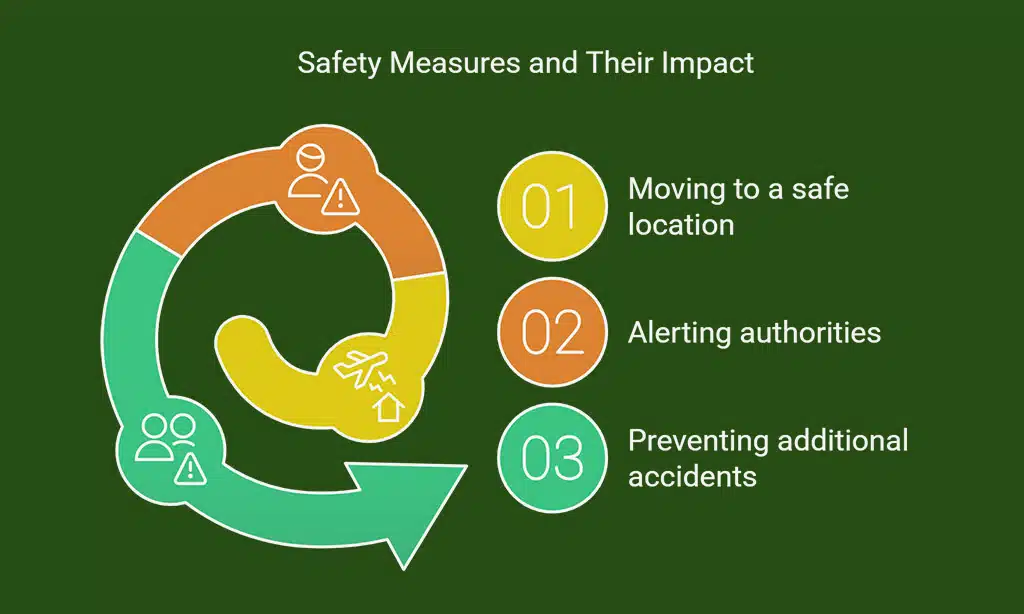
Safety Measures and Their Impact
| Safety Measures | Impact |
| Moving to a safe location | Reduces the risk of further injury. |
| Alerting authorities | Ensures a formal record of the incident. |
| Preventing additional accidents | Protects others from potential harm. |
Actionable Tip:
If injured in a public place, request that the management record the incident in their accident log. This official documentation can be helpful for compensation claims.
3. Report the Incident to Authorities
After an injury, reporting the incident to the proper authorities ensures that an official record is created. Depending on where the injury occurred, different authorities may need to be notified:
- Police: If you were involved in a car accident, assault, or another significant incident, filing a police report provides an official record that can be used in legal and insurance claims.
- Workplace Supervisor: If injured on the job, notifying your employer is crucial. Most Australian workplaces require official reporting of injuries, and failing to do so may impact your ability to claim workers’ compensation.
- Property Owner or Manager: If injured in a store, restaurant, or other commercial property, notifying the property owner ensures that the incident is recorded and investigated.
- Public Transport Authorities: If the injury occurred on a bus, train, or other public transport system, reporting the incident helps in processing claims for compensation.
Obtaining a Copy of the Report
Having an official report can be crucial evidence in a legal case or insurance claim. Always request a copy of any report you file and keep it in your records. If a police report is involved, you can typically request a copy from the local police station or their online portal. Workplace incident reports are usually kept by the HR department, while reports for public places may be available through venue management.
Where to Obtain Reports
| Type of Report | Where to Obtain It |
| Police report | Local police station or online portal. |
| Workplace report | HR department or employer records. |
| Public accident report | Venue management or transportation authorities. |
Real-Life Example:
David was injured in a taxi accident but failed to report it to the transport authority. Later, his claim was questioned due to the lack of an official report. Reporting the incident immediately would have strengthened his case.
4. Gather Evidence at the Scene
Documenting the accident scene can make a significant difference in proving liability and securing fair compensation.
The evidence should include:
- Photos and Videos: Take clear pictures of your injuries, the accident scene, hazardous conditions, and any visible damages. A short video walkthrough can provide further context.
- Witness Information: Collect names and contact details of anyone who saw the incident. Witnesses can provide unbiased statements that support your claim.
- Details of the Responsible Party: If applicable, gather the details of the person or entity responsible for your injury. For car accidents, this includes the driver’s license and insurance information.
- Environmental Factors: Take note of any factors that contributed to the incident, such as poor lighting, wet floors, or a lack of warning signs.
How to Document the Scene Effectively
| Evidence Type | Importance |
| Photos of the injury | Provides visual proof of severity. |
| Accident location photos | Helps reconstruct the incident. |
| Witness statements | Strengthens your claim. |
| Time and date stamps | Establishes a timeline of events. |
Expert Insight:
Legal experts suggest taking videos instead of just photos, as they capture environmental factors better. A slow walk-through video narrating the event can provide comprehensive evidence.
5. Keep Detailed Records of Medical Treatment
Thorough documentation of medical treatment is essential for proving the extent of your injuries and ensuring you receive fair compensation. These records help establish a clear history of medical care and treatment expenses.
Insurance companies and legal teams will rely on this information to assess the legitimacy and severity of your injury claims. Additionally, medical records provide evidence of ongoing medical needs, which can impact long-term compensation for rehabilitation and lost wages.
What to Record?
To strengthen your claim, keep a detailed record of the following:
- Doctor’s Reports: These contain official diagnoses, prescribed treatments, and medical opinions about your condition.
- Prescriptions: Keep track of all medications prescribed by your doctor to justify related expenses.
- Therapy Schedules: If you require physical therapy or psychological counseling, maintain a log of all sessions.
- Medical Bills and Receipts: Document all expenses related to your treatment, including consultations, hospital stays, surgeries, and diagnostic tests.
Importance of Medical Records
| Record Type | Why It’s Important |
| Doctor’s reports | Proves injury severity and need for treatment. |
| Prescriptions | Justifies medication costs in claims. |
| Therapy schedules | Shows the impact on daily life and work. |
| Medical expenses | Ensures reimbursement for incurred costs. |
Expert Insight:
Failing to keep medical records can weaken your case, as insurers may argue that your injuries are not as severe as claimed. Keep both physical and digital copies for easy access.
6. Notify Your Insurance Provider
Notifying your insurance provider as soon as possible is critical in starting the claims process. Delays can lead to complications, including claim denial due to late reporting. Insurance companies also require timely notification to investigate claims properly and assess liability.
Steps to Follow
- Contact your insurance company immediately after the incident to report your injury.
- Provide accurate details about the accident but avoid admitting fault, as this can be used against you.
- Ask about required documentation to ensure a smooth claims process.
- Keep records of all communication, including emails and call logs, as proof of your interactions.
- Verify your policy coverage to understand the benefits and limitations related to medical costs, lost wages, and rehabilitation expenses.
Key Actions and Their Importance
| Key Actions | Why They Matter |
| Notify insurer immediately | Prevents claim denial due to delays. |
| Provide accurate details | Strengthens the credibility of the claim. |
| Keep all correspondence | Serves as evidence in case of disputes. |
| Understand your policy | Helps determine covered expenses. |
Pro Tip:
Avoid making verbal agreements over the phone. Instead, request everything in writing to prevent miscommunication.
7. Consult a Personal Injury Lawyer
Consulting a personal injury lawyer can significantly increase your chances of receiving fair compensation. A lawyer will help you understand your rights, gather strong evidence, and negotiate with insurance companies. If necessary, they can represent you in court to ensure your interests are protected.
Steps to Take When Choosing a Lawyer
- Research law firms that specialize in personal injury cases.
- Schedule consultations (many personal injury lawyers offer free initial meetings).
- Ask about ‘No Win, No Fee’ agreements to minimize financial risk.
- Gather all necessary documentation before your first meeting to provide a clear picture of your case.
- Follow your lawyer’s advice to strengthen your case and avoid common mistakes.
Criteria for Choosing the Right Lawyer
| Criteria | Why It Matters |
| Specialization in personal injury | Ensures expertise in relevant laws. |
| Proven track record | Indicates success in similar cases. |
| No-win, no-fee option | Reduces financial risk. |
| Clear communication | Helps you stay informed and prepared. |
Legal Tip:
Do not accept the first settlement offer from an insurance company without consulting a lawyer, as initial offers are often lower than what you deserve.
8. Understand Compensation and Legal Claims
Understanding the types of compensation available can help you claim all eligible expenses. Compensation may cover:
- Medical Expenses: Hospital bills, medications, therapy, and any future medical costs.
- Lost Wages: If your injury prevents you from working, you may be entitled to compensation for lost earnings.
- Pain and Suffering: Compensation for physical and emotional distress resulting from the injury.
- Rehabilitation Costs: Costs related to physiotherapy, occupational therapy, and special medical equipment.
Filing a Personal Injury Claim
- Be aware of time limits: Personal injury claims in Australia have statutory deadlines that vary by state.
- Consult a lawyer to ensure your claim includes all relevant expenses.
- Gather supporting evidence, including medical records, witness statements, and accident reports.
- Keep a pain and recovery journal documenting how the injury affects your daily life and mental well-being.
Compensation Breakdown
| Type of Compensation | What It Covers |
| Medical expenses | Doctor visits, surgeries, prescriptions, etc. |
| Lost wages | Time off work due to injury recovery. |
| Pain and suffering | Emotional and physical distress. |
| Rehabilitation costs | Therapy, special medical equipment. |
9. Follow Your Doctor’s Treatment Plan
Following your doctor’s treatment plan is crucial for recovery and your legal claim. Insurance companies and opposing legal teams may argue that a failure to comply with treatment shows that your injuries are not severe.
Key Actions to Take
- Attend all scheduled medical appointments and follow up on referrals.
- Take prescribed medications as directed.
- Participate in recommended physical therapy or rehabilitation.
- Document all treatments and expenses to ensure they are covered in your claim.
Common Mistakes to Avoid
| Mistake | Why to Avoid It |
| Skipping medical check-ups | Weakens claim validity. |
| Ignoring doctor’s advice | Slows recovery and affects compensation. |
| Not keeping medical records | Makes proving injury claims harder. |
10. Monitor Your Mental Health and Seek Support
Many injury victims experience emotional distress, anxiety, or even PTSD. Chronic pain can also contribute to depression and impact daily life. Seeking support is essential to overall recovery.
How to Seek Support
- Speak with a mental health professional if you experience emotional distress.
- Join support groups for individuals recovering from injuries.
- Practice mindfulness techniques such as meditation and breathing exercises.
- Engage in physical activities (if medically allowed) to improve mood.
Final Thought:
Taking these 10 steps after a personal injury ensures a smooth recovery and strengthens your legal position. Seek legal advice and document everything carefully for the best outcome.
Takeaways
Experiencing a personal injury can be overwhelming, but taking the right steps immediately after the incident can make a significant difference in your recovery and legal standing. Prioritizing your health, documenting evidence, notifying the necessary authorities, and seeking professional legal advice will help you navigate the complexities of insurance claims and compensation.
Every step outlined in this guide is crucial for protecting your rights and ensuring that you receive the support and compensation you deserve. Whether it’s keeping meticulous medical records, consulting with a personal injury lawyer, or following through with your doctor’s treatment plan, proactive actions can strengthen your claim and maximize your recovery.
Additionally, mental health plays a key role in the healing process. Don’t hesitate to seek emotional support from professionals, family, or support groups to aid in your overall well-being.
By following these ten essential steps, you can take control of your situation and work towards a fair resolution. If you find yourself uncertain about any part of the process, consult with an experienced personal injury lawyer who can guide you through the legal intricacies and ensure you receive the best possible outcome.
Remember, staying informed and proactive is your best defense in a personal injury case.