
Holi, the festival of colors, is one of the most vibrant and joyous celebrations in India and across the world. However, traditional Holi festivities often contribute to environmental degradation through excessive water usage, synthetic colors with harmful chemicals, and plastic waste from balloons and decorations.
In 2025, as sustainability becomes more critical than ever, an Eco-Friendly Holi Celebration is a conscious choice to enjoy the festival while protecting nature.
An Eco-Friendly Holi Celebration not only safeguards the environment but also promotes healthier alternatives for individuals and communities. By switching to natural colors, conserving water, using biodegradable materials, and engaging in green activities, you can celebrate Holi responsibly without compromising on fun.
Embracing eco-friendly practices also helps preserve cultural traditions while adapting them to modern sustainability goals.
Why Choose an Eco-Friendly Holi?
An Eco-Friendly Holi Celebration is not just a trend but a necessity in today’s world. With growing concerns about climate change and pollution, making conscious choices during Holi can help protect our environment while keeping the festive spirit alive. By switching to sustainable alternatives, we can ensure that future generations continue to enjoy this vibrant festival without harming nature.
Environmental Impact of Traditional Holi Celebrations
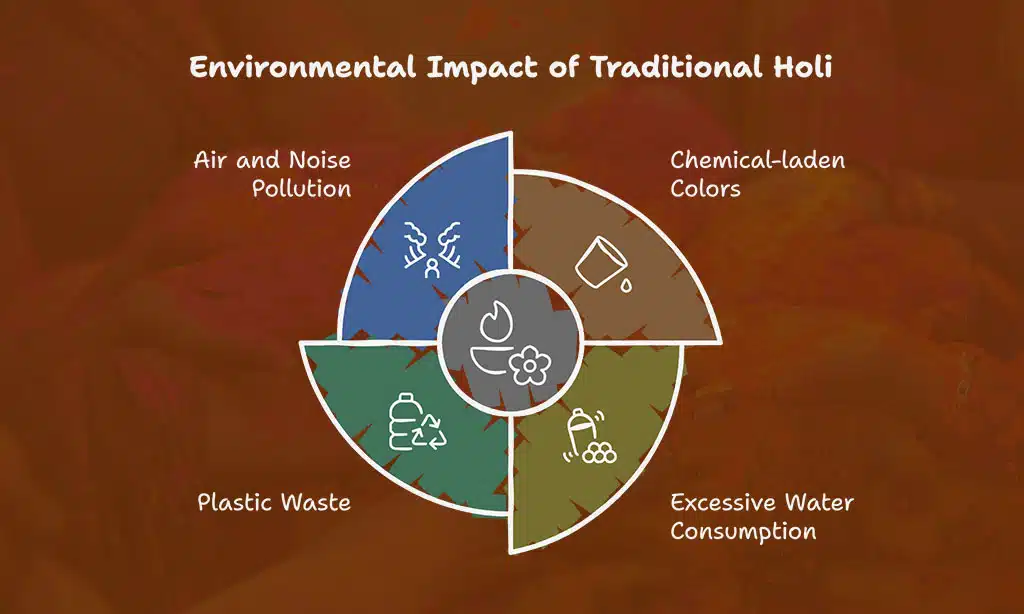
Holi’s traditional celebrations often include synthetic colors, excessive water usage, and wasteful practices. These habits harm the environment in several ways:
- Chemical-laden colors: Many commercial Holi colors contain toxic chemicals like lead, mercury, and chromium, which can cause skin allergies and pollute water bodies.
- Excessive water consumption: The use of water balloons and water guns leads to unnecessary wastage, contributing to the depletion of local water sources.
- Plastic waste: Balloons, plastic bags, and disposable plates used during celebrations add to land pollution.
- Air and noise pollution: Bonfires on Holika Dahan often involve burning waste materials, increasing carbon emissions and releasing harmful toxins.
| Environmental Issue | Impact on Nature | Long-term Consequences |
| Chemical Colors | Contaminate water & soil | Harm marine and plant life |
| Water Wastage | Depletes local reserves | Affects agriculture & drinking water supply |
| Plastic Waste | Non-biodegradable | Contributes to landfill and ocean pollution |
| Air Pollution | Carbon emissions from bonfires | Worsens climate change |
Benefits of an Eco-Friendly Holi Celebration
- Protects the environment: Reducing plastic waste, conserving water, and using natural colors lessen pollution.
- Healthier for skin and hair: Natural and organic colors prevent rashes and hair damage caused by synthetic powders.
- Encourages sustainability: Promotes eco-conscious choices that align with global sustainability goals.
- Fosters community participation: Creates awareness and encourages collective responsibility towards a greener future.
- Cost-effective: Many eco-friendly alternatives, such as homemade colors and decorations, are budget-friendly compared to synthetic products.
Eco-Friendly Ways to Celebrate Holi in 2025
As we move towards a more sustainable future, celebrating an Eco-Friendly Holi Celebration allows us to enjoy the festival while reducing environmental harm. With small but impactful changes, we can make Holi more inclusive, safe, and nature-friendly.
From using natural colors to adopting sustainable decorations, there are numerous ways to celebrate responsibly. Additionally, promoting eco-friendly choices ensures that the joy of Holi does not come at the cost of our planet. By incorporating traditional values with modern sustainability practices, we can create a festive experience that is both enjoyable and responsible.
Use Natural and Organic Colors
One of the simplest and most effective ways to enjoy an Eco-Friendly Holi Celebration is by using natural, homemade, or certified organic colors. Synthetic colors are often loaded with toxic chemicals that harm not just human health but also pollute water bodies and soil. Switching to natural alternatives ensures a safe and eco-conscious way of celebrating Holi.
DIY Homemade Colors:
- Yellow: Mix turmeric powder with gram flour.
- Red: Dry and grind hibiscus flowers or beetroot powder.
- Green: Crush dried spinach or neem leaves.
- Blue: Use dried jacaranda flowers or indigo leaves.
Where to Buy Organic Colors:
Many brands now offer herbal, non-toxic Holi colors that are safe for both skin and the environment. Look for organic Holi colors from reputable sources.
Comparison of Natural vs. Synthetic Colors:
| Feature | Natural Colors | Synthetic Colors |
| Ingredients | Flowers, herbs, food items | Chemicals, heavy metals |
| Skin Safety | Non-toxic, gentle on skin | Can cause rashes and allergies |
| Environmental Impact | Biodegradable | Pollutes water and soil |
| Availability | DIY or organic brands | Widely available but harmful |
| Cost | Affordable & homemade | Sometimes cheaper but harmful |
Water Conservation Tips for a Dry Holi
An Eco-Friendly Holi Celebration doesn’t mean skipping the fun—it means celebrating responsibly! Water scarcity is a growing concern in many regions, and reducing unnecessary water usage during Holi can contribute to conservation efforts. Opting for a dry Holi, where vibrant organic powders are used instead of water-based activities, ensures a sustainable and equally enjoyable celebration.
- Opt for dry Holi: Use colored powders instead of water fights.
- Set community rules: Encourage your neighborhood to limit water usage.
- Reuse water mindfully: If using water, collect rainwater or use recycled water.
- Host a sustainable rain dance: Instead of water wastage, create a fun, eco-conscious dance area with light mist sprays.
| Water-Saving Method | Impact |
| Dry Holi with colors only | Saves thousands of liters of water |
| Using rainwater | Reduces freshwater consumption |
| Community water-sharing rules | Encourages responsible celebration |
Sustainable Holi Decorations and Accessories
- Use recycled materials: Create decorations using old newspapers, paper streamers, cloth banners, and discarded cardboard.
- Choose biodegradable items: Instead of plastic plates and cups, use palm leaf or clay utensils that decompose naturally.
- Upcycle old items: Reuse old clothes for colorful decorations, or use natural flowers and leaves instead of synthetic decor.
- Avoid plastic balloons: Use paper-based or fabric buntings instead of plastic decorations.
- Eco-friendly rangolis: Create beautiful floor art using rice flour, flower petals, or organic colors.
Eco-Conscious Holi Sweets and Snacks
A significant part of Holi is the delicious food. Make it greener by choosing organic and homemade treats.
- Use natural ingredients: Prepare gujiyas, thandai, and laddoos using organic sugar, jaggery, and unprocessed flour.
- Buy from sustainable sources: Support local farmers and organic product suppliers.
- Avoid plastic packaging: Opt for eco-friendly containers instead of plastic wraps.
- Minimize food wastage: Serve portion-controlled meals to avoid excessive leftovers.
- Use reusable cutlery: Opt for steel, bamboo, or clay serving dishes.
| Eco-Friendly Sweet | Key Ingredients | Sustainability Benefit |
| Organic Gujiya | Jaggery, whole wheat flour | Healthier and plastic-free packaging |
| Natural Thandai | Almonds, saffron, organic milk | Uses local and organic produce |
| Herbal Laddoos | Nuts, dates, coconut | No artificial sweeteners, biodegradable serving options |
Engaging the Community in Eco-Friendly Celebrations

A truly Eco-Friendly Holi Celebration goes beyond personal choices; it involves the collective effort of communities. Encouraging neighbors, schools, and local organizations to adopt sustainable practices can significantly amplify the impact of eco-friendly celebrations. By fostering awareness and implementing small but effective changes, we can transform Holi into a festival that respects both tradition and the environment.
Hosting a Green Holi Event
Organizing a sustainable Holi event can be an excellent way to spread awareness and encourage responsible celebrations within your community. Here are some key steps to ensure your event is eco-friendly:
- Plan ahead: Set sustainability goals and outline how waste, water, and pollution will be minimized.
- Use organic color stations: Ensure that only natural, non-toxic colors are available for participants.
- Encourage zero-waste practices: Provide recycling bins and promote reusable or compostable tableware.
- Partner with local businesses: Support eco-friendly vendors who offer organic sweets, drinks, and decorations.
- Spread awareness: Use social media and local networks to educate attendees about the importance of a green Holi.
| Eco-Friendly Event Feature | Benefit |
| Organic color stations | Prevents exposure to harmful chemicals |
| Zero-waste cutlery | Reduces landfill waste |
| Limited water usage | Encourages conservation efforts |
| Recycling bins | Promotes responsible disposal |
| Sustainable decorations | Avoids plastic pollution |
Teaching Kids About Eco-Friendly Holi
Educating children about the significance of an Eco-Friendly Holi Celebration is essential for building long-term awareness. Holi presents an excellent opportunity to engage kids in fun, educational activities that teach sustainability.
Fun and Interactive Ways to Teach Kids:
- DIY Color-Making Workshops: Conduct hands-on sessions where kids learn to make organic colors from natural ingredients.
- Storytelling Sessions: Share stories highlighting the environmental impact of Holi and the importance of sustainability.
- Holi-Themed Eco Crafts: Encourage children to create decorations from recycled materials instead of buying plastic-based items.
- Tree-Planting Initiatives: Organize a tree-planting drive to compensate for the environmental impact of the festival.
| Activity | Learning Outcome |
| DIY color-making | Understanding natural alternatives to synthetic dyes |
| Storytelling | Building awareness of sustainability |
| Crafting from recyclables | Encouraging creative reuse of materials |
| Tree-planting | Promoting environmental responsibility |
Wrap Up
An Eco-Friendly Holi Celebration is a step towards protecting our environment while keeping the festive spirit alive. By choosing natural colors, conserving water, avoiding plastic waste, and promoting sustainability, we can enjoy Holi in a way that is both fun and responsible.
The more we involve our communities, educate younger generations, and spread awareness, the more impactful our celebrations become. Let’s make Holi 2025 a celebration of colors, joy, and eco-consciousness.
Would you like to share your own eco-friendly Holi experiences? Drop a comment and spread the message of sustainability!