

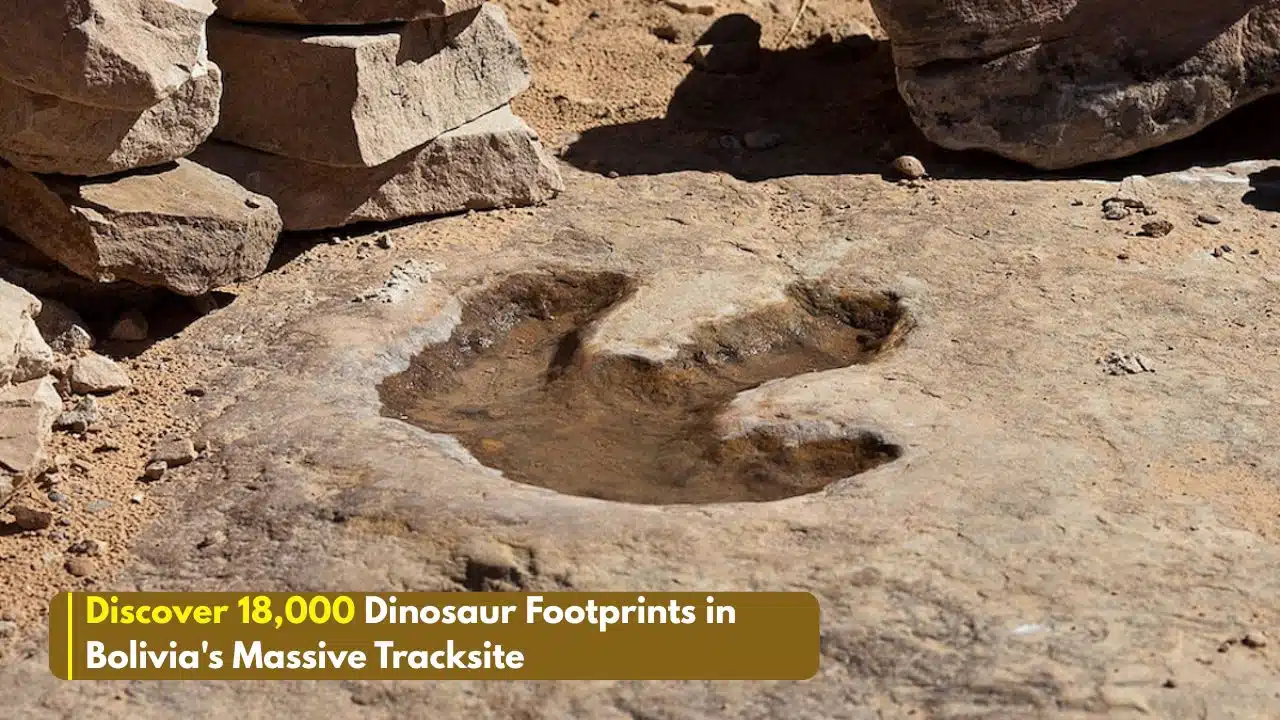
Bolivia has unveiled one of the most extraordinary paleontological discoveries in recent history: a tracksite containing nearly 18,000 dinosaur footprints. Located in the Torotoro National Park and the famed Cal Orck’o site near Sucre, this vast collection offers an unprecedented glimpse into the lives and behaviors of dinosaurs that roamed South America during the Late Cretaceous period, approximately 70 million years ago. The site, now recognized as the largest dinosaur tracksite ever documented, is not only a scientific treasure but also a major attraction for researchers and tourists alike.
The Discovery and Location
The Carreras Pampa tracksite in Torotoro National Park, situated on the eastern slope of the Andes, has been the focus of intensive research by an international team led by paleontologist Raúl Esperante from the Geoscience Research Institute in California. Over the course of recent surveys, scientists have meticulously cataloged almost 18,000 individual dinosaur footprints, making this the largest known concentration of dinosaur tracks in the world. The tracks are spread across nine distinct study sites within the park, each revealing a different aspect of dinosaur activity and behavior.
Cal Orck’o, located just outside Sucre, is the most famous of these sites. Discovered in 1985 by a local cement company, the site features a towering 100-meter-high, 1.5-kilometer-long vertical wall of limestone that preserves thousands of dinosaur footprints. The sheer scale of this fossil bed is staggering, with over 12,000 individual tracks identified across 465 distinct trackways. The vertical nature of the wall is due to powerful tectonic forces that uplifted the once-flat muddy plains into the steep cliff we see today.
Dinosaur Species and Behaviors
The tracks at Carreras Pampa and Cal Orck’o represent a diverse range of dinosaur species, including sauropods, ankylosaurs, ornithopods, titanosaurs, and theropods such as abelisaurids. At least eight to nine different types of dinosaur tracks have been identified, providing valuable insights into the variety of dinosaurs that inhabited the region. Notably, the site has yielded evidence of both herbivorous and carnivorous dinosaurs, with some of the largest tracks belonging to titanosaurs and abelisaurids.
One of the most remarkable discoveries at Cal Orck’o is the 347-meter-long trail of a baby theropod, affectionately nicknamed “Johnny Walker.” This track is the longest of its kind ever recorded and offers a rare glimpse into the early life stages of dinosaurs. The site also features the world’s largest recorded footprint from a carnivorous dinosaur, measuring over 115 cm across, which was likely made by an abelisaur.
The abundance and variety of tracks at Carreras Pampa suggest that this area was a high-traffic zone for dinosaurs. Most of the tracks are oriented roughly northwest-southeast, with ripple marks preserved in the sediment, indicating that these dinosaurs were roaming alongside an ancient coastline. The parallel orientation of some footprints may indicate that groups of dinosaurs traveled together, providing evidence of herding behavior among sauropods and solitary hunting by theropods.
Preservation and Geological History
The exceptional preservation of the dinosaur tracks at Carreras Pampa and Cal Orck’o is due to a unique combination of environmental and geological factors. Millions of years ago, dinosaurs roamed across muddy plains, leaving their footprints behind. Over time, layers of sediment covered these tracks, protecting them from erosion and allowing for fossilization. The formation of the Andes mountains played a crucial role in the preservation process, as powerful tectonic forces pushed the once-horizontal surface upward to an almost vertical position, with the wall now standing at a steep 72-degree angle.
The limestone wall at Cal Orck’o is a 1.5 km long and 110 meters high geological formation that contains over 5,000 dinosaur footprints from around 68 million years ago. The tracks are preserved in the El Molino Formation, a geological layer known for its rich fossil content. The site’s unique preservation has allowed scientists to study not only the footprints themselves but also other trace fossils such as tail dragging and swimming traces, providing a comprehensive picture of dinosaur behavior.
Scientific Significance and Research
The discovery of nearly 18,000 dinosaur footprints in Bolivia has significant implications for our understanding of dinosaur life and behavior. The sheer number of tracks and the variety of species represented offer a rare snapshot of a thriving hub of dinosaur activity. The site provides valuable insights into dinosaur behavior, such as herding patterns among sauropods and solitary hunting by theropods, contributing to our understanding of prehistoric life.
The research conducted at Carreras Pampa and Cal Orck’o has been published in leading scientific journals, including PLOS One, and has attracted attention from the global scientific community. The collaborative effort between Bolivian and international researchers has led to the identification of new species and the reevaluation of previous assumptions about the types of dinosaurs that inhabited South America during the Late Cretaceous period.
Tourism and Conservation
The dinosaur tracksites in Bolivia have become major tourist attractions, drawing visitors from around the world who are eager to walk in the footsteps of dinosaurs. The sites are not only educational but also offer a unique and immersive experience for tourists. The Bolivian government has recognized the importance of these sites and has taken steps to protect and preserve them, including designating Cal Orck’o as a UNESCO World Heritage Site.
Efforts to conserve the tracksites are ongoing, with local authorities working to balance tourism with scientific research and preservation. Educational programs and guided tours are available to help visitors understand the significance of the tracks and the importance of protecting these natural treasures for future generations.
Final Words
The discovery of nearly 18,000 dinosaur footprints in Bolivia is a landmark achievement in paleontology, offering an unprecedented glimpse into the lives and behaviors of dinosaurs that roamed the region during the Late Cretaceous period. The sites at Carreras Pampa and Cal Orck’o are not only scientific treasures but also major attractions for researchers and tourists alike. The exceptional preservation and variety of tracks provide valuable insights into dinosaur behavior and contribute to our understanding of prehistoric life. As research continues, these sites will undoubtedly yield even more fascinating discoveries, further enriching our knowledge of the ancient world.
























