Work is changing fast. People want more freedom, flexible hours, and fair pay. But many jobs still feel stuck in old ways—rigid schedules, unclear processes, and limited opportunities.
Sound familiar?
Enter DAOs (decentralized autonomous organizations). These groups run on blockchain technology and smart contracts to create a workplace with no boss or hierarchy. They offer transparent pay, shared decision-making, and remote work options.
This blog will show how DAOs are reshaping jobs for the better. You’ll learn about their benefits, how to join one, and what challenges they bring. Ready for the future of work? Keep reading!
Key Takeaways
- DAOs use blockchain and smart contracts to run without bosses or hierarchies. This creates fair pay, shared decisions, and remote work options.
- Workers in DAOs can choose tasks they like, enjoy flexible hours, and work from anywhere in the world.
- DAO jobs allow multiple income streams by joining several projects at once with automated payments via smart contracts.
- Challenges include uncertain incomes since most pay is task-based and delays in decision-making due to token-based voting systems.
- Joining a DAO starts on platforms like Discord or Twitter, where teams share tasks transparently using bounty boards or forums.
How DAOs Are Reshaping Work
DAOs change how people work together, using blockchain networks to connect teams worldwide. They replace strict managers with open, shared systems for smoother teamwork.
Decentralized collaboration
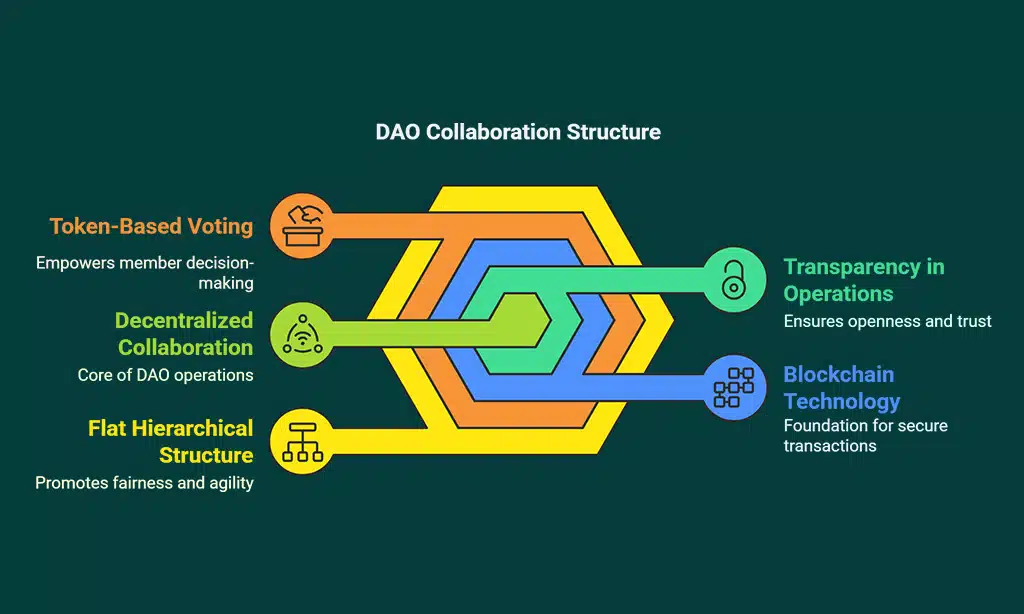
People work together in DAOs using public blockchains and smart contracts. Decisions get made through token-based voting, giving everyone a voice. This setup removes bosses and typical hierarchical structures.
Instead, teams operate in flat structures, where tasks are shared openly.
Global talent pools come into play, connecting workers from different places. Remote work becomes seamless as jobs focus on results instead of time spent at a desk. Blockchain technology keeps every action transparent, reducing agency costs and trust issues among employees.
Transparency in operations
DAOs make operations clear for everyone. Financial decisions are open to all members through decentralized governance. Mariano Ventura Barreira from MakerDAO explains that projects must be shared and voted on in forums.
This keeps the community involved and builds trust.
Smart contracts handle funds automatically, preventing misuse. Token-based voting lets every member have a say, removing hierarchical structures common in traditional companies. This flat structure promotes fairness and quick decision-making in real-time collaboration across global talent pools.
Benefits of DAO Jobs
DAO jobs let people work without strict bosses, making decisions together as equals. They offer ways to grow skills while earning in creative and open networks.
Greater autonomy for workers
Workers can choose tasks that match their interests. DAOs let participants decide how and when to work. This freedom beats rigid 9-to-5 schedules. Governance tokens give workers a voice in decisions, reducing top-down control found in hierarchical structures.
Automation handles boring tasks, leaving more time for creative work. Distributed networks and smart contracts cut middlemen, speeding up processes. Workers enjoy direct participation and fair pay within decentralized governance, making jobs less like chores and more fulfilling pursuits.
Flexible work opportunities
DAOs let people work from anywhere. No need to relocate or stick to a 9-to-5 schedule. Blockchain technology makes it easy to connect with global teams and projects. This means you can join from your couch, a café, or even another country.
Smart contracts handle tasks and payments quickly. You can take on jobs that fit your time and skills without rigid rules. Many DAOs embrace the gig economy, offering short-term bounties or long-term roles.
This freedom appeals to creators and freelancers who value independence over strict hours or office desks.
Multiple income streams
People earn from several DAOs at once. Smart contracts make this easier by automating payments for tasks completed. Workers take on various projects across a distributed network, choosing jobs that match their passions or skills.
A decentralized workforce supports the gig economy. For example, someone might contribute to coding in one DAO while managing social media for another. This setup brings flexibility and boosts earning potential without sticking to traditional nine-to-five workdays.
How to Get Started with DAO Jobs
Start by exploring communities that match your skills. Look for tasks or projects using blockchain-based platforms.
Finding bounties and projects
Bounty boards are a great place to start. They list tasks, deadlines, and payments upfront. These jobs often come from DAOs using blockchain technology and smart contracts. Platforms like Discord or Twitter host discussions about these tasks.
Sometimes, teams even use videoconferences to coordinate work.
Full-time positions in DAOs exist too. Websites such as Crypto Jobs List post these opportunities. You can also explore platforms connected to Web 3.0 and the creator economy for chances to join decentralized governance systems or collaborative ecosystems.
Many workers enjoy flexible schedules and multiple income streams through these roles across distributed networks worldwide!
Joining DAO communities
DAO communities often gather on platforms like Discord, Telegram, and Twitter. These spaces buzz with ideas, tasks, and discussions. People can connect globally without needing offices or formal structures.
Token holders vote on decisions, shaping the group’s future through decentralized governance.
Projects are shared transparently in bounty boards with clear pay rates and deadlines. Workers pick tasks that suit their skills. Meetings happen in virtual spaces like Zoom calls or chatrooms, keeping collaboration simple and remote-friendly.
Joining opens doors to the flexible work-from-home model tied to blockchain technology trends today.
Challenges of Working for DAOs
Paychecks can be unpredictable, which makes planning tough. Disagreements over rules or choices can slow progress.
Uncertainty in income
Earnings in DAOs can go up and down. Most jobs pay through bounties or project work, not steady salaries. Workers often rely on smart contracts for payment after tasks are done. This setup may suit the creator economy but feels risky compared to traditional jobs.
Governance tokens decide many payments in decentralized governance systems. Votes from token holders approve budgets, which might delay payouts. Projects like those in MakerDAO use forums to justify funding, adding more variables to income timing and stability.
Governance and decision-making complexities
Token-based voting gives everyone a voice, but it can slow decisions. Too many opinions may cause delays or disagreements. DAOs lack central leaders, which makes reaching consensus tricky at times.
Global regulations add another layer of challenge. Operating across borders invites legal issues. Smart contracts run the show, yet bugs in the code can lead to big risks. Balancing fairness and efficiency remains tough for decentralized governance models like DAOs.
Takeaways
DAOs are shaking up how we work. They bring freedom, fairness, and global teamwork to the table. Jobs can now be flexible, transparent, and rewarding for anyone willing to jump in.
As more people join these digital groups, work is starting to look less like a job and more like a shared mission. The future of jobs might just be decentralized!
FAQs
1. What are DAOs, and how do they create jobs?
DAOs, or decentralized autonomous organizations, run on blockchain technology using smart contracts. They enable a distributed workforce to collaborate without traditional bosses or offices.
2. How does decentralized governance impact the future of work?
Decentralized governance removes hierarchical structures. It allows flat structures where decisions are made collaboratively in real-time by members across the globe.
3. Can DAOs support remote work and outsourcing?
Yes, DAOs thrive on remote work and outsourcing by connecting a global talent pool through distributed networks. This makes working from home or anywhere possible.
4. How do DAOs fit into the creator economy?
DAOs encourage an entrepreneurial spirit within collaborative ecosystems. Creators can join projects permissionlessly while earning directly for their contributions.
5. Will artificial intelligence play a role in DAO-based jobs?
AI will likely assist with tasks like corporate communication and managing workflows in these decentralized systems, making processes smoother for teams worldwide.
6. Are startups using DAOs to reshape the job market?
Absolutely! Startups increasingly use decentralised finance models powered by DAOs to attract talent without borders while rethinking traditional employment methods in industries like the metaverse and beyond.