

Many cleaners add harsh perfume and irritate your lungs. You may mop twice and still see streaks and dirt hiding in grout lines. Hard floors like wood and tile are easier to clean than carpet, since you can sweep or vacuum before you mop.
This guide shows easy diy floor cleaner recipes using white vinegar, washing soda, olive oil, or sal suds. You will get step by step tips for hardwood floors, tile grout, and carpets.
Keep reading.
Key Takeaways
- Non-toxic cleaners cut harsh fumes and lower skin-irritation risks; 8 out of 10 U.S. households scrub floors weekly, and DIY mixes with vinegar, baking soda, or castile soap cost less than store brands.
- For hardwood, mix ½ teaspoon castile soap with 1 gallon hot water, add ¾ cup olive oil and ½ cup lemon juice, wring the mop until barely damp, and skip acid on raw wood to protect the finish.
- To clean tile grout, stir equal parts baking soda and warm water into a paste, spray white vinegar over it, wait 15 minutes, scrub with a brush, then rinse with clean water—avoid vinegar on marble or granite.
- On carpet, vacuum first, test any cleaner on a corner for 24 hours, mix 2 teaspoons of non-toxic concentrate per gallon of lukewarm water, dab stains gently, blot excess moisture, and air-dry to prevent mold.
- Add 5–10 drops of lemon, lavender, or orange essential oil per quart of cleaner for scent; always test oils on a small patch to avoid film on wood or darkened grout.
Benefits of Using Non-Toxic Floor Cleaners
Non-toxic floor cleaners cut harsh fumes in homes. Children breathe easier when indoor air quality stays high. Eco-friendly brands post clear ingredient lists, so families spot no hidden risks.
Homemade mixes with white vinegar, castile soap, and a dash of lemon essential oil cost less. Eight out of ten households scrub floors weekly, and safe recipes lower skin irritation worries.
Some eco cleaners take too long to dry, flagging stain removal at just twenty percent. Odd odors may linger after a round of mopping. A few drops of essential oils solve scent issues, adding fresh lemon or lavender notes.
A tool like a scrub brush or a mild grout cleaner attacks rough tile lines. Allergen reduction and low skin risk make green cleaning a smart pick.
Essential Tips for Safely Cleaning Different Floor Types
Test the pH of your eco-friendly cleaner, with a strip of paper, before you mop a hardwood plank, it keeps the finish intact. Use a cleaner like a rag, and a scrub brush on tile grout, they lift grime without harsh chemicals.
Hardwood Floors
Hardwood floors need extra care. Too much water can ruin their finish.
- Sweep or use a floor sucking tool to pull grit before every mop session.
- Mix 1/2 teaspoon of castile soap with a gallon of hot water to avoid harsh cleaning agents.
- Add 3/4 cup olive oil and 1/2 cup lemon juice to the water for a non-toxic floor cleaner that also shines.
- Wring the mop until barely damp, leaving minimal moisture that protects the finish.
- Apply hand sanitizer or rubbing alcohol only on spots and wipe them off fast, to kill germs without warping.
- Clean high-traffic zones once a week and mop less active rooms every other week to once a month.
- Skip white vinegar or lemon juice on raw wood, to avoid etching or dulling the surface.
Tile and Grout
Tile and grout wear dirt fast in busy homes. A good plan keeps tiles bright.
- Mix equal parts baking soda and warm water into a thick paste in a bowl.
- Spray white vinegar over the paste, wait 15 minutes, then scrub with a cleaning brush.
- Rinse grout lines with clean water using a damp cloth or mop head to wash away paste.
- Skip vinegar on marble or granite tile, as acid can dull or etch these stones.
- Add five drops of lemon essential oil to the spray mix for a fresh scent and natural cleaning boost.
- Mop high-traffic areas once a week and clean less busy spots every other week to once a month with a mild DIY floor cleaner.
Carpeted Floors
Carpet needs gentle care to stay fresh. Natural cleaning protects fibers and family health.
- Vacuum with a suction tool to pull up crumbs and dust before you add moisture.
- Choose non-toxic floor cleaners that suit soft fibers, like Babyganics Fragrance-Free Floor Cleaner Concentrate.
- Test any cleaner on a corner, let it sit 24 hours to check for fading or shrinkage.
- Mix two teaspoons of the cleaner into a gallon of lukewarm water, stir gently.
- Dab spots with a soft cloth, avoid harsh scrubbing that can push dirt in deeper.
- Blot wet areas with a dry towel to pull out extra liquid and speed dry time.
- Air out the space, open windows or run a fan, keep traffic off until the carpet feels dry.
- For a deep refresh, run a hot water extractor with a few drops of lemon essential oil in the rinse step.
- Tackle ink or grease stains with a drop of rubbing alcohol on a cloth, dab gently until the mark lifts.
DIY Non-Toxic Floor Cleaning Solutions
Skip harsh chemicals and whip up a simple mix of vinegar, sodium bicarbonate, liquid soap and citrus oil for a fresh, non-toxic clean—keep reading for the full recipes!
Vinegar and Water Mix
Mix half a cup of white vinegar with one gallon of water in a container or spray bottle. The acetic acid hits 0.166% at that ratio, enough to cut through grime, yet gentle on sealed hardwood floors and tile.
Dip a floor tool or scrub brush in the mix, gliding across grout lines to make a simple grout cleaner.
Drop in ten drops of lemon essential oil or lavender oil to turn it into a spa-like all-purpose cleaner. The natural cleaning trick zaps water-based stains and mineral deposits without harsh chemicals.
Marble or granite hate acid. Avoid it there. Rinse with plain water to keep it a safe, non-toxic floor cleaner.
Baking Soda and Castile Soap Blend
Use baking soda and Dr. Bronner Pure-Castile Liquid Soap in a mop bucket. Add 1/2 cup of each to 3 gallons of hot water. Swirl until foam forms. Mop floors with this bubbly blend. Watch how it tackles greasy stains on hardwood floors, tile, and vinyl.
This non-toxic floor cleaner stays gentle while it cuts through dirt.
Drop in a few drops of lemon essential oil for a zesty scent, or pour a splash of white vinegar for extra shine. Rinse the mop head often to keep the water clean, and swap in fresh solution for heavy grime.
This diy floor cleaner works with natural cleaning power, without harsh fumes. Pets and kids can roam free on floors once they dry.
Essential Oil Additions for Fragrance
Mix a gallon of hot water with 3/4 cup olive oil and 1/2 cup lemon juice, then stir in 10 drops of lemon essential oil for extra zing. Orange oil adds bright citrus notes, while peppermint and spearmint bring a crisp, cool kick.
Litsea oil lends a soft floral twist to any batch. You can also drop a few oils into a DIY floor cleaner with white vinegar and water or a baking soda plus castile soap blend.
Test oils on a small patch of hardwood or grout before you mop the whole floor. Too many drops can leave a slimy film on oak or maple finishes. Grout lines may absorb pure oil and darken.
Start with five drops per quart, then adjust for scent strength.
Recommended Store-Bought Non-Toxic Floor Cleaners
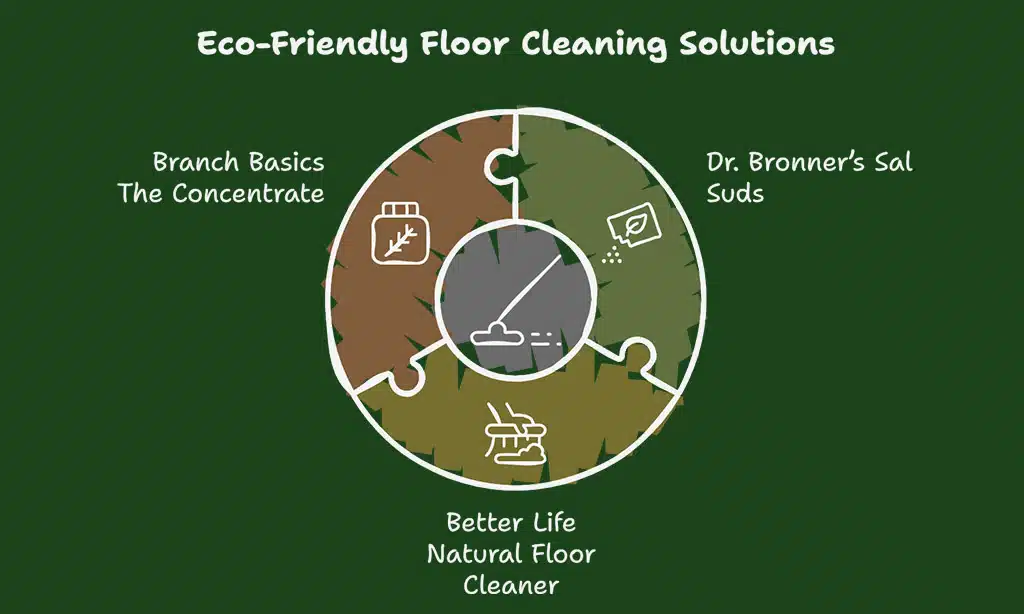
Store-bought options blend castile soap, white vinegar, and lemon essential oil to cut grime on all floors. Scroll down to see the top picks, then grab a scrub brush or a soft mop to try them out.
Dr. Bronner’s Sal Suds Biodegradable Cleaner
Dr. Bronner’s Sal Suds Biodegradable Cleaner earns top marks among non-toxic floor cleaners. It uses plant-based surfactants to lift dirt without harsh fumes. A tiny 1/2 tsp per 3 gallons of hot water handles large rooms.
Add lemon essential oil for fresh fragrance. This eco-friendly solution works on hardwood floors, cement grout joints, tile, and vinyl with no streaks.
Garden-friendly microbes break down residues fast, making cleaning feel like a breeze. Grease meets its match while rinse water runs clear and wood grain gleams. Scrub grout with a nylon grout brush, then rinse for spotless tiles.
The sal suds solution draws on castile soap roots, yet it tackles shower soap scum with ease.
Better Life Natural Floor Cleaner
Better Life Natural Floor Cleaner uses plant-based surfactants and water. The brand ships it in a 32 fl oz recyclable bottle. It meets USDA bio-based product standards. The formula cleans hardwood floors and tile grout.
It lifts spills without bleach or ammonia. It leaves a pleasant scent of essential oils, like lemon essential oil. You can use a microfiber mop or a spray bottle. This cleaner fits a non-toxic floor cleaning plan.
Many users mix it with white vinegar for a boost. You avoid adding washing soda or liquid dish soap. The product scrubs away pet hair and cooking grease. It guards grout against wear and dulling.
Application feels quick and mess free. Test reviews rank it high among non-toxic floor cleaners. Eco-friendly shoppers praise its natural cleaning power. The lemon essential oil scent freshens every room.
Branch Basics The Concentrate
Branch Basics The Concentrate uses plant and mineral-based ingredients. It tackles grime on hardwood floors, tile and grout, in carpets and beyond. You stir a capful into water for a clear diy floor cleaner that cuts grease without harsh fumes.
This bottle wins praise for safety and transparency. You boost cleaning power with a splash of white vinegar or a dash of washing soda to lift stubborn spots. The mix works on sealed wood, vinyl, tile, grout and adds a fresh lemon essential oil scent.
Common Mistakes to Avoid When Cleaning Floors
Cleaning floors demands focus and care. Tiny mistakes can damage wood or tile.
- Skipping spot tests can cause finishes to peel. Always try a patch before you mop the whole floor.
- Pouring white vinegar on untreated wood or stone eats away sealants. Acidic cleaners like lemon juice or rubbing alcohol can etch surfaces.
- Overwetting hardwood floors leads to warping or mold. Use a damp mop, avoid puddles, limit water to prevent damage.
- Scrubbing cork with a hard cleaning brush tears the surface. Swap in a cleaning pad or soft bristles to protect soft floors.
- Mixing castile soap, washing soda, sal suds, lemon essential oil and olive oil in one pot yields a greasy, cloudy film. Stick to one diy floor cleaner recipe for safe, natural cleaning.
- Neglecting pH balance can dull grout lines or stone tiles. Choose a grout cleaner with gentle surfactants to preserve color.
Takeaways
Your floors can gleam with safe, green cleaners, without dulling your health. You can mix vinegar, baking soda, castile soap, and a few drops of essential oil in minutes. Grab a mop or a steam vapor system, then treat high-traffic spots first.
Watch natural products tackle grime with gusto, while keeping kids and pets safe. Keep this guide handy, and you will enjoy fresh floors free of toxins every day.
FAQs
1. What ingredients make a solid DIY floor cleaner?
Mix white vinegar, lemon juice, and a spoon of washing soda with warm water. Add a squirt of castile soap or sal suds. Drop in a few drops of lemon essential oil or other essential oils. Shake in a spray bottle. You get a simple, natural cleaning solution that rivals store brands. This is a top non-toxic floor cleaner.
2. How do I clean hardwood floors safely?
Sweep or vacuum first. Then mop with warm water, castile soap, and a dash of olive oil. It feels like a spa day for your wood. Olive oil acts as a wood moisturizer and adds a gentle shine. Spot-treat sticky areas with rubbing alcohol and a soft cloth. Dry right away. Your hardwood floors look fresh, no harsh chemicals needed.
3. How can I tackle grout without harsh chemicals?
Make a grout cleaner with washing soda, white vinegar, and warm water. Think of it like a bubble bath for grout. Spray on the lines, let it fizz, then scrub. No sweat, just rinse. This DIY floor cleaner cuts grime while staying non-toxic.
4. Can I mix white vinegar with other cleaning products?
Yes, you can blend white vinegar with rubbing alcohol, castile soap, and water for more power. But never add bleach. Wear gloves, open a window, let fumes clear fast. This mix stays in the realm of safe, non-toxic cleaning products.
5. How do I keep my hands from drying out?
Many natural cleaning mixes strip oils. Rubbing alcohol is rough too. Keep a moisturizer by the mop. Or rub olive oil into your hands after you work. A gentle hand cream works well too. Your skin stays soft while your floors shine.