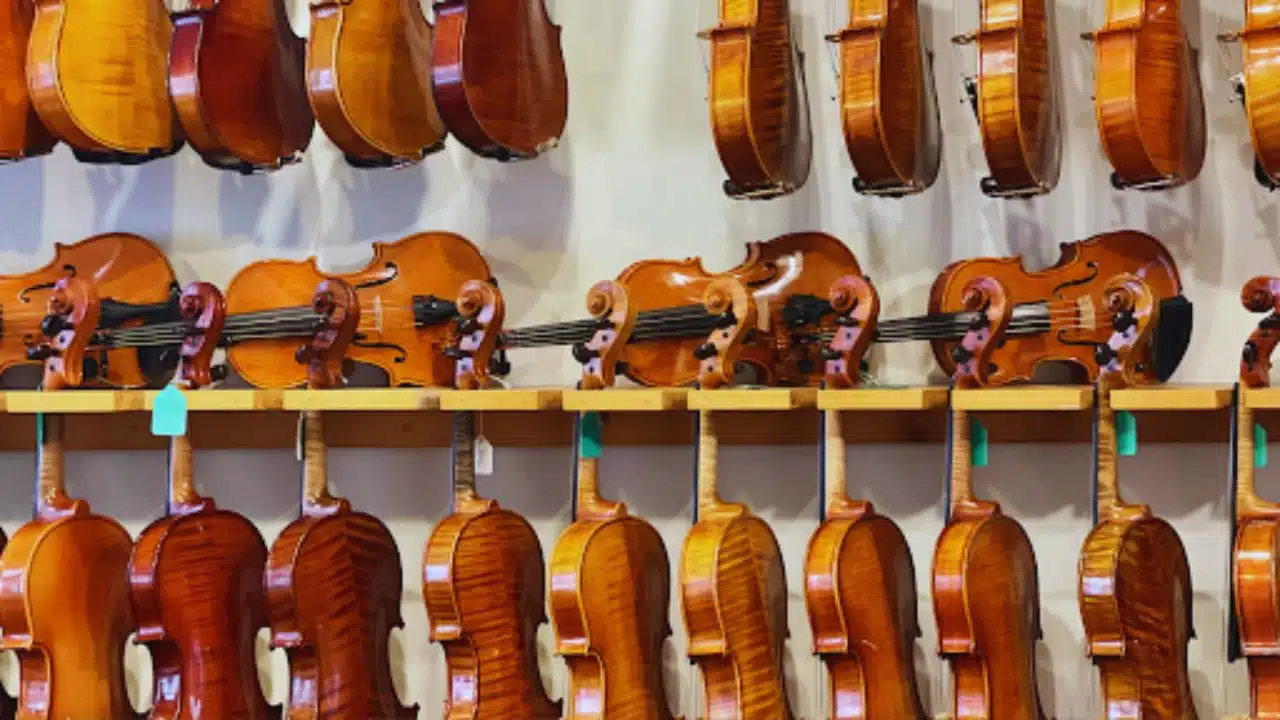
A Stradivarius violin recently sold for $23 million, becoming the most expensive violin in history. Sotheby’s has announced that the Joachim-Ma Stradivarius could sell for between $12 and $18 million, potentially breaking the current auction record. Even “ordinary” vintage Italian instruments routinely fetch hundreds of thousands of dollars.
These astronomical prices have created an impossible equation for young musicians. Students at top conservatories already struggle with educational debt, and the finest tools of their trade now cost more than most people’s lifetime earnings. The crisis has reached a point where established professionals are speaking out.
“Even the great Itzhak Perlman has publicly said that if his career were to start today, there’s no way that he would have been able to afford any of the instruments that he owns,” observes Cho-Liang Lin, a violinist, who performs on the 1715 “Titian” Stradivarius and teaches at Rice University’s Shepherd School of Music. Having taught at The Juilliard School and Rice for over three decades, Lin has witnessed firsthand how the instrument market has priced out talented students. His own journey from Taiwan to studying with Dorothy DeLay in New York gives him unique insight into the financial challenges young musicians face when pursuing world-class training.
The Modern Instrument Alternative
“Modern instruments can be excellent. That’s the bottom line,” Cho-Liang Lin states, addressing the centuries-old bias favoring antique Italian violins. He owns four modern violins that he loans to his students and occasionally takes on tour himself.
“Once in a while, I play on my Sam Zygmuntowicz, made in 2000 in Brooklyn. I tour with this violin, and often people can’t tell that I’m playing on a modern instrument,” he notes. Modern violin prices typically range from $7,500 to $48,000. The upper echelon makers can fetch $60,000 to $150,000 per violin, a fraction of what even modest antique instruments command.
Controversial blind tests conducted by maker Joseph Curtin support this view. In 2012, ten renowned soloists participated in the largest-ever blind testing experiment in Paris and New York, where new violins consistently outperformed old Italian instruments. Professional violinists, wearing modified welders’ goggles under low lighting, were unable to distinguish between old and new violins at a level better than chance. “If modern violins costing, let’s say $100,000, prove to be superior to a 10 million dollar Stradivari, the market is going to be in upheaval,” Cho-Liang Lin observes.
Contemporary makers like Sam Zygmuntowicz, Stefan-Peter Greiner, Terry Borman, Gregg Alf, and Joseph Curtin are creating instruments sought after by international soloists. Some have four-year waiting lists, indicating strong demand for quality modern instruments.
Loan Programs and Personal Solutions
Various approaches have emerged to address the affordability crisis of the instrument. The Maestro Foundation lends over 100 instruments to gifted young musicians. The Rachel Barton Pine Foundation operates a similar program.
Many conservatories maintain collections for student use. Cho-Liang Lin takes a direct approach: “I have four modern violins that I loan out to my students.” This personal lending addresses the catch-22 where students need quality instruments to develop their skills and win auditions, but can’t afford such instruments without an established career.
One Maestro Foundation recipient reported their loaned instrument was “indispensable in allowing me to win orchestral auditions,” including a position with the Milwaukee Symphony Orchestra. These programs provide crucial support during the transition from student to professional.
“Don’t wait for that great loaner of a 17th-century Italian violin,” Lin advises, “but actively seek out what you can afford from a modern maker.”
Stradivarius violins
Understanding Instrument Relationships
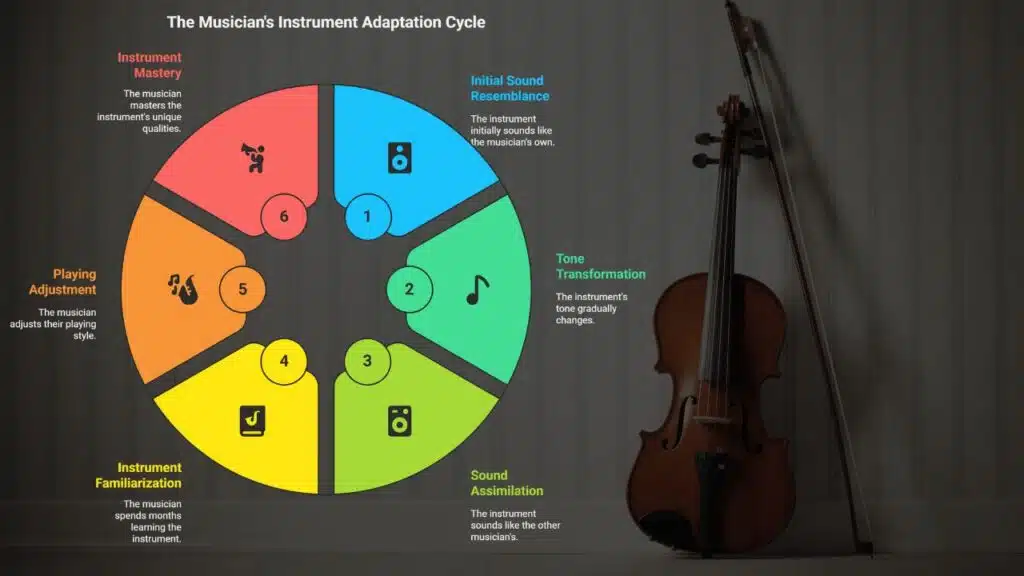
Musicians often need to adapt to different instruments throughout their careers. Cho-Liang Lin shares an illuminating story from Italy, when renowned violinist Salvatore Accardo borrowed Lin’s Stradivarius when a string on Accardo’s own Stradivarius broke mid-performance. “Initially, the violin resembled my own sound for the first 5 minutes. However, over the next 5 to 10 minutes, the tone gradually transformed, and by the end of the performance, it sounded just like Salvatore.”
“I would not have believed it if I hadn’t heard it myself. It was amazing—I call it voodoo science,” Lin says of this phenomenon with a chuckle.
He reports spending six to ten months getting to know each new instrument. “You’re listening constantly to what the violin can do, and you’re adjusting your playing accordingly.” Some violins demand vigor and aggression; others require aristocratic elegance.
He compares Stradivarius violins to driving a Rolls-Royce (“impeccable and elegant”), while Guarneri violins resemble Ferraris, with “raw power” that needs to be harnessed. This adaptability becomes essential for musicians who may play many different instruments throughout their careers, from student loans to orchestra-owned instruments.
Financial Realities and Career Planning
Modern classical musicians need to possess both business acumen and musical skill. “You need to know how to market yourself, how to negotiate contracts, and how to be entrepreneurial,” Lin tells his students.
Alternative funding sources have emerged to help young musicians:
- Jack Kent Cooke Young Artist Awards – up to $10,000 for instrument purchases
- Crowdfunding campaigns through platforms like GoFundMe
- Union loans through organizations like Actors’ Equity
- Borrowing against retirement accounts or life insurance policies
- Music school stipends and matching grants
Career paths have also diversified. Not every talented violinist will achieve a solo career or orchestral position.
Lin provides what he calls “brutally honest but caring advice” to students who may not find solo careers, encouraging them to pursue fulfilling musical roles off the center stage rather than feel a sense of failure. Quality modern instruments often require patience. “The good ones often will have like a 4 year wait period,” Lin notes, “and so during those 4 years you can use some other instruments, but it will be really worth your money and your patience to wait.”
Practical Solutions for a New Era
The violin market has created a two-tier system where vintage instruments have become investment vehicles rather than working tools. Recent sales data show consistent appreciation: the “Lady Blunt” Stradivarius sold for $15.9 million in 2011, while the recent $23 million sale of the Baron Knoop Stradivarius sets a new benchmark.
Musicians and educators are developing workarounds. Some focus exclusively on modern instruments. Others create sharing arrangements or long-term loan programs.
Music schools increasingly recognize the need to provide instruments for their students. Cho-Liang Lin, who has directed La Jolla SummerFest for 18 years and serves as Artistic Director of the Hong Kong Beare International Chamber Music Festival, understands both artistic and economic pressures. “Sustainable artistic vision requires pragmatic financial thinking,” he states.
His philosophy centers on musical priorities over instrument pedigree. “You’re only as good as your last performance,” he says, emphasizing that music matters more than the maker’s label inside the violin. The Grammy-nominated violinist continues to balance his performing career with educational commitments across multiple continents.
Lin’s festival work exemplifies his belief in nurturing emerging talent alongside established artists in international venues.
Modern makers continue advancing their craft. MyLuthier, which specializes in contemporary instruments, reports strong demand from young professionals. Shops like Metzler Violins regularly host exhibitions featuring dozens of modern American makers, with instruments ranging from $7,500 to $48,000.
Loan programs continue expanding:
- Chicago Musical Pathways Initiative – provides stipends for instrument purchases
- The Maestro Foundation – lends over 100 instruments to gifted young musicians
- Rachel Barton Pine Foundation – offers instrument loans and career grants
- Conservatory collections – built through donations and available to students
- Private dealer loan programs – some shops match musicians with benefactors
These practical solutions suggest a path forward for classical music, where talent and dedication matter more than access to multimillion-dollar instruments. Young violinists entering the field today have options their predecessors couldn’t imagine, even if the dream of owning a Stradivarius remains out of reach for all but a fortunate few.