

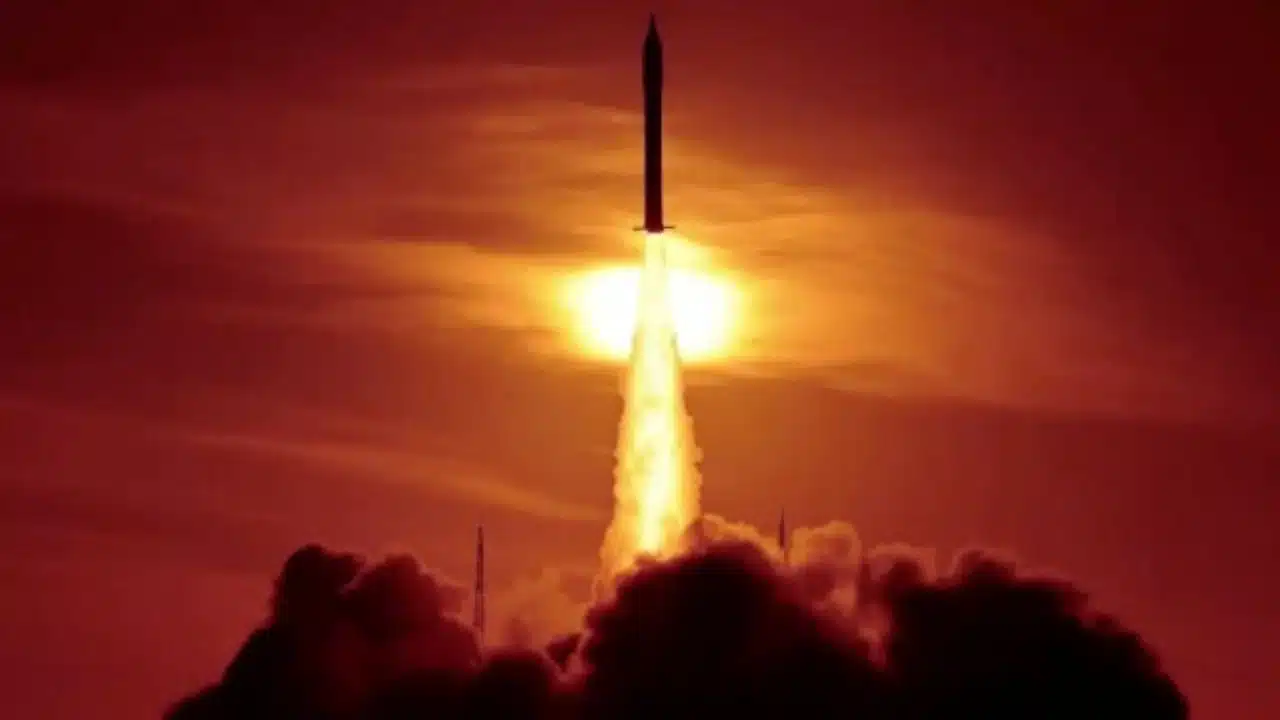
China launches first commercial cargo spacecraft with the DEAR-5 experimental platform, marking a notable step for the country’s private space sector and its push to broaden in-orbit research services. The spacecraft lifted off on a Kuaizhou-11 rocket from the Jiuquan Satellite Launch Center, carrying dozens of experiments and a separate satellite payload into planned orbit.
The DEAR-5 mission puts a privately developed, cargo-capable experimental platform in orbit, expanding China’s commercial options for microgravity research.
Lead
China launches first commercial cargo spacecraft as Beijing-based AZSPACE’s DEAR-5 entered orbit after a Kuaizhou-11 Y8 launch from northwest China on Saturday. The mission delivered DEAR-5—described as a cargo-capable space experimental platform—alongside the Xiwang-5 phase-2 satellite, adding momentum to China’s fast-growing commercial space ecosystem.
What launched, and who built it
DEAR-5 is a commercial experimental spacecraft developed by AZSPACE, and it is designed to host research payloads and return experimental data over at least one year of orbital operations. Chinese state media described the launch as the country’s first commercial space-born experimental capsule, underscoring its role as a private-sector milestone rather than a traditional state cargo craft like Tianzhou.
AZSPACE said the DEAR name reflects Discovery, Exploration, Advance and Reentry, and the vehicle is part of the company’s B300-L family. The spacecraft combines a service module with a payload module and is intended to support a wide mix of users across universities, institutes, and companies.
When, where, and how the mission flew
The Kuaizhou-11 Y8 rocket lifted off at 9:08 a.m. Beijing Time from the Jiuquan Satellite Launch Center, successfully placing its payloads into the planned orbit. China Daily reported DEAR-5 operating in an orbit about 343 kilometers above Earth.
Kuaizhou-11 is a solid-fueled launch vehicle developed by China Aerospace Science and Industry Corporation (CASIC), and Xinhua said this was the fourth flight of the Kuaizhou-11 rocket. China Daily described the Kuaizhou-11 as about 25 meters tall, with a 2.2-meter diameter and a liftoff mass around 78 metric tons.
What DEAR-5 carries (and why it matters)
The DEAR-5 mission includes 34 experimental payloads spanning microgravity research, space technology verification, materials research, and life and medical science-related work. Xinhua also described onboard hardware such as thin-film solar arrays and multiple experiment-support systems, including sensors, an optical camera, and compact lab facilities intended for flexible in-orbit use.
China Daily reported that beyond standard experiment racks, DEAR-5 also carries mini space labs designed for experiments and educational use. AZSPACE’s chairman Zhang Xiaomin said demand is rising among institutions and companies for access to space-based research environments, positioning DEAR-5 as a service platform for that market.
Mission facts table
| Item | Details |
| Launch vehicle | Kuaizhou-11 Y8 (solid-fueled), developed by CASIC |
| Launch time | 9:08 a.m. Beijing Time, Dec. 13, 2025 |
| Launch site | Jiuquan Satellite Launch Center (northwest China) |
| Primary commercial spacecraft | DEAR-5 (AZSPACE) |
| Payload capacity (DEAR-5) | 300 kg payload; 1.8 m³ cargo space |
| Experiments onboard | 34 experiments from universities, institutes, and companies |
| Reported operating orbit | About 343 km (as reported by China Daily) |
| Secondary payload | Xiwang-5 phase-2 satellite (China Academy of Space Technology) |
The rocket and performance context
Xinhua said Kuaizhou-11 can deliver about one tonne to a 700-kilometer sun-synchronous orbit. China Daily also reported Kuaizhou-11 performance as roughly 1 tonne to a 700-kilometer sun-synchronous orbit or around 1.5 tonnes to a typical low-Earth orbit.
That lift class is smaller than the rockets used for large station cargo ships, but it is well-suited to “hosted payload” missions like DEAR-5 that prioritize frequent access and targeted experiment campaigns. This approach mirrors a broader global trend: using smaller launchers and standardized spacecraft buses to fly research and technology demos faster than traditional flagship missions.
How this connects to China’s next cargo plans
While DEAR-5 is an experimental cargo-capable platform rather than a dedicated space-station freighter, its launch arrives as China develops additional commercial cargo vehicles aimed at supporting Tiangong logistics over time. For example, Xinhua reported that Qingzhou, a next-generation cargo spacecraft, has achieved technical milestones and is scheduled for a maiden flight next year.
Separate reporting has highlighted Haolong, a reusable winged cargo shuttle concept intended to dock with Tiangong and later return to Earth with a runway landing profile. Space.com reported Haolong’s approximate dimensions (about 10 meters long) and described the concept as a reusable cargo shuttle designed for station servicing and recovery.
Related commercial cargo projects (reported)
| Vehicle | Developer (reported) | Reported role | Status/timeline (reported) |
| DEAR-5 | AZSPACE (Beijing) | Cargo-capable experimental platform; 34 experiments | Launched Dec. 13, 2025 |
| Qingzhou | Chinese Academy of Sciences’ Innovation Academy for Microsatellites (reported by Xinhua/People’s Daily Online) | New-generation cargo spacecraft concept | Maiden flight next year (per Xinhua/People’s Daily Online report) |
| Haolong | AVIC subsidiary Chengdu Aircraft Design Institute (reported) | Reusable cargo shuttle concept; runway landing described | Design publicly revealed in 2024 reporting |
What comes next
Xinhua said DEAR-5 is designed to support orbital operations for at least one year while returning experimental data, suggesting follow-on experiment cycles could be added as the platform’s systems mature. China Daily also framed DEAR-5 as part of a broader push to provide standardized, repeatable access to microgravity conditions for scientific and commercial users.
If DEAR-5 performs as planned, it may strengthen confidence in China’s space-as-a-service model—where private firms build platforms and sell experiment slots—alongside the country’s longer-term work to diversify cargo and research infrastructure in low Earth orbit.





















