The year 2024 was defined by the desperate, often comical attempt to turn every professional into a “prompt engineer.” We were told that the future of work belonged to those who could most eloquently whisper instructions into a chat box. We spent countless hours learning the dark arts of framing requests, setting parameters, and refining outputs from large language models. This era was characterized by a frantic, manual engagement with artificial intelligence. It was a destination we had to visit. We opened a specific browser tab, we typed a request, and we waited for a response.
As we navigate the professional landscape of 2026, it is abundantly clear that the “prompt” era was merely a crude transition phase. It was the training wheels for a much larger cognitive shift. The novelty of the chat box has worn off. The thrill of watching a bot generate a three-paragraph email has been replaced by a realization that we are still doing the heavy lifting of coordination. We are still the ones dragging data between tabs, syncing calendars, and managing the sprawling mess of our digital dashboards.
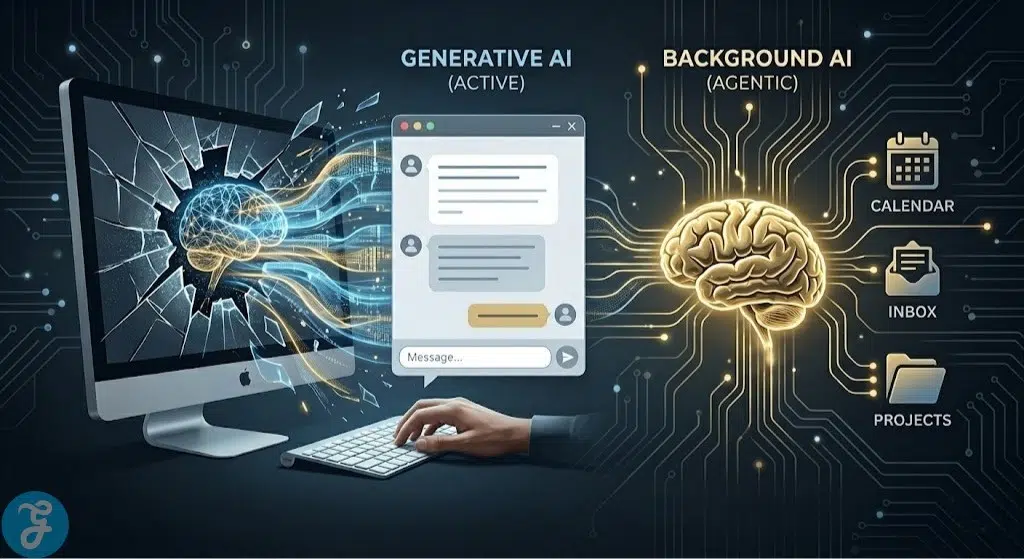
We are currently witnessing the total execution of the user interface. We are moving from “Generative AI” to “Background AI.” This shift is not about a better bot. It is about an invisible, pervasive intelligence layer that operates behind the scenes to build a truly Autonomous Professional Life. In this new reality, if you still have to open an app and type a prompt to get your work done, you are already obsolete. The goal is no longer to interact with machines more effectively. The goal is to stop interacting with them entirely so that they can finally start working for us.
To understand why the dashboard is headed for the graveyard, we must analyze the structural friction of the modern workflow and the rise of intent-based, agentic systems.
The Dashboard Graveyard: Why UI is the Enemy
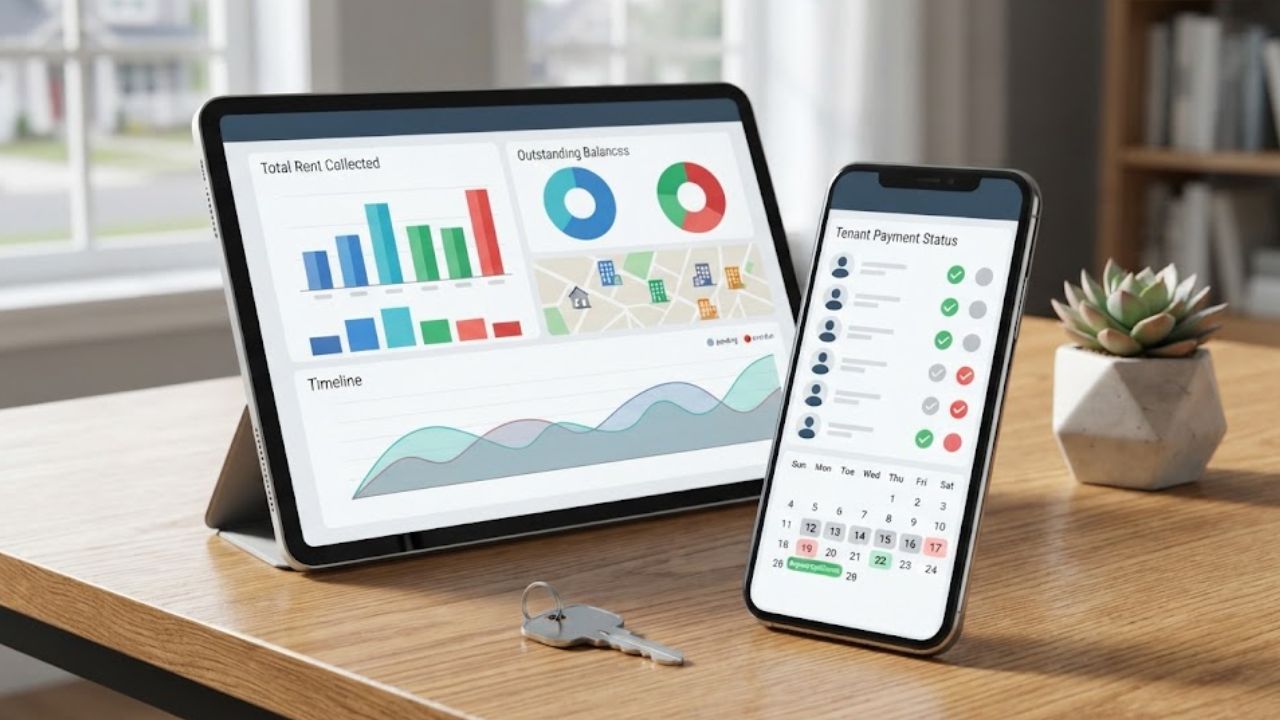
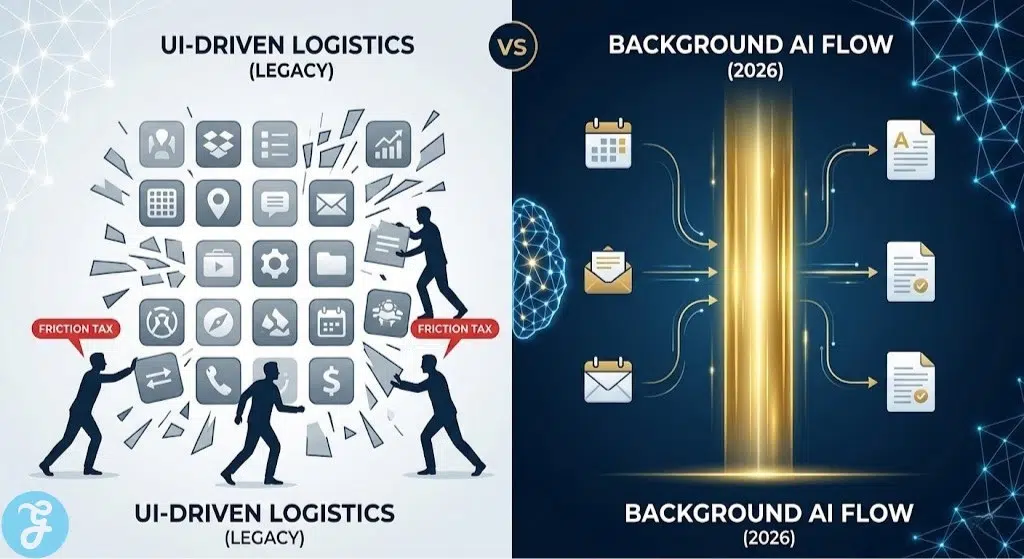
For the last decade, we have been sold a lie about “productivity.” We were told that more apps equaled more efficiency. This led to the creation of the modern professional dashboard. It is a fragmented, chaotic world where we spend thirty percent of our day simply moving information from one place to another. We copy notes from a meeting into a project board. We take deadlines from a project board and put them into a calendar. We take those calendar events and turn them into email updates.
This is not work. This is cognitive logistics. It is the digital equivalent of manual labor. The user interface, which was once a bridge between human and machine, has become a massive point of friction. Every click, every drag, and every drop is a moment of lost focus. It is a tax on human ambition.
An Autonomous Professional Life is built on the premise that the interface should be invisible. You should not have to “use” software. Software should simply exist as an atmospheric utility that understands your goals. When the intelligence layer is connected to your entire digital ecosystem, the need for a central dashboard evaporates. The machine already knows who you are meeting, what the project goals are, and what the next action step should be. It does not need you to click a button to confirm its existence.
The table below illustrates the brutal transition from the “Dashboard Era” to the “Autonomous Era.”
| Operational Domain | The Dashboard Era (Legacy) | The Autonomous Era (2026) |
| Primary Interaction | Constant clicking, dragging, and manual data entry. | Zero-touch background execution and ambient intelligence. |
| Data Flow | Fragmented silos that require human “bridges” to sync. | Liquid, unified data that flows through an invisible layer. |
| Workflow Logic | Instruction-based: The human tells the app what to do. | Intent-based: The app understands the goal and acts. |
| Human Role | A digital janitor managing the logistics of apps. | A strategic architect defining high-level intent. |
Generative AI vs. Background AI: The Agentic Shift
The problem with generative intelligence as we first knew it was that it was fundamentally passive. It sat there like a brilliant, albeit lazy, librarian. It could answer your questions perfectly, but it would not lift a finger until you walked up and asked. This created a new kind of “instructional fatigue.” We became the managers of a million small tasks, spending our time delegating to bots instead of doing the work.
The shift to an Autonomous Professional Life is driven by the move toward agentic workflows. This is “Background AI.” This intelligence layer does not wait for a prompt. It has persistent agency. It has a “long-running” memory that connects your past actions with your future requirements.
If you receive an email regarding a project delay, a background agent does not wait for you to read it. It cross-references the new timeline with your existing project board, identifies which meetings now have conflicts, drafts a summary of the impact for your team, and places those drafts in your queue before you even unlock your phone. This is the difference between a tool and a staff. A tool requires a hand to move it. A staff has its own eyes and feet.
The breakdown below highlights the psychological and operational difference between these two stages of intelligence.
| Intelligence Type | Generative Intelligence (Active) | Background Intelligence (Passive/Invisible) |
| Interaction Model | The “Chat” Box or the Command Line. | Ambient, voice, and event-triggered automation. |
| Human Input | High-effort “Prompt Engineering.” | Low-effort “Intent Definition.” |
| Memory Span | Transactional: Forgetful once the session ends. | Persistent: Deep understanding of professional history. |
| Action Capability | Limited to generating text or code in a sandbox. | Broad: Can execute actions across integrated APIs. |
The Death of Usage: Moving from Instruction to Intent
The ultimate provocative take for 2026 is that “software usage” is a failing metric. For years, tech companies measured their success by “Daily Active Users” and “Time Spent in App.” In an Autonomous Professional Life, these metrics are a sign of failure. If I am spending three hours a day “using” your project management software, your software is inefficient.
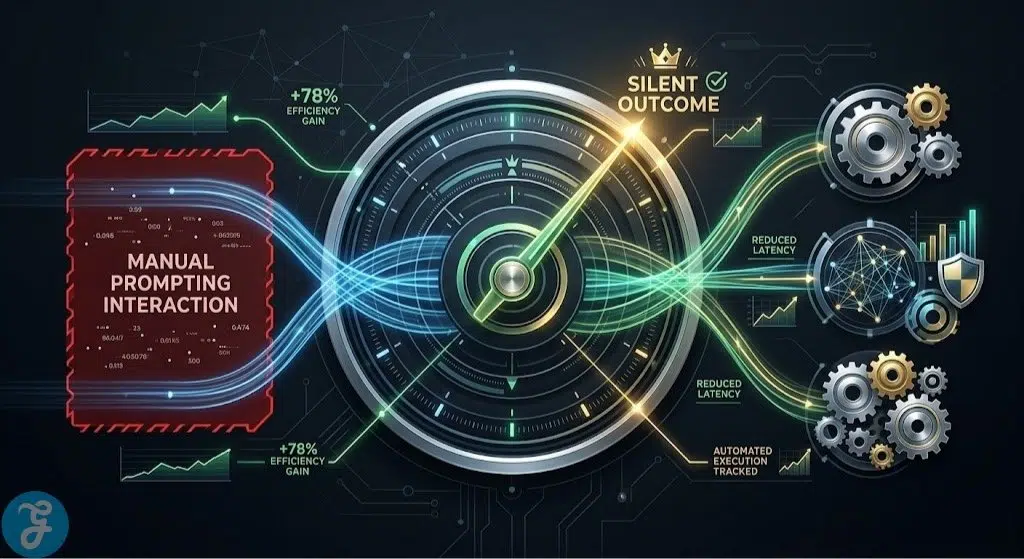
The new gold standard is the “Silent Outcome.” This is the measure of how much work was completed without the user ever opening the application. We are moving toward intent-based computing. In this model, the human professional defines the “Why” and the “What,” while the background intelligence handles the “How.”
Consider the act of scheduling a complex, multi-party meeting. In the old world, you would use a scheduling app. You would send a link. You would wait for votes. You would resolve conflicts. Even with “AI” tools, you were still managing the process. In the autonomous world, you simply state your intent: “I need to meet with the design leads this week to finalize the sprint.”
The invisible layer knows who the design leads are. It knows their time zones. It knows which projects are high priority and can move lower-priority blocks on your behalf. It executes the negotiation in the background. You simply receive a notification that the meeting is set and the pre-read materials have been distributed to everyone. You did not “use” a scheduling app. You manifested an outcome.
The grid below explores how the focus of the professional shifts once the logistics are offloaded.
| Focus Area | Legacy Logistics (The “How”) | Future Intent (The “Why”) |
| Communication | Managing inbox volume and drafting responses. | Setting the tone, strategy, and direction of the message. |
| Scheduling | Negotiating time slots and managing calendar blocks. | Determining the value and priority of human interaction. |
| Project Management | Updating cards, moving lanes, and tracking status. | Defining the vision and quality bar for the end product. |
| Data Analysis | Building spreadsheets and running manual queries. | Asking the critical questions that drive the business. |
The Invisible Intelligence Layer: Reclaiming the Human Mind
What happens to the human professional when the “logistics of living” are permanently offloaded to a silicon shadow? The critics argue that we will become lazy or lose our edge. They claim that by not doing the small tasks, we will lose our understanding of the big picture.
This is a fundamental misunderstanding of human potential. We were never meant to be file clerks. We were never meant to spend our best cognitive years managing the friction between different software vendors. The rise of an Autonomous Professional Life is not a path to laziness: it is a path to hyper-focus.
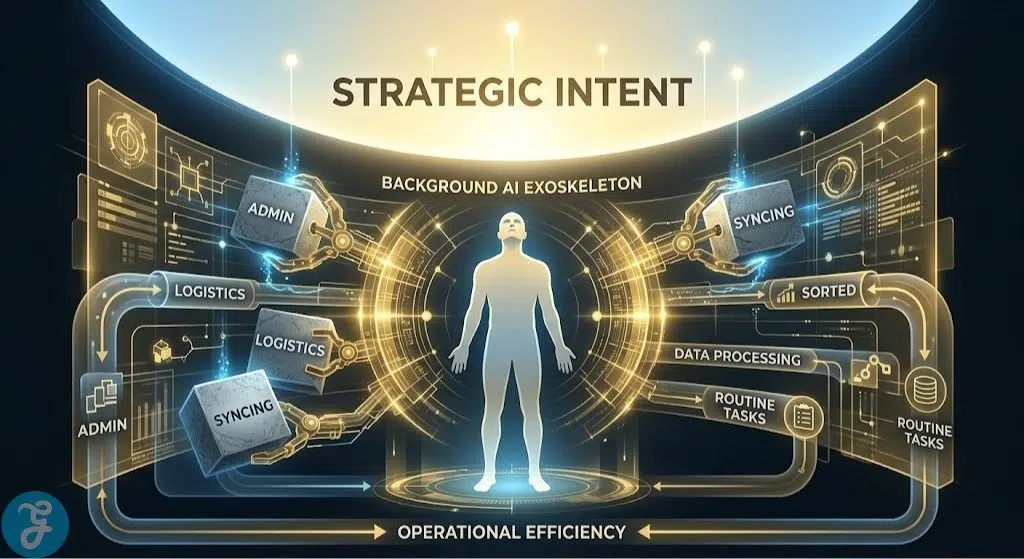
When the invisible layer handles the repetitive, the mundane, and the administrative, the human mind is forced back into the deep work it was designed for. We are entering the era of “High-Leverage Professionals.” These are individuals who do not measure their value by how many emails they sent or how many tickets they closed. They measure their value by the quality of their decisions and the originality of their ideas.
The background AI acts as a cognitive exoskeleton. It handles the weight of the digital world so that the human can move with total agility. It provides the “contextual awareness” that was previously locked away in a dozen different browser tabs. If you are in a meeting, the layer is silently surfacing the exact data point you need before you even have to search for it. It is not an assistant you talk to: it is an extension of your own memory and capability.
The index below outlines the structural layers of a self-driving professional life.
| Layer | Functional Role | Professional Benefit |
| The Sensor Layer | Constantly monitors all digital inputs (email, slack, news). | Eliminates the fear of missing out on critical info. |
| The Logic Layer | Cross-references inputs with existing project goals. | Ensures that every action is aligned with high-level intent. |
| The Execution Layer | Interacts with APIs to update boards, send invites, and file docs. | Removes the manual labor of digital coordination. |
| The Human Layer | Provides the final “Yes/No” and defines the vision. | Maximizes the value of human creative and social energy. |
The Economic Brutality of the Self-Driving Life
We must address the cold, competitive reality of this transition. An Autonomous Professional Life is not just a lifestyle choice for the tech-savvy: it is an economic mandate. In a global labor market that is being hyper-optimized by intelligence agents, those who continue to work manually are a liability.
If a company has two project managers, and one is still “using” tools to stay organized while the other has built a self-driving workflow that handles all administrative overhead, the difference in output is not ten percent. It is ten times. The manual manager is spending eighty percent of their energy on the “How.” The autonomous manager is spending one hundred percent of their energy on the “Why.”
The legacy professional is a bottleneck. They are a point of latency in a system that wants to move at the speed of thought. The organizations of 2026 will not hire “experts in software X.” They will hire “orchestrators of intent.” They will seek out individuals who can command fleets of background agents to produce massive results with minimal human intervention.
This is the end of “busy work” as a valid professional metric. If you are “busy” in 2026, it is a sign that you have failed to automate your logistics. Silence in your digital life is the new sign of status. It means your background layer is functioning perfectly. It means you are free to do the one thing that machines still cannot do: create something entirely new from nothing.
The table below contrasts the competitive standing of the legacy worker versus the autonomous professional.
| Competitive Factor | The Legacy “Manual” Worker | The Autonomous “Orchestrator” |
| Output Velocity | Limited by human typing speed and attention span. | Scalable through parallel agentic execution. |
| Error Rate | High, driven by manual data entry and fatigue. | Near-zero, driven by direct system-to-system syncing. |
| Operational Cost | High, requiring constant human oversight for small tasks. | Low, with humans only intervening for high-value decisions. |
| Market Relevance | Rapidly declining as “software skills” become obsolete. | Increasing as strategic intent becomes the primary value. |
Embracing the Silence of the Self-Driving Life
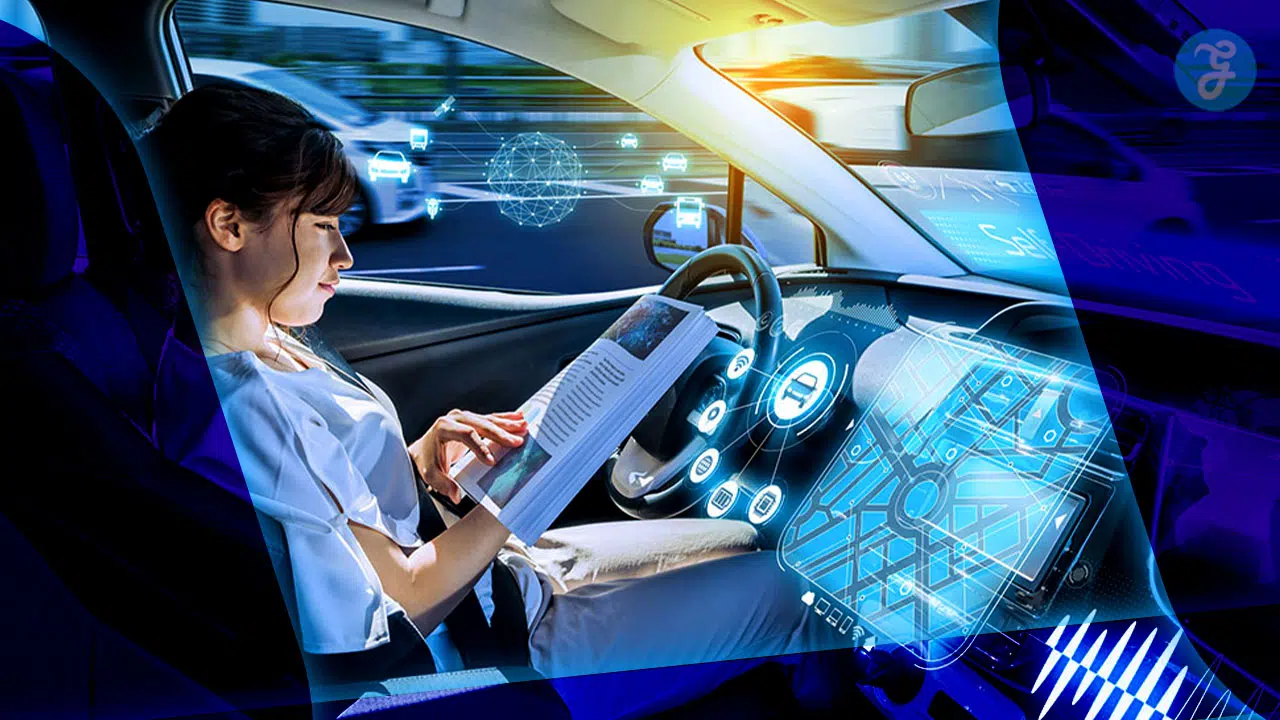
The era of the “Prompt Engineer” is dead, and we should be glad to see it go. We were not meant to be machine whisperers. We were not meant to spend our lives navigating the labyrinth of the user interface. The transition to an Autonomous Professional Life represents the final liberation of the knowledge worker.
We are moving into a world where intelligence is no longer a destination. It is the atmosphere. It is the invisible current that carries our goals from intent to execution. The professional of the future does not live in a dashboard. They do not live in a chat box. They live in the world of high-level strategy, creative vision, and genuine human connection.
The machines have finally stopped asking us what to do and have started doing what we intended. The “prompt” was the last gasp of the old world. The “self-driving life” is the first breath of the new one. The only question that remains is whether you are willing to let go of the steering wheel and start focusing on the destination.
The future belongs to the silent. It belongs to those who have built an invisible layer so effective that their only job is to think, to dream, and to decide. The age of usage is over. The age of intent has begun.