An assignment mentioned just before the bell can disappear somewhere between the school portal, a notebook, and the trip home. When the deadline arrives, the student may have forgotten the task rather than deliberately ignored it.
Often, there was never one reliable place where the assignment was recorded. The best productivity apps for high school students give those scattered deadlines a clear home. A useful app should make the next piece of work easier to find without creating another system that needs constant attention.
This ranking favors tools that solve common school problems with little setup. That is why a straightforward academic planner sits above Notion, even though Notion offers far more customization. Most students need dependable deadline tracking before they need a custom database.
Farther down the list are tools for specific jobs, including flashcard review, focus sessions, and group projects. Two or three well-chosen apps should cover most students. Installing all 10 would create more work. The product details and plan limits in this article were checked in July 2026. Prices and terms can change by region, device, billing platform, or school account.
Which App Solves Which Problem?
- Assignments and exam dates keep being missed: MyStudyLife
- The week is full, but study time is never planned: Google Calendar
- The task list is growing faster than it is shrinking: Todoist
- Class notes include handwriting, diagrams, and worksheets: OneNote
- Several students need to edit the same assignment: Google Docs and Drive
- College applications or academic projects need custom tracking: Notion
- Revision involves vocabulary, formulas, or short facts: Quizlet
- Phone distraction interrupts study sessions: Forest
- A group project has several stages and owners: Trello
- Small reminders need to be captured immediately: Google Keep
The school’s learning platform remains the official place to confirm instructions and deadline changes.
How the Apps Were Ranked?
Apps moved higher when they solved a frequent school problem without demanding much setup or daily maintenance.
The ranking also penalizes tools that are easy to abandon. A flexible workspace can become cluttered within days. Some apps reserve their most useful features for paying users. Others solve one narrow problem but are often treated as complete productivity systems.
Forest, for example, can protect a study session. It cannot recover a missing deadline. Notion will not help either if updating the dashboard becomes another chore.
1. MyStudyLife Puts School Deadlines in One Place
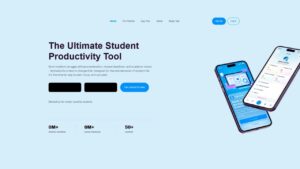
MyStudyLife takes the top spot because its structure already matches the school day. Classes, homework, exams, and activities can appear together instead of being split across several calendars and lists. Rotating timetables are supported too, including A/B days and schedules that change from one week to another.
That matters in schools where Monday’s timetable is not always the same. Students can update the planner on the web and check it later from an iPhone or Android device. The free version is enough for basic timetable, assignment, and exam tracking. MSL+ is mainly worth considering for students who need subtasks, more detailed grade tracking, personalization, or timetable scanning.
Subscription prices vary, so check the amount shown in the app before paying. MyStudyLife becomes especially useful when one teacher posts homework online, another announces it in class, and exam dates sit somewhere else. A practical routine is to check the school portal after class and copy only the assignments that require action into MyStudyLife.
Do not duplicate every announcement if the school portal already handles it reliably. Recording the same information twice gives deadlines another chance to disagree. General notices and course materials can stay in the official system.
2. Google Calendar Shows Where the Time Goes
A task list may show 12 unfinished assignments and still give no clue when any of them will get done. Google Calendar places study time beside the commitments competing with it, including classes, travel, sports, tutoring, and part-time work. Google Tasks can also appear in Calendar once a date is assigned.
A task can carry a time, notification, or repeat schedule. One limitation is that a recurring task cannot include subtasks. Google Calendar earns its place when students start reserving actual time for schoolwork. “Revise science” is too broad to be useful. Split it into sessions tied to a topic or piece of work:
- Tuesday: Review cell division notes
- Thursday: Complete genetics questions
- Saturday: Attempt one timed practice paper
A missed Tuesday session can then be moved without losing the entire revision plan. Calendar planning becomes unhelpful when every free minute is booked. A schedule packed from the end of school until bedtime leaves no room for travel, dinner, rest, or work that runs late.
Put fixed commitments in first. Reserve the study periods that genuinely matter and leave the rest flexible. Google Calendar works best alongside the place where assignments are recorded. It shows when the work can happen. Detailed instructions, project steps, and reference files belong elsewhere.
3. Todoist Keeps a Long Task List Manageable
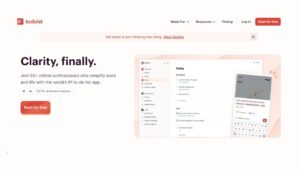
Todoist does not understand school timetables, but adding and rearranging tasks is quick. The free beginner plan covers ordinary task management, including due dates, priorities, subtasks, recurring work, reminders, list and board views, basic filters, and five personal projects. Todoist also has web, desktop, mobile, and smartwatch versions, so students are not tied to one device.
Five projects are workable when subjects are grouped under one larger school project. A student with seven subjects will hit the limit quickly if each subject gets its own space. In July 2026, the US price for Todoist Pro was $7 per month or $60 per year before tax. Prices can vary outside the United States and across billing platforms.
Pro is mainly useful for students who need more projects, calendar views, task-duration planning, custom reminders, deadlines, or wider filtering. Todoist handles small routines that repeatedly slip through the cracks. That might mean checking the school portal after class, submitting a weekly reading response, or charging a school laptop at night.
MyStudyLife remains easier when rotating classes, exam dates, and grades all need tracking. Todoist suits students who already understand their schedule and need a cleaner way to manage the growing list of actions.
4. OneNote Handles Messy, Mixed-Format Notes
History notes may fit into tidy paragraphs. Math and science often leave students with equations, diagrams, rough workings, screenshots, and marked-up handouts. OneNote lets those materials live on the same page.
Students can type beside handwritten calculations, annotate an inserted worksheet, add images, and file each page under the relevant subject. OneNote works across Windows, macOS, browsers, iPhones, iPads, and Android devices. Chromebook users should plan to use it in a browser. Microsoft does not support installing the Android OneNote app on a Chromebook.
Windows users should also check the app name before creating new notebooks. OneNote for Windows 10 reached the end of support on October 14, 2025, and moved into read-only mode. Use the current OneNote desktop app or OneNote for the web for new notes. The app gets messy when every page is saved with a vague title and left for search to sort out. Keep the setup simple: one notebook for the year, sections for subjects, and page titles such as “12 September: Photosynthesis.”
Sharing needs a little care. Depending on the notebook permissions, a link intended for one section may expose more content than expected. Check the recipient’s access before sending class notes or private teacher feedback.
5. Google Docs and Drive Reduce Version Confusion
Google Docs and Drive solve one of the dullest group-project problems: nobody knows which draft is current. One student is editing “Final Draft,” another has opened “Final Draft New,” and someone else is commenting on an attachment from two days ago.
Keeping one active document in a shared Drive folder avoids most of that confusion. The owner can let a classmate view, comment on, or edit the file. Give each person only the access needed for their part of the assignment. A peer reviewing an essay may only need comment access. A project partner writing a section needs editing rights.
School-managed Google accounts can restrict outside sharing. Test the file with every group member’s actual school account before the work begins.
Offline editing has to be switched on while the student still has an internet connection. On a computer, Google currently supports offline Docs, Sheets, and Slides through Chrome or Microsoft Edge with the Google Docs Offline extension. Mobile users can save selected files for offline work through the relevant apps. Set this up before a journey, a power cut, or any situation where the connection may disappear.
6. Notion Is Powerful, but Easy to Overbuild
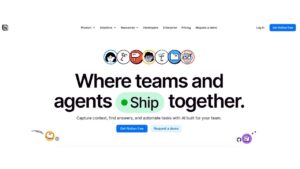
Notion can handle more kinds of academic information than most apps on this list. A single workspace can hold assignments, notes, reading lists, project pages, calendars, and application deadlines. For college applications, it can track essay drafts, recommendation requests, scholarship requirements, deadlines, and documents that are still missing.
That flexibility creates more setup than many high school students need. High school students can use Notion’s regular Free plan. The free Education Plus offer is reserved for eligible college and university users. The Free plan also limits individual file uploads to 5 MB.
Notion works on the web and through apps for Windows, macOS, iOS, and Android. On a Chromebook, use it in the browser; there is no native ChromeOS app. Notion becomes less useful when the student starts with an elaborate template. Most students do not need a dashboard full of formulas, progress bars, decorative pages, and half-understood databases.
It is easy to spend an evening arranging the workspace and make no progress on the actual homework. Notion suits students managing something more complicated than a weekly assignment list, such as several college applications or a long-term research project. For ordinary homework, MyStudyLife or Todoist takes less effort to keep current.
7. Quizlet Speeds Up Flashcard Review
Quizlet is most useful when students need to recall short pieces of information repeatedly, such as vocabulary, formulas, historical dates, or scientific terms. Students can create their own flashcards or study existing sets. Flashcards remain available free, but access to Learn, Test, study guides, practice tests, offline study, and other tools is limited without a subscription.
Free users receive limited access to Learn and Test. More access may be available when a teacher assigns an eligible set through a class.
Public study sets need checking because users create them. Many are accurate and well organized, but others contain mistakes or use definitions that do not match the course. Compare a shared set with class notes or the assigned textbook before spending an evening memorizing it.
8. Forest Helps Once the Task Is Clear
Forest belongs here for one narrow reason: it can make phone distraction harder. Starting a focus timer creates a small consequence for leaving the study session to open another app. The free tier provides countdown and stopwatch modes, basic blocking controls, focus records, group sessions, and Forest’s virtual tree system.
Forest Plus is mainly for users who want stricter app blocking, custom allowlists, more detailed analytics, tags, or additional sound features. Check the subscription price shown in the relevant app store. New users can no longer purchase the previous one-time Forest Pro plan. People who bought Pro earlier keep those features. New accounts choose between Free and Plus.
Start the timer only after choosing a specific piece of work. “Do homework for 30 minutes” leaves too much room for drifting. “Answer questions 1–8 without opening social media” tells the student exactly what must be finished. Forest will not help much when the student has not decided which assignment matters most. Use it after the task has been chosen.
9. Trello Is Worth the Setup for Group Projects
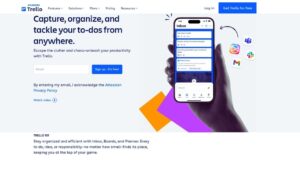
A Trello board is usually excessive for one student’s nightly homework. It earns the setup time when several people hand work from one stage to another. A school magazine could move articles from Ideas to Drafting, Editing, and Ready to Publish. A science fair team might use separate cards for the experiment, data analysis, and presentation.
Each card can show who owns a task, when it is due, what files are attached, and what remains unfinished. The Free plan supports up to 10 collaborators and 10 boards in a Workspace. It also includes unlimited cards and 250 automation runs a month. Individual attachments on the free plan are limited to 10 MB.
A normal class project is unlikely to exceed those limits. Trello becomes tedious when every small homework task gets its own card. For one student’s assignment list, Todoist or MyStudyLife requires far less upkeep. Save Trello for work that several people need to coordinate.
10. Google Keep Catches Small Things Quickly
Google Keep cannot replace a school planner or a proper note system. Its value is speed: a student can record something before it is forgotten. Keep handles short notes, reminders, drawings, labels, small checklists, and shared lists without much setup. It is available in a browser and on Android, iPhone, and iPad.
Notes can also be copied into Google Docs when an idea develops into longer writing.
It works well for things such as:
- A homework change announced as class ends
- A question to ask the teacher the next day
- Books or equipment to pack
- A sentence that might open an essay
- Supplies needed for a lab
Use Keep to capture information quickly, then move anything important to its permanent home. Put deadlines in the planner and longer notes in OneNote, Google Docs, or the student’s main note app.
The Boring Check That Matters
Before downloading another app, decide where the final version of each type of information will live.
One workable setup is:
- School portal: Official instructions and deadline changes
- MyStudyLife or Todoist: Personal assignment list
- Google Calendar: Classes, appointments, and study time
- OneNote or Google Docs: Notes, drafts, and completed work
- Forest: Short periods of distraction control
Problems begin when the same assignment appears in five tools with three different dates. Sharing settings can cause a different kind of trouble. Do not make project boards, class notes, or Drive folders public simply because public links are convenient. Before sharing outside the class, look for student names, schedules, grades, contact details, private feedback, or other school information.
On a school account, administrators may control storage, app access, outside sharing, and how long files remain available. Students preparing to graduate should export personal work they are permitted to keep rather than assume the account will remain open.
Final Thoughts
The best productivity apps for high school students are usually the ones that solve one recurring problem well. Start with the failure that keeps repeating: missed deadlines, poor scheduling, scattered notes, or phone distraction.
MyStudyLife is the clearest first choice for assignments that keep being forgotten. Google Calendar is more useful when the deadlines are known but no time has been reserved for them. Todoist suits students who understand their schedule and need a cleaner task list. Keep class notes and drafts in OneNote or Google Docs rather than inside the task manager.
Use one new app for a full school week before adding another. Enter the week’s real assignments and check the app at the same time each day. After seven days, look at what was still missed. The system does not need to look impressive. It needs one reliable task list that the student actually checks.
Frequently Asked Questions (FAQs) About Best Productivity Apps for High School Students
What Is the Best Free Productivity App for High School Students?
MyStudyLife is the strongest free option for tracking classes, assignments, exams, and rotating timetables. Google Calendar is a better choice when the main problem is finding time to complete the work rather than remembering the deadline.
Should Students Use One App for Everything?
Usually not. One planner for assignments, one calendar for time, and one note or document app will cover most school needs. Trying to manage the same deadline in several apps often creates conflicting dates and extra maintenance.
Is Notion Better Than Todoist for Students?
Todoist is easier for straightforward task lists, recurring homework, and reminders. Notion is more suitable for complex projects, college applications, reading databases, or students who genuinely need a custom workspace.
Are Public Quizlet Study Sets Reliable?
Their quality varies because users create many of the sets. Students should compare unfamiliar cards with class notes, teacher materials, or the assigned textbook before relying on them for an exam.
Can School Productivity Apps Be Used Without Internet Access?
Some can, but offline access may need to be enabled in advance. Google Docs requires offline setup on supported desktop browsers, while mobile apps often allow selected files to be saved locally. Students should test offline access before traveling or losing a connection.