

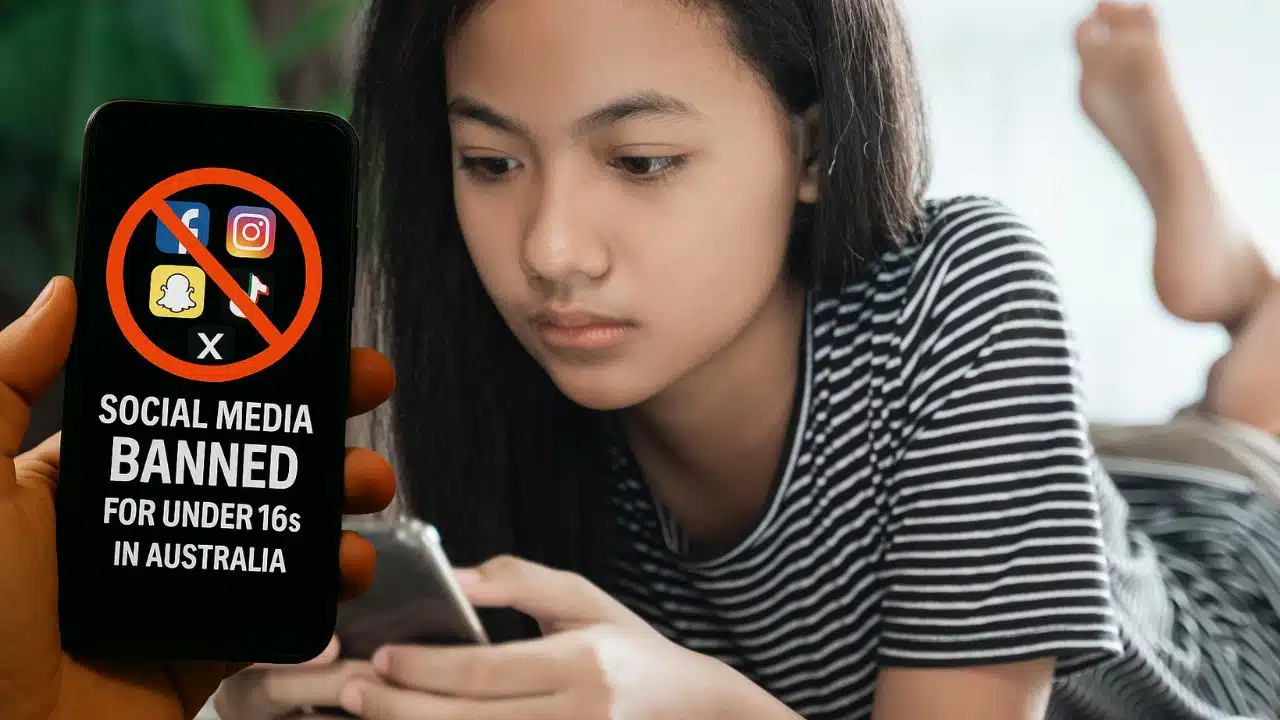
Australia is introducing one of the toughest online safety measures in the world: a ban preventing children under the age of 16 from having social-media accounts. The rule takes effect on 10 December, marking a major shift in how the country regulates young people’s access to digital platforms. The government argues the change is urgently needed to reduce exposure to harmful content, online predators and addictive design features. But the plan has sparked intense debate, with questions about enforcement, data protection and whether the policy will actually deliver the intended benefits.
The move comes amid growing concern that children are being exposed to distressing, adult-oriented or manipulative content before they are mentally prepared to handle it. Officials say the ban is designed to put responsibility back on companies—rather than on parents or children—to create a safer digital environment. Still, the plan is complex, controversial, and likely to reshape the online lives of millions of teens.
Why Australia Introduced the Ban
A government-commissioned study earlier this year showed just how deeply embedded social media has become in the lives of Australian children aged 10 to 15. According to the research, an overwhelming 96% of children in that age group use at least one social platform every week. For many, scrolling, posting and interacting online are routine parts of social life. Yet the study also revealed troubling patterns that helped push lawmakers toward action.
Seven out of ten surveyed children reported being exposed to harmful content. This included videos encouraging violence, posts promoting dangerous dieting habits, and material glamorizing self-harm. Many also said they had encountered misogynistic or sexually inappropriate content during everyday use. One in seven reported experiencing grooming-type behaviour—contact from adults or older teens attempting to build inappropriate or exploitative relationships. More than half said they had been cyberbullied at least once.
The government argues that the core problem lies in how the platforms are designed. Features such as infinite scrolling, algorithmic recommendations and constant notifications encourage children to stay online longer, which increases the chances they will encounter harmful material. Officials say that children—who are still developing critical thinking skills and emotional resilience—are particularly vulnerable to these pressures.
Lawmakers also highlighted the wider impact on mental health. Studies show that excessive screen time and exposure to negative online environments may contribute to anxiety, sleep problems and heightened stress in teenagers. For the government, this created a sense of urgency: online harm was no longer viewed as a side effect of internet use, but as a public health concern that required strong intervention.
Parents have mostly welcomed the idea, saying they are exhausted trying to monitor their children’s online behaviour across multiple platforms. Many have expressed relief that the responsibility for protecting kids will shift from households to major tech companies with far greater resources and technological capabilities.
Which Platforms Are Covered and Why Some Are Exempt
The ban applies to a set of major platforms that the government has identified as posing the highest risk to children. These include Facebook, Instagram, Snapchat, Threads, TikTok, X, YouTube, Reddit and the streaming platforms Kick and Twitch. Most of these services allow users to interact with strangers, join public channels, post content freely and access algorithm-driven feeds. Those features fit the criteria that regulators use to classify a service as a social platform.
However, not every popular app used by young people is included. Messaging services like WhatsApp, educational environments like Google Classroom and child-oriented versions of platforms such as YouTube Kids are exempt. Regulators argue that these services do not meet the threshold of being primarily designed for broad public interaction.
The list is not final. Officials say they will continue reviewing platforms and may add more services in the future, especially as companies evolve and new apps emerge. Online gaming platforms are high on the watchlist. Games such as Roblox and Discord have already started rolling out age-verification tools in an effort to demonstrate responsibility and potentially avoid inclusion in future bans.
Even though children will be banned from having accounts, they will still be able to access some content publicly. For example, YouTube allows non-logged-in users to watch most videos. However, anything involving posting, commenting or interacting will require verified age eligibility.
How Enforcement Will Work and Why It May Be Complicated
The burden of enforcement falls entirely on the platforms, not on children or their parents. No one under 16 will face penalties for attempting to access social media. Instead, platforms that fail to take “reasonable steps” to block or remove under-age users risk financial penalties of nearly 50 million Australian dollars for serious breaches. The government says this approach avoids criminalizing children while still creating strong pressure for tech companies to comply.
What remains unclear is exactly how platforms will verify age. The law intentionally avoids prescribing a specific method. Officials say this gives companies flexibility to choose technologies that are effective, accurate and respectful of user privacy. However, this also means the enforcement mechanism will vary widely between platforms.
Possible verification methods include:
– Checking a government-issued ID
– Using facial recognition to estimate age
– Using voice recognition tools
– Applying data-based age inference methods, which analyze behaviour patterns to estimate whether a user is likely to be a child
The government has stated that companies cannot rely on users simply entering their age, nor can they depend on parents to confirm their children’s ages. Instead, they must adopt more reliable verification systems, potentially blending two or more methods to minimize errors.
Meta, the owner of Facebook, Instagram and Threads, has already begun removing accounts that appear to belong to under-age users. The company says that young people mistakenly blocked can restore their account by verifying their age through a government ID or a video selfie. Other platforms, including TikTok, Snap, X and Twitch, have not yet fully detailed their plans.
One major concern is the accuracy of age-assurance technologies. Early testing suggests that some facial-estimation models are least reliable for younger teenagers—exactly the group targeted by the ban. Critics worry that these tools may misidentify adults as children or fail to catch children who use modified images or VPNs.
Another challenge involves deterrence. Some experts argue that the size of the fines may not be large enough to motivate major companies. They point out that large platforms earn tens of millions of dollars in revenue in very short periods, meaning that a fine—even if substantial—may not fully offset the profit incentives of retaining young users.
Broader Concerns, Industry Responses and What Comes Next
The ban has sparked mixed reactions across the tech industry. Many companies argued that the rule is difficult to enforce at scale, could invade user privacy and might inadvertently push children into less-regulated digital spaces where the risks are much higher. Some platforms questioned whether they should be categorized as social media at all. For example, gaming-oriented services and video-sharing sites say their primary purpose is entertainment, not social networking.
Others warned that teens who depend on online communities for support—especially those dealing with mental-health issues, identity exploration or social isolation—may be harmed by a complete shutdown of their accounts. Critics say that improving digital literacy and teaching responsible online behaviour might be a more effective long-term solution than restricting access.
Privacy advocates have raised alarms about the scale of personal data collection required for age verification. If millions of people must upload ID documents or biometric scans, the volume of sensitive information stored by corporations will grow sharply. This is especially concerning in Australia, where several high-profile data breaches in recent years have resulted in stolen or leaked personal information. The government says it has included strict safeguards to ensure collected data cannot be misused and must be destroyed after age verification, but experts remain cautious.
International observers are watching closely. While several European countries, including France, Norway and Spain, have proposed stronger rules for children’s use of social media, none have implemented a full ban like Australia’s. Efforts in the United States to impose similar restrictions have faced legal pushback, with courts ruling that such bans may violate constitutional protections.
Meanwhile, teenagers themselves are already exploring ways around the ban. Some are creating new accounts using false birth years, balancing joint accounts with parents, or seeking alternative platforms less affected by regulation. Others are preparing to rely on VPNs to appear as though they are accessing the internet from another country. These early reactions highlight how enforcement may become an ongoing challenge rather than a one-time change.
Despite the criticisms, Australia’s government insists the policy is necessary and overdue. Officials acknowledge that the transition will be messy and imperfect, but say it is a significant step toward reducing digital harm. What remains to be seen is whether the ban will meaningfully shield children from danger—or simply shift harmful behaviours into harder-to-monitor spaces.






















