Poker is one of those games that never really loses its appeal. The thrill of outsmarting an opponent, the precision in decision-making, and that undeniable rush when a bold bluff pays off—it’s a blend of skill and nerve that keeps people coming back. But the way poker is played is shifting, and anonymous poker tables are at the center of that change.
They’ve been around for a bit now, but lately, more players are gravitating towards this style. Why? Because it takes away the pressure of being watched, tracked, or targeted at the tables. For players who just want to focus on the game without the baggage of a long playing history or screen name that precedes them, this setup is a breath of fresh air.
What’s Driving Interest in Playing Anonymously?
The short answer: privacy and a cleaner, more strategic experience. People who’ve spent enough time at regular poker sites know how easily patterns emerge. A screen name gets recognized, hands are tracked over time, and before long, a regular’s tendencies are laid bare. This might be great for experienced players hunting edges, but it also leads to predictable play and heavy use of tracking software.
Anonymous tables change that equation. Everyone at the table is just a number, every session is a reset, and the only thing that matters is how the cards are played right now. No bias, no long-term notes, no history.
Chasing a fresh experience is often paired with tangible perks—free spins that boost early momentum, generous welcome bonuses that extend playtime, and faster payment methods that make deposits and withdrawals smooth. These benefits enhance the appeal of certain platforms, creating an environment where gameplay remains exciting, efficient, and rewarding from the start. The combination of perks and privacy makes anonymous poker sites an attractive option for anyone who prefers to keep their strategy tight and their identity even tighter. iGaming expert Pride Kazunga points out how this new format allows players to focus entirely on gameplay, without distractions.
How Anonymous Poker Works
At its core, anonymous poker is simple: players don’t use usernames that follow them from table to table. Instead, when someone sits down, they’re assigned a random label—often just a number or placeholder for the session. When they leave, that identity disappears with them.
Because there’s no carryover between games, it’s almost impossible to build reads based on previous interactions. Everyone’s flying blind, so the emphasis naturally shifts to immediate tactics rather than long-term metadata, which would have to be analyzed and aggregated. This setup isn’t just appealing to newer players. A lot of seasoned grinders are making the move, too, especially those who’ve dealt with aggressive regulars or data mining at traditional sites.
Anonymous poker also strips away the distractions tied to identity. Without long-term profiles or screen names, each session resets expectations and challenges players to rely purely on skill. The focus shifts from reputation to real-time strategy, creating a cleaner, sharper playing environment where every hand stands on its own.
Playing Better Without a Name
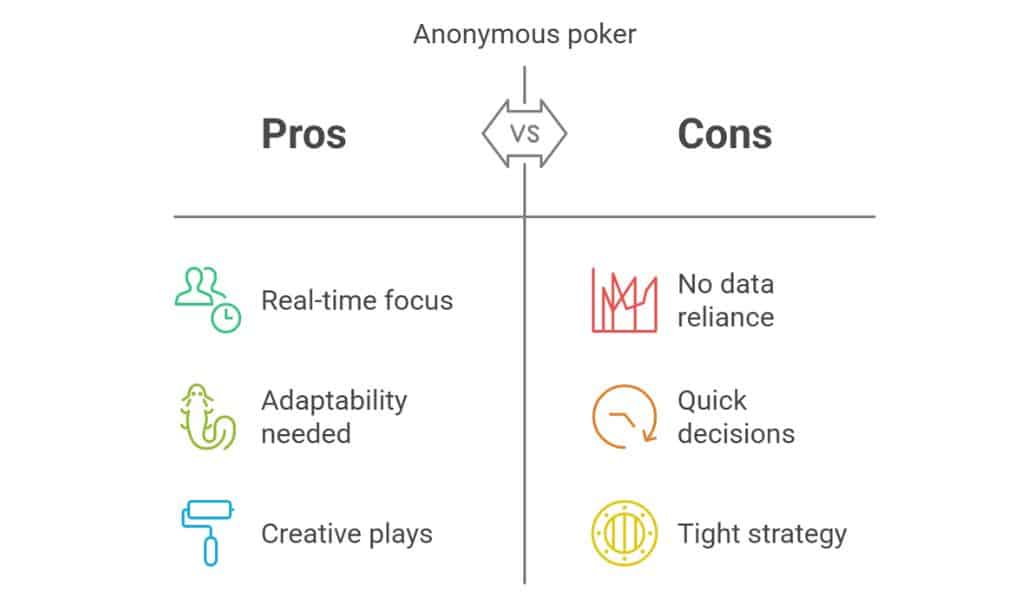
Anonymous poker forces a shift in how strategy is approached. With no data trail to follow and no screen names to track, reads have to come from the moment. Betting patterns, timing tells, and table position become even more important than usual.
In fast-paced formats like 6-max cash games, where action comes quickly and blinds rotate rapidly, anonymous play amps things up. It puts more pressure on real-time decisions and quick thinking. The absence of long-term notes or HUDs [heads-up displays] means players can’t rely on historical stats—they need to focus on adapting hand by hand.
A tight and aggressive strategy tends to hold up well here. Starting hands should be selected carefully, and betting lines need to be sharp. It’s not about playing robotically, but rather reducing leakages and maximizing pressure in key spots. There’s still room for creativity—well-timed bluffs, overbets, or slowplays can work wonders—but timing is everything.
Some Downsides to Keep in Mind
Of course, playing anonymously isn’t perfect. One major downside is the lack of accountability. Because players aren’t tied to long-term identities, there’s potential for less sportsmanlike behavior. Things like soft playing or chip dumping can fly under the radar more easily.
It’s also a more solitary experience. Traditional tables often come with a bit of banter and community. Anonymous tables, not so much. There’s less small talk and fewer familiar faces, which can be a downside for players who enjoy the social element.
Lastly, handling disputes gets trickier. Without a consistent player profile, it’s harder for sites to track down and resolve issues. If something questionable goes down at a table, there’s less context for staff to investigate.
Still, the Upsides Often Win Out
Despite the drawbacks, a lot of players see anonymous tables as the better option overall, especially those who care about privacy and clean competition. By stripping away profiles, stats, and reputations, the game becomes more honest in a way. It’s all about the cards and how they’re played, not about who’s holding them.
It also helps that these tables are usually offered on platforms with solid security and payment systems in place. With strong financial protections and support structures, the main experience feels smoother and less stressful.
Is Anonymous Play the Future?
It’s tough to say if this style will take over entirely, but it’s definitely here to stay. For some players, the anonymity is a non-negotiable part of the game now. They want to log in, hit the tables, and play their game without carrying any baggage from the last session.
There’s also an appeal for those who’ve had bad experiences on traditional platforms—whether that’s being targeted by more experienced players or just dealing with the mental toll of being “known” at every table.
At the end of the day, poker is a game that rewards those who stay sharp and adapt. Anonymous play just raises the stakes on both.