Are you tired of the never-ending cycle of waste caused by traditional packaging systems? Well, there’s good news! Circular packaging systems are here to revolutionize the way we package and dispose of products.
In this article, we will explore the importance of packaging in a circular economy, the role of packaging in consumer behavior, and the latest innovations in sustainable packaging solutions.
Join us on this journey as we uncover how circular packaging systems can take us from consumer to compost and back, benefiting both the environment and our future.
The Importance of Packaging in a Circular Economy
You might be wondering why packaging plays such a crucial role in a circular economy. Well, let me tell you, packaging is not just about protecting products during transportation or making them look appealing on the shelves. It actually plays a vital role in ensuring that resources are used efficiently and waste is minimized.
In a circular economy, the goal is to create a closed-loop system where materials are recycled, reused, or composted, rather than ending up in landfills. Packaging is at the forefront of this system. It is designed to be recycled or composted, so that it can be transformed into new products or returned to the earth as nutrient-rich compost.
By using packaging that is designed for circularity, we can reduce the need for virgin materials and minimize the environmental impact of production. This means less energy consumption, fewer natural resources being extracted, and less waste being generated. It also means that valuable materials can be recovered and reused, creating a more sustainable and resource-efficient system.
Consumer Behavior and the Role of Packaging
Understanding how people’s behavior influences the use and disposal of packaging is crucial in creating a sustainable cycle. As a consumer, your choices play a significant role in shaping the fate of packaging materials. The way you interact with packaging can determine whether it ends up in a landfill or contributes to a circular economy.
When you make a purchase, consider the packaging it comes in. Opt for products with minimal packaging or packaging made from sustainable materials. By choosing products that prioritize eco-friendly packaging, you are encouraging companies to adopt more sustainable fashion packaging practices.
Once you’ve made your purchase, it’s important to dispose of the packaging responsibly. Recycling is a key component of a circular packaging system. Take the time to separate your recyclables and place them in the appropriate bins. By recycling, you are giving packaging materials a second life and reducing the demand for new resources.
Additionally, reducing and reusing packaging can have a significant impact. When possible, choose products with refillable or reusable packaging. Bring your own bags when shopping to minimize the need for single-use plastic bags.
Your behavior as a consumer directly affects the lifecycle of packaging materials. By being mindful of your choices and taking action, you can contribute to a more sustainable and circular packaging system.
Innovations in Sustainable Packaging Solutions
When it comes to sustainable packaging solutions, there are various innovations being developed to reduce environmental impact and promote a more circular economy.
You’ll be glad to know that companies are coming up with creative ways to make packaging more eco-friendly. For example, some companies are using biodegradable materials like plant-based plastics and compostable packaging. These materials can break down naturally, reducing waste and avoiding pollution.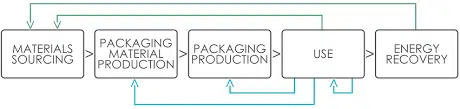
Additionally, there are companies exploring the use of innovative technologies such as edible packaging made from seaweed or other natural ingredients. These edible packages not only eliminate the need for traditional packaging materials but also provide a unique and fun consumer experience.
Another exciting development is the use of reusable packaging systems, where consumers can return their empty packaging to be cleaned and refilled. This system not only reduces waste but also encourages consumers to be more conscious of their environmental impact.
Finally, some companies are embracing the concept of minimal packaging, using less material and focusing on efficient design.
The Journey of Packaging Waste: From Consumer to Compost
From the moment a product is purchased, packaging waste begins its journey towards becoming compost. You, as the consumer, play a vital role in this process. After you’ve enjoyed the product inside, it’s time to think about what to do with the packaging.
Instead of simply tossing it in the trash, consider composting it. Composting is a natural process where organic materials, like food scraps and plant-based packaging, break down into nutrient-rich soil. By composting your packaging waste, you are contributing to a circular system that reduces waste and benefits the environment.
To compost your packaging waste, start by separating the organic materials from the non-compostable components, such as plastic or metal. Place the organic waste, like cardboard or paper-based packaging, in a compost bin or heap. Make sure to add a mix of browns (carbon-rich materials like shredded paper) and greens (nitrogen-rich materials like food scraps) to create a balanced compost pile.
Over time, microorganisms will break down the packaging waste, turning it into nutrient-rich compost that can be used to enrich your garden soil or donated to local community gardens.
Composting packaging waste not only diverts it from landfills but also reduces the demand for virgin materials to create new packaging. This sustainable practice helps conserve resources, reduce greenhouse gas emissions, and promote a more circular economy.
Closing the Loop: How Circular Packaging Systems Benefit the Environment?
Closing the loop on circular packaging systems benefits the environment by reducing waste and conserving resources. When you participate in a circular packaging system, you actively contribute to a sustainable and eco-friendly solution. Instead of disposing of packaging after use, you can return it to be reused or recycled, creating a closed-loop system that minimizes waste.
By closing the loop, you help reduce the amount of waste that ends up in landfills or oceans. This reduces the negative impact on the environment and helps protect natural ecosystems. Additionally, circular packaging systems conserve resources by reducing the need for new raw materials. When packaging is reused or recycled, less energy and resources are required for production.
Circular packaging systems also promote a more efficient use of resources. Instead of using materials once and then discarding them, these systems encourage the reuse and recycling of packaging materials. This reduces the demand for new materials and helps preserve valuable resources, such as wood, water, and energy.
Furthermore, closing the loop on circular packaging systems helps to create a more sustainable future. By actively participating in these systems, you contribute to the development of a circular economy, where waste is minimized, and resources are used in a more responsible and efficient manner.
Conclusion
So there you have it – circular packaging systems are the way of the future. By embracing sustainable packaging solutions and closing the loop on packaging waste, we can create a truly circular economy.
Consumers play a crucial role in this process, by making conscious choices and supporting companies that prioritize sustainable packaging.
Together, we can make a positive impact on the environment and ensure that packaging goes from consumer to compost and back, creating a more sustainable and eco-friendly future for all.