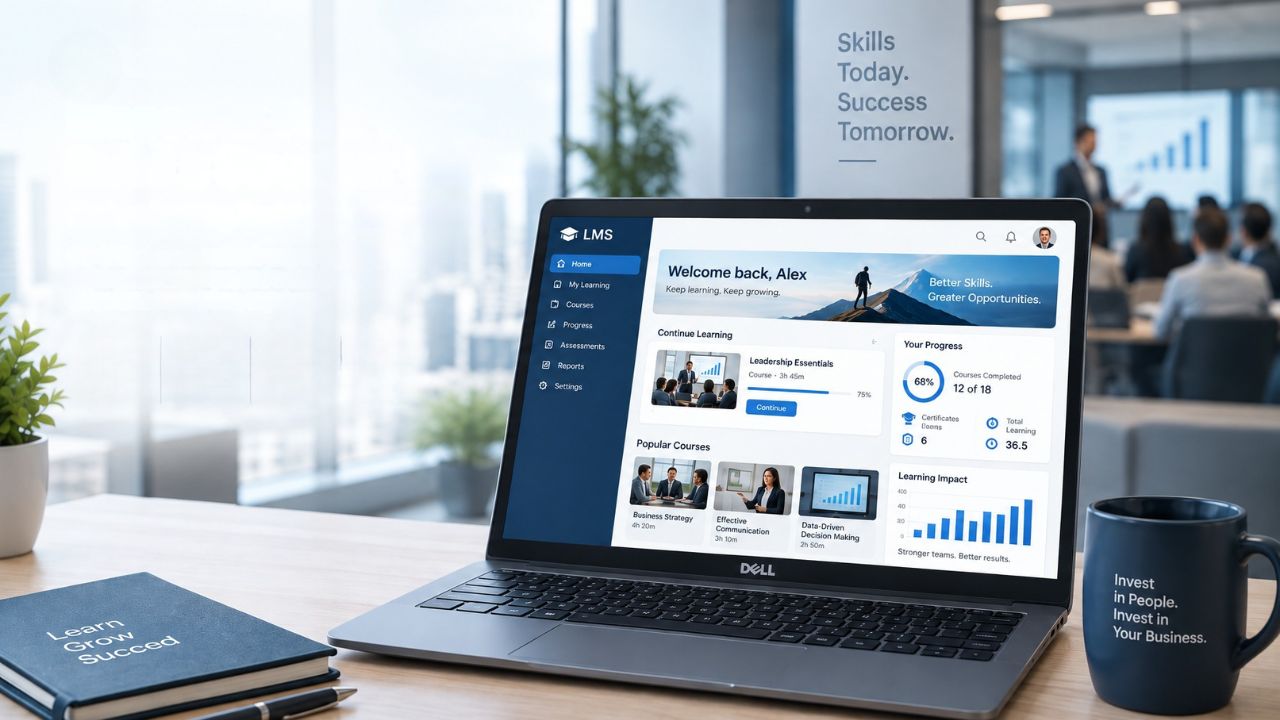


Singapore workplace reskilling begins with a practical question: what should your team be able to do differently after training? A broad course library may help employees explore new skills, while a guided programme can give a department the structure to apply those skills at work. These ten providers and learning options offer different ways to make that choice.
A logistics team learning to work with data has different needs from a manager introducing AI tools across an office. Before comparing catalogues, define the task people need to perform, how much time they can spend learning and who will help them practise. The course is only one part of the investment; supervision, projects and protected learning time matter too.
How these options were selected
This research-based shortlist combines Singapore training institutions, local learning services and international course libraries offered through Singapore-facing routes. It is organised by learning need, not a ranking of measured outcomes. We examined publicly available provider and government information on 11 November 2026; we did not enrol in or test the programmes.
Online access does not mean every course is self-paced. Some use live instruction, in-person sessions, workplace projects or a mixture. Confirm delivery, eligibility, current fees, data handling and support before committing.
1. NTUC LearningHub — a broad workplace learning library
NTUC LearningHub offers workplace courses and its Learning eXperience Platform (LXP), which brings together digital learning content. Its Digital Workplace programme combines structured training with an online component, giving teams a route from basic digital confidence to further study.
It may suit an employer that wants a common starting point for employees in different roles. Ask which LXP catalogue is included, whether managers can follow participation, and which courses require additional fees or classroom attendance. A large catalogue is useful only if people can find material connected to their work.
Why consider it: LXP can complement an instructor-led course with material employees can revisit. For example, a customer-service team could follow a short analytics lesson and then use a sample report in its weekly meeting. Agree on the lesson and a practical follow-up before buying seats; a catalogue alone does not create a training plan.
Best for: Organisations with varied roles that need both a broad learning library and access to structured local training. Check whether the exact package covers the chosen content and whether individual or corporate purchase terms apply.
2. Lithan eduCLaaS — learning linked to work projects
Lithan describes digital skills programmes that combine learning with workplace application and mentoring. That approach can be attractive when an employer has a specific project, such as improving a digital workflow, rather than a general wish to offer courses.
Before selecting a programme, establish who supplies the project, how often mentors meet learners and what evidence the learner must produce. Delivery and support differ by course; confirm the current Singapore offering and whether any in-person commitments apply.
Why consider it: Lithan’s model connects training with work-based application and mentoring. A team introducing a new digital process could ask the provider to map learning to a real task and identify a manager who can provide feedback. This is a stronger fit when protected practice time is available than when staff only want occasional videos.
Best for: Employers seeking a guided digital-skills pathway with workplace application. Ask for a sample learning plan, mentor contact hours, assessment method and the costs that remain after any applicable funding.
3. SMU Academy — structured corporate development
SMU Academy offers corporate programmes covering business skills, innovation and digital transformation, with online and blended formats among its options. It can be a useful starting point for managers who want a cohort to learn together and discuss how the material applies to their organisation.
Ask whether a programme is an open-enrolment course or can be tailored for your team. The cost, schedule and delivery mode depend on the selected course. A short executive programme and a longer transformation project should not be treated as equivalent purchases.
Why consider it: A cohort can give managers a shared language for discussing technology, processes and change. SMU Academy lists online and blended options, including corporate programmes, so ask for a format that fits the team’s availability rather than assuming that every programme runs online.
Best for: Managers and mixed-function teams working on a defined business challenge. Confirm the programme’s level, group size, facilitation and whether follow-up is included.
4. NUS Institute of Systems Science — technical and digital transformation programmes
NUS-ISS provides digital and technology education, including online blended learning and corporate programmes. Its offering is relevant to organisations looking beyond introductory awareness toward more specialised digital capabilities and applied organisational change.
Check prerequisites carefully: a technical programme can demand more preparation than a general digital literacy course. Employers should also ask whether coaching, assessment and post-course support are included in the particular proposal.
Why consider it: NUS-ISS lists both online blended programmes and corporate digitalisation training. An organisation planning a data or automation initiative can compare a general introductory course with a more specialised programme, then decide which employees need each level.
Best for: Teams seeking structured digital training with a potential route to deeper technical or transformation work. Request the course prerequisites, delivery format and a breakdown of any coaching or project support before enrolling.
5. Temasek Polytechnic — online short courses
Temasek Polytechnic lists online short courses in topics such as AI for managers, analytics and cybersecurity. Short, focused modules can help an employee address a defined skill gap without committing immediately to a long qualification.
Compare the course outline with the employee’s existing knowledge and check the assessment requirements. Funding eligibility is personal and programme-specific; the listed online courses describe subsidies for eligible Singapore citizens and permanent residents, but applicants should check the current terms before enrolling.
Why consider it: A short course can address a narrow need without requiring a whole team to enter a long programme. Temasek Polytechnic lists topics including AI for managers, data analytics and cybersecurity; an employer could pair one module with a supervised task relevant to the employee’s role.
Best for: Working adults who need a focused introduction or refresher. Check assessment, course dates and the actual net fee after applicable subsidies; do not assume all employees qualify for the same support.
6. Coursera through ReallyLesson — a wide international catalogue
Singapore’s SkillsFuture information describes a Coursera-ReallyLesson subscription covering topics such as data science, technology and business. It offers a way for individuals to access courses from a range of institutions while choosing their own pace.
This option may fit an employee who can work independently and wants to compare learning paths before specialising. For an employer, verify whether the individual subscription or a separate business arrangement best supports administration, reporting and payment. SkillsFuture Credit rules apply to eligible individuals and specific offers; do not assume a company subscription is automatically covered.
Why consider it: The ReallyLesson route listed by SkillsFuture offers a broad selection of courses from different institutions. It can help a learner compare introductory material in business, technology and data before committing to a specialised pathway.
Best for: Self-directed employees who can set aside regular study time. Check the Singapore subscription’s included catalogue and credential conditions. An individually funded subscription may not provide the administration or reporting an employer needs for a group.
7. GnowbeLearn — mobile-first learning in short sessions
GnowbeLearn focuses on mobile learning and shorter activities. Singapore’s SkillsFuture portal describes courses spanning digital transformation, data and entrepreneurship. It could fit staff whose schedules make long classroom sessions difficult, provided managers allow time for practice during the working day.
Look beyond lesson length: review a sample activity, check the depth of the subject and decide how employees will apply it. A short module can introduce a concept, but a substantial role change may need coaching and a longer curriculum.
Why consider it: Short mobile activities can fit around shifts and travel more easily than a fixed class. A supervisor might ask staff to complete one relevant activity and discuss a practical example at the next team meeting; that discussion is an employer’s training choice, not a guaranteed platform outcome.
Best for: Learners who prefer short sessions and have a clear skill goal. Check catalogue relevance, device requirements and whether a deeper course or coaching will be needed after the introduction.
8. edX through Ngee Ann Polytechnic — university-led online courses
The SkillsFuture online subscription listing describes an edX offering through Ngee Ann Polytechnic, with courses in areas including AI, analytics and digital marketing. It offers an avenue for learners who prefer a structured online course from an education partner rather than a single employer-built programme.
Check the exact subscription catalogue, duration and certificate conditions before purchase. A credential can document completion, but an employer should still assess whether the person can use the skill in the relevant workflow.
Why consider it: The Singapore subscription route combines access to an online course catalogue with courses from education partners. It can be useful when an employee wants a structured sequence in a subject such as data or digital marketing and can study over several weeks.
Best for: Independent learners who value course structure and recognised completion records. Compare the specific course, assessment and certificate terms, not merely the platform name; credits or certificates are not automatically equivalent to a professional licence.
9. ZilLearn — exploring skills and course pathways
Singapore’s SkillsFuture portal describes ZilLearn Plus as offering course recommendations and skills-gap exploration. It may be useful at the discovery stage, when an employee knows the role they want to move into but needs help identifying what to learn first.
Recommendations depend on the information supplied and the catalogue available. Compare the suggested pathway with the actual requirements of the intended job, and check the current subscription terms and employer reporting capabilities before adopting it for a team.
Why consider it: Skills-gap and course recommendations can make an overwhelming catalogue easier to navigate. A prospective analyst, for example, can compare suggested study topics with the skills listed in an actual job description before deciding what to take.
Best for: Learners exploring a role change or building an individual learning plan. Recommendations are a starting point; ask a manager or career adviser to help assess their relevance, and confirm the current course availability and subscription terms.
10. Udemy Business through Republic Polytechnic — self-paced skills exploration
Republic Polytechnic lists an RP x Udemy Business subscription on its micro-learning page. The broad course-library model may appeal to learners who want to explore practical topics on their own timetable. Confirm the current offering and its Singapore subscription route before budgeting.
Because courses can differ in depth and teaching approach, review the syllabus, update date and exercises rather than selecting on title alone. For a team rollout, check whether the available purchase includes the management features your organisation needs.
Why consider it: Republic Polytechnic currently lists an RP x Udemy Business subscription on its micro-learning page. Its self-paced catalogue can help an individual explore a specific skill, such as spreadsheet analysis or project coordination, before choosing a longer programme.
Best for: Learners who can manage their own study and want a broad range of topics. Compare course syllabuses and update dates, and verify whether the specific Singapore subscription and payment terms suit the learner or the organisation.
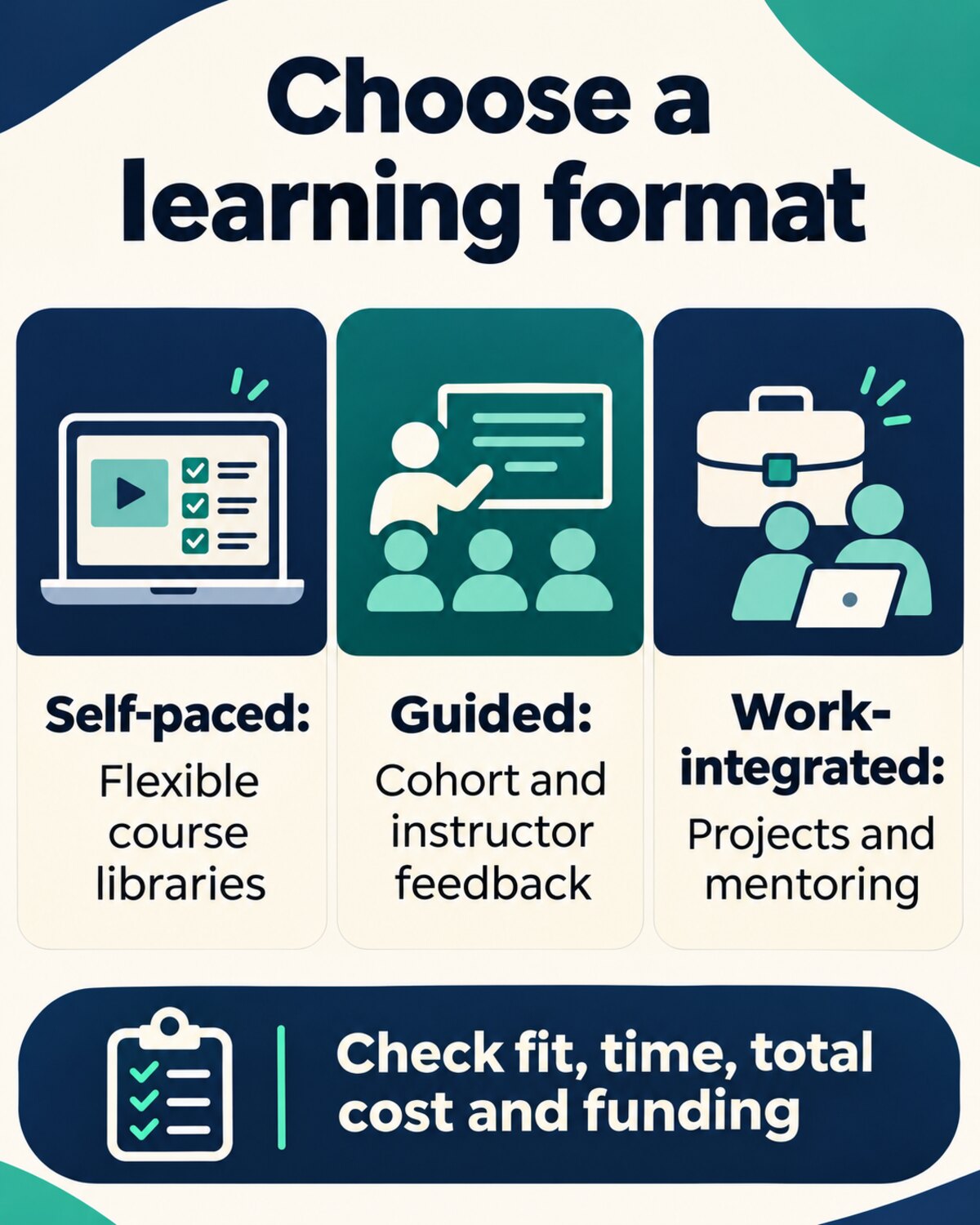
Self-paced libraries offer flexibility, guided courses add instructor feedback, and work-integrated programmes connect projects with mentoring. Check the fit, time, total cost and funding for each option.
How to compare them for a real team
Start with a small group and a task they already need to perform. A customer-service team might practise using a new reporting dashboard; an operations manager might build a simple workflow for reviewing exceptions. Ask each provider how learners practise, receive feedback and show that the skill transfers to work.
Our guide to building career skills through online learning explains how to connect study with a real assignment. For shorter lessons, consider the benefits and limits of microlearning. Then compare the full cost: subscription or course fee, time away from work, manager support, assessment and renewal. If funding matters, verify the exact course or subscription, the learner’s eligibility and the claim process directly. Individual SkillsFuture Credit and employer funding are separate questions.
Singapore’s SkillsFuture online subscription guide lists current routes and claim information. The IMDA training-partner page also describes reskilling support for employers. Availability and terms can change, so confirm them at enrollment.
Choose the support, not just the catalogue
A team with motivated independent learners may value a flexible library. A department making a major transition may need a cohort, coaching, and a workplace project. Neither format guarantees a result: the deciding factor is whether people have the time, guidance, and opportunity to use what they learn.