A luxury home gym should eliminate the inconveniences that make exercise easy to postpone. Instead of simply filling a spare room with expensive equipment, the goal is to create a private fitness environment that works as reliably as any other well-designed part of the home. That means investing in equipment worth using, planning for adequate space and power, and making the room pleasant enough that exercising there feels preferable to driving across town.
For homeowners accustomed to investing in premium kitchens, offices and entertainment spaces, the same logic applies to fitness. The best home gyms combine performance, convenience and thoughtful design rather than treating exercise equipment as an afterthought.
Invest in Commercial-Level Cardio
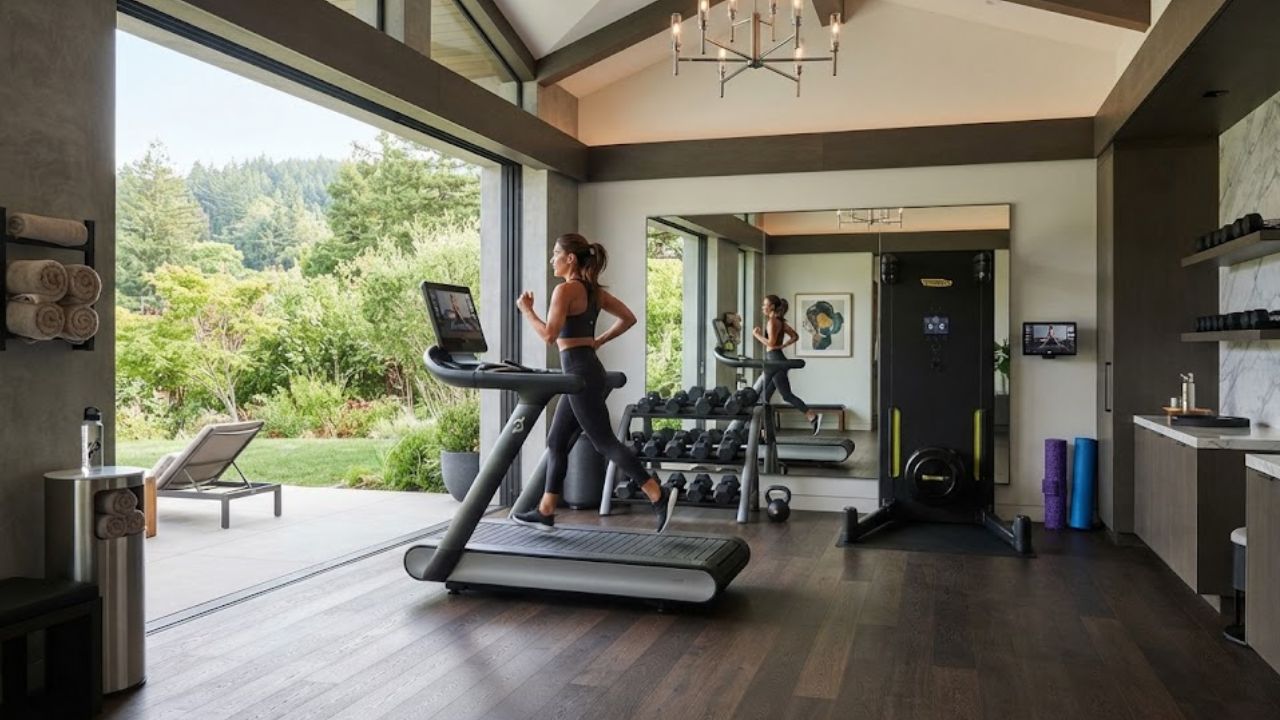
Cardio equipment often becomes the anchor of a serious home gym because it supports workouts regardless of weather, daylight or travel time. A commercial treadmill can make sense for a high-end residential setup when the goal is to replicate the substantial feel and performance associated with premium fitness facilities. Models designed with features including a hex-deck system, aluminum deck construction, multiple console options and a maximum speed of 15 mph are fantastic options.
Size deserves as much consideration as specifications. Full-scale machines can be significantly larger and heavier than typical residential fitness equipment, so homeowners should confirm floor space, ceiling clearance, electrical requirements and delivery access before ordering. A beautiful treadmill that cannot make it around the staircase is an expensive lesson in measuring twice.
Design Around Actual Workouts
Equipment selection should reflect how the household exercises rather than how impressive a showroom looks. Someone who primarily runs and strength trains may get more value from an excellent treadmill, adjustable bench, rack and carefully selected weights than from six specialized machines that rarely get touched.
Layout affects the experience, too. Leave enough clearance around equipment to move comfortably and create defined areas for cardio, strength work and mobility when space permits. Flooring should be selected with impact, equipment weight and cleaning in mind, while mirrors can help with form and make an enclosed room feel larger. Good ventilation and temperature control are equally important. A luxury gym loses much of its appeal when the room becomes unbearably warm halfway through a workout.
Make Convenience the Luxury
Time is often more valuable than another amenity, particularly for busy professionals who may be fitting exercise between early meetings, family obligations, travel and evening commitments. A well-planned home gym removes several small barriers at once. There is no commute, no waiting for equipment and no need to coordinate a workout around facility hours.
Design can push that convenience further. Keep towels, water, resistance bands and frequently used accessories within reach rather than storing them elsewhere in the house. Charging points for phones and watches are useful additions, as is a screen for guided workouts or entertainment during longer cardio sessions. If the gym is used before the rest of the household wakes, sound insulation may be worth considering as well.
The objective is not to create a room packed with amenities for their own sake. It is to reduce the number of reasons to skip a workout.
Spend Where It Matters
Luxury does not require choosing the most expensive version of every item. Put the largest share of the budget toward equipment that will receive frequent use and features that improve the room every day. Durable cardio machines, quality strength equipment, appropriate flooring, ventilation and professional electrical work generally deserve priority over decorative extras.
Smaller details can then make the space feel finished. Built-in storage prevents dumbbells, mats and accessories from taking over the floor. Adjustable lighting allows brighter illumination for strength sessions and softer settings for stretching. A compact refrigerator or hydration station can be useful in a large dedicated space, but it should follow the essentials rather than replace them.
This approach also makes future upgrades easier. Leaving open floor space provides flexibility if training preferences change or a new piece of equipment eventually earns its place.
Build for Long-Term Use
The smartest luxury spaces age well, and a home gym should be no exception. Equipment should be positioned so it can be serviced, flooring should withstand repeated use and technology should not be so integrated that replacing one outdated component requires redesigning the room.
It is also worth considering how the space might serve different members of the household. Adjustable equipment, flexible training areas and cardio machines with broad speed or intensity ranges allow one room to accommodate very different fitness levels.
A luxury home gym ultimately earns its value through use, not appearance. Build around the workouts you genuinely enjoy, invest heavily in the equipment that supports them and make exercising at home exceptionally convenient. The result is a space that does more than photograph well. It becomes part of the daily routine.