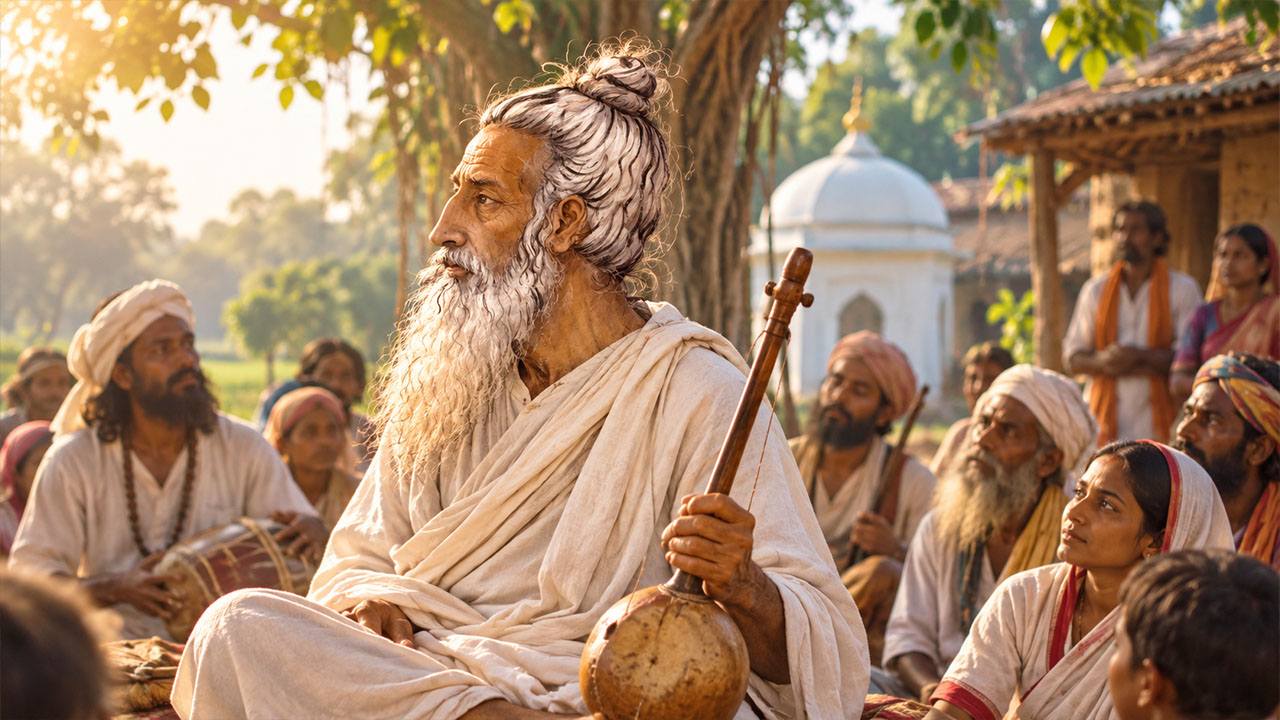
Today, October 17, 2026, marks 136 years since Fakir Lalon Shah died at his akhra in Chheuriya, Kushtia. This morning, Bauls, fakirs, and ordinary families are gathering there for a three-day festival. They will sing, share rice, and sit side by side without asking who is Hindu and who is Muslim. That simple scene holds the heart of Lalon’s question we still can’t answer: what is caste, and who gave it to us?
Lalon asked this in his songs more than a hundred years ago. He never got a clear reply. Neither have we. Across Bangladesh and South Asia, people still hurt each other over the very labels he laughed at.
A Man Who Would Not Name His Faith
No one knows for sure where Lalon was born or what faith his parents followed. One popular story says he was born Hindu, fell sick on a pilgrimage, and was nursed back to life by a Muslim family. Other stories say something else. Lalon never cleared it up. When people asked, he answered with a song.
Everyone asks what caste Lalon belongs to. Lalon says, I have never seen what caste looks like with these eyes.
This was not a way to escape the question. It was his answer. If you cannot see caste, touch it, or smell it, why build walls with it? That is why Lalon’s question we still can’t answer makes us uneasy. The honest reply makes our divisions look silly.
In 1889, a year before Lalon died, Jyotirindranath Tagore drew his picture on a houseboat on the Padma. It is the only image of Lalon made while he was alive. Look at it closely. You see an old man, thin and calm. You do not see a Hindu or a Muslim. You see a human being.
Readers who want the full story of his life can start with our profile of Lalon Shah, the Baul saint of Kushtia.
“Jat Gelo Jat Gelo Bole”: The Song That Still Stings
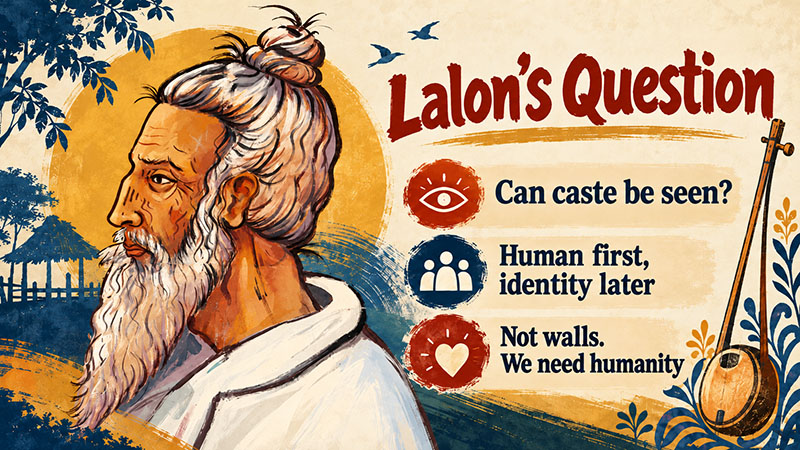
One of his sharpest songs opens with a crowd shouting that caste has been lost.
“Caste is gone, caste is gone,” they cry. What a strange factory this is!
The word he picks is karkhana, a factory. A factory makes things. Lalon is telling us that caste is made by people, not by God. People build it, and then they panic when it cracks.
He pushes further in another song. He looks at the marks people use to prove faith. Circumcision marks a Muslim man. The sacred thread marks a Brahmin man. Then he asks a question a child in class six could follow.
If circumcision makes a Muslim, what is the rule for women? I know a Brahmin by his thread, but how do I know a Brahmin woman?
A rule that cannot cover half of humanity is not a law of heaven. It is a habit of men. This is Lalon’s question we still can’t answer, and it hurts because it is so simple while our excuses are not.
136 Years Later, the Old Fight Is Back
This year, preparations at the shrine wrapped up on time, with painting, stages, and stalls ready for the festival. The Kushtia Deputy Commissioner, Touhid Bin Hasan, said the day reflects the country’s folk culture, humanism, and secular spirit. He also said the district has taken steps to keep the festival safe.
That last line tells its own story. A festival of songs should not need a security plan. But the last two years explain why it does.
- After August 2024, scores of shrines, Sufi darbars, and Baul akhras were attacked across the country. Many devotees told reporters they had stopped going out of fear.
- On November 20, 2025, Baul singer Abul Sarkar was arrested in Manikganj over claims that his pala gaan performance hurt religious feelings. Three days later, his supporters held a peaceful human chain. They were attacked, and some ran into a pond to escape the beating.
- In March 2026, more than a hundred men stormed a Baul gathering near the Ibrahim Shah shrine in Bishwanath, Sylhet. They smashed instruments and sound systems and warned against holding such events again.
- On May 15, 2026, men with sticks attacked the Shah Ali shrine in Mirpur, Dhaka, during its weekly Urs. Several devotees were hurt.
Each attacker believes he has settled Lalon’s question; we still can’t answer. He answers it with a stick. Lalon would call that the factory at work again.
There is a strange gap here. The state honors Lalon with official programs every October. Yet many who live his message, the Bauls with long hair and ektaras, feel unsafe for the rest of the year. Honoring a dead saint is easy. Protecting his living followers is the real test.
Why Lalon’s Question Matters Across South Asia
This is not only a Bangladesh story. Across the border in India, couples still face threats, and sometimes death, for marrying outside their caste. In Pakistan, a rumor of blasphemy can bring a mob to someone’s door within hours. In Bangladesh, a song sung at a village fair can now lead to a police case. The labels change from place to place. The anger stays the same.
Social media has made this faster. One clipped video, one angry post, and a crowd gathers before anyone checks the facts. Lalon never saw a phone. Still, he understood crowds perfectly. “Jat gelo, jat gelo” is the sound of a mob in any century.
That is why Lalon’s question we still can’t answer belongs to all of South Asia. Over a billion people here share rivers, food, music, and a long, painful history of partition. We keep drawing lines on each other, then acting surprised when the lines turn into wounds.
What Honoring Lalon Should Really Mean
Lalon gave us a better place to start. He sang:
Worship the human, and you will become a golden human.
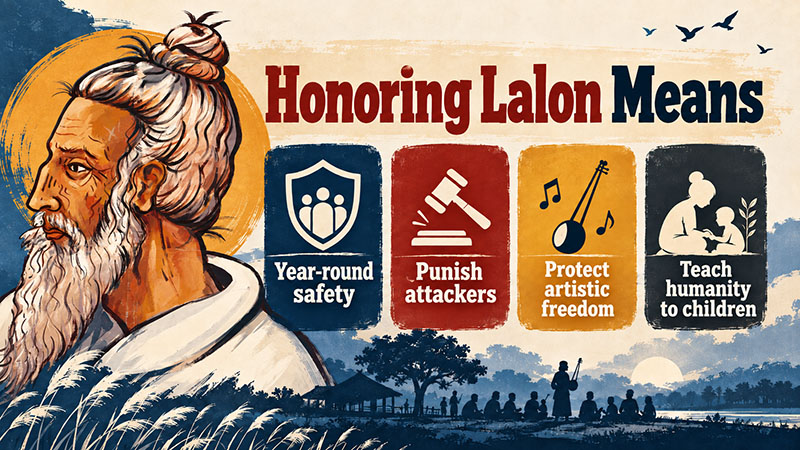
If we take that line seriously, honoring Lalon on his death anniversary should mean a few clear things:
- Protect the akhras and shrines all year. Security should not appear only on festival days.
- Punish attackers, not singers. Arresting a Baul for a song while mobs walk free sends the wrong message.
- Teach his songs with their meaning. Children should learn what Lalon asked, not just how the tune goes.
- Ask ourselves the question. Before we judge someone by faith or caste, we can stop and ask what we actually see.
None of this needs a new law or a big budget. It needs courage. Facing Lalon’s question we still can’t answer means admitting that we built these walls ourselves.
Final Words: The Answer Lalon Left Us
On this 136th death anniversary, the songs will rise again from Chheuriya. Thousands will sit together on the same ground, eat from the same pots, and cry at the same verses. For three days, the walls will be quiet.
Lalon’s question we still can’t answer may never get a neat reply in words. But he showed us the answer in how he lived. He refused to wear a label, and he treated every visitor as a human first. If we want to honor him, we do not need to solve the puzzle of his faith. We need to stop asking it of each other.
As Lalon would say, look with these eyes. You will not find caste. You will find a person.