Most keywords do not deserve their own page. After more than 10 years of keyword research and SEO writing, I’ve learned that the powerful signs a keyword is worthy of a full article are rarely the ones a tool shows first. A big volume number and a green difficulty score can still lead you to a page that never ranks, never gets clicked, or fights with a post you already have.
That problem is bigger now. SparkToro found that about 68% of US Google searches in the first four months of 2026 ended without a click. Every article you publish needs a real reason to exist.
Below are the seven checks I run before I commit a keyword to a full article, plus the simple score I use to decide.
The Quick Answer: 7 Powerful Signs a Keyword Is Worthy of an Article
A keyword deserves its own article when:
- Real people search for it, and you can prove it outside one tool.
- The top results are articles, not tools, product pages, or videos.
- The answer needs more depth than an AI overview can give.
- The searcher is close to a decision that matters to your business.
- The pages ranking now are weak, old, or off-target.
- No page on your site already targets the same intent.
- It holds enough real questions to fill a page without padding.
1. Real Demand Is the First of the Powerful Signs a Keyword Is Worthy
Keyword tools estimate volume. They don’t count it, and two tools can show very different numbers for the same term. So I never trust a single number.
I look for proof in three places instead:
- Search Console. If one of your pages already gets impressions for the term, the demand is real.
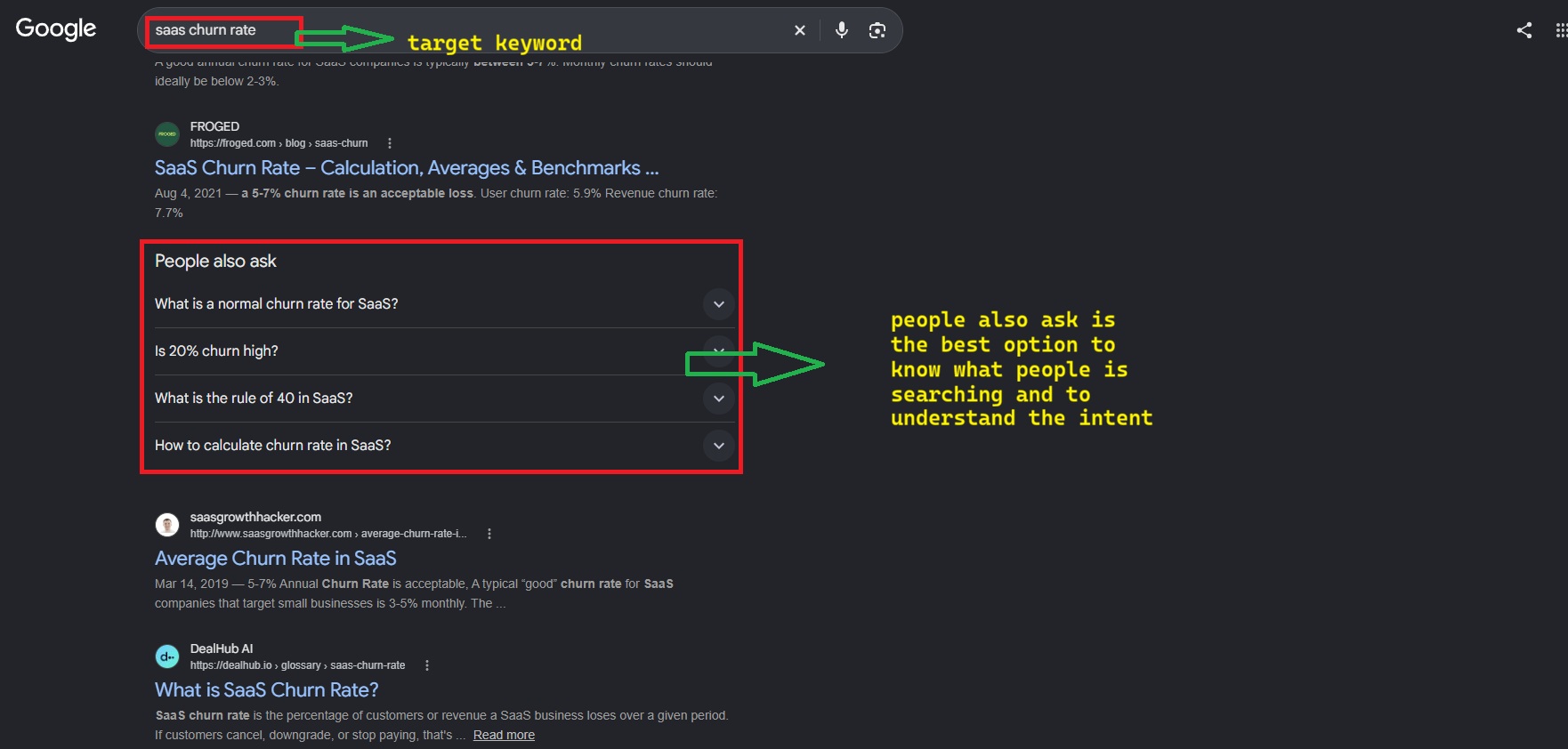
- Autocomplete and “People also ask.” If Google suggests the phrase, people type it.
- Forums and communities. Reddit threads, Quora answers, and niche Facebook groups show how people actually word the problem. I cover more of these in my list of places to find keywords outside keyword tools.
Brian Dean said it plainly in a podcast interview: “Search will always start with a keyword.” The real work is picking one that real people use, not one that is a tool made up.
A term with low reported volume but steady forum questions is often a safer bet than a term with a big number and no human trace.
2. The SERP Shows Articles: Powerful Signs a Keyword Is Worthy Start Here
Google tells you what format it wants. You just have to look.
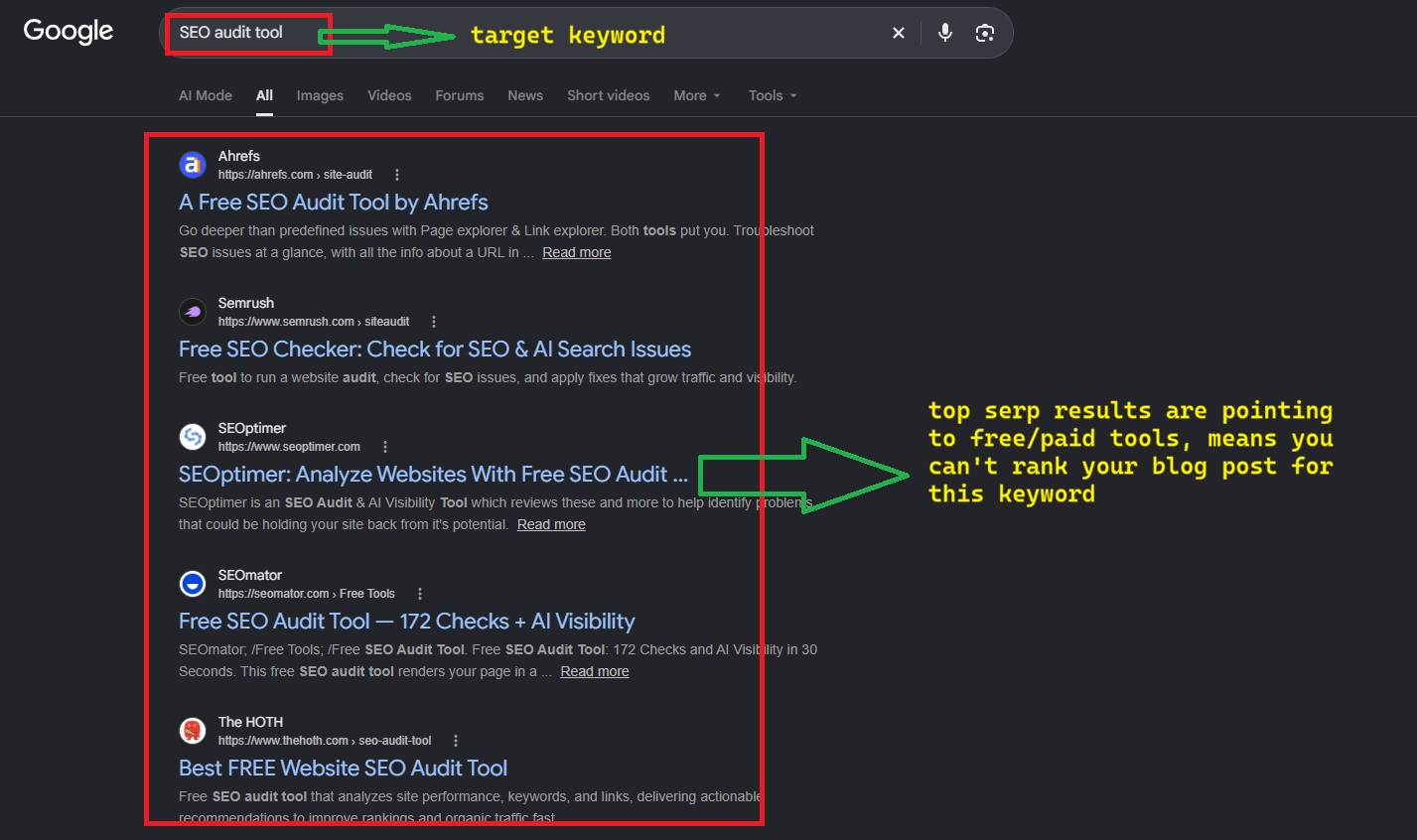
Search the keyword in a private window and scan the top 10. Blog posts and guides mean an article fits. Tool pages, category pages, or product listings mean an article will struggle, no matter how well you write it.
Nathan Gotch explained this with the keyword “SEO audit tool.” If every page-one result is a tool, he said, “You probably shouldn’t create a long-form article.” That rule has saved me from a lot of wasted drafts.
Also check what sits above the organic results. Video carousels, local packs, and shopping units push articles down the page. My breakdown of hidden SERP features covers the ones most people miss.
3. The Answer Needs Depth, One of the Powerful Signs a Keyword Is Worthy Today
Some questions end on the results page. “How many ounces in a cup” does not need 1,500 words. Google answers it, and the searcher leaves.
The data backs this up. Pew Research Center studied the browsing of 900 US adults and found they clicked a regular search result in 8% of visits when an AI summary appeared, compared with 15% when no summary showed.
So I ask one question: can this be answered well in two sentences? If yes, it belongs in an FAQ or a section of a bigger article. If the answer needs steps, trade-offs, examples, or judgment, it can carry a full piece.
“How to choose a CRM for a five-person sales team” needs depth. What does CRM stand for?” doesn’t.
Depth also helps you get cited by AI tools. A page that explains the why, not just the what, gives ChatGPT, Perplexity, and AI Overviews something worth quoting.
4. Buyer Intent: Powerful Signs a Keyword Is Worthy Often Hide in Low Volume
Traffic that doesn’t move anyone toward a sale, signup, or subscription is a vanity number.
Neil Patel has pushed this for years. In a 2025 post, he told marketers to “pivot from ‘volume’ to buyer intent. ” Long, specific searches bring fewer visitors, but those visitors know what they want.
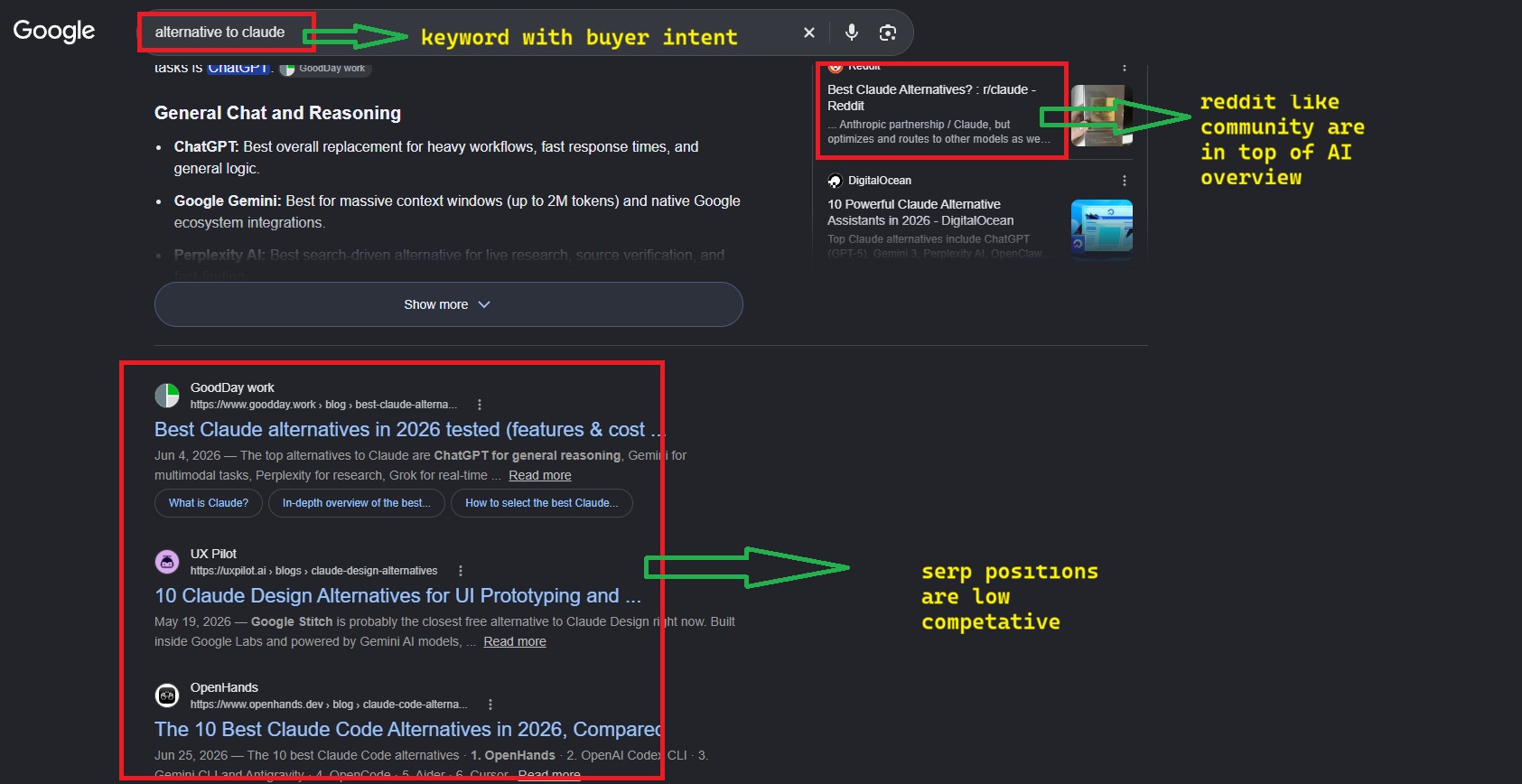
Watch for modifiers that show a decision is near:
- “best,” “vs,” “alternative,” “review”
- “for [a specific use or industry]”
- “pricing,” “template,” “checklist”
There’s a second benefit. Studies on AI Overviews keep finding that simple informational searches lose the most clicks, while buying-stage searches hold up better.
5. Weak Pages on Page One Are Powerful Signs a Keyword Is Worthy of Your Effort
A good keyword you can’t rank for isn’t a good keyword for you. Difficulty scores help, but I trust my own look at page one more.
These are the gaps I look for:
- Reddit or forum threads ranking in the top five
- Articles last updated two or more years ago
- Pages that only half-answer the query
- Thin pages from small sites
- Big sites ranking with a page that’s clearly about something else
Two or three of these tell me a focused, well-built article has room. When page one is ten fresh, detailed guides from major brands, I pick a narrower angle or move on.
6. No Overlap With Your Own Pages Is Among the Powerful Signs a Keyword Is Worthy
Most writers skip this check. If you already have a page targeting the same intent, a new article will compete with it. Google may swap between the two, and both can slip.
Before I write, I search site:yourdomain.com for the keyword. Then I check Search Console for pages that already get impressions for it. If an old page is close, I update that page instead of starting a new one.
Two keywords can look different and still share one intent. “Keyword research tips” and “how to do keyword research better” usually want the same page. If you’ve already run into this, my guide to keyword cannibalization fixes shows how to clean it up.
7. Enough Real Questions: The Last of the Powerful Signs a Keyword Is Worthy
A full article needs a full outline. If I can’t list five to eight real subquestions a searcher would ask, the topic is too thin.
My test is simple. I open “People also ask,” autocomplete, and a few forum threads, then write down every distinct question. I remove the duplicates. What’s left becomes my outline. If it’s only two questions long, the keyword becomes a section, not an article.
A long list also tells you the topic can anchor a cluster. These keyword research questions can help you build that list.
How I Score the Powerful Signs a Keyword Is Worthy in 60 Seconds
I give each keyword one point per sign it passes. Here’s what a pass looks like:
| Sign | It passes if… |
|---|---|
| Real demand | It shows up in Search Console, autocomplete, or forums. |
| SERP format | Most of the top 10 results are articles. |
| Depth | The answer needs more than two sentences. |
| Buyer intent | The searcher is near a decision you care about. |
| Beatable results | Two or more weak or outdated pages sit on page one. |
| No overlap | No page on your site targets the same intent. |
| Enough questions | You can list five or more distinct subquestions. |
Here’s how I read the score:
- 6 to 7 points: Write the full article.
- 4 to 5 points: Write it only if it supports a bigger topic you’re building.
- 3 or fewer: Turn it into a section or an FAQ answer, or skip it.
The whole check takes less time than writing one bad intro.
Final Thoughts
Search sends fewer clicks than it did two years ago, so every wasted article costs more. The powerful signs a keyword is worthy of a full article all point to the same thing: a real person needs an answer that a snippet can’t give, and your site is the right place to give it.
Pick five keywords from your current content plan and run them through these seven signs today. Drop the ones that fail. Put that time into the ones that pass.