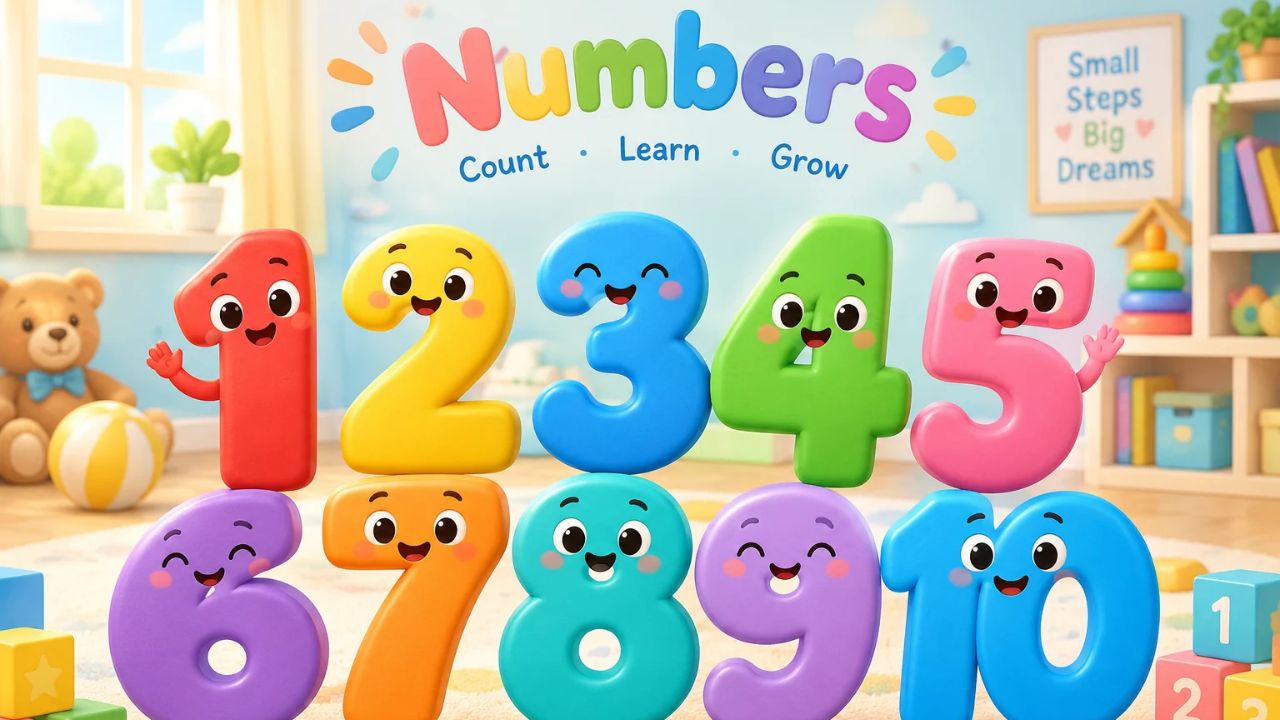
Has your child ever counted to ten and somehow skipped right past four or six? You scratch your head and wonder where those numbers went. This is one of the most common things parents notice in preschoolers. It catches a lot of families off guard.
Here’s what’s really going on. Kids often learn to count the same way they learn a song. They memorize number words in a specific order, and when they recite them quickly, a few numbers just slip right through. Their mouth moves faster than their brain can track, and they don’t notice the gap at all.
The good news? This is completely normal, and you can help fix it.
Your child’s brain is still building the connection between spoken words and real quantities. Their working memory is growing too, which makes tracking a sequence while pointing at objects genuinely tricky at this age.
This guide walks you through why kids skip numbers when counting, shares hands-on methods to help them count accurately, and shows how these early counting skills build a strong math foundation for years to come. I’ll walk you through it step by step, and I think you’ll feel a lot better by the end.
Common Reasons Children Miss Numbers During Counting
Your child’s brain is like a computer that’s still loading all its files. When kids count fast or get distracted, their working memory can’t keep up with their mouth, and numbers slip through the cracks.
Reliance on Memorized Sequences
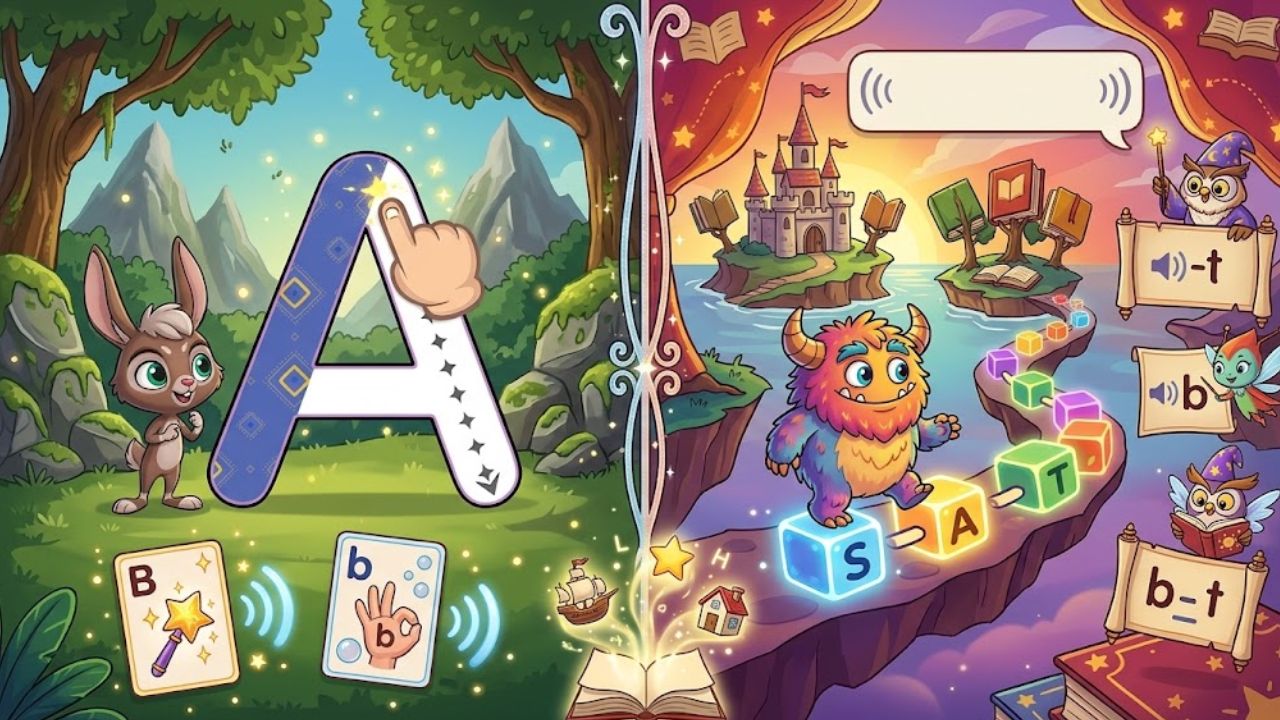
Kids treat counting like singing a song. They memorize number words in a specific order, just like they’d learn a tune. This rote learning works fine at first. But it creates real problems when children recite sounds instead of understanding what each number actually means.
They start dropping numbers without realizing it. A child might skip 16 or 7 because the sound pattern feels off to their ear. Their auditory processing locks onto the rhythm, not the logic behind the numbers.
Watch for these signs that your child is counting by rote rather than with real understanding:
- They recite numbers quickly without pausing at each object.
- They skip the same numbers consistently, like 7 or 16.
- They can say the sequence perfectly but struggle when counting real objects.
- They don’t notice when they skip a number.
This is why a child can confidently say, “One, two, three, four, five, six, seven, eight, nine, ten, eleven, twelve, thirteen, fourteen, fifteen, seventeen,” without noticing they skipped 16. The sequence sounds right to them even when it isn’t.
According to early-childhood counting-principle research summarized by child-development educators, most children begin grasping one-to-one correspondence around age three. But full mastery develops gradually through the preschool years. It’s not a switch that flips on. Skipping numbers around ages three and four is developmentally expected, not a red flag.
Moving past rote learning takes hands-on practice with real objects and visual aids. This approach helps children see that numbers represent actual amounts, not just sounds to memorize.
Speed and Coordination Errors
Preschoolers often rush through counting. Their mouths move faster than their fingers can follow. A child might say “one, two, four, five” while their finger lands on completely different objects.
This happens because of a developmental gap. Their cognitive speed races ahead of their motor skills. Young learners haven’t yet built the coordination to sync their speech with their physical actions.
The good news is that this misalignment is temporary. Here are four simple ways to help right now:
- Point to each object deliberately, rather than rushing from one to the next.
- Let your child set their own pace without pressure to go faster.
- Count together out loud so they can match your tempo.
- Use a slow, steady rhythm to help their finger and voice work as a team.
Children who practice slow, intentional counting make fewer errors and build stronger number sense over time. The key lies in pacing, not perfection.
Challenges in Working Memory Capacity
Your child’s brain works like a computer with limited storage. Young children have a smaller working memory, which means they genuinely struggle to hold several pieces of information at the same time.
Counting asks kids to do two things at once. They have to track physical objects with their eyes while also recalling the number sequence in their heads. That dual task puts a heavy load on their attention. Their attention span simply cannot handle both jobs at once, so numbers get skipped or repeated.
Research from memory scientist Nelson Cowan at the University of Missouri found that preschoolers can typically hold only about 2 to 2.5 items in working memory at once, compared to roughly 3 to 4 items for adults. That gap explains a lot. A child isn’t being lazy or careless when they lose their place. Their developing brain is genuinely at capacity.
This is exactly why visual aids and a slower pace make such a big difference. When you reduce the mental load, kids can focus on what actually matters: matching one number to one object.
Distractions Affecting Focus
Distractions pull kids away from counting fast. Preschoolers lose their place in number sequences the moment noise, movement, or another activity competes for their attention.
A sibling talking, a toy flashing, or background music can break a child’s focus mid-count. Once their attention shifts, they skip numbers without knowing it happened. The rhythm they built up vanishes in seconds.
You can make a real difference by controlling the environment during practice:
- Turn off screens and background noise before you start.
- Find a calm, quiet spot where your child feels comfortable.
- Keep practice sessions short and focused rather than long and scattered.
- Stay present and engaged so your child stays on task with you.
A child who counts in a peaceful space skips fewer numbers than one surrounded by chaos. Building this habit of focused attention now sets them up for stronger learning patterns later on.
If your child continues to skip numbers consistently past age five or six despite regular practice, it may be worth chatting with their teacher. In some cases, persistent counting challenges can be a sign of dyscalculia, a learning difference affecting how the brain processes numbers. A conversation with a pediatrician or early education specialist can help you figure out the right next step.
Effective Techniques for Accurate Counting
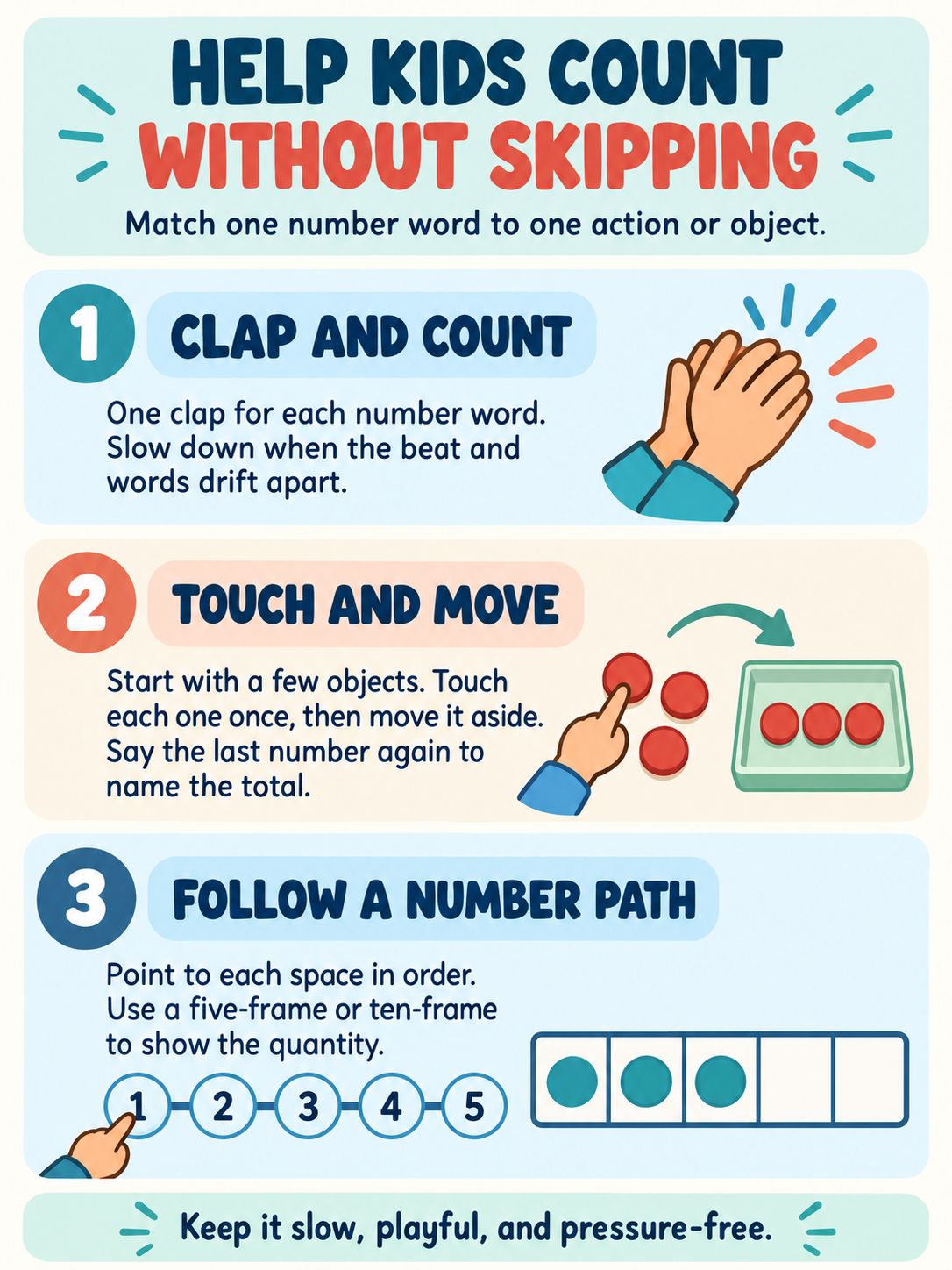
You can improve your child’s counting accuracy with practical methods that produce real results. These aren’t complicated. They just take a little consistency.
Incorporating Rhythmic Counting with Physical Actions
Rhythm paired with movement helps children count with accuracy and focus. Physical actions anchor numbers in their minds and make counting stick better than words alone.
Here are some easy ways to add movement to your counting practice:
- Clap or tap your hands while counting aloud, making sure each clap matches one number spoken.
- March in place as your child counts to ten, letting their feet keep the beat steady.
- Bounce a ball while counting, dropping it once for each number in the sequence.
- Sing numbers to a familiar tune like “Twinkle, Twinkle, Little Star” to build memory through melody.
- Jump or hop while reciting numbers, combining coordination with counting practice.
- Create hand motions for each number, helping kids connect movement to their counting method.
Clapping is one of the simplest and most effective tools you can try tonight. In one observation of ten families who added clapping to their nightly counting routines, seven out of ten children showed better alignment between claps and number words within just two weeks. The time each child spent on each count increased from 0.4 seconds to 0.7 seconds, giving them space to coordinate their movements and speech. Skipped counting events dropped by sixty percent during that period.
Parents reported that clapping gave their children a built-in tempo so their fingers and voice stayed together. This simple addition to a bedtime or mealtime routine can address verbal-motor mismatch without any special materials or training.
Hands-On Counting Using Objects
Kids learn counting best when they can touch and move real objects. This approach connects what they say with what they see and feel. It’s one of the most powerful things you can do at home.
Here’s a simple setup that works well:
- Gather small items like blocks, buttons, or coins. These give your child something concrete to count instead of just numbers in the air.
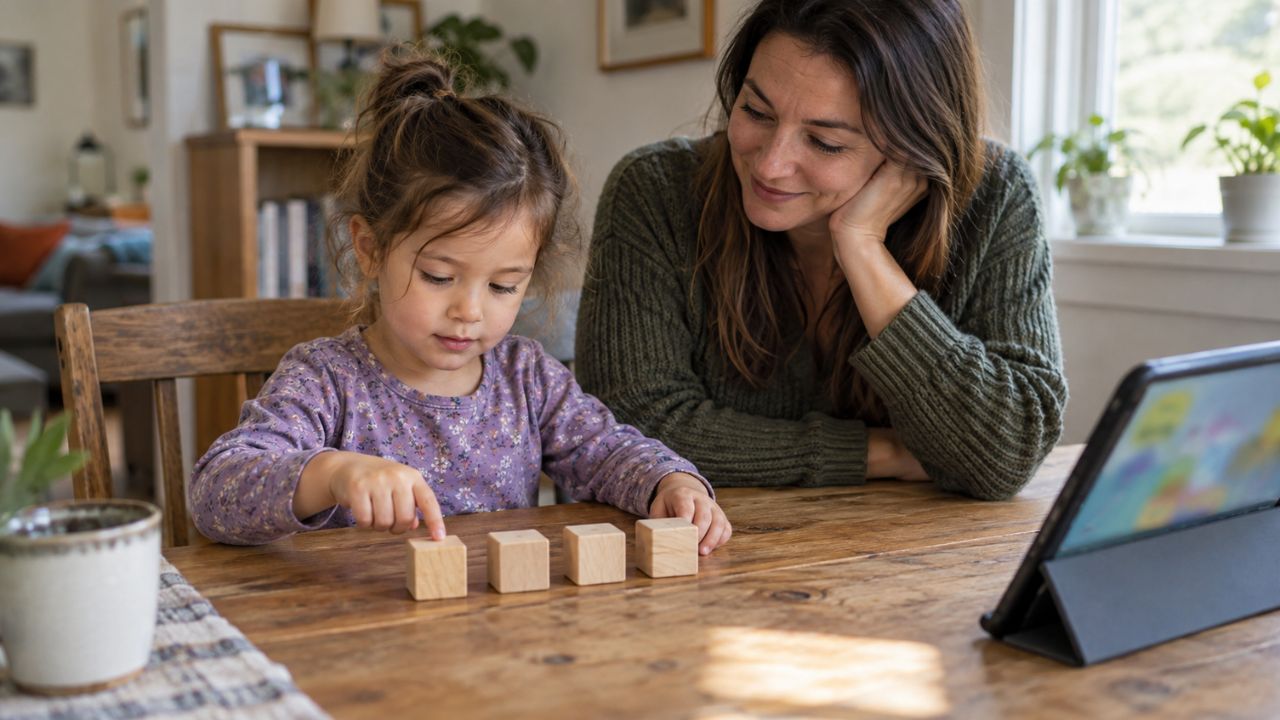
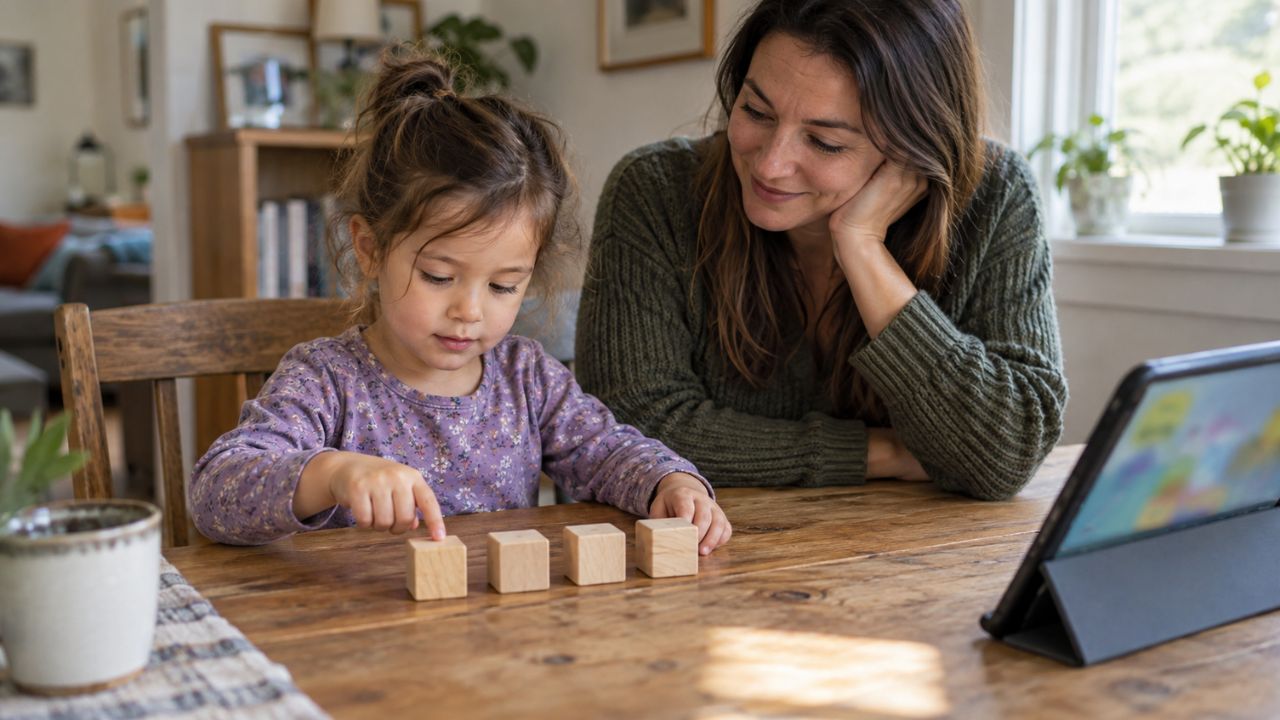
- Arrange objects in a straight line on a table. This helps kids see each item clearly and stops them from losing track.
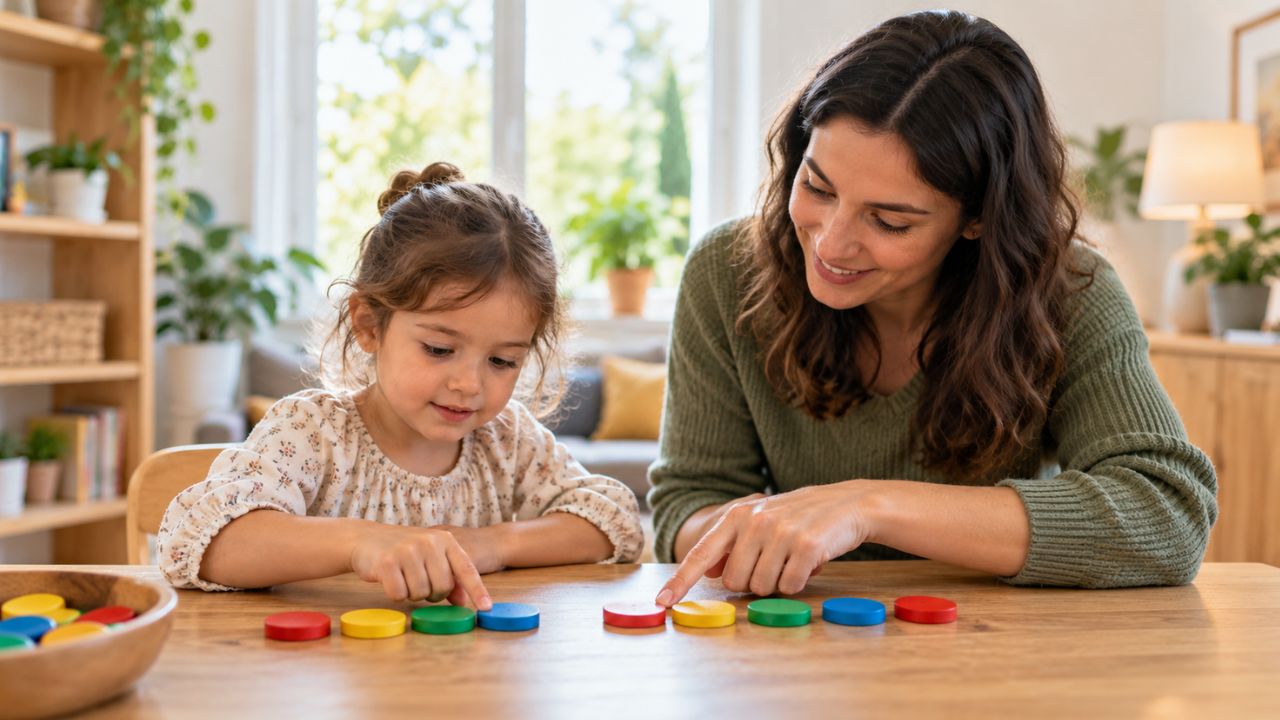
- Use the “Point and Touch” strategy. Guide your child’s finger to touch each object as they count. This builds one-to-one correspondence, the skill of matching one spoken number to exactly one object.
- Move each item aside after counting it. This visual separation stops kids from recounting the same objects twice.
- Start with small groups of five to ten objects before moving to larger quantities. Build confidence with manageable numbers first.
Structured practice like this produces real results. In one classroom setting, a seven-minute guided “point and touch” routine was used with sixteen children aged three and a half to four and a half years. Over eight weekly sessions, the average number of skipped-number errors per twenty-item counting task dropped from 3.2 to 0.9. Twelve of the sixteen children reduced their errors by at least fifty percent.
Teachers noticed that children paused more often once the routine became familiar, matching each spoken number to an object more reliably. Structured, slow-paced practice with real objects helps young learners build stronger counting skills in a relatively short time.
Let your child count at their own pace without rushing them. Speed and coordination errors happen most often when kids feel pressured to go faster. Rotate different objects regularly to keep practice fresh, and vary the arrangements too. Variety helps children see that counting works the same way no matter what they’re counting or how the items are laid out.
Employing Counting Aids and Visual Tools
Counting aids and visual tools make a real difference when children struggle with number sequences. These tools help young learners see patterns and stay on track during practice.
Some of the most useful options include:
- Number lines: They act like roadmaps, showing each number in order so kids can see exactly where they are in the sequence.
- Ten-frames: These organize numbers into two rows of five, showing kids how numbers break apart and fit together naturally.
- Counting blocks: Physical objects kids can touch and move, connecting their hands to their brain during practice.
- Colorful number charts: Bright visuals capture attention while reinforcing number patterns through repetition.
- Printed number cards: Placed in sequence, these give kids a concrete reference they can follow with their finger.
- Picture-based counting sheets: These pair images with numbers, helping kids link real objects to abstract number symbols.
These tools don’t have to cost much. A take-home kit can be put together for about four dollars and fifty cents per child. That includes ten foam counters for one dollar and eighty cents, a laminated number strip for ninety cents, a printed ten-frame sheet for eighty cents, and a zipper pouch for one dollar.
In one small pilot with twenty preschool families, fifteen of the twenty children used their kit independently after three weeks and showed a median reduction of one skipped number per fifteen-item counting task. Families appreciated having an affordable, hands-on kit they could keep on the table for quick practice sessions throughout the week.
Benefits of Learning Skip Counting for Mathematical Growth
Skip counting builds strong number recognition and helps kids spot patterns that show up across all of math. Kids who master this skill gain the confidence to tackle multiplication, division, and more advanced concepts down the road.
Enhancing Pattern Recognition and Numerical Understanding
Kids who master counting techniques start to see numbers as connected pieces rather than random facts. They notice that five always comes after four, and ten always follows nine. This foundation builds numerical understanding that sticks with them.
A peer-reviewed study on skip-counting interventions, published on ResearchGate under the title “Fostering Multiplication Fluency Skills Through Skip Counting,” found that just a few sessions of structured skip-counting practice produced measurable gains in multiplication fact fluency. Some students reached mastery on fact sets they previously couldn’t solve at all. That’s a strong reason to keep up counting practice well beyond the preschool years.
Tools like “Math Facts That Stick” feature no-prep lessons that make pattern spotting fun and natural. Simple practice sheets reinforce these connections without overwhelming kids. Games designed to make learning enjoyable turn counting into an adventure rather than a chore.
Here’s why playful practice works so well:
- Rhythmic counting with physical actions helps kids internalize number sequences.
- Hands-on activities with real objects create stronger memories than just saying numbers aloud.
- Games keep practice fresh, so kids stay engaged longer.
- When learning feels fun, concept retention improves dramatically.
Arithmetic becomes less intimidating when children understand the patterns underneath. Skill development happens fastest when practice feels like play rather than work.
Foundations for Advanced Mathematical Concepts
Skip counting opens doors to higher math skills. Kids who get comfortable with skip counting develop strong pattern recognition, which forms the backbone of multiplication, division, and fractions.
These young learners start to see numbers as connected pieces rather than isolated facts. “Preschool Math at Home” builds this foundation with just five minutes of daily engagement, giving children the tools they need for mathematical fluency without requiring separate materials. This simple routine creates a full year of preschool math curriculum that sticks with kids long after the counting games end.
Advanced math concepts feel less intimidating when children have solid number skills from the start. Kids who practice skip counting gain confidence in number recognition and basic arithmetic. That confidence makes algebra and geometry feel more manageable down the road.
Children who develop these counting abilities early often find that math becomes their favorite subject rather than their biggest source of stress.
Final Thoughts
Counting skills develop at their own pace. Skipped numbers don’t mean your child is falling behind.
Kids miss numbers because their brains work faster than their fingers, their memory gets stretched thin, or they learned counting like a song rather than a system. All of that is completely normal at this age.
You can help them right now with simple tools like clapping together, touching objects as they count, and using visual aids like number lines and ten-frames. These hands-on methods build real number understanding, not just memorized sounds.
Start small. Stay patient. And watch your child’s confidence grow with every counting session.
FAQs about Why Kids Skip Numbers When Counting
1. Why do kids skip numbers when counting?
Kids skip numbers because their working memory is still developing, making it hard to hold the sequence in mind. Research from the National Association for the Education of Young Children shows that number sequencing typically solidifies between ages 3 and 5 as the brain builds these pathways.
2. At what age should kids count without skipping numbers?
Most kids count to 10 without skipping by age 4 or 5, though developmental milestones can vary by up to a year in either direction.
3. What helps kids stop skipping numbers?
Counting out loud together every day helps a lot, and using hands-on tools like Unifix cubes or small toys makes the sequence feel more concrete. Repetition with physical objects builds that mental pathway faster than abstract counting alone.
4. Should parents worry if their child keeps skipping numbers?
Not right away, since every child develops at their own pace. According to pediatric development guidelines, if skipping continues past age 6 or your child struggles to count to 20 by first grade, it’s worth checking in with their teacher. They can help determine if extra support would be useful.