The modern manufacturing landscape is undergoing a quiet but fundamental shift. As consumers become increasingly discerning about the provenance of the products they invite into their homes, the traditional methods of commodity production—often prioritized for volume and low cost—are being challenged by a new wave of operational transparency. In sectors like home fragrance, this shift is not just about environmental ethics; it is about the fundamental engineering of safety and performance. For the contemporary business owner, sustainability is no longer a marketing buzzword but a core operational pillar that demands a deep dive into material science and supply chain reliability.
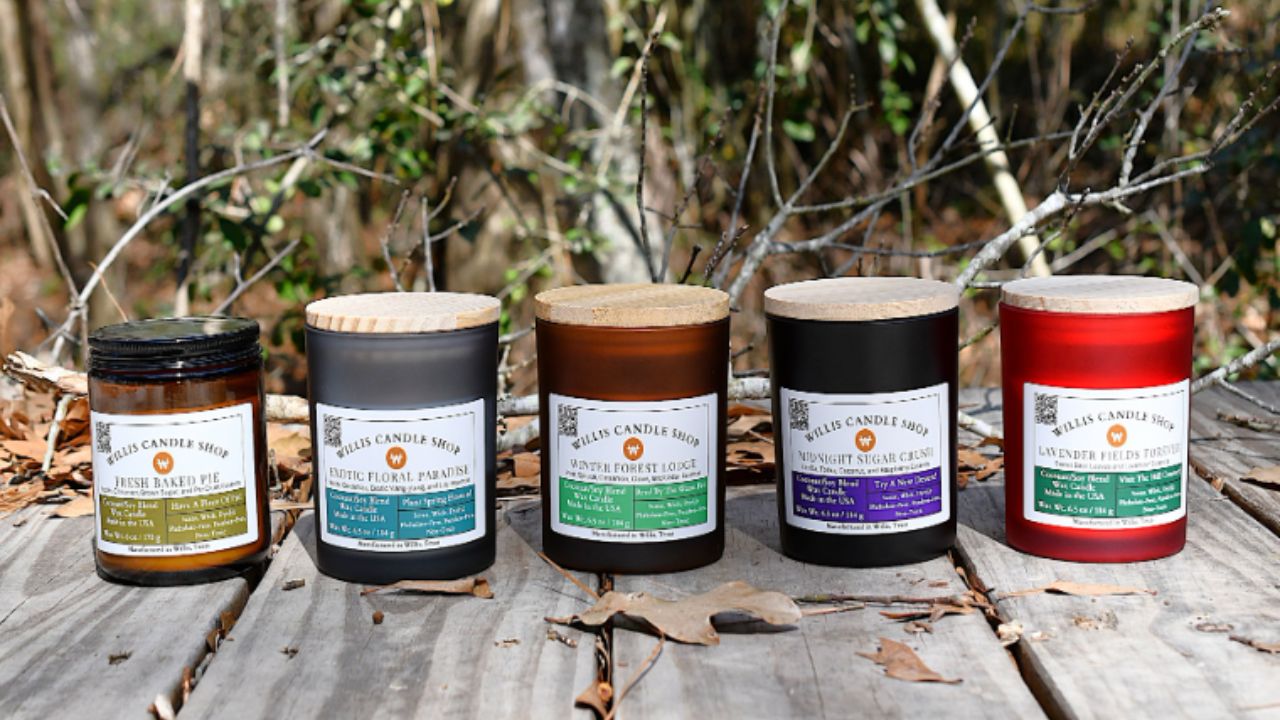
For decades, the candle industry was defined by paraffin, a petroleum derivative that offered consistent, cheap, and easily accessible fuel for the mass market. However, the reliance on such materials has come under scrutiny as we learn more about the chemical byproducts of combustion. Today, independent vendors at the Willis Candle Shop are proving that it is possible to achieve superior olfactory performance without relying on petroleum-based paraffin. By utilizing a refined matrix of soy, coconut, and beeswax, these manufacturers are creating a product that prioritizes clean combustion and structural stability, effectively raising the bar for the entire industry.
The Physics of Clean Combustion
Understanding the difference between mass-market paraffin and high-performance sustainable waxes requires an appreciation for the physics of the flame. A candle is essentially a chemical reactor. The wick serves as the delivery system, pulling fuel—the wax—into the combustion zone where it meets oxygen. When the fuel source is contaminated or chemically unstable, the result is incomplete combustion, which often manifests as black soot. This soot is not just an aesthetic issue; it is a physical indicator that the product is failing to burn cleanly, thereby compromising the indoor air quality of the very sanctuary it was meant to enhance.
Sustainable, plant-based waxes behave differently. When formulated with precision, they burn at a cooler temperature with a more stable, laminar flame. This requires an intimate understanding of the wax’s melting point and the wick’s absorption rate. When a manufacturer successfully balances these variables, they achieve what the industry calls “clean burn”—a state where the fuel is entirely consumed by the flame, leaving behind no measurable particulate matter. This is the ultimate goal of sustainable manufacturing: to provide a product that performs exactly as intended without creating negative externalities in the home environment.
Fragrance Stability: Engineering vs. Naturalism
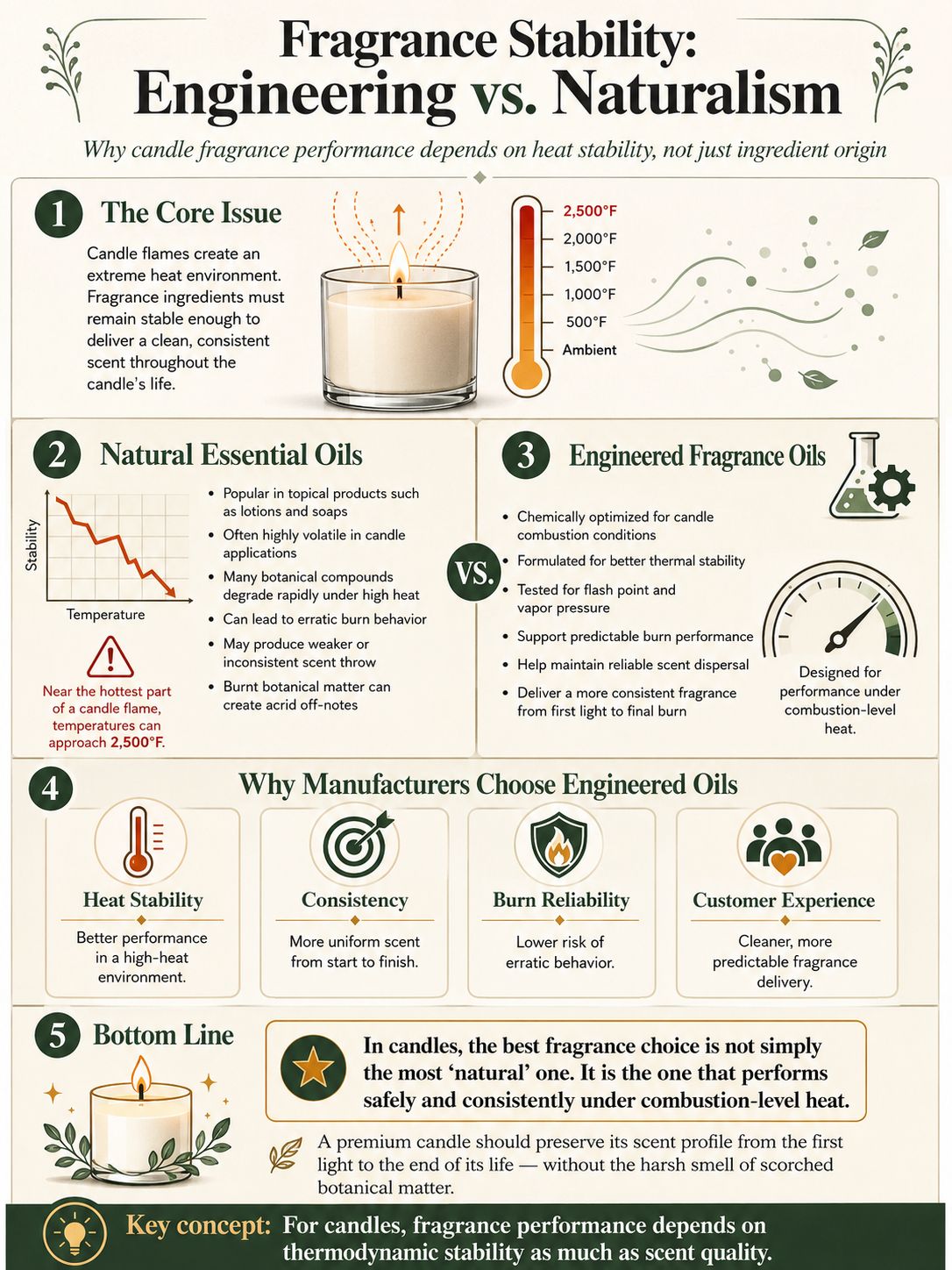
The conversation around fragrance is equally technical. While there is a strong cultural movement toward “all-natural” or “organic” ingredients, the reality of manufacturing for combustion is complex. Essential oils, which are popular for their therapeutic use in topical lotions and soaps, are often volatile when exposed to the high heat of a candle flame. At temperatures nearing 2,500 degrees Fahrenheit, many botanical compounds break down rapidly, leading to erratic burn behavior and compromised scent dispersal. This is a critical point of failure for many “natural” candle lines that prioritize marketing labels over thermodynamic stability.
In contrast, high-performance manufacturers are increasingly utilizing engineered fragrance oils. These are not necessarily “synthetic” in a pejorative sense, but rather “chemically optimized” for the high-heat environment of a candle. By testing these oils for their flash points and vapor pressures, manufacturers can create a predictable, reliable experience. Whether a customer is exploring a curated Fall & Winter Candle Collection or a seasonal release, the goal remains the same: to deliver a scent profile that stays consistent from the first light to the end of the candle’s life, free from the acrid smell of burnt botanical matter.
Operations as a Competitive Advantage
The operational discipline required to manufacture at this level of quality is a significant barrier to entry, which actually serves to protect the most dedicated SMEs. When a business invests in the technical documentation of their ingredients—such as Material Safety Data Sheets (MSDS) and fragrance load testing—they are building an intellectual moat. They are no longer just selling a “candle”; they are selling a piece of functional home equipment that has been tested for safety, consistency, and performance. This technical rigor is what allows a small-batch business to compete effectively against corporate giants who are too anchored in legacy paraffin models to pivot.
Furthermore, this focus on performance metrics—such as cold throw and hot throw—serves as a natural quality filter. Nose blindness is a real occupational hazard for candle makers, and overcoming it requires the development of objective, repeatable testing protocols. By standardizing how a product is measured, the business owner ensures that their quality remains consistent even as they scale production. This professionalization of the home fragrance industry is the true future of sustainable business. It is a sector where the manufacturer who understands the science wins, not the one who spends the most on generic advertising.
The Future of Sustainable Lifestyle Brands
As we look forward, the trend toward sustainable manufacturing is set to accelerate. The businesses that will thrive are those that can successfully navigate the tension between customer demand for “natural” narratives and the technical requirement for “stable” performance. This requires an honest, ongoing dialogue with the consumer—educating them on why an engineered oil might be safer than a raw botanical, or why a soy-coconut blend is the optimal fuel for their home environment.
In conclusion, the home fragrance industry is maturing into a legitimate sector of precision manufacturing. It is a space where the traditional boundaries between craft, engineering, and commerce are blurring, creating new opportunities for business owners who are willing to do the hard work of research and development. By keeping the consumer’s safety at the forefront and the science at the center of the production line, manufacturers can continue to innovate, ensuring that the next generation of home ambiance is healthier, cleaner, and more sustainable than ever before. This is the definition of professional excellence in the modern age.