
Have you ever tried to pin down a real number for metaverse game development costs? I did, and the answers bounced everywhere. One article said $50,000. Another claimed $500,000. I felt completely lost. Should I hire a team? Should I outsource? Would blockchain features eat my entire budget? Those questions kept me up at night, and I’m guessing you’re wrestling with the same ones right now.
After months of digging through resources and talking with developers actually building these projects, one number changed my perspective: the global metaverse gaming market hit $103.6 billion in 2025 and keeps growing at a compound annual rate of 37.43%.
That growth creates real opportunity. It also creates real confusion about where to start and what to spend.
So I spent weeks tracking down development costs, team rates, and technology expenses to cut through the noise. This guide breaks down metaverse game development costs into numbers you can actually use, from basic games to enterprise ecosystems, plus how blockchain, 3D assets, and AI affect your wallet.
Grab a coffee and let’s walk through it together. By the end, you’ll have a clear roadmap, whether you’re building something small or something massive.
Key Factors Influencing Metaverse Game Development Costs
Every metaverse game starts with a handful of critical decisions, and each one hits your budget hard. Your choices about game type, technology stack, 3D asset creation, and blockchain integration shape how much you’ll spend from day one.
What types of metaverse games affect development costs?
Game type selection makes or breaks your budget from the start, so let me walk you through the cost categories that matter most.
| Game Type | Cost Range | Key Features & Complexity | Best For |
|---|---|---|---|
| Basic Metaverse Games | $30,000 to $70,000 | Simple avatars, basic interactions, limited environments, minimal blockchain integration | Startups testing market viability, indie developers with tight budgets |
| Intermediate Complexity Metaverse Games | $70,000 to $150,000 | Custom 3D assets, multiplayer mechanics, social features, moderate NFT functionality | Growing studios, games targeting regional audiences, GameFi prototypes |
| Advanced Functionality Metaverse Games | $150,000 to $300,000+ | Complex economies, advanced AI systems, sophisticated graphics, cross-platform compatibility | Established teams, games requiring premium quality, competitive multiplayer ecosystems |
| Small Branded Metaverse Experiences | $5,000 to $34,000 | Corporate events, branded galleries, limited avatar customization, temporary installations | Brands hosting virtual events, companies building marketing experiences |
| Mid-Scale GameFi Metaverse | $7,000 to $40,000 | In-game land ownership, NFT integration, token economics, multiplayer sessions | Crypto-focused projects, play-to-earn game developers |
| Large Decentralized Metaverse | $6,000 to $38,999+ | Open-world design, interoperability standards, governance systems, persistent worlds | Ambitious projects, communities building shared digital infrastructure |
| AAA-Tier Persistent Worlds & MMO Metaverse | $4 million to $20 million+ | Massive multiplayer capacity, cinematic quality, extensive content libraries, enterprise infrastructure | Major studios, established publishers, globally-scaled experiences |
The market opportunity backs up these investments. According to a recent industry report by Blocktunix, the United States alone contributed $32.1 billion to the global metaverse gaming market in 2025, the highest regional share worldwide. That means building for a US audience puts you in front of a massive, proven player base.
How does technology integration impact game development expenses?
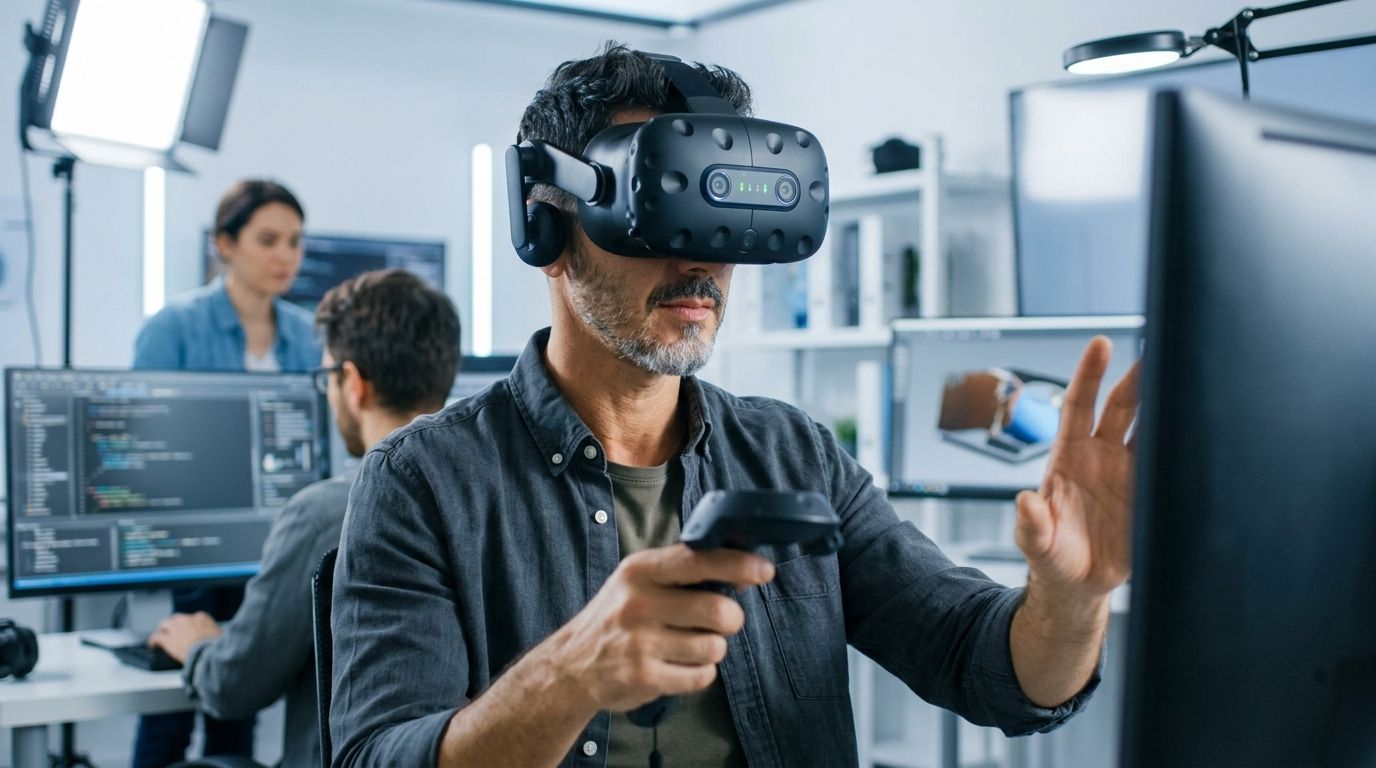
A small studio I know evaluated two engine options for a 12-month cross-platform build aimed at desktop and mobile VR. They ran parallel 3-month prototype sprints to compare real costs:
- The first option required 18 percent more dev time for cross-platform fixes but saved 22 percent on asset pipeline setup.
- The second option cut initial dev time by 12 percent but increased monthly server optimization costs by 15 percent over 9 months.
- The team chose the engine that streamlined their asset pipeline, finding that engine choice shifted ongoing ops costs more than upfront fees.
That practical test showed me engine selection affects both immediate expenses and long-term operational spending in ways you can’t predict without real prototyping.
AI integration adds $20,000 to $80,000 to development costs, depending on how smart you want your game’s systems to be. Spatial computing optimization increases expenses by $50,000 to $200,000, but Apple’s Developer Kit for Vision Pro and Unity’s PolySpatial engine help manage those costs. Web3 technologies and blockchain development can raise budgets another $25,000 to $150,000, so picking the right tools upfront saves money on rewrites later.
Your platform choices hit your wallet directly. Cloud computing services let you scale your metaverse game development without buying expensive servers outright, and rendering technology plus 3D computer graphics demand powerful hardware that cloud solutions let you rent as needed.
Who builds your game matters just as much as what they build it with. Based on 2026 developer pricing data from Q99 Studio and 300Mind, US-based metaverse developers typically charge $50 to $200 or more per hour, while offshore teams in regions like Asia charge $25 to $50 per hour. That gap explains why the exact same technology stack might cost $50,000 or $150,000 depending on where you source talent.
How Much Does Designing and Creating 3D Assets Cost?
3D asset creation stands as one of the biggest cost drivers in metaverse game development, so understanding this expense category is critical for budget planning.
| Asset Type | Cost Range | Details & Considerations |
|---|---|---|
| Complete 3D World & Asset Creation | $6,000 – $40,000 | Full-scale environment design covers terrain modeling, environmental objects, and interactive elements. Complexity and scope determine placement within this range. Custom work commands premium pricing. |
| Character Models & Rigging | $2,000 – $15,000 per character | Detailed humanoid or creature designs require skeletal structure setup. High-fidelity characters push costs upward. Simplified designs reduce expenses significantly. |
| Environmental Assets | $1,000 – $8,000 per scene | Buildings, vegetation, props, and atmospheric elements comprise this category. Reusable modular pieces lower individual costs. Custom unique environments increase budgets. |
| Animation Assets | $500 – $5,000 per animation sequence | Mixamo by Adobe provides ready-to-use character animations at lower costs. Custom motion capture work requires substantial investment. Walk cycles, combat moves, and emotes fall here. |
| Texture & Material Design | $300 – $3,000 per asset | High-resolution textures enhance visual quality. Procedurally generated textures reduce manual creation time. Physical-based rendering materials demand more resources. |
| NFT Asset Creation | $1,500 – $10,000 per collection | Asset tokenization enables fractional ownership of digital items. Modular NFT frameworks decrease development overhead. Smart contract integration adds complexity and cost. |
| Pre-Built Model Licensing | $50 – $500 per asset | Sketchfab offers free and paid 3D models for immediate use. Purchasing ready-made assets accelerates timelines. License restrictions vary by marketplace. |
| Procedurally Generated Content | $3,000 – $12,000 for system setup | Algorithmic world generation slashes manual asset creation costs. Initial development investment pays off through scalability. Infinite variety emerges from minimal base assets. |
| AI-Powered Avatar Development | $5,000 – $20,000 per avatar system | Advanced avatars enhance player identity and immersion. Machine learning integration increases sophistication. Behavioral systems require specialized programming expertise. |
Want to see how these numbers play out in practice? A cost audit of a 40-scene mid-scale virtual world, built by a 6-person art team over 10 months, gives us a real snapshot. The total asset budget came to $62,500:
- Environment modular kit: $18,000
- 12 character models and rigging: $24,000 (averaging $2,000 each)
- 140 prop assets: $9,800 (averaging $70 each)
- 220 animation sequences: $6,600 (averaging $30 each, using mixed motion libraries)
- Texture and material polish: $4,100
Breaking costs down per asset helped that team reallocate 28 percent of the original budget toward higher-value character polish without increasing total spend. Use this breakdown as a planning baseline for your own mid-scale projects.
Sketchfab has become my go-to resource for sourcing both free and premium 3D models without building from scratch. Teams can leverage these libraries to slash production timelines while keeping quality high. Mixamo by Adobe streamlines character animation workflows, eliminating the need for expensive motion capture sessions.
Why is 3D asset creation a significant cost factor?
3D asset creation is one of the heaviest hitters in your metaverse game development budget. I’ve watched projects balloon in cost because developers underestimated the work required to build immersive visual environments.
High-quality 3D models, textures, animations, and environmental details directly shape how players experience your virtual world. Each asset demands skilled artists, specialized rendering software, and countless hours of refinement. A single character model can take weeks to perfect, and when you multiply that across hundreds of assets for a scalable metaverse game, costs spiral fast.
The financial weight intensifies once you layer in digital assets and NFTs for virtual economies. Creating tokenized items requires both artistic skill and technical precision so digital ownership works seamlessly across platforms. Your development company must invest in rendering technology, animation software, and artist salaries, and optimizing for spatial environments alone can add $50,000 to $200,000.
Cutting corners on asset quality damages player immersion and ultimately tanks a game’s success. The visual foundation you build today determines whether your metaverse platform attracts or repels your audience tomorrow.
How do blockchain and NFTs influence development budgets?
Blockchain and NFT integration costs can make or break your metaverse game development budget. Adding a blockchain layer runs between $4,999 and $39,000, while NFT features alone cost $10,000 to $25,000. Wallet and onboarding systems add another $4,999 to $40,000.
A few blockchain line items deserve special attention:
- Smart contract development automates transactions and player interactions through secure, scalable contracts.
- Security and performance audits run $8,000 to $29,000, and I consider them essential for protecting your metaverse platform development investment.
- OpenSea API integration offers a practical path for NFT features without reinventing the wheel, saving real money versus building custom systems from scratch.
Smart contract audit services keep your project secure and compliant, preventing costly breaches later. The blockchain layer cost varies based on complexity, transaction volume, and which cryptocurrency exchange powers your virtual economy. Your metaverse game development services provider should break these expenses down clearly, showing exactly where each dollar goes, so you can decide which features belong in your initial launch versus future updates.
Metaverse Game Development Cost Breakdown by Development Scale
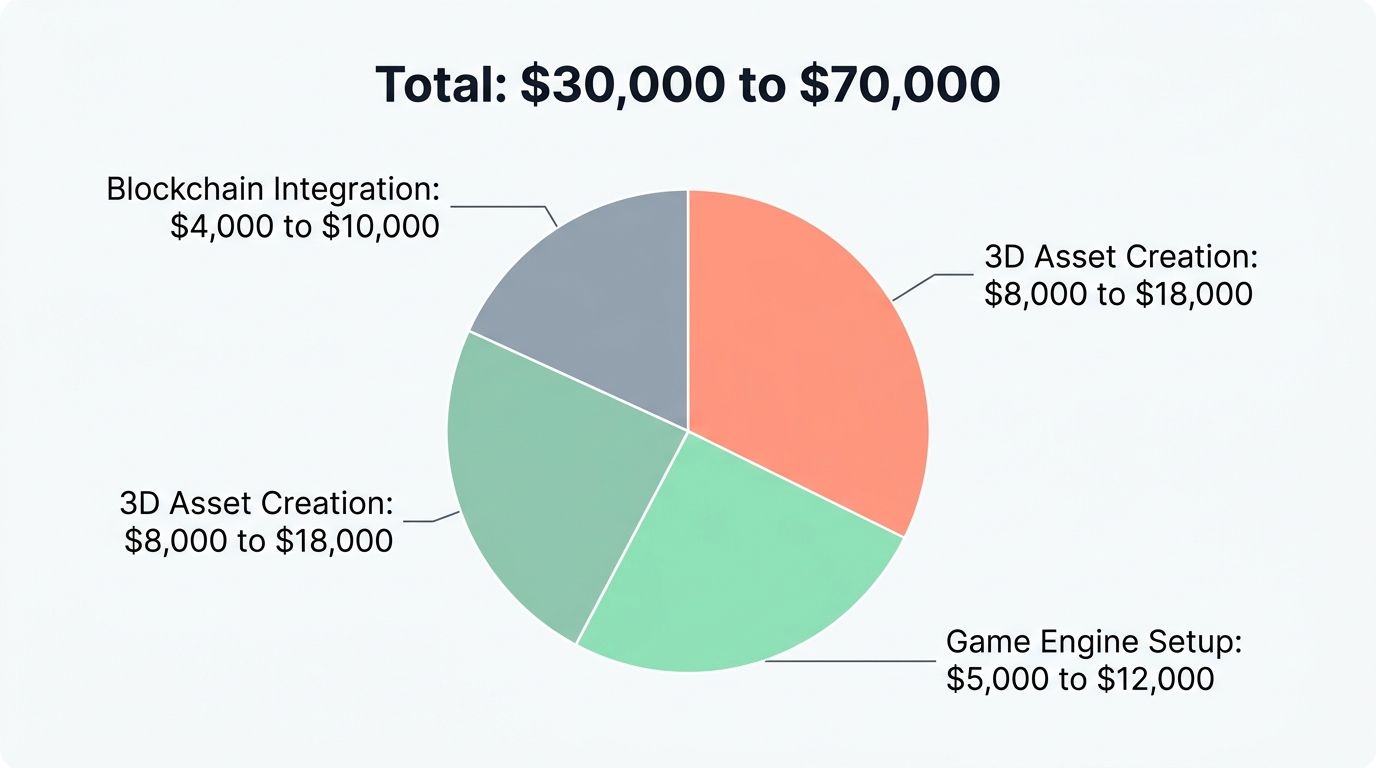
I break down game development costs into three clear tiers, each serving different project scopes and team sizes. Your budget balloons or shrinks based on which level matches your vision, so let’s walk through what each scale demands from your wallet.
What is the cost estimate for a basic metaverse game?
When I launched my first metaverse game project, the cost estimates shocked me. Here’s what I discovered about basic metaverse game development expenses.
| Cost Category | Estimated Range | What This Covers |
|---|---|---|
| Total Development Budget | $30,000 to $70,000 | Complete basic metaverse game production from concept to launch |
| 3D Asset Creation | $8,000 to $18,000 | Character models, environment design, avatar customization systems |
| Game Engine Setup | $5,000 to $12,000 | Platform selection, modular NFT frameworks, server infrastructure |
| Blockchain Integration | $4,000 to $10,000 | Smart contract development, NFT implementation, wallet connectivity |
| Quality Assurance & Testing | $3,000 to $8,000 | Bug detection, gameplay testing, performance optimization |
| Community & Marketing Launch | $5,000 to $40,000 | Social media campaigns, influencer partnerships, initial player acquisition |
| Miscellaneous Tools & Licenses | $2,000 to $5,000 | Software subscriptions, development tools, audio libraries |
Basic metaverse games fall into the $30,000 to $70,000 range. That figure buys a functional, playable experience with core metaverse features, and the actual number depends on your scope and ambitions.
3D asset creation eats a big portion of the budget. Characters, environments, and customizable avatars demand serious investment, and poor quality assets kill player engagement fast. This category alone runs $8,000 to $18,000 for basic work. Using modular NFT frameworks cuts costs considerably, since these pre-built systems handle blockchain ownership without forcing custom development.
Where the Hidden Savings and Costs Live
Open-source resources can slash your development timeline by up to 25 percent. Free engines and libraries reduce costs without sacrificing quality, and an MVP typically takes 6 to 12 months with this approach.
Blockchain integration introduces its own complexity. Smart contracts need auditing, NFT systems require testing, and wallet connectivity demands backend work, adding $4,000 to $10,000 total. Software licenses and development tools are the sneaky expenses: budget $2,000 to $5,000 for subscriptions, audio libraries, and specialized software.
My first basic metaverse game landed near the $50,000 mark. I spent heavily on assets and testing and lightly on marketing, and the experience taught me where corners can bend and where they cannot.
How much does a mid-level metaverse game typically cost?
Mid-level metaverse game development costs fall between $70,000 and $150,000 for intermediate-complexity projects. That price tag covers the essential components you need to build a metaverse that actually works.
A typical mid-level team looks like this:
- One Project Manager
- Two Unity Developers
- One Blockchain Engineer
- One 3D Artist, one UI/UX Designer, and one QA Tester
These professionals work together to create gaming platforms with basic user avatars, simple multiplayer environments, basic NFT integration, and mobile or WebVR compatibility. The development timeline stretches from 12 to 24 months, depending on your project scope and team size.
I recommend sprint-based billing with biweekly or monthly payments tied to clearly defined deliverables. Milestone-based payments connected to production progress work even better for tracking costs. For GameFi metaverse development with land, NFTs, economy systems, and multiplayer features, costs on the mid-scale side range from $7,000 to $40,000, with 3D modeling, avatar systems, and server infrastructure as your biggest expenses. Structuring payments around finished work, not promises, keeps everyone honest and prevents budget surprises during development and testing.
What are the expenses involved in an enterprise-level metaverse ecosystem?
Enterprise-level metaverse development means facing infrastructure costs that dwarf smaller projects. Server and bandwidth scaling runs $5,000 to $30,000 monthly, while cloud and hosting infrastructure costs $1,000 to $10,000 per month on an ongoing basis.
Security and performance audits demand $8,000 to $29,000 per engagement, and smart contract upgrades and audits add another $3,000 to $29,000 yearly. AAA-tier persistent worlds and MMO metaverse games push budgets to $4 million to $20 million and beyond, with decentralized world development timelines spanning 24 to 48 months.
Building a successful metaverse at this scale requires auto-scaling infrastructure and modular architecture from the start. Technologies like artificial intelligence and augmented reality integration compound expenses significantly. Cross-platform software that supports multiplayer video game functionality across virtual reality headsets and other devices is another must, and the rendering capabilities, server management, and data personalization systems demand continuous investment.
A good development partner helps optimize these metaverse development services through agile development practices, though the cost to build stays substantial compared to traditional game development. My advice: prioritize end-to-end metaverse game development services that address scalability challenges before they become budget disasters.
Final Words
Starting a metaverse game project in 2026 requires smart planning, not just deep pockets.
I have covered how metaverse game development cost ranges from $30,000 for basic games to $300,000 or more for advanced functionality, with AAA-level projects demanding multimillion-dollar budgets.
Your metaverse game doesn’t need to break the bank to succeed. It just needs solid strategy, quality assets, and smart resource management to win in a market headed toward $507.8 billion by 2030.
Frequently Asked Questions (FAQs) on Metaverse Game Development Cost
1. How much does it cost to develop a metaverse game in 2026?
From what I’ve seen in 2026, you’re looking at $30,000 for a simple game up to over $300,000 for an AAA metaverse project. The cost really depends on your feature choices, design quality, and platform targets. Most projects with solid features fall in the $80,000 to $150,000 range.
2. What factors affect metaverse game development cost?
The main factors I consider are avatar design, NFT support, rendering quality, and server requirements. Extra features like AI integration and user-generated content systems can bump up the price too.
3. How is a metaverse game different from a traditional game?
The big difference is that metaverse games offer deep immersion, VR features, and true ownership where you can trade assets and own virtual real estate, unlike traditional games.
4. What tools do developers use to build metaverse games?
I use Unity for rendering and world-building, and I’ve seen companies like BitGoLabs add blockchain tools and self-sovereign identity features for a more decentralized experience.
5. How much did Mark Zuckerberg pay for Metaverse?
According to Meta’s recent earnings reports, the Reality Labs division posted a $19.2 billion operating loss in 2025 alone, pushing total cumulative losses on metaverse and AR/VR development past $83.6 billion since 2020.