Pulling a child out of conventional schooling brings an immediate wave of curriculum overwhelm. Searching for advice online usually leads to highly filtered social media spaces filled with pristine schoolrooms and rigid lesson plans that are difficult to sustain in a chaotic household. Starting homeschool successfully requires stepping back from daily schedules to focus on educational philosophy and realistic expectations.
Transitioning to home education is a structural lifestyle shift for the entire family. Finding the right resources can reduce that pressure, offering battle-tested frameworks from educators who survived the early trial-and-error phases without burning out.
The Fundamental Importance of Homeschooling
Home education shifts the core focus of child development from institutional compliance to individualized competence. The true importance of homeschooling lies in its structural flexibility. Traditional school systems must cater to the average performance of a large classroom, which often leaves advanced students under-stimulated and struggling students left behind.
By removing the constraints of standardized testing timelines, home education allows parents to protect a child’s natural learning pace. A student can spend three weeks mastering a single difficult math concept without falling behind an arbitrary district schedule. Furthermore, it allows families to integrate essential life skills, character development, and real-world problem solving directly into the academic day, creating a more resilient foundation for adulthood.
The Detail Readers Usually Miss: The Deschooling Trap
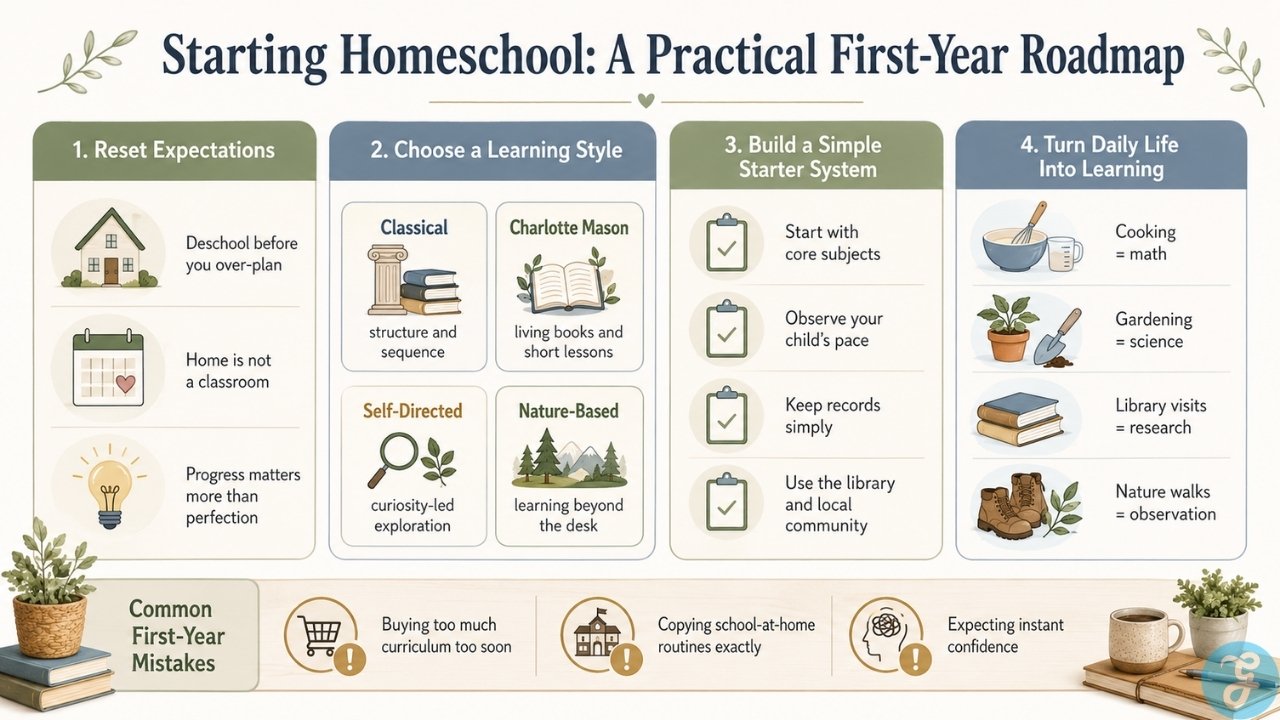
The most common mistake new educators make is attempting to replicate the exact institutional school environment at the kitchen table. They purchase rigid desks, strict daily timetables, and expensive box curriculums designed for a classroom of thirty children rather than a single living room.
Veterans call the process of breaking these institutional habits deschooling. Before spending thousands on textbooks, parents need to read foundational literature that recalibrates their understanding of how children learn when removed from classroom constraints.
The 10 Best Books for New Homeschool Parents
The following collection of homeschool guidebooks covers structural methodologies, daily logistics, and the mental shifts required to navigate the first year successfully.
1. The Well-Trained Mind by Susan Wise Bauer and Jessie Wise
This massive volume is widely considered the definitive blueprint for classical education at home. It breaks learning down into a three-part structural framework known as the trivium, aligning subjects with a child’s natural cognitive development stages.
The value of this text lies in its highly specific syllabus recommendations. It does not speak in vague educational theories; it lists exact reading sequences, history timelines, and writing exercises from kindergarten through high school graduation. It functions as a dense, textbook-style reference manual that you will return to for years, even if you do not follow the classical path strictly.
2. Teaching from Rest by Sarah Mackenzie
If the classical approach feels structurally overwhelming, this short book serves as the direct counter-balance. Focused heavily on parental mindset, it addresses the anxiety of not doing enough or falling behind institutional peers.
The author argues that true educational quality drops when parents operate out of constant panic and frantic checklist management. It is a quick afternoon read meant to provide emotional grounding before the academic year begins.
3. The Brave Learner by Julie Bogart
This manual addresses the lifestyle integration of education, showing how to turn ordinary household environments into spaces that naturally encourage self-directed learning. It has frequently topped lists of books for new homeschool parents because it demystifies the concept of keeping children engaged without constant lecturing.
-
It introduces the concept of staging your home environment with interesting objects to spark organic curiosity.
-
It details specific strategies for parsing language arts through natural conversation rather than dry grammar worksheets.
-
It outlines methods to pivot a lesson plan when a child displays sudden frustration or structural fatigue.
4. For the Children’s Sake by Susan Schaeffer Macaulay
This work serves as the foundational introduction to the Charlotte Mason method. The framework views children as capable individuals rather than empty containers to be filled with standardized facts.
Instead of heavy reliance on textbooks, it advocates for the use of living books, which are high-quality narrative literature written by passionate authors rather than committee-designed manuals. The text also emphasizes short lesson structures, nature study, and copywork to prevent mental fatigue in early childhood.
5. Free to Learn by Peter Gray
While not strictly a traditional homeschool guidebook, this text by a developmental psychologist is critical for anyone considering unschooling or radical self-directed education.
| Educational Angle | Core Philosophy | Primary Material |
| Institutional | Standardized progression through age-segregated testing | State-approved textbooks |
| Self-Directed | Natural development driven by evolutionary play mechanics | Real-world environments |
The book presents compelling research showing how institutional constraints can occasionally hinder natural problem-solving skills, giving parents the confidence to allow more unstructured play in their daily routines.
6. The Call of the Wild and Free by Ainsley Arment
This book outlines a modern, nature-centric approach to home education. It encourages moving the core of early childhood development away from indoor desks and out into fields, forests, and community spaces.
It is particularly useful for parents of high-energy children who struggle to sit still for traditional workbooks. The narrative offers practical advice on building local community co-ops to prevent social isolation during the transition out of public systems.
7. Homeschooling 101 by Erica Arndt
For parents who want to skip the deep philosophy and move straight to legalities, scheduling, and record-keeping, this text delivers straight logistics.
The author walks through the mechanical steps of researching state-specific compliance laws, organizing portfolio reviews, creating high school transcripts, and managing lesson planners without losing track of household organization. It functions as a strict introductory field manual.
8. Dumbing Us Down by John Taylor Gatto
Written by a former New York State Teacher of the Year, this collection of essays offers a sharp, uncompromising critique of institutional schooling systems.
It does not provide lesson plans or curriculum suggestions. Instead, it uncovers the hidden social programming built into factory-model school systems. Reading this text is highly effective for parents who are feeling hesitant about their decision, as it clarifies exactly why breaking away from traditional systems is beneficial.
9. The First Year of Homeschooling Your Child by Linda Dobson
This compilation should be on the shelf of anyone researching books for new homeschool parents due to its emphasis on first-year survival metrics. It gathers wisdom from dozens of families to highlight predictable friction points.
It offers clear guidance on managing the social skepticism of extended family members, handling the mid-winter slump when motivation bottoms out, and adjusting academic expectations when a child requires unexpected remedial help.
10. Rethinking School by Susan Wise Bauer
Every child learns at a different pace, but institutional schools force them into standardized age tracks. This diagnostic book guides parents through the process of customizing education for children who are either advanced or struggling.
It provides clear instructions on how to split grade levels contextually, such as allowing a child to work at a fifth-grade reading level while utilizing a third-grade math curriculum, maximizing individual potential without causing unnecessary emotional distress.
Creative Ways of Homeschooling Beyond Textbooks
Shifting away from a standard desk layout opens up numerous non-traditional learning pathways that institutions cannot replicate. Creative ways of homeschooling include transforming ordinary community infrastructure into core academic modules. Instead of relying solely on written quizzes, parents can implement experiential validation to test comprehension.
For example, calculating raw ingredient ratios and adjusting recipe yields during cooking doubles as a practical fractions lesson. Managing a small backyard garden or compost system serves as a hands-on biology lab where tracking growth metrics substitutes for a textbook chapter. Parents can also utilize local library networks, business mentorships, apprenticeship styles for older kids, and self-paced digital archives to build a highly customized learning environment that responds directly to a child’s evolving interests.
Gamified Learning Through Apps and E-Learning
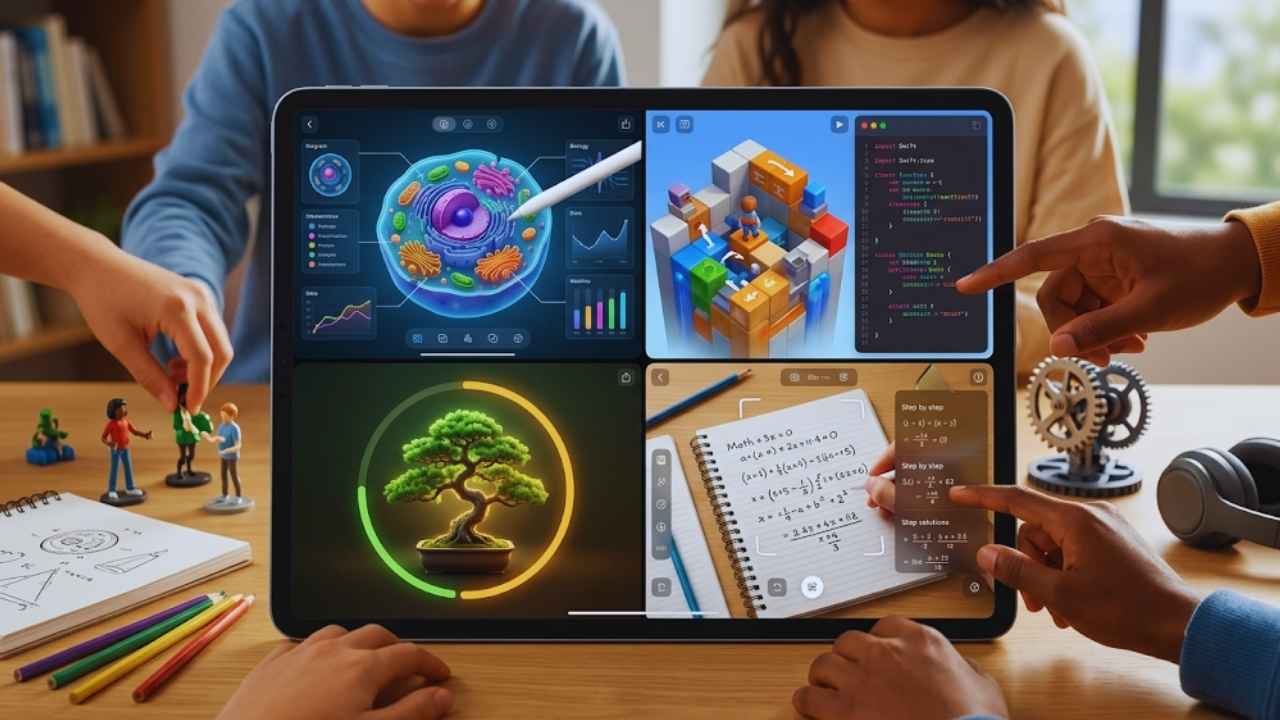
Digital platforms offer a highly interactive alternative to traditional print workbooks. Gamified software and mobile applications are an excellent approach for teaching young children and toddlers, turning fundamental skill acquisition into engaging challenges. Early learners can start with basic recognition apps focused on alphabets and phonics and introductory numbers. As students grow, these e-learning tools scale up to cover complex topics in science, coding, and advanced STEM subjects, providing immediate feedback that helps maintain learning momentum without requiring constant parental supervision.
A Practical Strategy for Starting Homeschool
Navigating this educational shift successfully requires focusing on long-term sustainability. Relying on these foundational books for new homeschool parents helps build a grounded framework before you purchase a single lesson plan. Avoid buying comprehensive, multi-subject curriculum packages until you have spent a few months observing your child’s natural learning habits outside a school building. Treat the first year as an experimental phase, adapting the environment as you discover which methods fit the unique rhythm of your household.