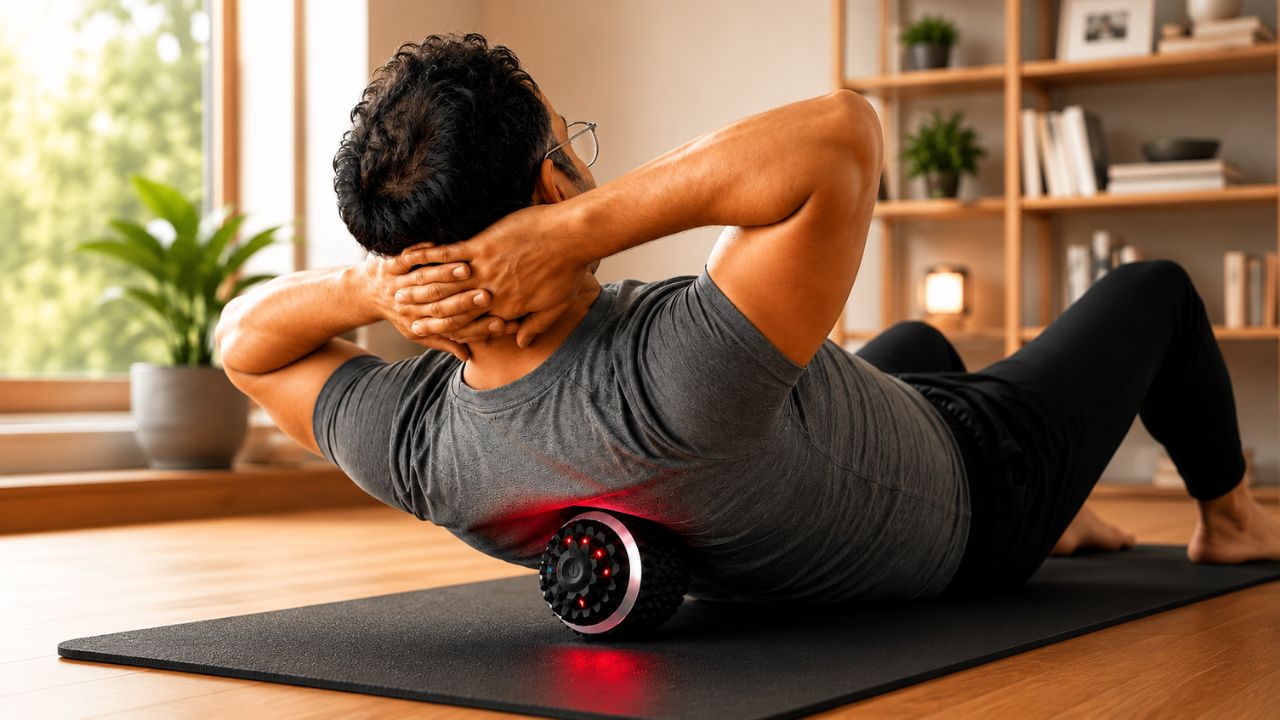
A vibrating massage ball sounds like the kind of product that should not need much thought. You charge it, switch it on, place it against a tight spot, and see whether the muscle relaxes.
That may be fine for ordinary soreness. Spine injury is different.
When the lower back is already sensitive, when there has been surgery, or when nerve pain is part of daily life, even a small massage tool can feel unpredictable. The same vibration that feels pleasant on a shoulder may feel irritating near the hip. A setting that feels gentle for one person may be too much for someone whose body is already guarding against pain.
That is why I would not judge the Happiness Fit Electric Massage Ball like a normal massage gadget. The more useful question is not, “Is it powerful?” The better question is, “Where can this be used without causing a flare-up?”
The product is sold as a compact vibrating massage ball for sore muscles, with adjustable intensity, rechargeable use, and a travel-friendly size. Those are useful features, but for someone with a spine injury, the important part is control. A low setting matters more than maximum power. A small target area matters more than “deep tissue” claims.
I would treat this as a careful three-week trial, not a dramatic recovery tool.
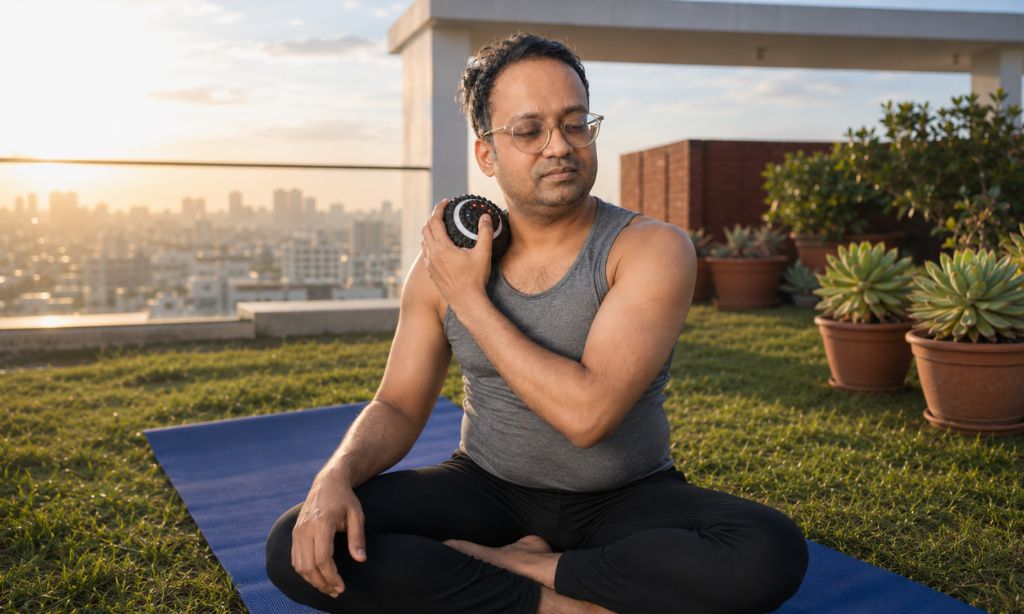
The lower back is the tempting place to use it, but it is also the place I would be most careful with. A massage ball should not be pressed directly on the spine, a surgical scar, a numb patch, or a point where pain travels down the leg. If the goal is to test the device safely, start somewhere less risky: a calf, shoulder, foot, thigh, or possibly the outer hip.
That may sound less exciting, but it tells you something important. If the body reacts badly to gentle vibration on a safer muscle area, it is probably not wise to move closer to the spine.
During the first week, I would keep the trial almost boring. Choose one area only. Use the lowest setting. Keep the session short. Do not test the calf, shoulder, hip, and lower back all on the same day. If the pain changes later, you will have no idea what caused it.
After each use, write down a few simple notes: where it was used, how long it was used, which setting felt tolerable, how the muscle felt before, and how it felt later. The “later” part matters. Some irritation does not appear in the first five minutes. A spot can feel loose at first and then feel sore in the evening.
The second week is where patterns usually become clearer. Maybe the calves feel better after sitting for a long time. Maybe the shoulder responds well. Maybe the outer hip feels too sensitive. Maybe the lowest setting is enough, and anything stronger feels unnecessary.
Those details are more useful than a perfect rating score. With spine injury, the answer is often not “good product” or “bad product.” It may be, “Useful on my calves, not worth it near my back.”
By the third week, the question becomes practical. Would this ball actually stay in the routine, or would it sit unused in a drawer? If it helps a tight shoulder or tired feet for a short time, that may be enough. Not every recovery tool has to be life-changing. But if it creates sharp pain, tingling, burning, spreading discomfort, or next-day soreness, that is a clear reason to stop.
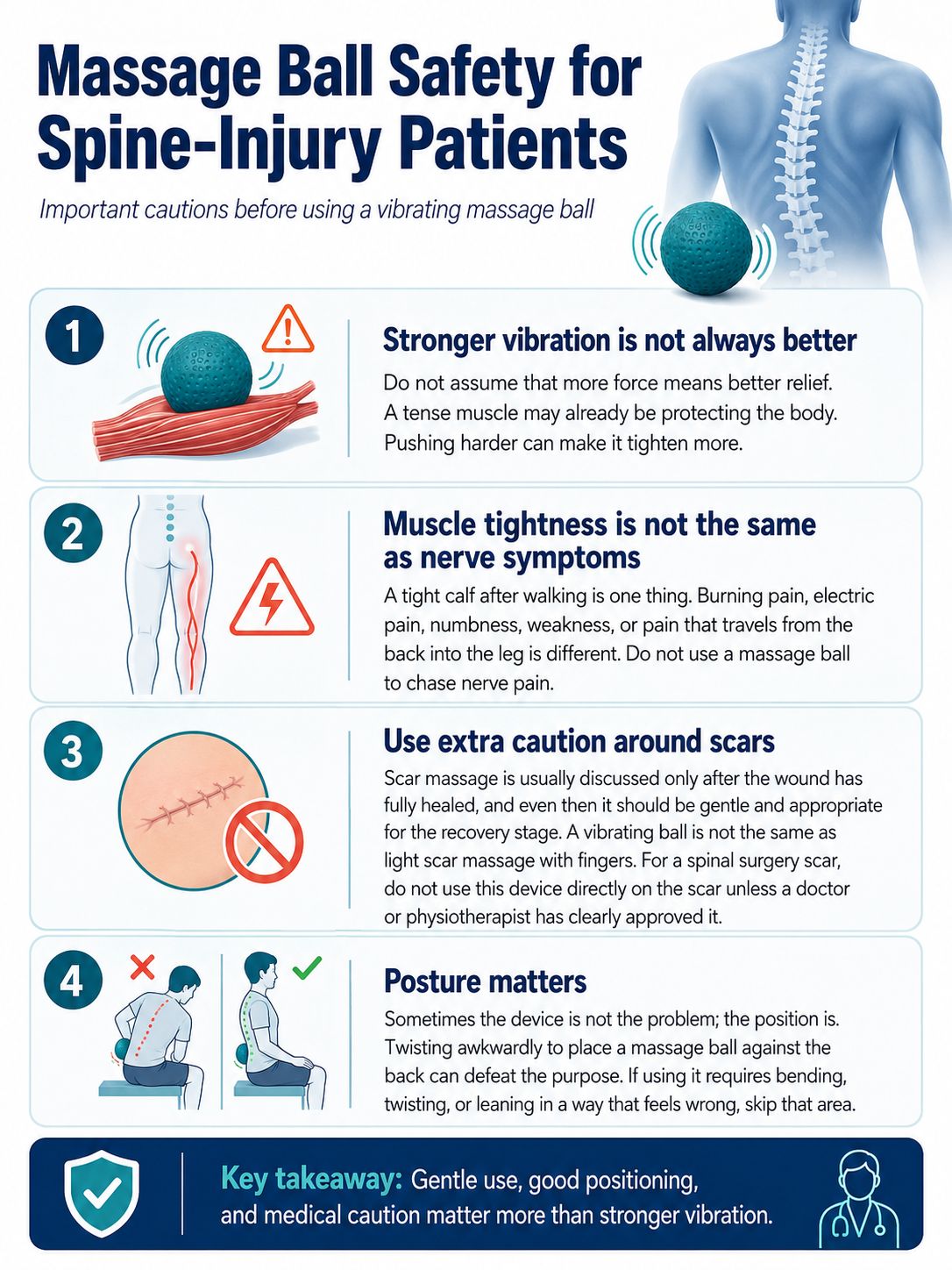
The biggest mistake is assuming that stronger vibration means better relief. For a spine-injury patient, more force is not always better. A tense muscle may already be protecting the body. Pushing harder can make it tighten more.
There is also a difference between muscle tightness and nerve symptoms. A tight calf after walking is one thing. Burning pain, electric pain, numbness, weakness, or pain that travels from the back into the leg is different. A massage ball should not be used to chase nerve pain.
Scars need extra caution too. Scar massage is usually discussed only after the wound has fully healed, and even then, it should be gentle and appropriate for the person’s recovery stage. A vibrating ball is not the same as light scar massage with fingers. For a spinal surgery scar, I would not use this device directly on the scar unless a doctor or physiotherapist had clearly approved it.
Posture matters as well. Sometimes the device is not the problem; the position used to reach the area is the problem. Twisting awkwardly to place a massage ball against the back can defeat the whole purpose. If using it requires bending, twisting, or leaning in a way that feels wrong, skip that area.
This kind of massage ball may make sense for someone with stable symptoms, medical clearance, and muscle tightness away from the spine. It may be useful after long sitting, light walking, or general stiffness in the shoulders, calves, thighs, feet, or outer hips.
It makes less sense for someone with recent surgery, fresh wounds, unhealed scars, changing nerve symptoms, unexplained pain, or a habit of pushing through discomfort.
The Happiness Fit Electric Massage Ball may be a useful comfort tool, but it should not be treated as a treatment for spine injury. Its best use is likely simple and limited: short sessions, low intensity, and careful placement on muscles away from the spine.
If I were trying it carefully, I would judge it by three things: whether it feels tolerable during use, whether the body still feels okay later that day, and whether it helps enough to use again without forcing the habit.
That is the most honest way to approach a product like this. Not as a miracle device. Not as a fake 21-day success story. Just as a small tool that may help certain tight muscles, as long as the spine itself is treated with caution.