Hungarian cinema has a reputation problem. Say “Hungarian movies” to most film fans and they picture three hours of black-and-white despair, wind, and a man eating a potato in silence. That movie exists. I watched it. But over the past few months I worked my way through eleven Hungarian movies spanning six decades, and what I actually found was a national cinema that swings from Stalinist satire to rock opera to a kidnapping thriller currently sitting on Netflix.
Here’s my honest, personal take on all ten, roughly in the order I’d tell a friend to watch them.
The 11 Best Hungarian Movies At a Glance
- The Witness (1969) – banned Stalinist satire, still hilarious
- Moszkva tér (2001) – teenage life while communism collapses
- István, a király (1984) – the national rock opera
- Children of Glory (2006) – the 1956 Revolution meets Olympic water polo
- The Whiskey Bandit (2017) – a real gentleman bank robber’s story
- Sunshine (1999) – three generations of one family, one century of tragedy
- Mephisto (1981) – Hungary’s first Oscar winner, an actor’s deal with the Nazis
- Father (1966) – a boy’s invented myth of his dead father
- Confidence (1980) – two strangers posing as a couple in wartime hiding
- The Turin Horse (2011) – Béla Tarr’s hypnotic final film
- Feels Like Home (2025) – a kidnapping thriller now on Netflix
The Witness (A tanú, 1969)
Start here. Péter Bacsó’s satire of the Stalinist show-trial era follows József Pelikán, a simple dike keeper who keeps getting arrested, released, and promoted into jobs he’s spectacularly unqualified for, all by the same shadowy comrade. The regime found it so uncomfortable that the film was shelved for roughly a decade before Hungarians could see it.
What surprised me is how funny it still is. The famous scene where officials proudly present the new “Hungarian orange” (it’s a lemon) had me laughing out loud. Comedy about dictatorship rarely ages this well.
Moszkva tér (2001)
Ferenc Török’s coming-of-age film drops you into Budapest in the spring of 1989. The Berlin Wall is about to fall, communism is dissolving in real time, and the teenage heroes could not care less. They’re busy cheating on final exams, chasing girls, and hustling for cash.
That’s the genius of it. History happens in the background, on radios and in overheard adult conversations, while the kids just live. It reminded me that most people don’t experience historic moments as history. They experience them as Tuesday.
István, a király (1984)
A rock opera about the founding of the Hungarian state sounds like a joke. It isn’t. Filmed from a massive open-air staging, it dramatizes the clash between King Stephen I, who tied Hungary’s future to Christian Europe, and the pagan chieftain Koppány, who fought to keep the old ways.
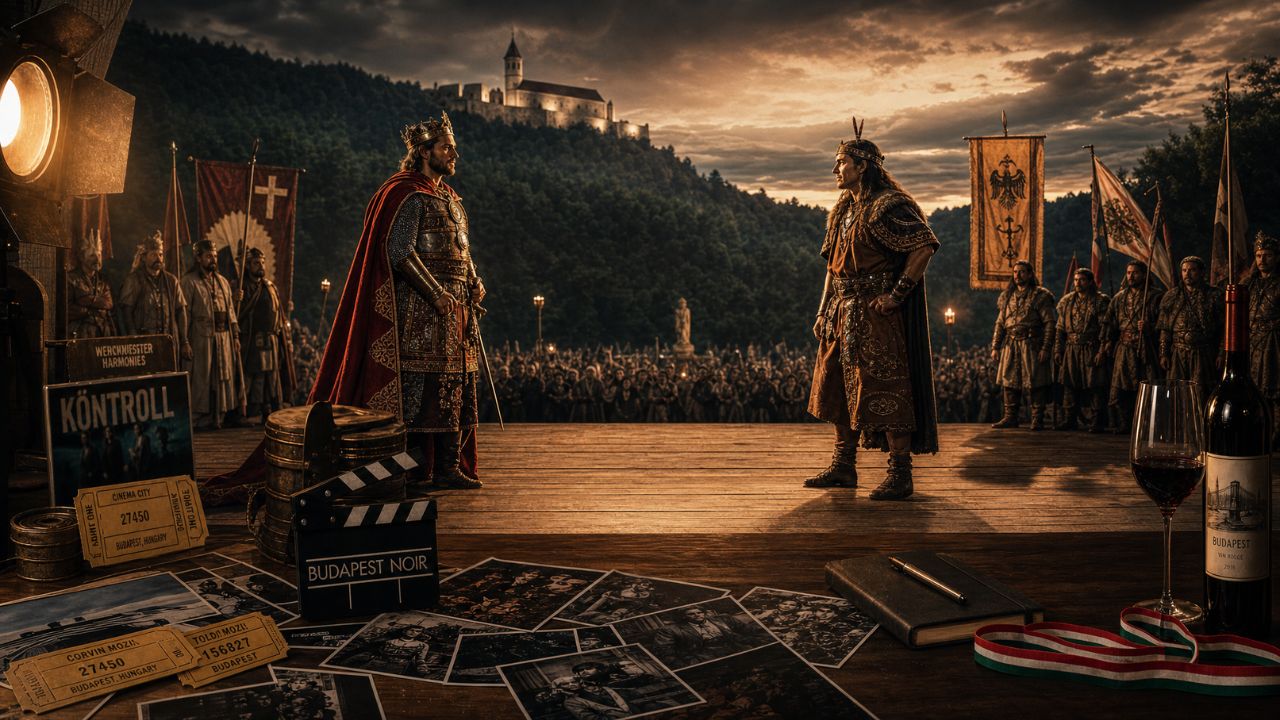
I went in as a curiosity-seeker and came out with two songs stuck in my head for a week. Hungarians treat this the way other countries treat national epics, and once you’ve heard the crowd roar along, you understand why.
Children of Glory (Szabadság, szerelem, 2006)
This one weaves the 1956 Hungarian Revolution together with the infamous “Blood in the Water” water polo match at the Melbourne Olympics, where Hungary faced the Soviet Union weeks after Soviet tanks crushed the uprising in Budapest.
It’s the most conventionally Hollywood film on this list, with a script co-written by Joe Eszterhas, and sometimes it shows. But the street-fighting scenes hit hard, and the pool violence in the final act carries real historical weight. I’d call it the most accessible entry point into 1956 for viewers who know nothing about it.
The Whiskey Bandit (A Viszkis, 2017)
Attila Ambrus was a hockey goalie who robbed around thirty banks across 1990s Budapest, famously downing a shot of whiskey before each job. Nimród Antal, who went to Hollywood after Kontroll and came back, turns his story into a slick, fast heist film.
It’s not deep. It’s a Friday-night movie, and I mean that as a compliment. What lingers is the backdrop: a post-communist Hungary so chaotic that a polite man in a wig could rob banks for years while half the country quietly cheered him on.
Sunshine (1999)
István Szabó’s three-hour epic follows one Jewish family in Budapest across three generations, with Ralph Fiennes playing the son in each era: the Austro-Hungarian golden age, the Holocaust, and the communist decades that followed. The family changes its name from Sonnenschein to Sors to fit in. It doesn’t save them.
This was the film that wrecked me most. One scene in a wartime labor camp is among the cruelest things I’ve seen in cinema, and I won’t spoil it. If Mephisto is Szabó’s sharpest film, this is his most devastating.
Mephisto (1981)
The big one. István Szabó’s Mephisto won Hungary its first Academy Award for Best Foreign Language Film, and forty-plus years later, it hasn’t lost a volt of its charge. Klaus Maria Brandauer plays Hendrik Höfgen, an ambitious German actor whose signature role is Mephistopheles and who gradually strikes his own devil’s bargain with the Nazi regime to keep his career alive.
Brandauer’s performance is frightening because it never asks for sympathy. You watch a man convince himself, one small compromise at a time, that art sits above politics, right up until the final scene strips him bare. His last desperate line, something close to “I’m only an actor,” has been rattling around my head ever since. Of everything on this list, this is the film I’d put in front of anyone who works in a creative field. It’s about all of us, and it knows it.
Father (Apa, 1966)
Szabó again, three decades earlier. A boy loses his father at the end of the war and spends his childhood inventing a heroic version of him: resistance fighter, brilliant doctor, legend. As an adult, he has to dismantle the myth to figure out who he actually is.
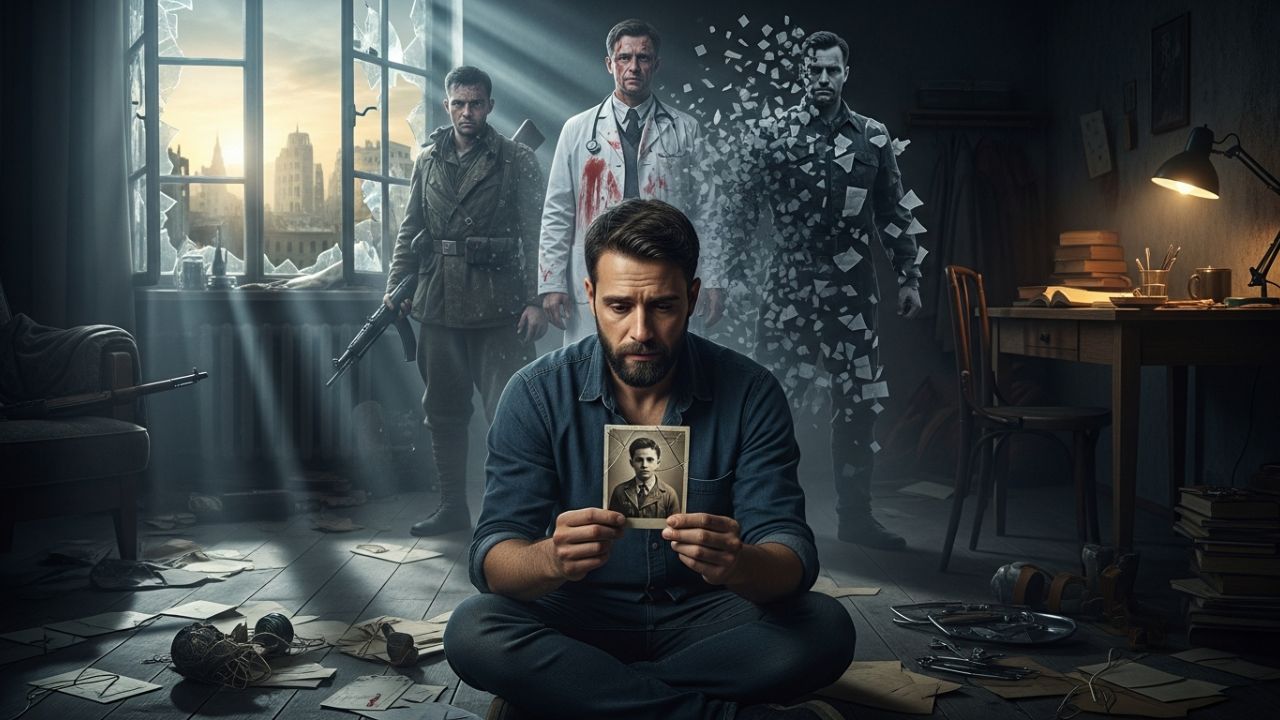
It’s a small, tender film, and it snuck up on me. Anyone who has lost a parent young or grew up on stories about one will feel this in the chest.
Confidence (Bizalom, 1980)
The fourth and quietest film in my accidental Szabó marathon. In Nazi-occupied Budapest, a woman and a man who have never met must pose as a married couple to survive in hiding. Two strangers, one rented room, and the constant question of whether trust is a survival strategy or a feeling.
It earned an Oscar nomination for Best Foreign Language Film, and it’s basically a two-hander thriller played entirely through glances and half-truths. Watch it on a quiet night. It demands and rewards attention.
The Turin Horse (A torinói ló, 2011)
Yes, this is the potato movie. Béla Tarr’s final film opens with the story of Nietzsche breaking down after seeing a horse being whipped in Turin, then follows the horse’s owner and his daughter through six days of routine on a windblown farm as their world quietly runs out.
Black and white, around thirty long takes, and a wind machine that never stops. I checked my phone twice in the first half hour, then something shifted and I couldn’t look away. It’s a test of patience that turns into hypnosis. Not for everyone, but if it catches you, no other film on this list will haunt you longer.
Feels Like Home (Itt érzem magam otthon, 2025)
The newest film here is proof that Hungarian movies are still taking risks. A recently unemployed shop clerk named Rita is kidnapped by a family who insist she’s their long-lost daughter Szilvi, and her only way out is to play the role. It’s a psychological thriller made independently, without state funding, and it premiered at the Sitges Film Festival, where it took a major genre prize before landing on Netflix.
Rozi Lovas is phenomenal in the lead. The film works as pure white-knuckle suspense, but there’s a sharper social reading underneath about how people learn to perform obedience to survive. I finished it at 1 a.m. and then lay awake thinking about it, which is the highest compliment I can give a thriller.
Frequently Asked Questions (FAQs) About Hungarian Movies
1. Are Hungarian movies available on Netflix?
Yes, some are. Feels Like Home (2025) is currently streaming on Netflix, and availability of the older titles rotates across platforms. The classics on this list tend to appear on Mubi, the Criterion Channel, and festival streaming services, so check JustWatch for your region before hunting.
2. What is the most famous Hungarian movie?
Internationally, it’s probably Mephisto (1981), which won Hungary’s first Oscar for Best Foreign Language Film, or Son of Saul (2015), which won the second. Inside Hungary, The Witness and István, a király, are cultural landmarks that most Hungarians can quote from memory.
3. Is Hungarian cinema good for beginners?
Absolutely, if you pick the right entry point. Start with an accessible film like The Witness, Children of Glory, or The Whiskey Bandit rather than diving straight into Béla Tarr. Save The Turin Horse for when you already trust the country’s filmmakers.
4. Which Hungarian movies have won Oscars?
Two features have won Best Foreign Language Film: Mephisto (1981) and Son of Saul (2015). Hungary has also won for short film, with Kristóf Deák’s Sing (Mindenki) taking Best Live Action Short in 2017.
Where to Start With Hungarian Movies
If you want one recommendation from each mood: The Witness to laugh, Sunshine to be devastated, Feels Like Home for a modern thriller you can stream tonight, and The Turin Horse once you’re ready to sit with something slow and enormous.
Eleven films in, I’m convinced. Hungarian movies deserve far more attention than they get outside Europe. This is a cinema shaped by occupation, revolution, and censorship, and you can feel all of that history pressing against the frame, even in the comedies. Especially in the comedies.
If you’ve seen any of these, or think I skipped something unforgivable (I know, no Kontroll, no Son of Saul, they’re on my list), tell me in the comments. My watchlist is always open.