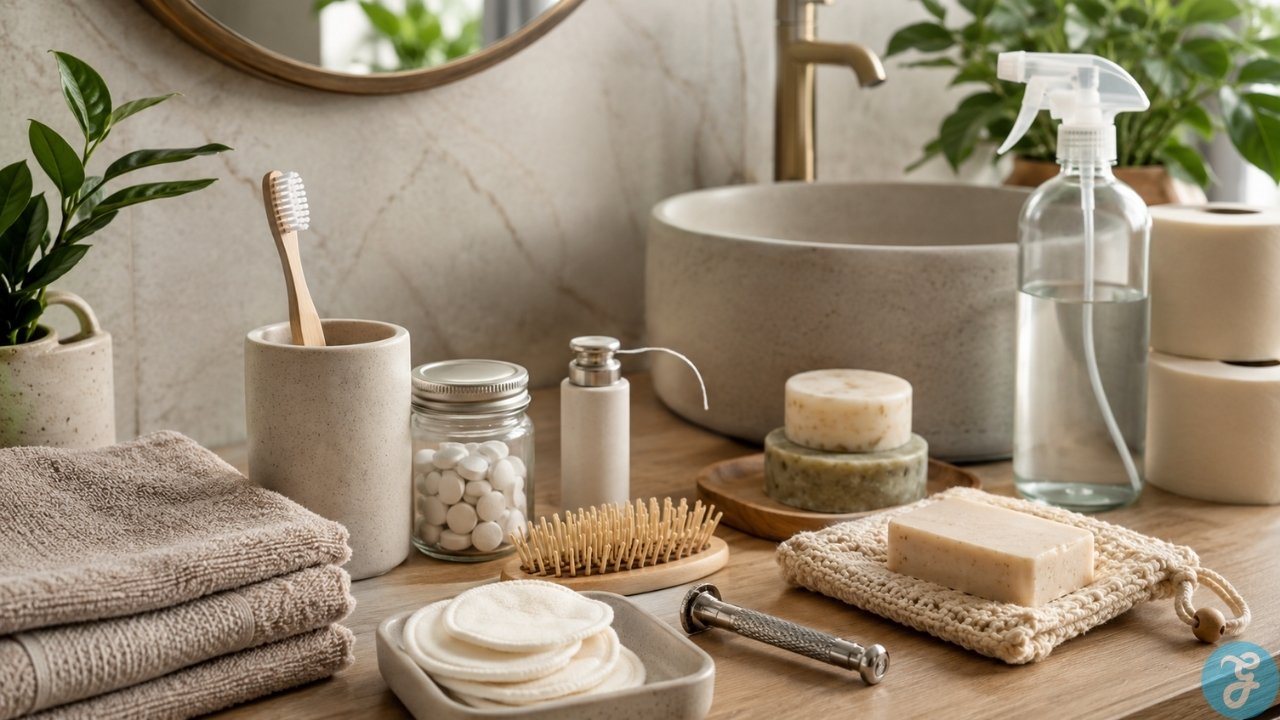
The bathroom is often the highest-density source of plastic waste in the modern home. From multi-layered laminate toothpaste tubes to synthetic liquid soap bottles, our daily grooming routines generate continuous streams of non-recyclable garbage. Transitioning to sustainable bathroom swaps does not require upgrading your entire space into an expensive, picture-perfect eco-boutique overnight. Instead, it involves identifying the plastic items you run through most frequently and swapping them for durable alternatives as they wear out.
Adopting practical eco bathroom products helps minimize your environmental footprint while protecting your body from microplastic exposure and harsh chemical additives.
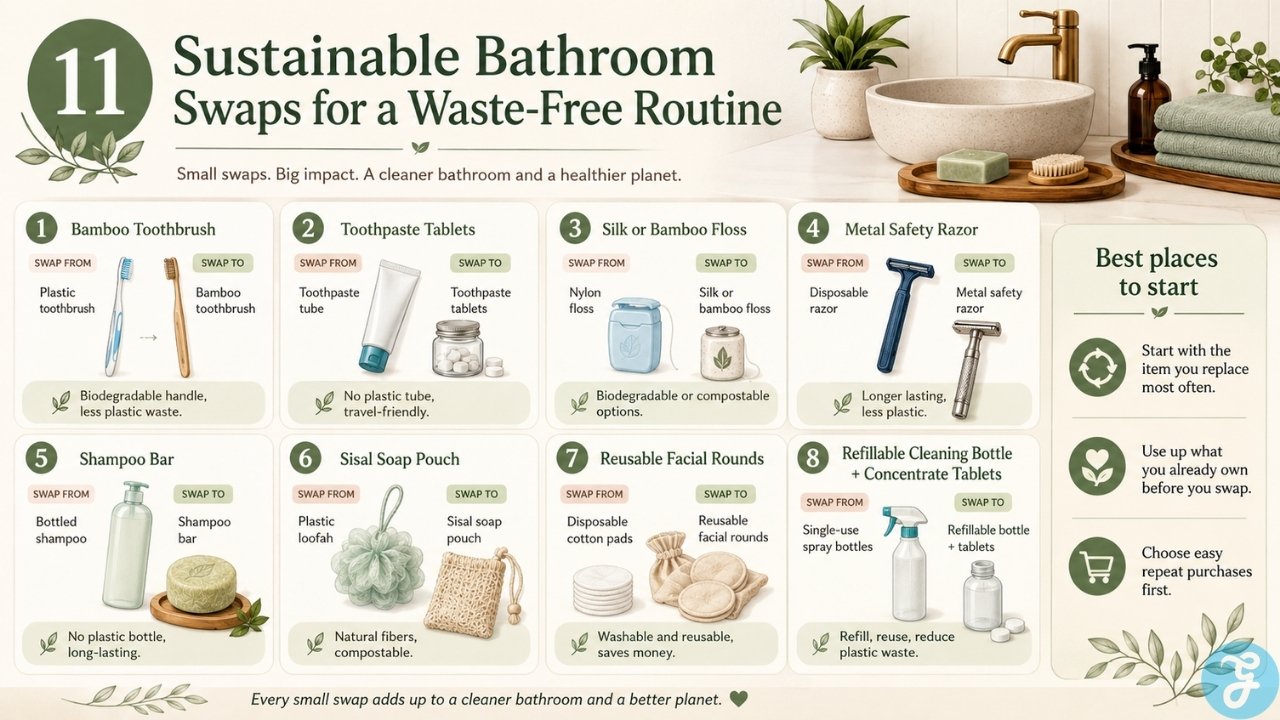
| Swap Category | Standard Item | Sustainable Alternative |
| Dental Care | Plastic Toothbrush | Bamboo Toothbrush |
| Dental Care | Plastic Paste Tube | Toothpaste Tablets |
| Dental Care | Nylon Floss | Silk or Bamboo Floss |
| Shaving | Disposable Razor | Metal Safety Razor |
| Hair Care | Bottled Shampoo | Solid Shampoo Bar |
| Bathing | Plastic Mesh Loofah | Sisal Soap Pouch |
| Skincare | Disposable Pads | Washable Cotton Rounds |
| Grooming | Plastic Hairbrush | Wooden Bristle Brush |
| Sanitation | Virgin Wood Paper | Bamboo Toilet Paper |
| Intimate Care | Disposable Pads | Silicone Menstrual Cup |
| Cleaning | Plastic Spray Bottles | Glass Bottles with Tablets |
Personal Care and Dental Hygiene Swaps
Dental routines and hair removal tools generate massive volumes of composite plastic waste that municipal facilities simply cannot recycle. Shifting to plastic-free bath swaps in these categories delivers immediate environmental returns.
1. Bamboo Toothbrushes Instead of Plastic Brushes
Moving away from manual plastic toothbrushes eliminates a recurring source of non-recyclable landfill waste. Bamboo toothbrushes use fast-growing, naturally antimicrobial wooden handles that decompose cleanly in backyard compost systems, providing an easy entry point into green bathroom items.
The Disposal Friction
While the wooden handles are completely biodegradable, the bristles remain a structural challenge. Most commercial eco toothbrushes still rely on nylon-6 bristles to meet dental health standards for plaque removal. To dispose of the brush correctly, you must use pliers to painstakingly pull the bristles out of the head for plastic recycling before tossing the wooden handle into your compost bin. Leaving the bristles intact means you are still introducing microplastics into the soil, though some users bypass this by sawing off the brush head entirely and using the remaining wooden handle as a garden plant marker.
2. Toothpaste Tablets Instead of Plastic Tubes
Conventional multi-layered laminate toothpaste tubes are functionally impossible to recycle because they fuse plastic and aluminum layers together. Pressed toothpaste tablets eliminate this packaging entirely, shipping in recyclable glass jars or compostable paper pouches. You simply chew a tablet to create a paste and brush normally with a wet toothbrush.
3. Silk or Bamboo Dental Floss Instead of Nylon Floss
Standard dental floss is made of Teflon or nylon coated in synthetic petroleum wax, meaning every used strand remains intact in landfills for centuries. Switching to natural silk or bamboo fiber floss coated in plant-based candelilla wax provides an entirely compostable alternative that ships in refillable glass or stainless steel dispensers.
4. Safety Razors Instead of Disposable Plastic Razors
Cartridge razors trap hair and bacteria between tightly packed blades, forcing you to discard the entire plastic housing every few weeks. Double-edge metal safety razors provide a lifetime alternative where you only replace the single, fully recyclable stainless steel blade. This transition saves significant money over time while reducing skin irritation.
The Shaving Learning Curve
Metal safety razors require a completely different technique than pivot-head plastic cartridges. They are significantly heavier, meaning you must allow the weight of the metal tool to glide across your skin without applying downward physical pressure. Holding the razor at a strict thirty-degree angle is necessary to avoid deep nicks, making it a slower, more deliberate grooming ritual that requires focus during the first few weeks.
Shower and Hair Care Transformations
Liquid hygiene products are primarily composed of water, meaning consumers inadvertently pay for the transport of heavy fluids wrapped in high-density polyethylene bottles.
5. Solid Shampoo and Conditioner Bars Instead of Plastic Bottled Liquids
Concentrated hair care bars eliminate plastic packaging completely by removing the water content from the manufacturing equation. A single solid bar frequently outlasts two or three standard liquid bottles, reducing shipping emissions and clearing plastic clutter from your shower ledges.
The Transition Phase
Switching to solid shampoo bars can introduce a temporary adjustment period for your scalp. Many commercial liquid shampoos use heavy synthetic silicones to coat hair strands and create artificial shine. When you switch to clean, plant-oil formulations, your hair may undergo a purging phase where it feels slightly gummy or unusually dry for two weeks while your natural oil production recalibrates.
6. Natural Sisal Soap Pouches Instead of Synthetic Mesh Loofahs
Colorful plastic mesh shower loofahs are hotbeds for bacterial accumulation and shed microscopic plastic fibers down your drain during every shower cycle. Swapping to woven sisal soap pouches made from natural agave fibers provides gentle skin exfoliation while allowing you to use up tiny, leftover soap scraps cleanly.
7. Reusable Facial Rounds Instead of Single-Use Cotton Pads
Single-use cotton rounds require massive amounts of pesticides during agricultural cultivation and are typically wrapped in non-recyclable plastic sleeves. Washable facial rounds made from organic bamboo or cotton fleece handle makeup removal and toner application perfectly before clearing up inside a standard laundry load.
8. Wooden Hairbrushes Instead of Synthetic Plastic Brushes
Plastic hairbrushes featuring synthetic nylon pins generate static electricity, snag fragile hair knots, and eventually break down into brittle landfill waste. Investing in a solid hardwood brush with wooden bristles redistributes natural scalp oils evenly, improving hair health while utilizing zero synthetics.
Utility and Waste Management Adjustments
Sanitation habits and cleaning protocols represent the final frontier in establishing a truly waste-free personal care space.
9. Bamboo Toilet Paper Instead of Virgin Wood Pulp Paper
Manufacturing traditional toilet paper requires clear-cutting old-growth forests and consuming immense quantities of chemical bleaching agents. Bamboo toilet paper utilizes a hyper-renewable grass species that thrives without fertilizers, offering a plumbing-safe paper option that preserves global forest ecosystems.
The Texture Variance
Bamboo fibers are naturally shorter than virgin tree pulp fibers, meaning sustainable rolls can feel significantly less plush compared to commercial quilted alternatives. If you are accustomed to ultra-soft synthetic textures, bamboo paper can feel slightly utilitarian at first. It is an essential compromise to understand before ordering large bulk shipments for your household.
10. Reusable Menstrual Cups Instead of Disposable Sanitary Products
Traditional feminine hygiene items generate immense plastic wrapper and silicone backing waste over an individual operational lifetime. Food-grade silicone menstrual cups or washable period underwear provide up to twelve hours of reliable protection per use, lasting for several years without generating daily garbage.
11. Refillable Cleaning Concentrates Instead of Single-Use Spray Bottles
Purchasing pre-diluted bathroom cleaners means you are repeatedly paying for water wrapped in heavy plastic trigger bottles. Utilizing glass spray bottles paired with dissolvable cleaning tablets or concentrated liquid refills cuts out packaging waste while effectively sanitizing tiles, glass, and porcelain surfaces.
The Detail Readers Usually Miss With Sustainable Bathroom Swaps
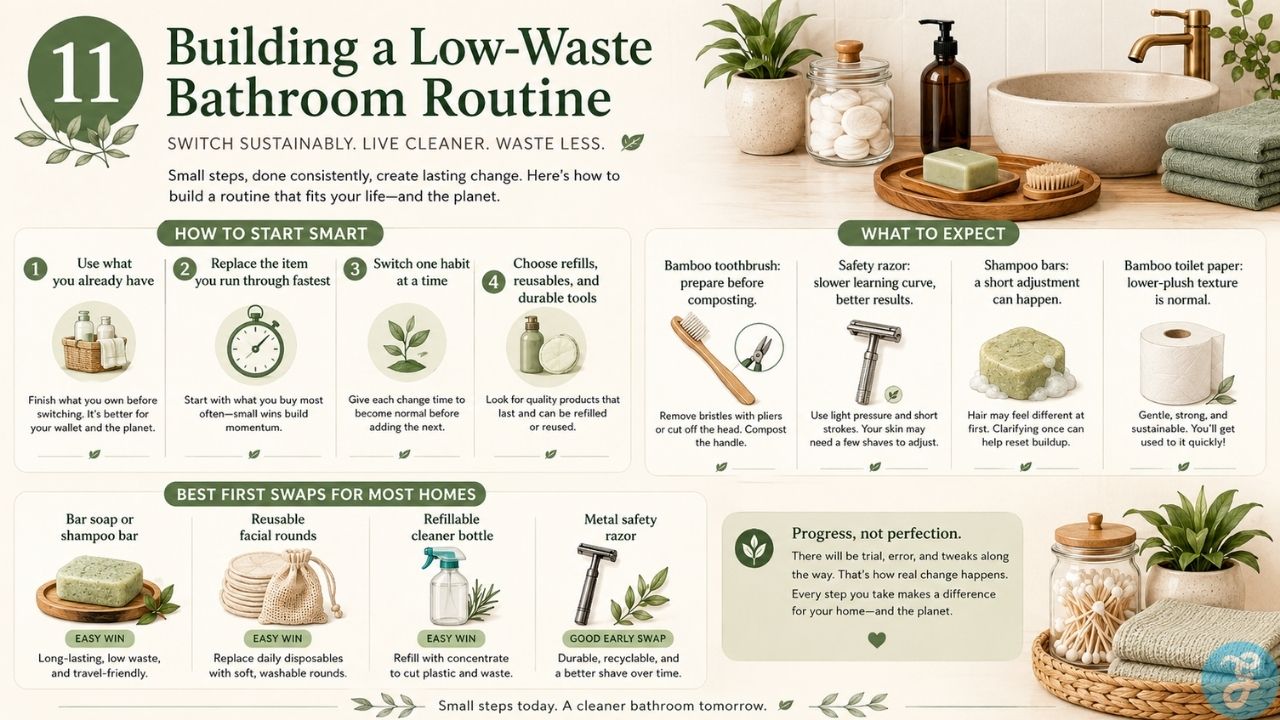
The most common trap when adopting sustainable bathroom swaps is the sudden urge to execute an immediate cosmetic purge of your current cupboards. Throwing away half-full plastic bottles of lotion, tossing out functional plastic razors, or discarding usable synthetic brushes simply to create an immediate zero-waste aesthetic is an environmentally counterproductive choice. True conservation requires maximizing the lifecycle of every item currently sitting under your sink.
The most ecological product is always the one that already exists in your home. Use up every drop of your current liquid shampoos, wear out your existing plastic tools, and only introduce eco bathroom products when your current inventory is genuinely exhausted. This approach prevents unnecessary landfill contributions while allowing you to budget for higher-quality replacements.
Choosing Your Initial Eco Bathroom Products
Your entry point into a low-waste bathroom should be guided by your personal consumption patterns rather than internet trends. If your household runs through multiple plastic bottles of liquid body wash every month, your most impactful first step is substituting them for simple paper-wrapped bar soaps. If you find your trash bin continuously filling up with disposable plastic razors, prioritize investing in a high-grade metal safety razor.
Isolate the single item you replace most frequently in your current grooming routine and establish a replacement habit before moving to the next category. Attempting to overhaul your entire bathroom organization simultaneously often leads to frustration and abandoned routines. Focus on mastering one conscious adjustment at a time to build a permanent, low-impact lifestyle.