
The modern residential kitchen is the single largest site of food distribution loss in the global supply chain. While corporate agricultural operations and major supermarket chains are frequently criticized for commercial loss, the physical volume of edible material discarded at the household level eclipses every other stage of disposal combined. Transitioning toward a sustainable kitchen configuration focused on reducing food waste home requires shifting away from impulsive bulk shopping and learning to manage the real-world friction of household ingredient shelf-lives.
For the vast majority of busy households, families, and homeowners, food waste reduction is rarely caused by a deliberate lack of environmental concern. Instead, it happens incrementally: a bag of salad greens slips behind the milk carton, a container of past dinners gathers frost in the back of the freezer, or confusion over a date label leads to the premature disposal of perfectly safe pantry items. Mitigating this waste does not demand an austere culinary lifestyle. It requires establishing basic, repeatable systems for meal tracking, ingredient storage, and creative recipe adaptation that respect both your household budget and the broader environment.
The Silent Environmental Drain in the Modern Kitchen
The collective impact of residential food disposal carries severe environmental and financial consequences. According to data published in the United Nations Environment Programme Food Waste Index Report, households globally are responsible for 60 percent of all food waste generated at the consumer stage, which equates to roughly 631 million tonnes of discarded organic material annually. On an individual level, the average consumer wastes approximately 79 kilograms of food every year. This means that across the globe, the equivalent of at least 1 billion meals of perfectly edible food is thrown into residential garbage bins every single day.
When food is discarded, the waste extends far beyond the physical item hitting the bottom of the trash bin. All of the natural resources utilized to cultivate, irrigate, harvest, package, and transport that food are permanently squandered. Agricultural operations consume immense volumes of freshwater and clear native ecosystems for arable land; when food is wasted, those ecological resources are spent in vain.
Furthermore, once organic material is buried tightly inside a municipal landfill, it is deprived of oxygen. Instead of decomposing cleanly as it would in an open compost pile, it undergoes anaerobic digestion, releasing massive amounts of methane gas into the atmosphere. Environmental research reveals that global food loss and waste generate between 8 and 10 percent of total greenhouse gas emissions. Decomposing kitchen food waste in landfills alone accounts for up to 14 percent of global human-caused methane emissions, creating an environmental burden several times higher than the entire global aviation sector. Financially, this systemic inefficiency drains nearly 1 trillion US dollars from the global economy every year, directly inflating the standard cost of living for ordinary households.
Demystifying Date Labels: The Root of Premature Disposal
A primary driver of unnecessary residential food waste is the fundamental misunderstanding of commercial date labels. Millions of tons of shelf-stable and perishable goods are thrown away weekly simply because the calendar date on the packaging has passed. In most global regions, date labeling systems are completely unregulated by centralized food safety authorities, leading to a confusing patchwork of terminology that consumers misinterpret as absolute expiration deadlines.
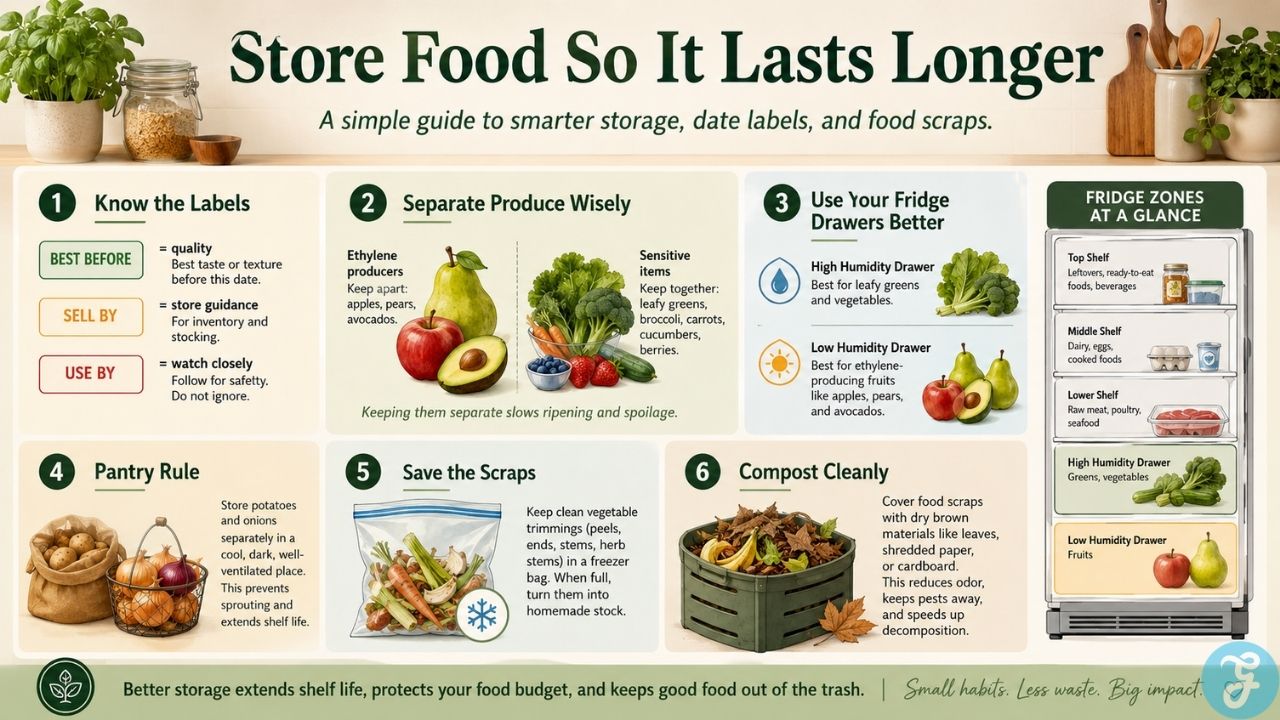
To manage kitchen food waste effectively, you must understand the distinction between quality indicators and safety thresholds:
Best if Used By or Best Before: This label is an estimate of peak quality, flavor, and texture as determined by the manufacturer. It has nothing to do with bacteria growth or safety risks. Canned goods, dry grains, condiments, and hard cheeses remain perfectly safe to consume long after this date has passed, provided the packaging remains undamaged and free of bloating.
Sell By: This is an internal logistical note intended exclusively for grocery store inventory managers. It informs the store clerks when a product should be rotated off the front shelves to ensure consumers still have a reasonable window of time to use it at home. It is not an indicator of product spoilage.
Use By or Expiry: This is the only label that should be monitored closely for safety, particularly on highly perishable items like unpasteurized dairy, fresh seafood, and deli meats. Even then, the label assumes the product has been continuously stored at correct refrigeration temperatures.
Overcoming date label confusion requires shifting away from arbitrary calendar dates and relying on basic sensory evaluation. Before discarding an item, inspect it visually for signs of mold, structural separation, or unusual color changes. If it passes a visual check, perform a scent audit. Sour odors in milk, ammonia scents in meat, or fermented smells in juices are definitive signs of spoilage. If the texture and scent remain normal, the ingredient is generally safe to use, regardless of the stamped text on the box.
A Step-by-Step Blueprint for Reducing Food Waste Home
Altering the trajectory of your household waste requires introducing intentional checkpoints before, during, and after your weekly shopping routines.
Inventory Audits and Pragmatic Meal Planning
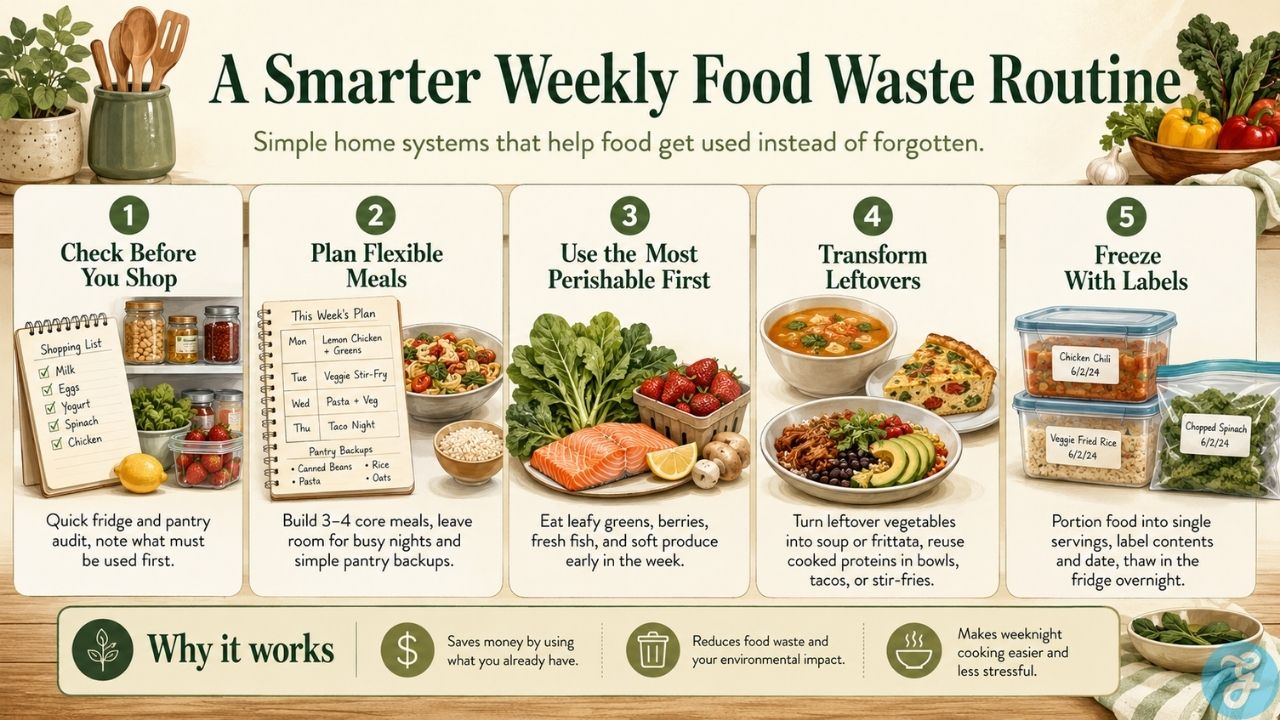
The foundational step in reducing food waste home does not happen in the grocery store aisle; it starts inside your own cabinets. Impulsive grocery shopping without a strategic plan is the direct cause of over-purchasing. Before leaving the house, complete a rapid physical inventory of your refrigerator and pantry shelves. Identify items that need to be consumed immediately and use them as the structural anchor for your upcoming meals.
When constructing a meal plan, avoid the temptation to sketch out a rigid, hyper-detailed menu for every single night of the week. Unanticipated work deadlines, changing social calendars, or simple evening fatigue can easily disrupt a strict schedule, leaving fresh ingredients to rot in the cold case. Instead, practice flexible meal planning.
Schedule three or four core meals that utilize highly perishable ingredients like fresh fish, leafy greens, or soft berries during the immediate days following your shopping trip. For the remaining nights of the week, rely on shelf-stable pantry staples, frozen vegetables, or versatile base items that can be adapted to whatever ingredients remain in rotation.
Crisper Drawer Management and Ethylene Realities
When looking at practical obstacles to reducing food waste home, the vegetable crisper drawer is often the primary source of failure. Most consumers treat these compartments as simple storage boxes, piling a chaotic mix of fruits and vegetables together without considering the natural gaseous emissions of the plants.
Many fruits release a natural plant hormone called ethylene gas as they ripen. When ethylene-producing items are stored in tight confinement with fruits or vegetables that are sensitive to the gas, it accelerates the aging process, causing greens to turn yellow and crisp vegetables to turn soft and mushy within forty-eight hours. Managing your refrigerator layout correctly depends on separating these distinct groups.
The Environmental Affinity Matrix for Produce Storage
Understanding how items interact inside your refrigerator structure prevents premature decay and extends usage windows.
| Storage Zone | Ethylene Status | Ideal Inhabitants | Physical Management Rule |
| High-Humidity Crisper | Ethylene Sensitive | Leafy greens, broccoli, carrots, cucumbers, berries | Keep the vent slider completely closed to trap moisture; wrap greens loosely in unlined paper towels. |
| Low-Humidity Crisper | Ethylene Producer | Apples, pears, avocados, stone fruits, cantaloupes | Open the vent slider completely to allow the gas to escape; do not use plastic bags. |
| Dark Pantry Shelf | Temperature Sensitive | Potatoes, onions, garlic, winter squashes | Store onions and potatoes in separate baskets; proximity causes potatoes to sprout rapidly. |
The Practical Mechanics of Leftover Use
Expanding your repertoire of leftover use is another critical component of reducing food waste home without causing family dinner fatigue. Re-serving the exact same plate of food three nights in a row often leads to behavioral rejection, particularly from young children. The solution is to treat leftovers not as a final meal, but as a pre-prepped component for an entirely new dish.
The Transformation Method
Instead of reheating a container of roasted vegetables, blend them into a smooth puree with vegetable stock to create a base for a winter soup, or fold them into an egg frittata for breakfast. Leftover proteins like roasted chicken, pork, or baked tofu can be shredded and re-seasoned with spices to serve as the core filling for tacos, stir-fries, or grain bowls later in the week. This approach cuts kitchen preparation times in half while completely masking the identity of the original meal.
Reclaiming the Freezer From the Mystery Container Trap
The home freezer is an exceptional tool for food waste reduction, but it frequently functions as a delayed stop on the way to the landfill. Most households throw extra food into random plastic containers, place them in the freezer without a label, and forget about them until they are covered in freezer burn and completely unidentifiable.
To use your freezer effectively, establish a strict organization policy:
Portion Control: Never freeze a massive, solid block of stew or rice unless you plan to feed a large group. Freeze leftovers in individual, single-serving portions so they can be defrosted quickly for solo lunches or quick weeknight dinners.
The Label Mandate: Keep a roll of painter’s tape and a permanent marker attached to the refrigerator door. Every single item entering the freezer must be clearly labeled with the exact contents and the date it was frozen.
The Defrost Sequence: Plan your defrosting twenty-four hours in advance by moving items from the freezer to the lower refrigerator shelf. This slow temperature change preserves the structural texture of meats and sauces far better than high-heat microwave defrosting cycles.
Even with meticulous planning, certain inedible elements of cooking, such as eggshells, coffee grounds, onion skins, and vegetable ends are unavoidable. Managing these scraps responsibly means keeping them out of the general municipal waste stream.
The Scrap Scrap Stock Alternative
Before processing vegetable ends for disposal, consider transforming them into a culinary resource. Keep a large, resealable silicone bag in your freezer. Whenever you trim carrots, peel onions, chop celery tops, or parsley stems, drop the clean scraps directly into the bag.
Once the bag is completely full, empty the frozen contents into a large stockpot, cover them with water, add a bay leaf, and simmer on low heat for two hours. Staining the liquid leaves you with a rich, nutrient-dense vegetable stock that can be used for future soups and grains, completely bypassing the need to purchase sodium-laden commercial boxed broths.
Overcoming Home Composting Obstacles
For homeowners and sustainability enthusiasts, setting up a home compost system can introduce noticeable real-world friction, particularly regarding odor control and domestic pests. A poorly managed compost pile can draw fruit flies into the kitchen or attract rodents to the backyard.
To prevent these issues, maintain a balanced ratio of materials within your compost pile. Every addition of nitrogen-rich green materials, such as raw kitchen food waste and coffee grounds, must be thoroughly covered with a double layer of carbon-rich brown materials, like shredded cardboard, dry autumn leaves, or unlined paper scraps.
This layout ensures aerobic breakdown occurs quickly without generating offensive odors. If you live in an apartment or lack outdoor space, look into municipal organic collection programs or use a compact indoor worm bin running a controlled vermicomposting system.
Final Thoughts
Ultimately, reducing food waste home is an ongoing practice of mindful, incremental alterations to daily domestic habits. The objective is never to achieve absolute perfection or to run a kitchen that generates zero organic waste overnight.
Instead, true progress is achieved by understanding the functional difference between manufacturing quality dates and true food safety thresholds, organizing storage spaces to respect ethylene sensitivities, and utilizing the freezer as a strategic resource for leftover use. By altering how you buy, store, and repurpose ingredients, you can build a highly resilient kitchen framework. This practice minimizes your environmental footprint, saves significant household financial resources, and contributes directly to a sustainable global food system over the long term.
Frequently Asked Questions(FAQs) on Best Free Courses for Founder’s
Why do households generate the most food waste in the supply chain?
Residential waste is driven by impulse buying, cooking excessive portions, and a lack of meal planning. Poor organization also allows fresh ingredients and leftovers to get hidden at the back of the refrigerator, where they spoil before they can be used.
Can you safely reheat leftovers multiple times to prevent waste?
No, food safety guidelines recommend reheating leftovers only once. Each cooling and reheating cycle allows food to pass through the temperature danger zone, encouraging harmful bacterial growth. Divide large batches into individual portions before storing so you only heat what you intend to eat immediately.
How does storing ethylene-producing fruits separately help reduce waste?
Fruits like bananas, apples, and avocados naturally release ethylene gas as they ripen. When stored in tight confinement with ethylene-sensitive produce like leafy greens or cucumbers, the trapped gas accelerates aging and causes the surrounding vegetables to decay prematurely.
Is food still safe to consume immediately after the best before date?
Yes, a best before label indicates peak quality, flavor, and texture rather than a safety deadline. Most dry pantry items and canned goods remain safe to eat long after this date, provided the packaging is undamaged and the food passes a simple visual and scent check.