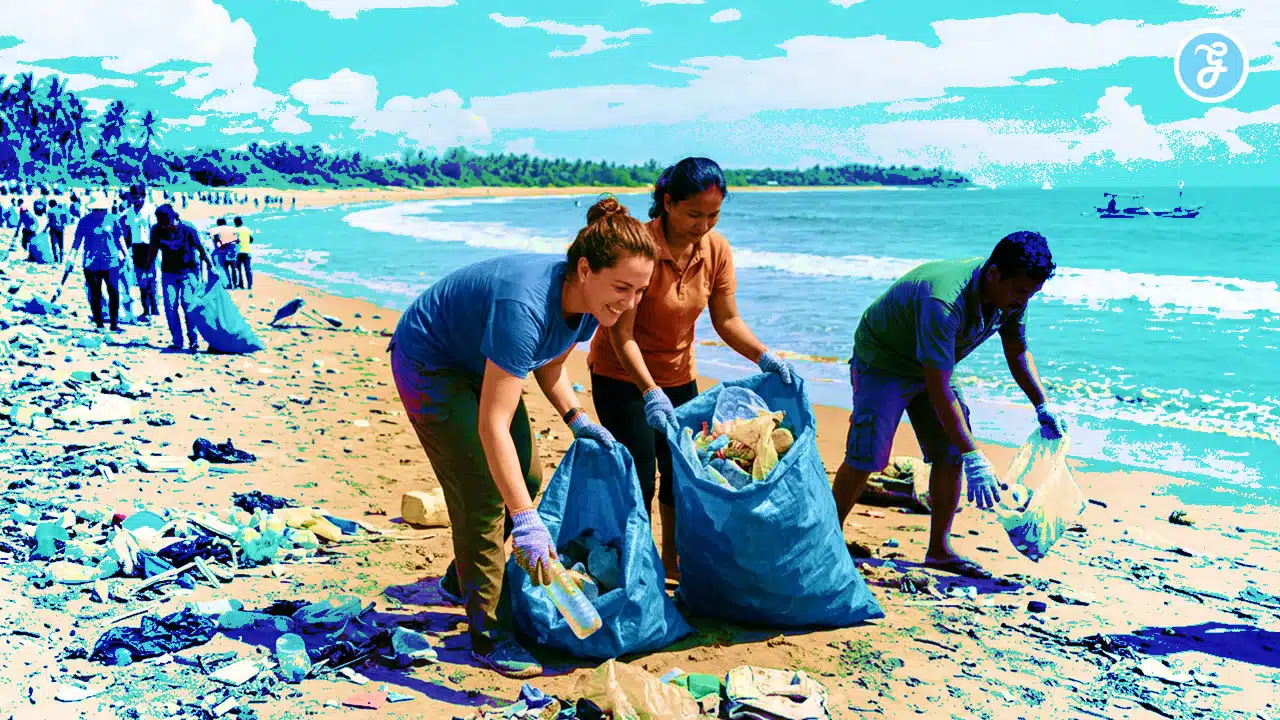
Plastic pollution everywhere—on sidewalks, in rivers, and even inside the food chain—demands immediate action. Instead of greenwashing, finding authentic plastic pollution solutions requires looking at what actually works in the United States right now to cut waste.
Real progress comes from tighter single-use regulations, automated river interceptors, and circular economy systems that keep materials in use. Smarter waste management and the push for a global plastics treaty are finally moving the needle from vague promises to measurable environmental recovery.
The Scope of the Plastic Pollution Crisis
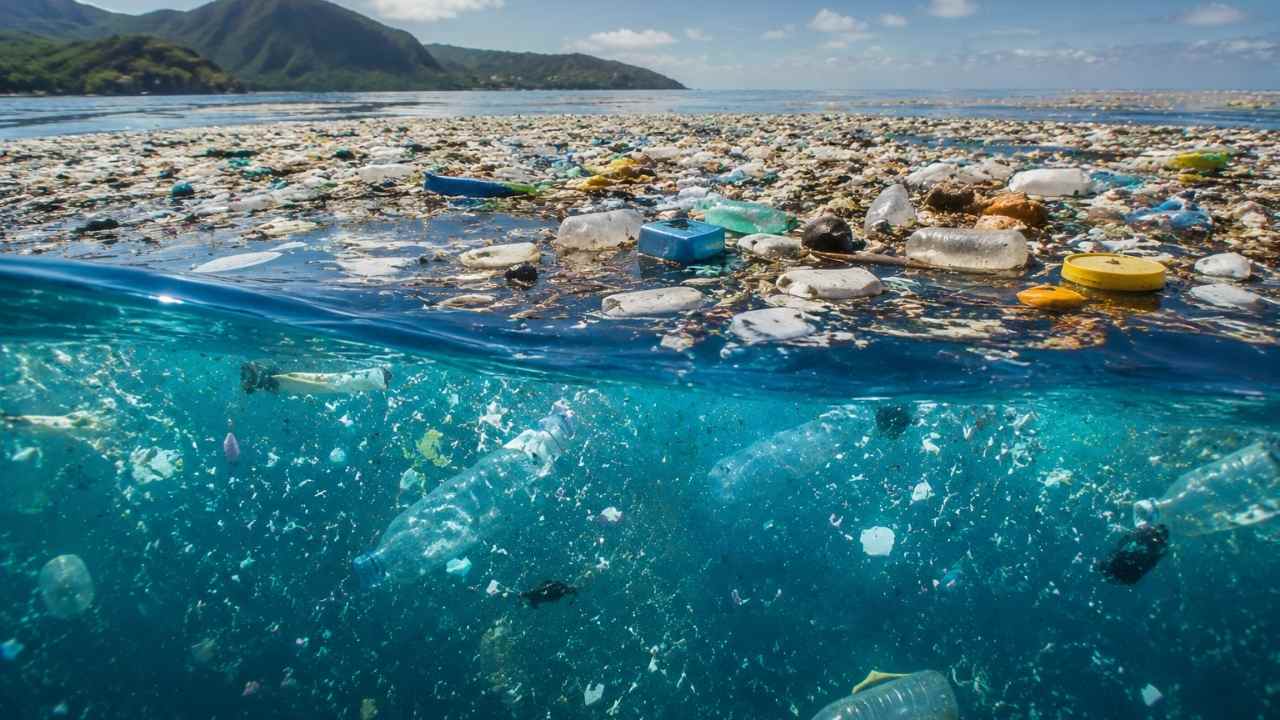
Plastic keeps piling up because we still make far more of it than our systems can collect, sort, reuse, or recycle.
The scale is hard to overstate. The OECD found that the world generated 353 million metric tons of plastic waste in 2019, and just 9% was recycled. Under business as usual, global plastic waste could nearly triple by 2060.
That is why this is not just a litter problem. It is a production problem, a design problem, and a waste management problem all at once.
In the United States, EPA says plastic generation reached 35.7 million tons in municipal solid waste in 2018, with an 8.7% recycling rate. About 27 million tons were landfilled, which tells you how much material value is still being thrown away instead of kept in circulation.
- Plastic waste is persistent: EPA notes that plastic in the environment can take roughly 100 to 1,000 years or more to break down.
- Microplastics and nanoplastics spread easily: microplastics are particles from 5 millimeters down to 1 nanometer, and nanoplastics are smaller still.
- Climate change is part of the story: OECD estimates the plastics life cycle could account for about 5% of global greenhouse gas emissions by 2040 if current trends continue.
The Great Pacific Garbage Patch shows what happens when leakage goes unchecked for years. The Ocean Cleanup estimates its surface area at about 1.6 million square kilometers, while NOAA cautions that it has no clean edge and shifts with currents, which matters because cleanup is harder than people imagine.
The practical lesson is simple: once plastic reaches open water and breaks into smaller pieces, recovery gets slower, more expensive, and less effective. That is why the best plastic pollution solutions start upstream.
Systemic Solutions to Plastic Pollution
Systemic solutions matter because individual effort cannot outrun a throwaway system. The strongest fixes change product design, packaging rules, collection systems, and who pays for cleanup.
If you want plastic pollution to fall at scale, this is the level that has to move first.
Source Reduction: Phasing out single-use plastics
The fastest way to cut plastic waste is to stop making so much disposable plastic in the first place. EPA’s national strategy, updated in early 2026, puts source reduction near the top of the list for a reason.
In the United States, California tightened its statewide bag policy on January 1, 2026, closing the thicker plastic bag loophole and requiring stores covered by the law to offer paper bags instead of plastic checkout bags. That kind of rule works because it removes the easy default that keeps single-use plastics flowing.
You can also see the power of small price signals. In England, the government reported that single-use carrier bag use at major retailers fell by more than 98% after the charge was introduced. For local leaders, that is a strong reminder that a modest fee can change behavior fast.
- For households: keep a bottle, mug, and shopping bag where you will actually use them, in your car, by the door, or in your work bag.
- For stores: remove automatic handouts like plastic cutlery, condiment packets, and checkout bags unless a customer asks.
- For brands: cut unnecessary layers, sleeves, and mixed materials before trying to market a package as recyclable.
Extended producer responsibility, often shortened to EPR, pushes this shift further by making producers help pay for the packaging waste they put on the market. By 2026, seven U.S. states had enacted packaging EPR laws: Maine, Oregon, Colorado, California, Minnesota, Maryland, and Washington.
That matters because EPR changes the business math. Packaging that is lighter, reusable, or easier to recycle becomes cheaper to manage over time, while hard-to-process formats become a bigger liability.
Circular Reuse and Refill Systems
Reuse and refill systems cut waste before it exists. That makes them more powerful than systems that depend on collecting and processing trash after the fact.
The best examples are simple: refillable detergent stations, returnable beverage containers, bulk food dispensers, and takeout container programs that bring the same durable item back into circulation again and again.
Refill, reuse, and repeat works best when it feels easier than throwing something away.
The Ellen MacArthur Foundation’s 2025 progress update showed that participating brands and retailers increased the share of plastic packaging that is reusable, recyclable, or compostable to 72% in 2024. That does not solve the problem by itself, but it shows that design standards can move when companies are measured against them.
WWF has also been blunt on the point that matters most: reuse is one of the few strategies that can measurably reduce dependence on single-use plastics instead of just managing the waste later.
| Approach | What it looks like | Why it helps |
|---|---|---|
| Refill in store | Bulk dispensers for soaps, cleaners, and dry goods | Removes many single-use containers from the system |
| Returnable packaging | Deposit bottles, takeout container return programs | Spreads one package across many uses |
| Standardized durable formats | Shared jars, cups, or transport totes across brands | Makes washing, collection, and redistribution cheaper |
If your city or local stores want to start small, reuse works best in closed loops first, campuses, office parks, food halls, stadiums, and neighborhood grocers. Those are the places where return rates are easiest to track and improve.
Global Treaties: Caps on virgin plastic production
The global plastics treaty is the biggest policy effort aimed at the full life cycle of plastics, from production and design to disposal. The process began after the United Nations Environment Assembly adopted resolution 5/14 in March 2022.
Negotiators met in Geneva from August 5 to 15, 2025 for INC-5.2, the resumed fifth session of the Intergovernmental Negotiating Committee on plastic pollution. The talks adjourned without consensus, which means there is still no final treaty text.
There was movement in 2026, but it was procedural. UNEP announced that INC-5.3 on February 7, 2026 elected Ambassador Julio Cordano of Chile as the next chair, and no substantive negotiations were held that day.
- Why this matters to readers: a strong treaty could set global rules on product design, chemicals of concern, waste trade, and producer responsibility.
- What remains contested: caps on virgin plastic production, controls on hazardous additives, and how far rules should reach across the plastic life cycle.
- What to watch: whether the next negotiation round keeps the focus on cutting plastic production, not just improving end-of-pipe cleanup.
That last point is crucial. OECD policy modeling found that improving waste management alone would not get the world close to ending plastic pollution by 2040. You need lower demand for virgin plastic at the same time.
Innovative Technologies Tackling Plastic Pollution
Technology can help, but it works best when it targets the places where plastic escapes the system. In practice, that means rivers, sorting lines, and high-density ocean hotspots.
The strongest tools do two jobs at once: they remove material and produce data that helps cities and companies stop the next wave.
River Interceptors: Stopping waste at aquatic sources
Rivers are one of the smartest places to intercept plastic because debris is still concentrated there. Once it reaches open ocean, cost and difficulty go up fast.
The Ocean Cleanup reported 20 Interceptor deployments as of May 2025, and by April 2026 the organization said it had collected more than 52 million kilograms of trash from aquatic ecosystems worldwide. That is one reason river technology now gets so much attention.
Los Angeles County’s Ballona Creek Interceptor 007 is a useful U.S. example. County project information says the system, first deployed in October 2022, prevented more than 250,000 pounds, or 125 tons, of trash and debris from reaching the Pacific during the pilot phase, more than twice the roughly 60 tons originally anticipated.
| Project | What it shows | Why it matters |
|---|---|---|
| Ballona Creek Interceptor 007, California | 125 tons captured during the pilot | Shows a river-mouth system can stop large loads before they hit beaches |
| Newport Bay Trash Interceptor, California | Uses booms, a water wheel, conveyor, and dumpsters on San Diego Creek | Shows how cities can protect sensitive estuaries with fixed local infrastructure |
| Mr. Trash Wheel, Baltimore | Set a debris-removal record with 1,832 metric tons by December 2023 | Shows long-running interceptors can deliver years of cumulative impact |
These systems do more than collect trash. They help cities identify which packaging types show up most often, which makes them useful for redesign decisions and stronger local rules.
Ocean Cleanup Systems: Removing plastic from gyres
Ocean cleanup still matters because decades of legacy plastic are already circulating in gyres like the Great Pacific Garbage Patch. The Ocean Cleanup marked its 100th ocean extraction in May 2026, which signals that offshore removal is becoming more operational, not just experimental.
Still, offshore cleanup has limits. The Ocean Cleanup says 75% to 86% of debris in the Great Pacific Garbage Patch comes from fishing activities at sea, especially ghost gear. That tells you two things right away: large floating debris is still worth removing, and source-specific prevention, especially in fisheries, has to be part of the plan.
For readers, the takeaway is practical. Support ocean cleanup projects, but do not mistake them for the main fix. If rivers and production stay unchecked, the patch keeps getting refilled.
AI-Powered Waste Segregation
AI-powered waste segregation helps most when a recycling facility already has volume but struggles with contamination, staffing, or inconsistent sorting. In plain English, cameras and machine learning help lines spot the right material faster and miss fewer valuable items.
A U.S. Plastics Pact case study from Kent County, Michigan describes AMP’s compact AI-guided robotics system as a retrofit that was installed over a weekend, offered an expected return on investment in under two years, and allowed the facility to pull three to four people off the line for other work while improving plastic bale quality.
Another U.S. Plastics Pact case study shows how Evergreen, a major rPET producer in Ohio, installed six AMP Cortex units at its Clyde facility. The robots reached pick rates of up to 120 bottles per minute and removed up to 90% of contamination on average across different lines.
- For MRF operators: retrofit first if space is tight, because faster installation lowers disruption and capital risk.
- For cities: pair AI sorting with contamination education, since cleaner curbside streams make the machines more effective.
- For haulers: look at collection-stage tools too. In March 2026, Oshkosh introduced AI-enabled contamination detection that can identify more than 80 contaminants in real time during collection.
This is where technology earns its keep. It does not replace better packaging design or stronger policy, but it can make recycling lines cleaner, faster, and more profitable.
Biodegradable and Alternative Materials
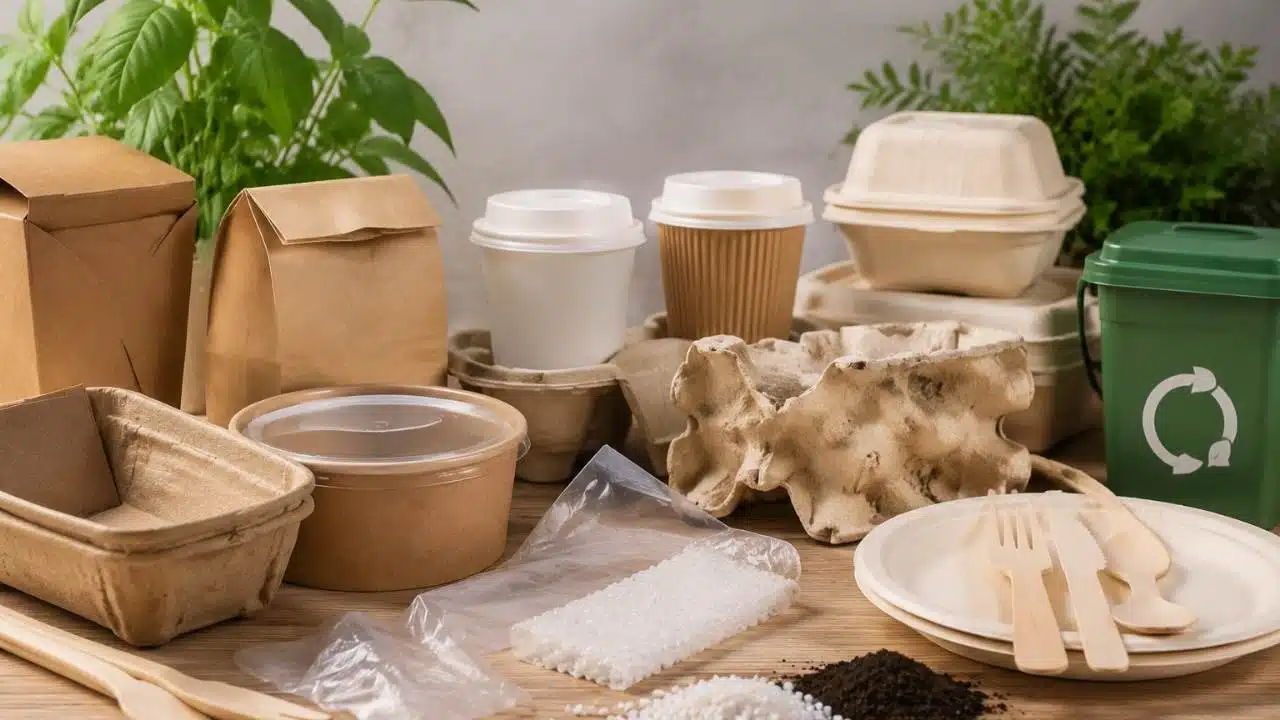
Alternative materials can help, but only when they match the real disposal system around them. A package that says compostable is not useful if your city does not accept it, and a plant-based plastic is not a win if it still contaminates recycling.
That is why the safest rule is to choose the simplest material that works, then verify how it will be collected at the end of use.
Innovations in packaging materials
Here are the packaging options that matter most right now, along with where they fit and where they can mislead people.
| Innovation | Best use | Main strength | Watch out for |
|---|---|---|---|
| PHA biopolymers | Film, food service items, specialty packaging | Can reduce reliance on fossil-based resin and is attracting new commercial launches | Higher cost and limited scale compared with conventional plastic |
| PLA and cellulose-based formats | Cups, liners, wraps, coated paper applications | Useful in controlled compost systems when certified for the full product | Often mistaken for recyclable plastic by consumers |
| Mycelium and molded fiber | Protective packaging, trays, shipping inserts | Good replacement for foam in some dry applications | Not suitable for every moisture or barrier need |
| Reusable packaging | Takeout, beverages, detergents, event service | Cuts single-use waste at the source and often lowers lifecycle emissions after repeated use | Needs collection, washing, and return logistics to work well |
| Design for recyclability | Bottles, tubs, rigid packaging, mono-material packs | Improves sortability and bale quality in existing waste management systems | Fails if labels, inks, adhesives, and mixed layers are not simplified too |
Non-toxic, biodegradable plastic substitutes
The big mistake here is assuming every material marketed as biodegradable is a real fix. EPA’s guidance draws a clear line between biodegradable and compostable, and that line matters in the real world.
| Point | What it means for you |
|---|---|
| Core requirement | Look for products certified to standards such as ASTM D6400 or ASTM D6868 when a package claims it is compostable. |
| Best practice | Check whether your local composting facility actually accepts the item. Certification alone does not guarantee collection. |
| Labeling risk | Washington State bars products from using vague claims like biodegradable or degradable on compostable products because those terms confuse people. |
| Performance check | California’s compostable food service packaging criteria require strong proof of timely biodegradation under industrial composting conditions. |
| Design focus | Use compostable formats mainly where food residue makes recycling unrealistic, such as some food service applications. |
| Common pitfall | Do not mix compostable plastics into regular plastic recycling. That raises contamination and hurts bale quality. |
| Safer strategy | If reuse is possible, pick reuse first. If reuse is not practical, pick the simplest recyclable or certified compostable option that your local system can handle. |
Community and Individual Actions
You do not have to solve the whole plastic crisis by yourself. You can still make your home, block, school, and city far less wasteful.
The best personal actions are the ones that cut waste every week and help better rules stick.
Reducing single-use plastics at home
You can cut plastic waste at home with a few steady habits. Small changes work best when they remove a repeat purchase or a repeat trash item.
- Carry your own basics: use a reusable bottle, mug, and shopping bag every day. This is the easiest way to stop plastic before it enters your home.
- Buy where packaging is lighter: choose loose produce, concentrates, bulk goods, or refill options when you have them nearby.
- Set up a better sort station: give recyclables a quick rinse and keep trash, recycling, and organics clearly separated so good material does not get contaminated.
- Use local disposal tools for hard items: EPA points people to Earth911 for items that do not belong in the curbside bin, including some foam products and specialty materials.
- Replace the worst repeat items first: plastic wrap, disposable cutlery, sandwich bags, and bottled water are good places to start because the savings add up quickly.
If you want one pro tip, do a one-week waste audit before buying any new zero-waste gear. Most households find the same five or six items filling the bin again and again, and that makes your next swap much easier.
Participating in local cleanups
Local cleanups are worth doing, especially when they also collect useful data. They will not replace upstream policy, but they can remove trash fast and show officials exactly what keeps leaking into rivers and shorelines.
- Use data, not just trash bags: Ocean Conservancy’s Clean Swell app uploads cleanup results directly into its global ocean trash database.
- Choose priority locations: storm drains, creek mouths, riverbanks, and parking lot edges often intercept litter before the next rain moves it downstream.
- Bring the right gear: gloves, grabbers, water, buckets, and a simple item tally sheet will make a two-hour cleanup much more useful.
- Report hazardous finds: tires, drums, syringes, and chemical containers should go to local authorities, not into volunteer haul piles.
- Share the patterns: if most of what you collect is bottles, food wrappers, foam, or plastic bags, bring that evidence to city staff and business owners.
Programs from groups such as Oceanic Society, Ocean Conservancy, and local watershed groups can also make it easier to turn a one-time cleanup into a monthly effort with better tracking.
Advocating for stricter regulations
Good policy saves more plastic than good intentions alone. If you want bigger results, ask for rules that reduce plastic production and improve waste management at the same time.
- Push for packaging EPR: seven states already have packaging extended producer responsibility laws, which gives local advocates a real U.S. playbook.
- Ask for stronger bag, foam, and litter rules: California’s 2026 bag law and SB 54 packaging framework show that states can tighten loopholes after weak first drafts.
- Back better recycling standards: ask cities to publish clearer accepted-material lists and contamination guidance so households stop guessing.
- Connect pollution and environmental justice: petrochemical production, waste facilities, and incineration burdens often fall hardest on already overburdened communities.
- Show up with local evidence: photos, cleanup counts, storm drain hotspots, and waste audit results usually move officials faster than abstract arguments.
If you want a simple message for lawmakers, ask them to favor source reduction, reuse, and producer responsibility before they spend public money on cleanup alone.
Benefits of a Circular Economy Approach
A circular economy keeps materials in use longer, cuts waste generation, and gives companies a reason to design products that are easier to reuse, repair, and recycle. That makes it one of the most practical long-term answers to plastic pollution.
It also helps explain why so many weak solutions disappoint people. If a system still depends on endless virgin plastic production, it is not truly circular.
Reducing waste generation
Circular systems reduce waste because they treat used material as a resource, not an afterthought. EPA’s national strategy says the goal is to keep resources at their highest value for as long as possible.
That idea becomes real when you look at lost value. WWF noted that landfilled plastics represented an estimated average of $7 billion in lost market value in the United States in 2019. Put plainly, we are paying to bury material that still had economic value.
- Reuse lowers purchasing frequency: fewer single-use items in, fewer trash items out.
- Better sorting improves bale quality: cleaner material commands better prices and supports stronger domestic recycling markets.
- Producer responsibility shifts costs: local governments and taxpayers carry less of the burden alone.
This is why circular economy work is not just environmental branding. It can cut disposal costs, protect local budgets, and reduce demand for new fossil-fuel-based plastic production.
Encouraging sustainable product design
Better product design is one of the least glamorous fixes, and one of the most effective. A bottle made from one resin with a sortable label and fewer additives is much easier to recover than a multi-layer pack with dark pigments, glued sleeves, and mixed materials.
In practice, design teams should ask a short set of questions early: Can this be reused? If not, can it be made from one main material? Will a local recycling or compost system actually accept it? If the answer is no at every step, the package is a waste problem waiting to happen.
| Linear design | Circular design |
|---|---|
| Mixed layers, hard-to-remove labels, short life | Simpler materials, refill or return options, easier sorting |
| Cheap at checkout, costly at disposal | Higher design discipline, lower system waste over time |
| Shifts cleanup costs to cities and communities | Shares responsibility across producers, retailers, and users |
When companies say they support a circular society, this is the test. The package has to work in the real world, not just in a sustainability slide deck.
Challenges in Implementing Solutions
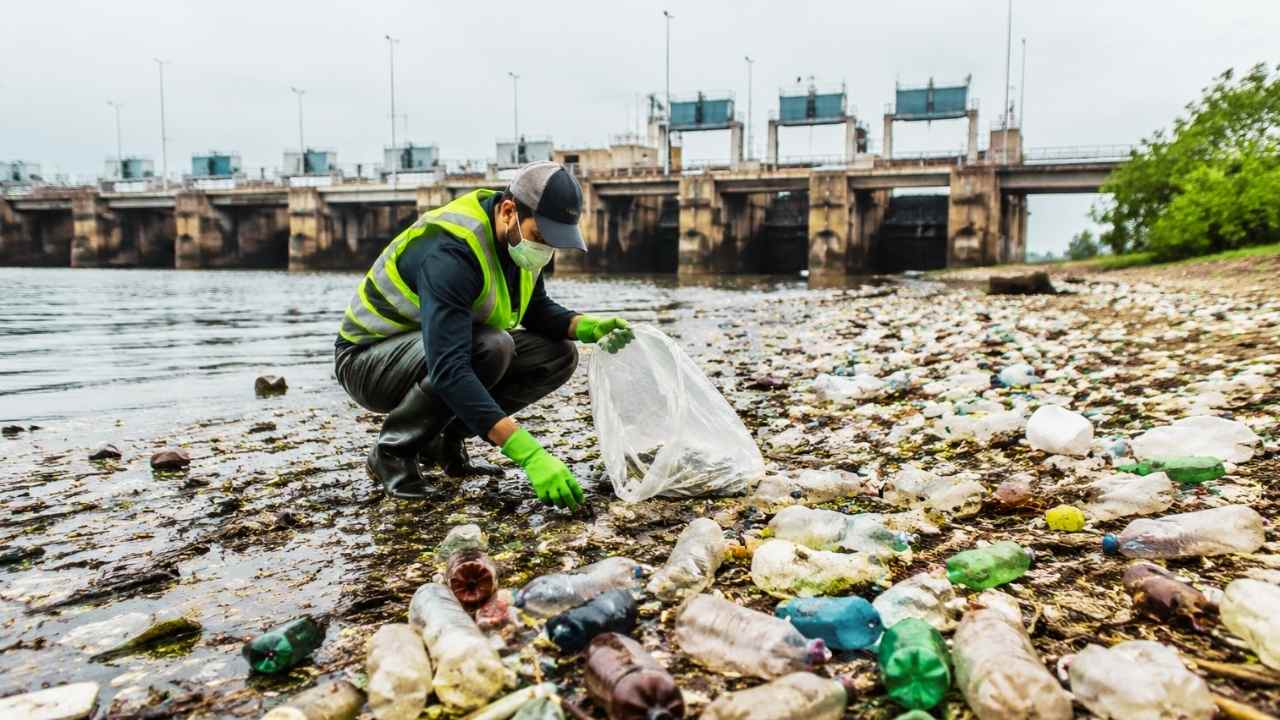
The hard part is not finding ideas. The hard part is scaling them fast enough, funding them well enough, and writing rules strong enough to hold up under pressure.
Barriers to global collaboration
The global plastics treaty process shows how hard this gets once production limits and chemical rules are on the table. INC-5.2 in Geneva ended without consensus in August 2025, even though the talks were supposed to move the treaty toward final approval.
That deadlock matters because countries still disagree on the biggest questions: should the treaty cap virgin plastic production, how should it address chemicals of concern, and how much authority should sit at the global level instead of the national level?
As of February 2026, the process had a new chair, Julio Cordano of Chile, but no substantive negotiations were held during INC-5.3. So the treaty is still alive, but the clock is still running.
Economic and logistical hurdles
Even the best solutions need money, infrastructure, and staff. That is where many communities get stuck.
Pew’s 2026 U.S. analysis projects that, without intervention, taxpayers could face nearly $37 billion a year in plastic municipal solid waste management costs by 2040. The same work points to a projected 30% increase in waste management expenses if current trends continue.
That pressure shows up in familiar places: underfunded collection systems, older material recovery facilities, weak local data, and communities that still do not have reliable access to high-quality waste services.
- Technology costs money: interceptors, AI retrofits, sensors, and sorting upgrades all need capital and maintenance.
- Operations matter as much as equipment: crews need training, contracts need continuity, and data need to be reviewed, not just collected.
- Chemical recycling is still limited: Pew’s 2025 global update found that even large modeled growth in chemical conversion stays tiny relative to the full plastic waste stream, which is why it cannot carry the strategy on its own.
If you are deciding where effort should go first, the safest bet is still the basics: reduce unnecessary plastic, standardize packaging, improve collection, and build reuse where it can work right now.
Final Thoughts
Plastic pollution drops fastest when we stop waste upstream, redesign products, fund better waste management, and use cleanup tools where they can make the biggest difference. That means fewer single-use plastics, stronger extended producer responsibility rules, more circular economy systems, smarter sorting, and better river interception before plastic reaches the ocean.
So what should you do next?
Start with one repeat item at home, one cleanup or data effort in your community, and one policy ask for your city or state. That is how real progress stacks up, and that is how plastic pollution starts to shrink for good.
Frequently Asked Questions (FAQs) About Plastic Pollution Solutions
1. What plastic pollution solutions are actually working?
Policies that cut single-use plastics, strong waste management, and good recycling systems are working, they slow new plastic waste and keep materials in use. These steps push us toward a circular economy, they favor reuse and practical plastic alternatives.
2. Does recycling stop plastic pollution?
Recycling helps, but it does not stop pollution on its own. It works when collection and sorting run well, and when makers buy recycled feedstock. Pair recycling with producer rules, like extended producer responsibility, for real scale.
3. Are ocean cleanup projects worth it?
Ocean cleanup pulls plastic out of water and makes a big splash, but it can feel like mopping the floor while the tap runs, so stopping plastic at the source matters most.
4. What can I do, and who must act?
You can cut single-use items, carry reusables, and buy items that last, your consumer behavior matters. Governments and companies must pass strong policy, fund waste systems, and make producers take responsibility, they must back better plastics recycling and true alternatives like safe, biodegradable options when they actually break down.