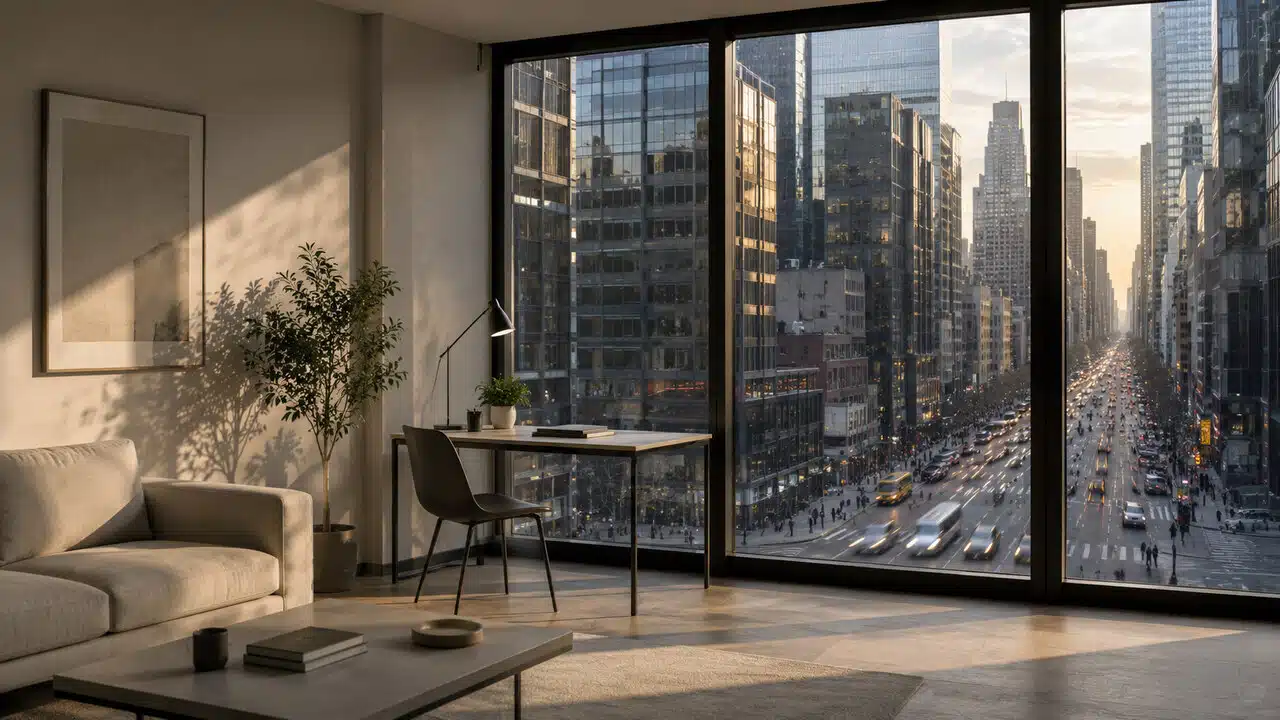
A minimalist lifestyle in a busy city isn’t about living in a cold white room with one chair and no personality. That version looks good online, but real life is messier. Real minimalism is simpler. It means keeping what helps you live well and letting go of what keeps getting in the way.
City life can be exciting. There’s work, food, culture, transport, people, energy, and movement. But it also gets loud fast. Rent is high. Apartments are small. Commutes eat time. Ads chase you on every screen. Delivery apps make buying too easy. Your home fills up before you even notice.
Then one day you walk in after work and feel tired before you’ve even sat down.
Shoes near the door. Clothes on a chair. Packages on the floor. Emails unread. A closet full of “nothing to wear.” A kitchen that makes cooking feel harder than ordering food.
That’s not just clutter. That’s friction.
Minimalism helps you cut that friction. It gives your space, money, time, and attention a clear direction. You don’t need to own less for the sake of owning less. You need to own what makes your life lighter.
What a Minimalist Lifestyle in a Busy City Really Means
A minimalist lifestyle in a busy city means living with intention in a place that constantly pushes you to want more.
It doesn’t mean you stop buying things. It doesn’t mean you give up style, comfort, hobbies, or beauty. It means you stop letting random stuff decide how your home feels.
For urban professionals, this matters a lot. Space costs money. Time runs short. Attention gets pulled in every direction. If your home feels crowded, your mind often follows.
Minimalism gives you a filter. You keep what earns its place. You remove what drains you.
| City-Life Problem | Minimalist Shift | Everyday Benefit |
|---|---|---|
| Small apartment | Keep fewer useful items | More space to move |
| High cost of living | Buy with purpose | Less money pressure |
| Busy workdays | Reduce small decisions | Easier routines |
| Constant advertising | Pause before buying | Fewer impulse purchases |
| Messy surfaces | Clear key areas | A calmer home |
Minimalism Is Not a Design Trend
Minimalism isn’t about copying a Pinterest apartment. It’s not a beige sofa, a linen curtain, or a perfect shelf.
It’s a way to ask better questions.
Do I use this?
Do I love this?
Does this fit my life now?
Would I buy this again today?
Those questions cut through guilt. They also cut through fantasy.
You may own books, art, plants, good clothes, kitchen tools, family photos, and sentimental pieces. That’s fine. Minimalism doesn’t erase personality. It protects it from getting buried under things you don’t even care about anymore.
Start With the Areas That Annoy You Every Day
Don’t start with old letters, childhood photos, or emotional boxes. Those take time. They can stop you before you build momentum.
Start with the places that irritate you every single day.
Your entryway. Your desk. Your bedside table. Your kitchen counter. Your bathroom shelf. Your wardrobe.
These areas shape your mornings and evenings. When they’re messy, the day feels heavier.
Fixing them gives you fast relief.
| Area to Start | What to Remove First | Why It Helps |
|---|---|---|
| Entryway | Extra shoes, old mail, unused bags | Makes leaving easier |
| Desk | Loose papers, cables, random gadgets | Improves focus |
| Kitchen counter | Duplicate tools and packets | Makes cooking less annoying |
| Wardrobe | Poor-fit or unused clothes | Saves time in the morning |
| Bathroom | Expired products | Clears visual clutter fast |
Use the “Daily Friction” Test
Walk through your home and notice what keeps bothering you.
Do you always lose your keys?
Does your desk feel too crowded to work?
Do you have too many clothes but still wear the same five outfits?
Does your kitchen make you avoid cooking?
That irritation is a clue.
Start there.
Minimalism works best when you feel the reward quickly. One clear counter. One peaceful bedside table. One easy morning routine. Small wins matter because they make the next step feel possible.
Use Decluttering Methods That Work for Busy People
Most people don’t fail at decluttering because they’re lazy. They fail because they try to do too much at once.
They pull everything out, get overwhelmed, lose energy, and push the mess back into drawers.
That’s not helpful.
Use simple methods that fit real city life. You don’t need a full weekend. You need one drawer, one shelf, one bag, or ten focused minutes.
| Method | Best For | How It Works |
|---|---|---|
| 20/20 Rule | Low-risk “just in case” items | Let go if it’s cheap and easy to replace |
| One-In, One-Out | Clothes, books, beauty items | Remove one item when one comes in |
| Four-Box Method | Bigger cleanups | Keep, donate, recycle, discard |
| 10-Minute Reset | Tired evenings | Clear one small zone daily |
| Project 333 | Wardrobe overload | Wear 33 items for 3 months |
Try the 20/20 Rule With Common Sense
The 20/20 Rule helps with the “what if I need it someday?” problem.
It works well for extra mugs, random cables, old chargers, duplicate kitchen tools, spare tote bags, and office supplies.
If something is cheap and easy to replace, you probably don’t need to store it forever.
But don’t use this rule blindly. Keep passports, legal papers, medicines, backup documents, emergency supplies, and expensive items that would be hard to replace.
Minimalism should make your life easier. Not risky.
Use Project 333 to Calm Your Closet
City wardrobes grow quickly.
You need clothes for work, weekends, gym, events, weather changes, travel, and “just in case” moments. Soon the closet is full, but getting dressed still feels hard.
Project 333 gives you a simple experiment: choose 33 clothing items and wear them for three months.
You don’t have to follow it perfectly. Use it to learn what you actually wear.
A smaller wardrobe can make mornings faster. It can also show you your real style. Not the fantasy version. The real one.
Fix Your Buying Habits Before You Buy More Storage
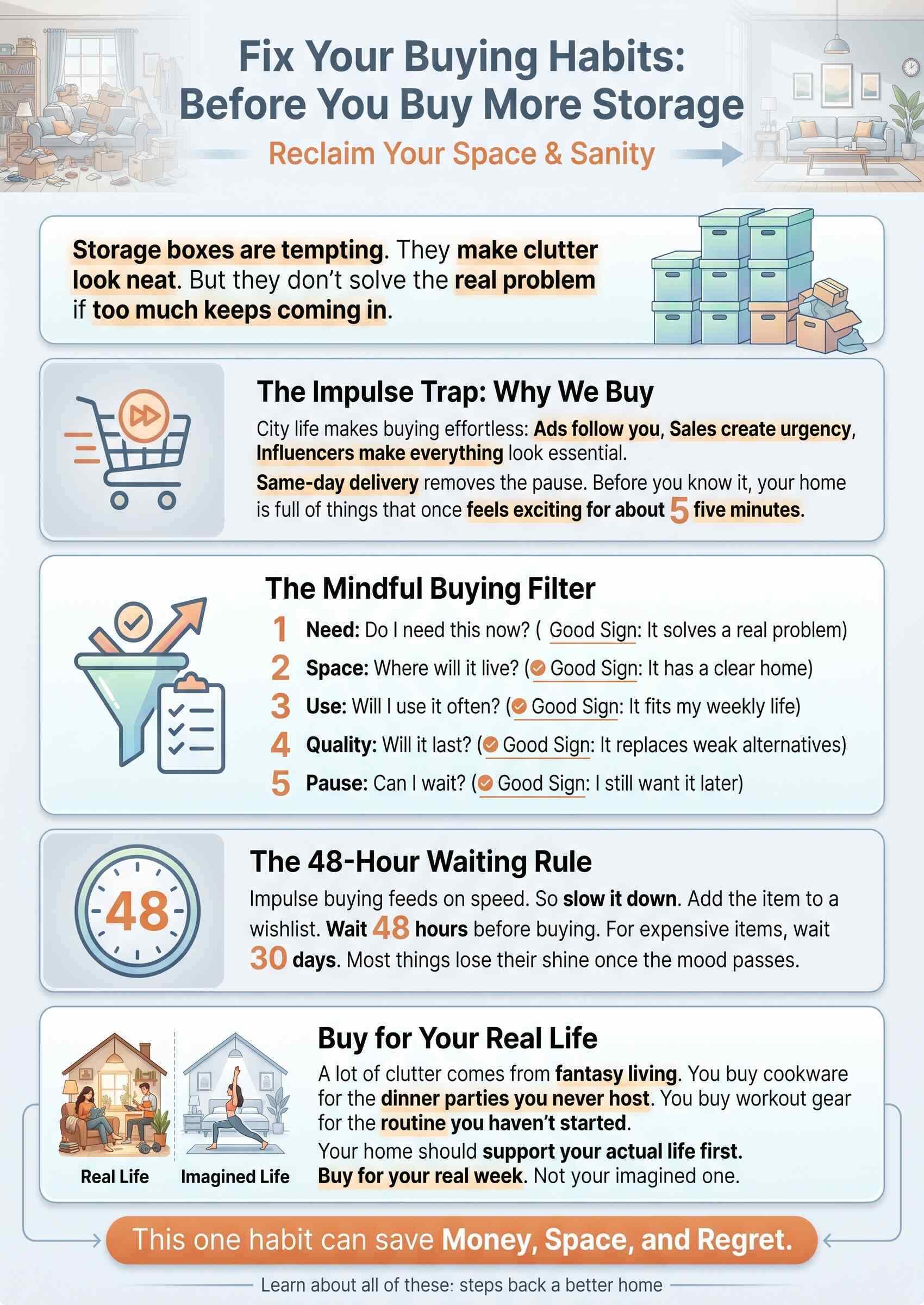
Storage boxes are tempting. They make clutter look neat. But they don’t solve the real problem if too much keeps coming in.
City life makes buying effortless. Ads follow you. Sales create urgency. Influencers make everything look essential. Same-day delivery removes the pause.
Before you know it, your home is full of things that once felt exciting for about five minutes.
Minimalism starts before checkout.
| Buying Filter | Question to Ask | Good Sign |
|---|---|---|
| Need | Do I need this now? | It solves a real problem |
| Space | Where will it live? | It has a clear home |
| Use | Will I use it often? | It fits my weekly life |
| Quality | Will it last? | It replaces weak alternatives |
| Pause | Can I wait? | I still want it later |
Use a 48-Hour Waiting Rule
Impulse buying feeds on speed.
So slow it down.
Add the item to a wishlist. Wait 48 hours before buying. For expensive items, wait 30 days.
Most things lose their shine once the mood passes. The item that felt urgent on Tuesday may feel unnecessary by Friday.
This one habit can save money, space, and regret.
Buy for Your Real Life
A lot of clutter comes from fantasy living.
You buy cookware for the dinner parties you never host. You buy workout gear for the routine you haven’t started. You buy clothes for a version of yourself who goes to very different places.
Growth is good. Trying new things is good. But your home should support your actual life first.
Buy for your real week. Not your imagined one.
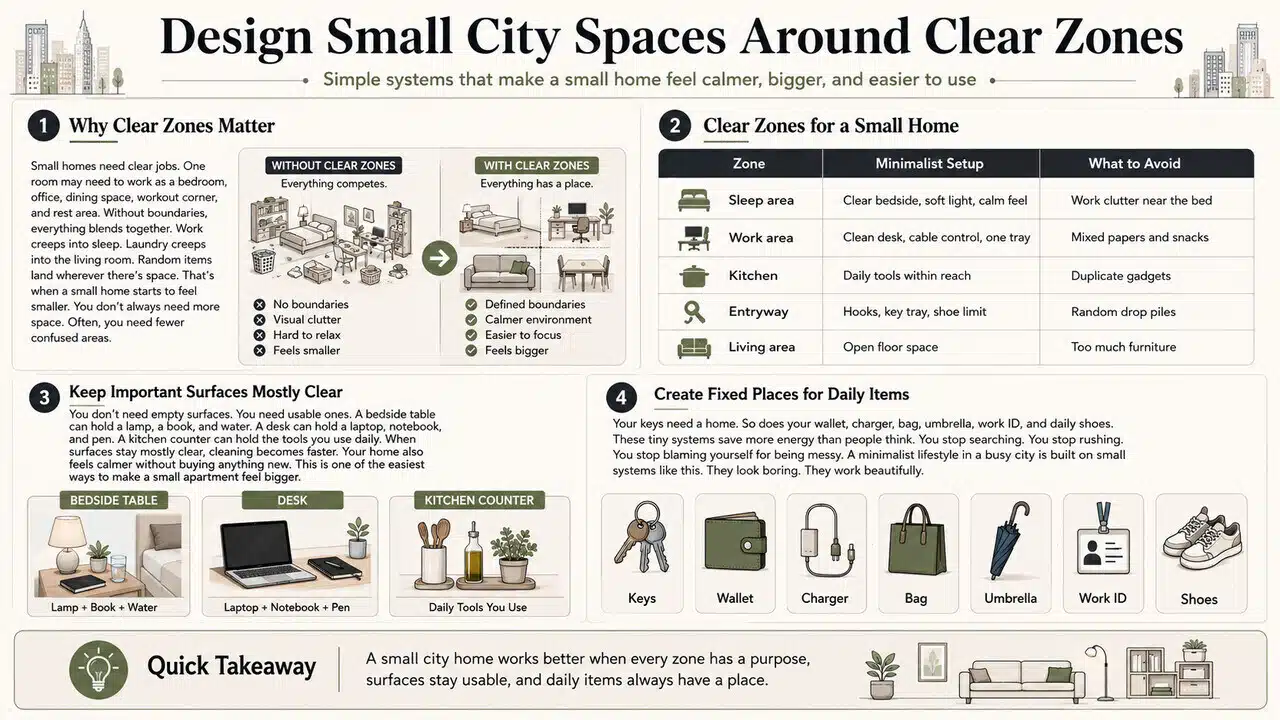
Design Small City Spaces Around Clear Zones
Small homes need clear jobs.
One room may need to work as a bedroom, office, dining space, workout corner, and rest area. Without boundaries, everything blends together. Work creeps into sleep. Laundry creeps into the living room. Random items land wherever there’s space.
That’s when a small home starts to feel smaller.
You don’t always need more space. Often, you need fewer confused areas.
| Zone | Minimalist Setup | What to Avoid |
|---|---|---|
| Sleep area | Clear bedside, soft light, calm feel | Work clutter near the bed |
| Work area | Clean desk, cable control, one tray | Mixed papers and snacks |
| Kitchen | Daily tools within reach | Duplicate gadgets |
| Entryway | Hooks, key tray, shoe limit | Random drop piles |
| Living area | Open floor space | Too much furniture |
Keep Important Surfaces Mostly Clear
You don’t need empty surfaces. You need usable ones.
A bedside table can hold a lamp, a book, and water. A desk can hold a laptop, notebook, and pen. A kitchen counter can hold the tools you use daily.
When surfaces stay mostly clear, cleaning becomes faster. Your home also feels calmer without buying anything new.
This is one of the easiest ways to make a small apartment feel bigger.
Create Fixed Places for Daily Items
Your keys need a home. So does your wallet, charger, bag, umbrella, work ID, and daily shoes.
These tiny systems save more energy than people think.
You stop searching. You stop rushing. You stop blaming yourself for being “messy.”
A minimalist lifestyle in a busy city is built on small systems like this. They look boring. They work beautifully.
Declutter Your Digital Life Too
Your phone can become the messiest room in your life.
Unread emails. Random screenshots. Unused apps. Duplicate photos. Too many notifications. Subscriptions you forgot about. Downloads you never opened.
Even if your room looks clean, digital clutter can keep your brain noisy.
And the worst part? It follows you everywhere.
| Digital Area | What to Do | Why It Helps |
|---|---|---|
| Notifications | Keep only essential alerts | Better focus |
| Apps | Delete unused apps monthly | Less distraction |
| Unsubscribe weekly | Cleaner inbox | |
| Photos | Remove duplicates | Easier searching |
| Subscriptions | Review every quarter | Lower spending |
Turn Off Alerts That Don’t Deserve You
Most notifications are not important. They’re interruptions dressed as updates.
Keep alerts for calls, calendar, banking, transport, close family, and essential work messages. Turn off the rest.
You’ll miss less than you think.
You may also notice how often your attention was being pulled away for no good reason.
Clean One Digital Area Each Month
Pick one area each month.
Photos. Downloads. Email. Desktop. Cloud storage. Notes. Subscriptions.
Delete what you don’t need. Rename what matters. Move files into clear folders. Cancel services you no longer use.
Digital minimalism doesn’t mean leaving the internet. It means using your tools without letting them run your life.
Make Minimalism Work Around Real People
Minimalism sounds easy until other people enter the picture.
Friends want to shop. Family gives gifts. Coworkers expect new outfits. Roommates leave things everywhere. Social media makes everyone’s life look more polished than yours.
That pressure is real.
You don’t need to become strict or rude. You need simple boundaries.
| Situation | Minimalist Response | Helpful Phrase |
|---|---|---|
| Gifts | Ask for food, plants, books, or experiences | “I’m trying to keep my space simple.” |
| Shopping plans | Suggest coffee, walks, or museums | “Let’s do something lighter.” |
| Work events | Build repeatable outfits | “This is my go-to event look.” |
| Family pressure | Explain the benefit | “Less stuff helps me feel calmer.” |
| Shared home | Set rules for common zones | “Let’s keep this area clear.” |
Choose Experiences More Often
A good meal, a walk, a class, a concert, a short trip, or a long conversation can feel better than another object on a shelf.
This matters even more in cities. Experiences are easy to find. Storage space is not.
Minimalism doesn’t remove joy. It redirects it.
You still enjoy life. You just stop dragging every good feeling home in a shopping bag.
Don’t Force Minimalism on Others
If you live with a partner, family, or roommates, start with your own things.
Shared spaces need agreement. Not lectures.
Don’t use minimalism to judge people. Nobody likes being told they own too much. Focus on shared benefits instead: easier cleaning, less searching, lower spending, more space, and a calmer home.
Minimalism should create peace. Not tension.
Keep Clutter From Coming Back
Decluttering once feels great. But daily habits keep the peace alive.
Without maintenance, clutter returns quietly. One package. One receipt. One chair full of clothes. One drawer of random things. Then you’re back where you started.
The fix is not another big cleanout. The fix is small routines you can repeat even when you’re tired.
| Habit | Time Needed | Why It Works |
|---|---|---|
| Night reset | 10 minutes | Makes mornings easier |
| Exit basket | 5 minutes weekly | Moves unwanted items out |
| Money review | 20 minutes monthly | Spots wasteful spending |
| Closet edit | 45 minutes quarterly | Keeps clothes useful |
| Sunday plan | 15 minutes | Reduces weekday chaos |
Use the One-Touch Rule
Handle items once when you can.
Hang the coat when you enter. Put keys in the tray. Place mail in one spot. Wash the cup instead of leaving it near the sink.
This sounds small because it is small.
That’s why it works.
Small messes don’t become weekend projects when you stop feeding them all week.
Keep an Exit Basket
Place one basket or bag near your closet, door, or laundry area.
Use it for things to donate, return, repair, sell, or give away.
When it fills, move it out.
This gives clutter an exit route. Without one, unwanted things sit around for months because “I’ll deal with it later” becomes their permanent home.
Minimalism Can Help Your Money Too
Minimalism changes one important question.
Instead of asking, “Can I afford this?” you start asking, “Do I really want to own this?”
That shift matters.
Every item has a hidden cost. You have to store it, clean it, move it, repair it, organize it, and sometimes feel guilty about not using it.
In a city, those costs hit harder because space and time are already limited.
| Area | Minimalist Shift | Long-Term Benefit |
|---|---|---|
| Clothing | Buy fewer, better pieces | Less closet waste |
| Food | Plan simple meals | Less delivery spending |
| Beauty | Finish before replacing | Fewer half-used products |
| Tech | Upgrade only when needed | Less electronic clutter |
| Home goods | Choose durable items | Fewer replacements |
Learn the Feeling of “Enough”
Enough is not failure. It’s freedom.
You can want success, comfort, travel, good clothes, a beautiful home, and a better career without buying every symbol of those things.
A strong lifestyle isn’t built on constant consumption. It’s built on energy, focus, health, and meaningful work.
Minimalism gives those things more space.
It also helps you spend on what truly matters: better sleep, good food, health, learning, travel, savings, and time with people you love.
FAQs About Minimalist Living in the City
Minimalist living gets tricky when you rent, share space, work long hours, or live in a small apartment. These questions cover the real-life problems most people face.
| Question Theme | Why It Matters |
|---|---|
| Renting | Many city residents can’t renovate |
| Shared spaces | Other people have different habits |
| Work clothes | Professional wardrobes grow fast |
| Sentimental items | Emotional clutter is harder |
| Small kitchens | Storage is limited |
Can I live minimally in a rented apartment?
Yes. Focus on portable solutions.
Use hooks, baskets, trays, slim hangers, drawer dividers, foldable furniture, and under-bed storage. Avoid large, heavy pieces that may not fit your next home.
A rented apartment can still feel calm when every item has a job.
What if my partner or roommate is not minimalist?
Start with your own belongings first.
Then talk about shared spaces like the kitchen counter, bathroom shelf, entryway, and living room. Keep the conversation practical. Don’t make it about personality.
Say, “I’d love this area to stay easier to clean,” instead of “You have too much stuff.”
Is a capsule wardrobe realistic for office workers?
Yes, if you build around outfit formulas.
Choose strong basics, comfortable shoes, a few layers, and colors that work together. You don’t need a huge wardrobe to look polished. You need clothes that fit well and repeat easily.
How do I declutter sentimental items without guilt?
Don’t start with sentimental items. Build confidence with easier categories first.
When you’re ready, keep the best few. Take photos of items you want to remember but don’t need to store. Pass meaningful pieces to someone who will use them.
Memory doesn’t always need a box.
What should I do with gifts I don’t need?
Appreciate the thought. Then decide honestly.
Use it, regift it, donate it, or keep only what matters. A gift should not become a lifelong storage contract.
You can be grateful without keeping everything forever.
Final Thoughts: Build a Minimalist Lifestyle in a Busy City Your Way
A minimalist lifestyle in a busy city is not about perfection. It’s about protection.
You’re protecting your space from clutter.
Your money from impulse spending.
Your time from endless maintenance.
Your attention is drawn from noise.
Your home is from becoming another source of stress.
Start small.
Clear one surface. Delete one app. Cancel one subscription. Put your keys in the same place every day. Donate one bag. Wait 48 hours before buying something new.
You don’t need to escape the city to feel calmer.
You just need to stop letting the city live inside your head all day.
When your home gets lighter, your routines feel easier. When your spending becomes more intentional, your money stretches further. When your belongings match your real life, you stop managing old versions of yourself.
That’s the quiet power of minimalism.
It gives you room to breathe, think, work, rest, and choose.