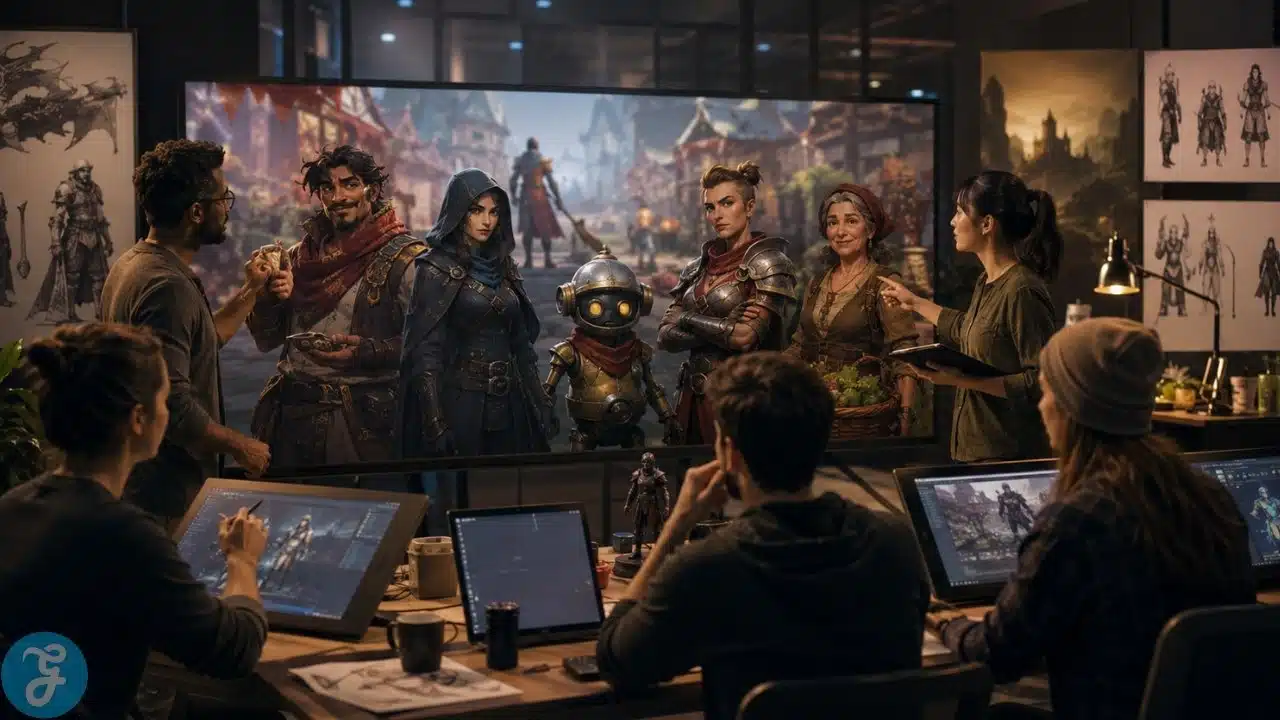
The gaming industry loves to talk about heroes, villains, bosses, and playable protagonists. Fair enough. They get the trailers, the posters, and usually the dramatic one-liners. But players often remember the world because of everyone around the hero: the companion who argues with you, the merchant with suspiciously good gossip, the rival who slowly becomes human, the NPC who appears for five minutes and somehow lives rent-free in your brain.
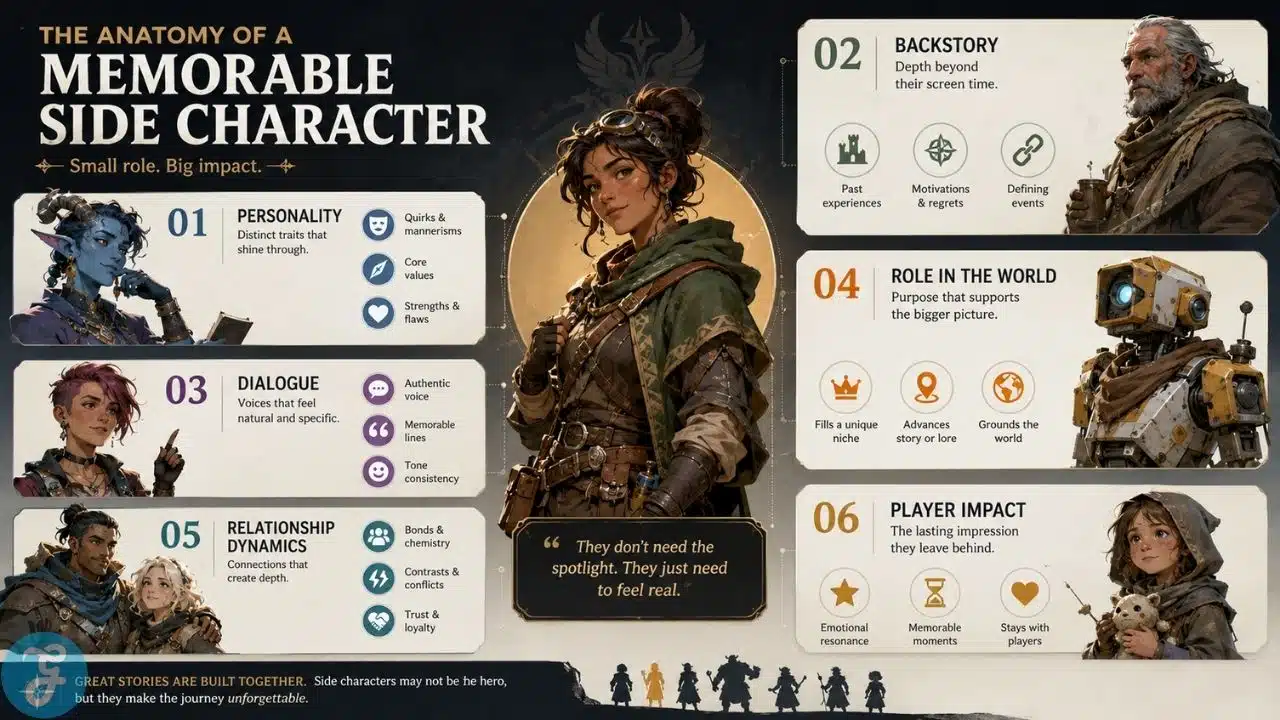
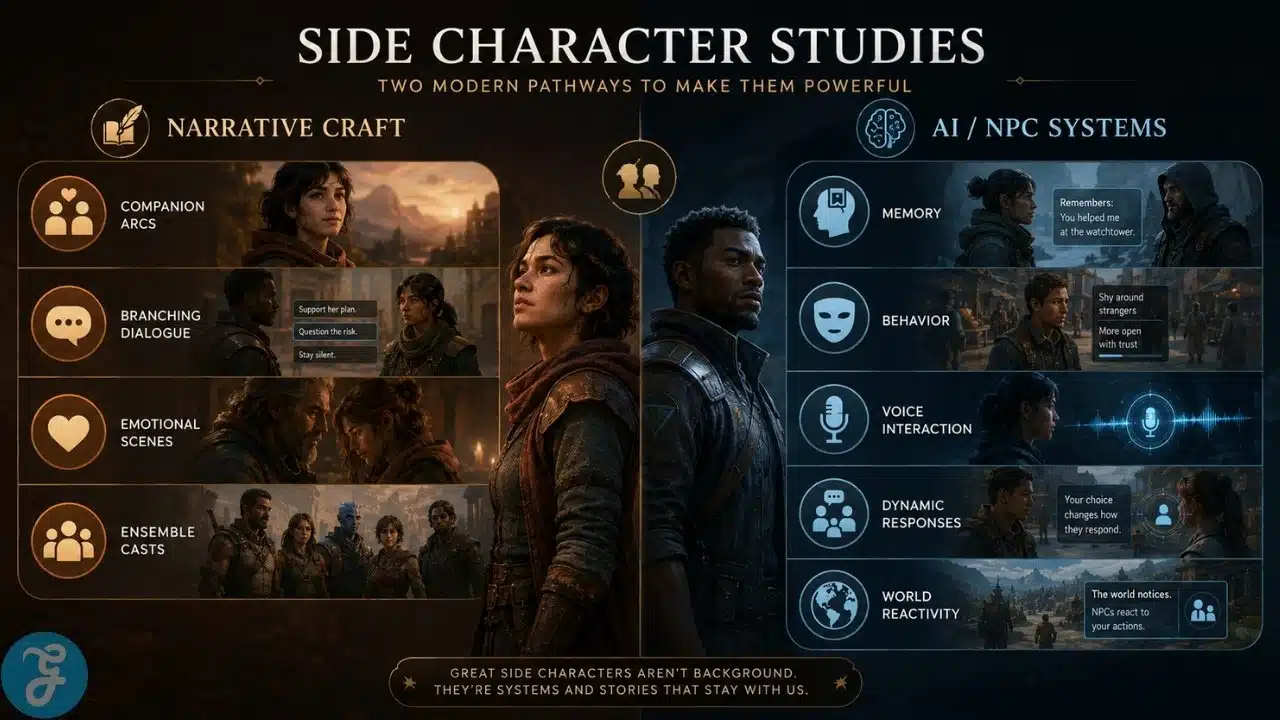
That is why Side Character Studies has become an important lens in game development, even if the industry does not always use that exact phrase. In practical terms, this niche covers NPC design, companion arcs, supporting cast development, dialogue systems, AI characters, character behavior, relationship design, and narrative systems that make fictional worlds feel alive.
Our Selection Criteria
For the country selection, I compared the United States, Japan, and the United Kingdom. Japan remains one of the world’s strongest gaming nations, especially for character-led franchises, while the UK has excellent narrative studios. But the USA wins for this SME list because it has the strongest verified mix of startups and SMEs working across AI NPCs, narrative games, character-driven interactive storytelling, and player-responsive supporting-character systems. Newzoo reported that the U.S. and China together account for about half of global consumer games spending in 2025, with the U.S. at roughly $49.6 billion. The U.S. also has a large startup ecosystem around gaming and game technology.
This list does not include ordinary game studios just because their games happen to contain characters. That would be useless. The companies below were selected because their products, games, or tools are meaningfully connected to supporting characters, NPCs, AI character systems, narrative design, companion interaction, or character-led worldbuilding.
Here is the selection logic used.
| Selection Factor | Why It Matters |
|---|---|
| NPC Or Character Focus | The company needed a clear link to supporting characters, NPCs, companions, or character systems |
| Narrative Strength | Storytelling, dialogue, emotional arcs, or branching narrative had to matter |
| Startup Or SME Fit | Preference went to private, independent, specialist, or mid-sized companies |
| U.S. Base | Companies needed a meaningful U.S. headquarters or operating base |
| Product Evidence | The company needed visible games, tools, platforms, or public work |
| Market Relevance | Funding, adoption, released titles, partnerships, or industry recognition helped validate inclusion |
| Category Fit | I avoided generic studios unless their work clearly supports character-driven design |
Whom This Is For
This guide is useful for game studios, narrative designers, game writers, investors, character artists, AI game tool builders, publishers, and researchers studying how supporting characters shape player experience.
It is especially relevant for:
- game studios building NPC-rich worlds;
- narrative designers studying companion arcs;
- publishers looking for character-led game partners;
- AI game startups exploring dynamic NPCs;
- investors tracking narrative technology;
- writers studying interactive dialogue and side-character systems;
- developers building RPGs, adventure games, cozy games, and social simulations.
Top 10 SMEs Specializing In Side Character Studies In The USA
These companies do not all solve the same problem. Some build AI NPC infrastructure. Some create narrative games. Some specialize in interactive storytelling. Others use companion systems, supporting casts, or character-led worldbuilding to make games emotionally memorable.
1. Inworld AI
Headquarters: Mountain View / Palo Alto, California, United States
Website: inworld.ai
Email: Contact form available
Founder: Ilya Gelfenbeyn, Kylan Gibbs, Michael Ermolenko
Core Services: AI NPCs, character engines, real-time voice AI, game logic, interactive character behavior
Target Market: Game studios, entertainment companies, immersive worlds, developers
Track Record: Inworld has raised major funding and is widely recognized for generative AI-powered NPCs and character systems.
Inworld AI is the cleanest fit for Side Character Studies because it directly focuses on making non-player characters more believable, interactive, and responsive. Lightspeed describes Inworld’s Character Engine as a tool for building generative NPCs with personalities, thoughts, memories, and behaviors designed to mimic social interaction. Inworld also partnered with Microsoft Xbox on AI tools for game developers, including dialogue, story, quest, and character systems.
Best for:
- AI-powered NPCs and dynamic supporting characters
- Game studios exploring real-time character interaction
Why We Chose It:
- Strongest direct match for AI NPC development
- Focuses on personality, memory, behavior, and dialogue
- Relevant to both side characters and companion systems
- Strong industry validation through major partnerships
Things to consider:
- AI NPCs can be expensive and technically complex
- Studios still need human narrative design to avoid shallow or uncontrolled character behavior
2. Convai
Headquarters: San Jose / Bay Area, California, United States
Website: convai.com
Email: Contact form available
Founder: Purnendu Mukherjee
Core Services: Conversational AI characters, virtual humans, NPC dialogue, multimodal perception, Unity and Unreal integrations
Target Market: Game developers, XR creators, virtual world builders, simulation teams
Track Record: Convai has been featured by NVIDIA for its work in conversational NPCs and humanlike AI characters.
Convai specializes in making AI characters that can speak, perceive, and respond inside games and virtual worlds. Its own site says it powers XR worlds with conversational AI through virtual humans and AI characters, while NVIDIA described Convai as a platform for designing characters with advanced multimodal perception abilities. This makes Convai highly relevant for side characters that need to do more than repeat three scripted lines near a tavern door.
Best for:
- Conversational NPCs and interactive virtual characters
- Studios building AI-driven side characters in 3D worlds
Why We Chose It:
- Strong focus on humanlike NPC interaction
- Integrates with game-development environments
- Useful for dialogue-heavy games, simulations, and virtual worlds
- Strong fit for side characters that need real-time response systems
Things to consider:
- AI conversations must be tightly controlled for tone, safety, and lore consistency
- Cost and latency can matter when many NPCs talk often
3. Hidden Door
Headquarters: New York, New York, United States
Website: hiddendoor.co
Email: Contact form available
Founder: Hilary Mason, Lauren Oliver, Matt Brandwein
Core Services: Narrative AI, social roleplaying, fictional-world adaptation, character creation, AI-guided storytelling
Target Market: Players, authors, creators, entertainment IP holders, narrative gaming audiences
Track Record: Hidden Door is a narrative AI game technology studio with early access coverage and licensed fiction-world experiments.
Hidden Door is a strong Side Character Studies company because it focuses on AI-guided narrative worlds where players create characters and interact inside structured story systems. The Verge described Hidden Door as an AI-powered storytelling game that lets players co-create choose-your-own-adventure-style narratives within structured fictional worlds, including public domain and licensed settings. Its LinkedIn profile describes the company as a game technology studio building narrative AI for social roleplaying.
Best for:
- AI storytelling, roleplaying, and character-led fictional worlds
- Creators exploring interactive side characters inside licensed universes
Why We Chose It:
- Strong narrative AI focus
- Uses character creation and structured roleplaying
- Relevant to supporting characters, story cards, and world interaction
- Good fit for IP-driven interactive storytelling
Things to consider:
- AI storytelling still needs guardrails to preserve narrative quality
- The platform is more story-tech focused than traditional game-studio focused
4. Latitude
Headquarters: Utah, United States
Website: latitude.io
Email: Contact form available
Founder: Nick Walton
Core Services: AI-generated adventures, interactive storytelling, AI Dungeon, narrative engines, roleplaying systems
Target Market: Players, creators, AI storytelling fans, roleplaying communities
Track Record: AI Dungeon grew into a community of millions of players and tens of thousands of creators, according to Latitude’s own site.
Latitude is best known for AI Dungeon, one of the earliest widely known AI storytelling games. Its company profile says it develops immersive virtual experiences with machine-learning technology, and AI Dungeon lets players express actions in language while the AI decides how the world responds. That makes it relevant to Side Character Studies because its worlds depend on generated characters, side interactions, and emergent story responses.
Best for:
- AI roleplaying and emergent side-character interaction
- Writers and game designers studying AI-generated narrative systems
Why We Chose It:
- Early mover in AI narrative games
- Strong link to player-generated character interaction
- Useful for studying emergent side characters and procedural story roles
- Clear startup profile around AI-based game experiences
Things to consider:
- AI-generated storytelling can be inconsistent
- Moderation, safety, and narrative coherence are major challenges in open-ended systems
5. AdHoc Studio
Headquarters: Los Angeles, California, United States
Website: adhocla.com
Email: Contact form available
Founder: Michael Choung, Nick Herman, Dennis Lenart, Pierre Shorette
Core Services: Narrative games, character-driven storytelling, episodic structure, interactive choices, cinematic game writing
Target Market: Narrative game players, publishers, entertainment IP partners
Track Record: AdHoc’s 2025 debut game Dispatch became a major narrative-game breakout, with GamesRadar reporting it sold 1 million copies in 10 days.
AdHoc Studio is a strong fit because it builds around ensemble casts, choice-driven storytelling, and supporting-character dynamics. Unreal Engine’s developer interview describes AdHoc as an independent developer founded in 2018 by veterans from Telltale Games, Ubisoft, and Night School Studio, and notes its work on the critically acclaimed 2025 game Dispatch. That kind of narrative structure depends heavily on side characters, team dynamics, workplace comedy beats, and recurring cast development.
Best for:
- Ensemble casts and interactive narrative side characters
- Studios studying modern Telltale-style character writing
Why We Chose It:
- Strong narrative-game pedigree
- Clear focus on interactive character relationships
- Proven market response with Dispatch
- Excellent fit for side-character arcs and ensemble storytelling
Things to consider:
- It is a game studio, not a character-tool platform
- The company’s output should be judged title by title
6. Singularity 6
Headquarters: Los Angeles, California, United States
Website: singularity6.com
Email: Contact form available
Founder: Anthony Leung, Oliver Chuang
Core Services: Online worlds, social simulation, community systems, character interaction, cozy MMO-style gameplay
Target Market: Social MMO players, cozy game audiences, online community players
Track Record: Singularity 6 is the developer of Palia, an online life-sim/community game.
Singularity 6 fits this list because its work centers on online worlds, belonging, social interactions, and character-rich community play. Its website says the studio is based in Los Angeles and aims to create rich, compelling universes filled with meaningful social interactions and diverse gameplay experiences. That makes it relevant to Side Character Studies because games like Palia rely on NPC relationships, community characters, and lived-in social worldbuilding.
Best for:
- Social worlds and community-driven side characters
- Cozy MMO-style games with relationship systems
Why We Chose It:
- Strong focus on meaningful social interactions
- Builds worlds where supporting characters and community matter
- Good fit for relationship-driven game design
- U.S.-based startup/SME profile
Things to consider:
- More social-world-focused than pure narrative design
- Players may judge the studio by live-service content depth and NPC updates
7. Deck Nine Games
Headquarters: Westminster, Colorado, United States
Website: deckninegames.com
Email: Contact form available
Founder: Originally Idol Minds; current public founder details are less central than its studio identity
Core Services: Narrative adventure games, character-driven story, cinematic storytelling, branching emotional choices
Target Market: Narrative adventure players, publishers, story-driven IP partners
Track Record: Deck Nine developed multiple Life is Strange titles and describes itself as an independent developer dedicated to forging stories and gameplay into transformative entertainment experiences.
Deck Nine is one of the strongest U.S. narrative-game SMEs for character-driven storytelling. Its public identity is built around emotional narrative games, and the Life is Strange franchise is especially dependent on secondary characters, relationships, dialogue, secrets, and emotional stakes. For Side Character Studies, Deck Nine is relevant because its work shows how supporting characters can carry player attachment and moral tension.
Best for:
- Character-driven narrative adventure games
- Emotionally supportive casts and relationship-heavy storytelling
Why We Chose It:
- Strong record in narrative adventure design
- Clear fit for emotional side-character development
- Works with character-led IP and branching stories
- Strong example of supporting cast as narrative infrastructure
Things to consider:
- Recent reports around the studio have included layoffs and criticism, so buyers should check the current project status carefully
- It is more established than an early-stage startup
8. Tender Claws
Headquarters: Los Angeles, California, United States
Website: tenderclaws.com
Email: Contact form available
Founder: Samantha Gorman, Danny Cannizzaro
Core Services: Interactive storytelling, VR narrative games, emerging media, immersive theater, experimental character systems
Target Market: VR players, interactive media audiences, experimental game communities, entertainment partners
Track Record: Tender Claws is an award-winning art and games studio known for projects including Virtual Virtual Reality, The Under Presents, Tendar, and Stranger Things VR.
Tender Claws belongs here because its work treats characters and interaction as part of the medium itself. The studio’s projects explore VR, AR, virtual pets, immersive performance, and narrative systems where the relationship between player and character becomes central. That makes it useful for Side Character Studies, especially in emerging media where side characters are not just dialogue vendors but experiential anchors.
Best for:
- Experimental side characters in VR, AR, and immersive storytelling
- Studios exploring character interaction beyond traditional screens
Why We Chose It:
- Strong foundation in storytelling and emerging media
- Uses interactive formats where characters behave as experiences
- Relevant for virtual pets, AI-adjacent characters, and immersive casts
- Good example of character design outside ordinary game templates
Things to consider:
- More experimental than mainstream game studios
- Best suited for projects that value innovation over conventional production models
9. Night School Studio
Headquarters: Glendale, California, United States
Website: nightschoolstudio.com
Email: Contact form available
Founder: Sean Krankel, Adam Hines
Core Services: Player-driven narrative games, supernatural storytelling, dialogue systems, character-led interactive stories
Target Market: Narrative game players, Netflix Games users, mobile and console audiences
Track Record: Night School Studio is known for Oxenfree, Afterparty, and Oxenfree II, and Netflix acquired it in 2021.
Night School Studio is a slightly different case because it is now owned by Netflix, but it remains a small narrative-focused studio with a clear identity. Its press kit says it was founded in 2014 by Sean Krankel and Adam Hines and is known for player-driven narratives that combine wonder, danger, and humor. That makes it a strong fit for side-character work because its games rely heavily on dialogue, relationships, mystery, and ensemble dynamics.
Best for:
- Dialogue-heavy narrative games
- Player-driven stories with memorable supporting casts
Why We Chose It:
- Strong narrative-game identity
- Known for dialogue and character interaction
- Small-studio creative background despite Netflix ownership
- Relevant to supernatural and ensemble side-character design
Things to consider:
- It is now a subsidiary, not an independent startup
- Best classified as an SME-style studio rather than a pure startup
10. Telltale Games / LCG Entertainment
Headquarters: Malibu, California, United States
Website: telltale.com
Email: Contact form available
Founder: Jamie Ottilie, Brian Waddle for the revived LCG Entertainment operation
Core Services: Narrative adventure games, episodic storytelling, branching choices, character-led licensed games
Target Market: Narrative game players, publishers, IP holders, interactive story audiences
Track Record: The current Telltale brand operates under LCG Entertainment, which acquired Telltale assets and IP in 2019.
Telltale deserves inclusion because few U.S. studios are more closely associated with supporting casts, episodic storytelling, moral choices, and character-driven interactive drama. The revived company is private and smaller than the original Telltale operation, making it closer to an SME than a major publisher. Its legacy and current positioning make it relevant for Side Character Studies because its games depend on side characters who challenge, betray, support, and emotionally pressure the player.
Best for:
- Episodic side-character arcs and branching narrative drama
- Studios studying choice-based character design
Why We Chose It:
- Strong historical connection to interactive narrative games
- Side characters often drive player decisions in Telltale-style stories
- Private, smaller revived company structure
- Important reference point for narrative game design
Things to consider:
- The original Telltale closed in 2018, and the current company is a revived operation
- Buyers should evaluate current delivery capacity separately from legacy reputation
An Overview Of 10 U.S. SMEs Specializing In Side Character Studies
The U.S. market has two clear clusters in this niche. One cluster builds AI and NPC technology. The other builds narrative games and character-led interactive experiences. Together, they explain why the USA is the strongest country choice for this article.
Overview Comparison Table
| Rank | Company | Main Angle | Best Fit |
|---|---|---|---|
| 1 | Inworld AI | AI NPC character engine | Dynamic side characters |
| 2 | Convai | Conversational AI characters | Interactive NPC dialogue |
| 3 | Hidden Door | Narrative AI roleplaying | Fictional-world character play |
| 4 | Latitude | AI-generated storytelling | Emergent side characters |
| 5 | AdHoc Studio | Ensemble narrative games | Character-driven casts |
| 6 | Singularity 6 | Social online worlds | Community and NPC relationships |
| 7 | Deck Nine Games | Narrative adventure | Emotional side-character arcs |
| 8 | Tender Claws | Emerging media storytelling | Experimental character interaction |
| 9 | Night School Studio | Player-driven dialogue | Dialogue-heavy supporting casts |
| 10 | Telltale Games | Episodic interactive drama | Branching side-character decisions |
Our Top 3 Picks And Why?
| Pick | Why It Stands Out |
|---|---|
| Inworld AI | Strongest direct fit for AI NPCs and dynamic character systems |
| AdHoc Studio | Strongest modern example of ensemble side-character storytelling |
| Night School Studio | Strongest dialogue-driven small-studio example for player-driven narratives |
If you want the most technical angle, Inworld and Convai are the strongest. If you want the most story-led angle, AdHoc, Night School, Deck Nine, and Telltale are the stronger references.
Why Are Side Character Studies Booming In The USA?
Side Character Studies is booming in the USA because modern games increasingly depend on emotional attachment, replayable dialogue, relationship systems, AI-driven NPCs, and living worlds. Players do not only want better graphics. They want characters who feel responsive, memorable, and meaningful.
The U.S. also has the right combination of ingredients: a huge games market, strong venture capital, major AI labs, indie narrative studios, experienced writers, and a large talent pool from film, TV, games, and interactive media. Newzoo’s 2025 market data shows the U.S. remains one of the two largest consumer games markets globally, while startup databases show thousands of U.S. gaming startups, giving the country a deep base for both tools and studios.
What’s Special About Them?
The best U.S. companies in this niche usually share four strengths:
- They treat side characters as systems, not decoration.
- They connect dialogue, behavior, memory, emotion, and player choice.
- They use AI or branching design to make supporting characters more responsive.
- They understand that memorable side characters can carry worldbuilding, humor, conflict, and emotional payoff.
The real shift is simple: side characters are no longer background furniture. They are how games make worlds feel inhabited.
The Side Characters Are Where Worlds Become Believable
The future of game storytelling will not be decided only by bigger maps, better lighting, or more dramatic protagonists staring into the rain. It will be decided by whether the worlds feel alive when the main quest is not shouting at the player.
That is why Side Character Studies matters. NPCs, companions, merchants, rivals, background citizens, AI characters, and supporting casts are no longer small details. They are the connective tissue of modern games. They carry jokes, grief, memory, politics, lore, tension, and emotional stakes.
The uncomfortable truth is that many games still treat side characters like vending machines with dialogue trees. Press button. Receive lore. Leave. That is not enough anymore. Players notice when a character feels alive, and they definitely notice when a character feels like a cardboard cutout waiting for patch notes.
The U.S. leads this SME niche because it has both sides of the future: AI character technology and narrative game studios. The winners will be the companies that combine those two carefully. Better side characters will not come from AI alone or writing alone. They will come from systems, writers, designers, actors, artists, and tools working together to make fictional people feel worth remembering.
Frequently Asked Questions (FAQs) About Side Character Studies
What Does Side Character Studies Mean In Gaming?
Side Character Studies refers to the design and analysis of supporting characters, NPCs, companions, rivals, and background characters in games. It includes dialogue, personality, behavior, narrative function, emotional arcs, and player interaction.
Which Country Leads In Side Character Studies Startups And SMEs?
The United States is the strongest country for this list because it has the deepest verified mix of AI NPC startups, narrative game studios, and interactive storytelling SMEs working on character systems.
Are Side Characters The Same As NPCs?
Not always. NPCs are non-player characters, while side characters are supporting characters who may be NPCs, companions, rivals, quest-givers, or recurring cast members. A side character usually has more narrative importance than a generic NPC.
Why Are AI NPC Companies Relevant To Side Character Studies?
AI NPC companies are relevant because they build tools that let side characters respond dynamically, remember context, and interact more naturally with players. This can make game worlds feel more alive when used carefully.
What Should Studios Look For In A Side Character Design Partner?
Studios should look for proven narrative quality, character-system experience, strong dialogue design, technical compatibility, safety controls, and examples of released work. A good partner should make side characters more meaningful, not just louder.