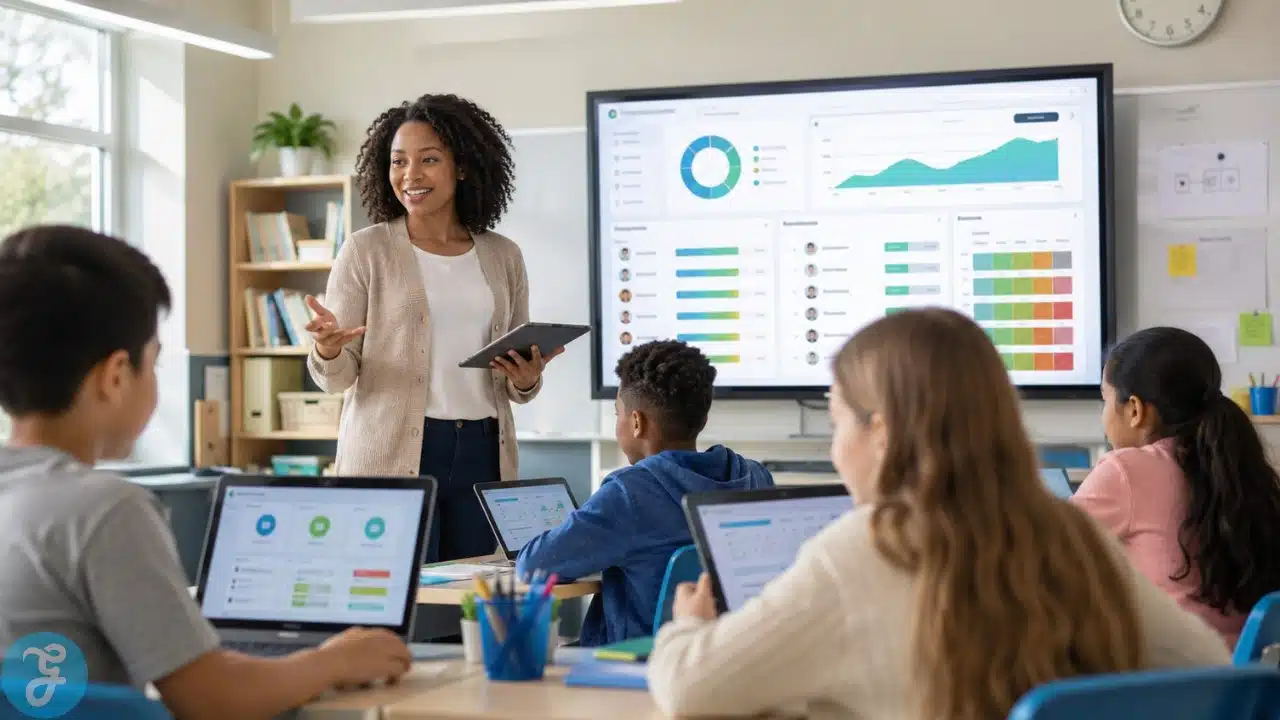
The classroom data problem is no longer “we do not have enough information.” Please. Schools now have grades, attendance, LMS activity, assessment scores, behavior notes, device activity, family engagement data, SEL signals, and enough dashboards to make a principal quietly consider farming.
The real problem is timing. By the time many schools notice a student is struggling, the student has already fallen behind. That is why Real-Time Classroom Analytics has become one of the most useful corners of EdTech. The best tools do not just collect data. They help teachers and school leaders see what is happening while there is still time to act. Now, let’s take a look at how we came up with our list
Our Selection Criteria
For the country selection, I compared the United States, India, and the United Kingdom. The USA is the strongest choice for this niche because it has the deepest concentration of private EdTech startups and SMEs building real-time assessment tools, teacher dashboards, student progress platforms, AI classroom assistants, engagement analytics, and intervention systems. North America also dominated the global education technology market with a 36.1% revenue share in 2025, and TIME’s 2025 global EdTech ranking had the U.S. leading all countries with 138 listed companies, ahead of India and China.
This list does not include generic LMS companies just because they have a reporting tab. That would be cheating, and frankly, the EdTech world has enough “analytics” screens that are just colorful attendance spreadsheets with confidence issues.
The companies were selected using these filters.
| Selection Factor | Why It Matters |
|---|---|
| Real-Time Visibility | The product needed live or near-live insight into student learning, engagement, behavior, or progress |
| Classroom Usefulness | The tool had to help teachers or school teams act during instruction or support cycles |
| Analytics Depth | Preference went to platforms with dashboards, alerts, progress views, or data-driven recommendations |
| SME Or Startup Fit | Priority went to private, specialist, startup, or mid-sized companies rather than huge public corporations |
| U.S. Presence | Companies needed a meaningful U.S. headquarters or operating base |
| K-12 Relevance | The main target had to include schools, teachers, districts, or classroom learning teams |
| Track Record | Adoption numbers, customer claims, funding, or visible district/school use helped validate inclusion |
Whom This Is For
This guide is useful for district leaders, school administrators, classroom teachers, instructional coaches, EdTech buyers, investors, founders, and learning analytics researchers.
It is especially relevant for:
- K-12 districts comparing classroom analytics platforms;
- teachers who need live student understanding checks;
- administrators looking for intervention dashboards;
- EdTech buyers evaluating AI classroom tools;
- investors studying U.S. learning analytics startups;
- founders building products around student data and teacher workflows.
Top 10 SMEs Specializing In Real-Time Classroom Analytics In The USA
These U.S. companies approach classroom analytics from different angles. Some focus on live student responses. Some track engagement and device activity. Some use AI to surface student progress. Others focus on student well-being, classroom talk, or whole-child dashboards.
1. SchoolAI
Headquarters: Lehi, Utah, United States
Website: schoolai.com
Email: Contact form available
Founder: Caleb Hicks
Core Services: AI classroom assistant, teacher dashboard, student progress signals, AI tutoring, classroom activities
Target Market: K-12 teachers, schools, districts, and education partners
Track Record: Used in over 1 million classrooms across 80+ countries and embedded in 500+ education partnerships, according to OpenAI’s customer story.
SchoolAI is one of the strongest U.S. startups in this niche because its platform is built around observable AI use in classrooms. The company’s own site says teachers can see every student’s progress in real time, with instant insight into what students know, where they are struggling, and how to help. OpenAI’s case study also says SchoolAI gives teachers real-time signals on student progress and helps with early intervention.
Best for:
- AI-supported real-time classroom insight
- Teachers who want live visibility while students work with AI learning activities
Why We Chose It:
- Strong real-time student progress positioning
- Clear AI classroom analytics use case
- Significant reported classroom reach
- Useful for identifying student needs before gaps become bigger
Things to consider:
- AI classroom tools require strong district policies and teacher training
- Schools should check privacy, safety, and implementation controls carefully
2. Kira Learning
Headquarters: Palo Alto / San Francisco, California, United States
Website: kira-learning.com
Email: Contact form available
Founder: Andrea Pasinetti and Jagriti Agrawal
Core Services: AI teaching platform, curriculum tools, automated grading, tutoring, analytics, student support
Target Market: K-12 schools and districts
Track Record: Kira says its team works from offices in San Francisco, New York, and Los Angeles, and its AI Fund profile lists Andrea Pasinetti and Jagriti Agrawal as founders.
Kira Learning is a strong fit because it is not only building lesson tools; it is also building real-time visibility into learning. Its platform says student work becomes evidence immediately and mastery updates continuously, not after benchmark season. That is exactly the kind of classroom analytics schools need if they want to adjust instruction before the next big assessment autopsy.
Best for:
- AI-powered mastery visibility
- Districts interested in curriculum, grading, tutoring, and analytics in one system
Why We Chose It:
- Strong real-time mastery analytics claim
- AI-native K-12 platform
- Founded by experienced education and AI operators
- Useful for schools trying to connect instruction, feedback, and intervention
Things to consider:
- The company is newer than several legacy classroom analytics vendors
- Districts should evaluate subject coverage, integrations, and AI governance
3. GoGuardian
Headquarters: El Segundo, California, United States
Website: goguardian.com
Email: hello@goguardian.com
Founder: Advait Shinde and team
Core Services: Classroom management, student safety, device monitoring, digital learning visibility, engagement tools
Target Market: K-12 districts, schools, teachers, and IT teams
Track Record: GoGuardian says it supports 50% of U.S. K-12 students, is trusted by 2M+ educators, and processes 2.4B+ browsing events daily.
GoGuardian is a larger private EdTech company, but it remains highly relevant because classroom analytics is central to its digital learning visibility model. Its classroom management product helps teachers guide student devices, reduce distractions, and maintain class flow. For schools using 1:1 devices, that type of real-time visibility is not a luxury anymore; it is classroom survival gear.
Best for:
- Real-time digital classroom visibility
- Districts managing student devices, online focus, and classroom flow
Why We Chose It:
- Strong K-12 market penetration
- Real-time student device visibility and classroom management
- Clear connection to engagement and focus analytics
- Useful for districts with large Chromebook or device programs
Things to consider:
- It is larger than a typical small startup
- Schools should balance monitoring needs with privacy, trust, and student autonomy
4. Formative
Headquarters: Santa Monica / Los Angeles, California, United States
Website: formative.com
Email: Contact form available
Founder: Craig Jones and Kevin McFarland
Core Services: Real-time formative assessment, AI instruction tools, student response monitoring, dashboards, standards tracking
Target Market: K-12 teachers, schools, and districts
Track Record: Formative says it is used by teachers in 90%+ of U.S. school districts, has powered 6B+ student responses, and supports 25M+ students.
Formative is one of the clearest examples of Real-Time Classroom Analytics because teachers can see student responses while learning is happening. Its platform says educators can create interactive lessons, assign real-time assessments, see student progress instantly, give feedback, adjust instruction, and track mastery in one place.
Best for:
- Live formative assessment and student-response analytics
- Teachers who need to adjust instruction during class
Why We Chose It:
- Strong real-time response-monitoring use case
- Large claimed U.S. district reach
- Works across instruction, assessment, and dashboards
- Strong fit for classroom-level data-driven teaching
Things to consider:
- Buyers should compare free and paid analytics limits
- Districts should check whether advanced analytics require upgraded plans
5. Otus
Headquarters: Chicago, Illinois, United States
Website: otus.com
Email: Contact form available
Founder: Chris Hull and Andy Bluhm
Core Services: Assessment, grading, data analytics, progress monitoring, AI insights, student growth platform
Target Market: K-12 schools and districts
Track Record: Otus is privately held, founded in 2014, and has 51–200 employees according to its LinkedIn company profile.
Otus is built for K-12 schools that want assessment, progress monitoring, grading, and data insights in one platform. The company says it combines data, assessment, progress monitoring, and grading to maximize student performance, while its responsible AI launch story says the founders’ early work focused on giving educators real-time insights.
Best for:
- District-wide student growth analytics
- Schools that want assessment, grading, and progress monitoring connected
Why We Chose It:
- Strong K-12 data and assessment platform
- Useful for standards-based grading and progress monitoring
- AI insights support quicker decision-making
- Good fit for districts trying to centralize classroom data
Things to consider:
- Best results depend on clean data integration
- Schools should define whether they need classroom-level, school-level, or district-level views first
6. Schoolytics
Headquarters: Washington, D.C., United States
Website: schoolytics.com
Email: Contact form available
Founder: Aaron Wertman and Courtney Monk
Core Services: Student data dashboards, LMS/SIS/assessment integrations, progress monitoring, engagement analytics
Target Market: K-12 districts, school leaders, teachers, and data teams
Track Record: Schoolytics describes itself as a purpose-built student data platform for tracking trends and monitoring student outcomes; its team page lists Aaron Wertman as Co-Founder and CEO and Courtney Monk as Co-Founder and COO.
Schoolytics deserves a place because it focuses directly on building and sharing dashboards for student outcomes. Its platform integrates SIS, LMS, assessment data, and spreadsheets, helping schools analyze attendance, grades, behavior, assessment scores, and more. The Center for Data Innovation also described Schoolytics as a Washington, D.C.-based startup helping teachers and administrators use data to track student engagement and achievement.
Best for:
- District analytics and student progress dashboards
- Schools using multiple systems that need one cleaner view
Why We Chose It:
- Strong student-data dashboard focus
- Integrates several major school data sources
- Useful for engagement and progress monitoring
- Founder information is clearly published
Things to consider:
- It is more of a data-platform layer than a live classroom activity tool
- Schools need strong data governance before connecting multiple systems
7. TeachFX
Headquarters: Menlo Park, California, United States
Website: teachfx.com
Email: Contact form available
Founder: Jamie Poskin and Berk Coker
Core Services: Classroom conversation analytics, teacher feedback, student talk analysis, professional learning insights
Target Market: K-12 districts, teachers, instructional coaches, and professional development teams
Track Record: TeachFX is privately held, founded in 2017, and has 11–50 employees according to LinkedIn.
TeachFX is different from the usual assessment dashboard because it analyzes classroom talk. Its platform gives teachers personalized feedback so instructional moves that shape student talk are visible in every classroom. F6S describes TeachFX as a smartphone and web app that analyzes classroom audio and gives metrics such as lecture versus discussion, student participation, and classroom dialogue patterns.
Best for:
- Classroom talk analytics
- Instructional coaching and professional learning teams
Why We Chose It:
- Unique focus on real classroom conversation data
- Helps teachers reflect on instructional practice
- Supports student talk and engagement goals
- Strong fit for districts prioritizing equitable classroom discussion
Things to consider:
- It is not a traditional student progress or assessment dashboard
- Schools should communicate clearly about audio data, privacy, and teacher trust
8. Sown To Grow
Headquarters: Oakland, California, United States
Website: sowntogrow.com
Email: Contact form available
Founder: Rupa Gupta and Dennis Li
Core Services: Student check-ins, SEL and well-being analytics, MTSS support, reflection, feedback dashboards
Target Market: K-12 schools, districts, counselors, teachers, and student support teams
Track Record: Sown To Grow’s site lists its Oakland physical address, and Wellfound lists Rupa Gupta and Dennis Li as founders.
Sown To Grow is a strong classroom analytics company because it captures student voice and emotional well-being signals that traditional academic dashboards often miss. Its LinkedIn profile says teachers, counselors, principals, and district administrators get a real-time understanding of student emotions and can proactively intervene. HundrED also describes Sown To Grow as producing real-time well-being insights to identify and support student needs.
Best for:
- Real-time SEL and student well-being insights
- Schools using MTSS or advisory systems to support the whole student
Why We Chose It:
- Captures student voice and emotional data
- Real-time well-being insight is clearly part of the product value
- Supports proactive intervention
- Useful for districts that want more than academic analytics
Things to consider:
- Best for SEL, belonging, and MTSS support rather than subject mastery alone
- Schools should handle emotional data with care and clear consent practices
9. Kiddom
Headquarters: San Francisco, California, United States
Website: kiddom.co
Email: Contact form available
Founder: Ahsan Rizvi and Abbas Manjee
Core Services: Curriculum delivery, instructional tools, AI support, grading, classroom analytics, learning intelligence
Target Market: K-12 teachers, schools, and districts
Track Record: Kiddom’s about page lists Ahsan Rizvi as Co-Founder and CEO, while PitchBook lists Kiddom’s corporate office in San Francisco.
Kiddom is relevant because it connects classroom analytics directly with curriculum and instruction. Its homepage describes Kiddom as learning intelligence technology that streamlines planning, delivery, grading, and data insight, while also mentioning instructional tools and classroom analytics. That makes it a strong fit for schools that want analytics tied to what teachers are actually teaching.
Best for:
- Curriculum-connected classroom analytics
- Schools that want instructional insights tied to classroom materials
Why We Chose It:
- Analytics are connected to curriculum delivery and grading
- Useful for teachers trying to understand learning in context
- Strong K-12 focus
- Founder and headquarters information are publicly available
Things to consider:
- Best suited for districts looking at curriculum and analytics together
- Schools should evaluate curriculum alignment before adopting the platform
10. Edpuzzle
Headquarters: San Francisco, California, United States
Website: edpuzzle.com
Email: Contact form available
Founder: Quim Sabrià, Santi Bajo, and team
Core Services: Interactive video lessons, embedded questions, video analytics, student progress tracking, LMS integration
Target Market: K-12 teachers, schools, and districts using video-based instruction
Track Record: Edpuzzle’s LinkedIn profile lists it as privately held, founded in 2013, headquartered in San Francisco, and employing 201–500 people.
Edpuzzle is a strong specialist pick because video learning becomes much more useful when teachers can see who watched, who understood, and where students struggled. Edpuzzle says teachers can create interactive video lessons and track student progress with analytics. Its help center also includes sections for managing student progress, which is central to its classroom analytics value.
Best for:
- Video-based classroom analytics
- Teachers using a flipped classroom, asynchronous lessons, or embedded checks for understanding
Why We Chose It:
- Strong analytics layer for video learning
- Useful for tracking student progress through assigned content
- Fits blended, flipped, and remote learning workflows
- Private U.S.-based EdTech company with significant scale
Things to consider:
- It is strongest for video instruction, not whole-school data warehousing
- Teachers still need good lesson design, not just video completion data
An Overview Of 10 U.S. SMEs Specializing In Real-Time Classroom Analytics
The strongest U.S. companies in this niche do not all solve the same problem. Some show teachers what students understand during a lesson. Some reveal engagement signals from devices, videos, or AI activities. Others surface emotional well-being, classroom talk patterns, or district-wide student trends.
Here is a quick comparison to help readers understand where each company fits.
| Rank | Company | Core Analytics Angle | Best Fit |
|---|---|---|---|
| 1 | SchoolAI | AI classroom progress signals | AI-supported live learning insight |
| 2 | Kira Learning | Real-time mastery and AI instruction | AI-native K-12 learning systems |
| 3 | GoGuardian | Device and digital classroom visibility | 1:1 device management and focus analytics |
| 4 | Formative | Real-time student responses | Live formative assessment |
| 5 | Otus | Assessment, grading, and progress monitoring | District-wide student growth analytics |
| 6 | Schoolytics | Unified student data dashboards | SIS, LMS, and assessment data visibility |
| 7 | TeachFX | Classroom talk analytics | Instructional coaching and student talk |
| 8 | Sown To Grow | SEL and well-being signals | Student support and MTSS |
| 9 | Kiddom | Curriculum-linked analytics | Instructional data and classroom delivery |
| 10 | Edpuzzle | Video learning analytics | Flipped and blended classrooms |
Our Top 3 Picks And Why?
These three stand out because they represent three different versions of the market.
| Pick | Why It Stands Out |
|---|---|
| SchoolAI | Strongest AI-native real-time classroom signal platform |
| Formative | Strongest live formative assessment and response-monitoring platform |
| Schoolytics | Strongest student-data dashboard layer for unified district visibility |
GoGuardian is also a major player, but it is broader and more mature than many SME-style startups. TeachFX deserves special mention because classroom conversation analytics is a more specialized and underused type of classroom intelligence.
Why Are Real-Time Classroom Analytics Booming In The USA?
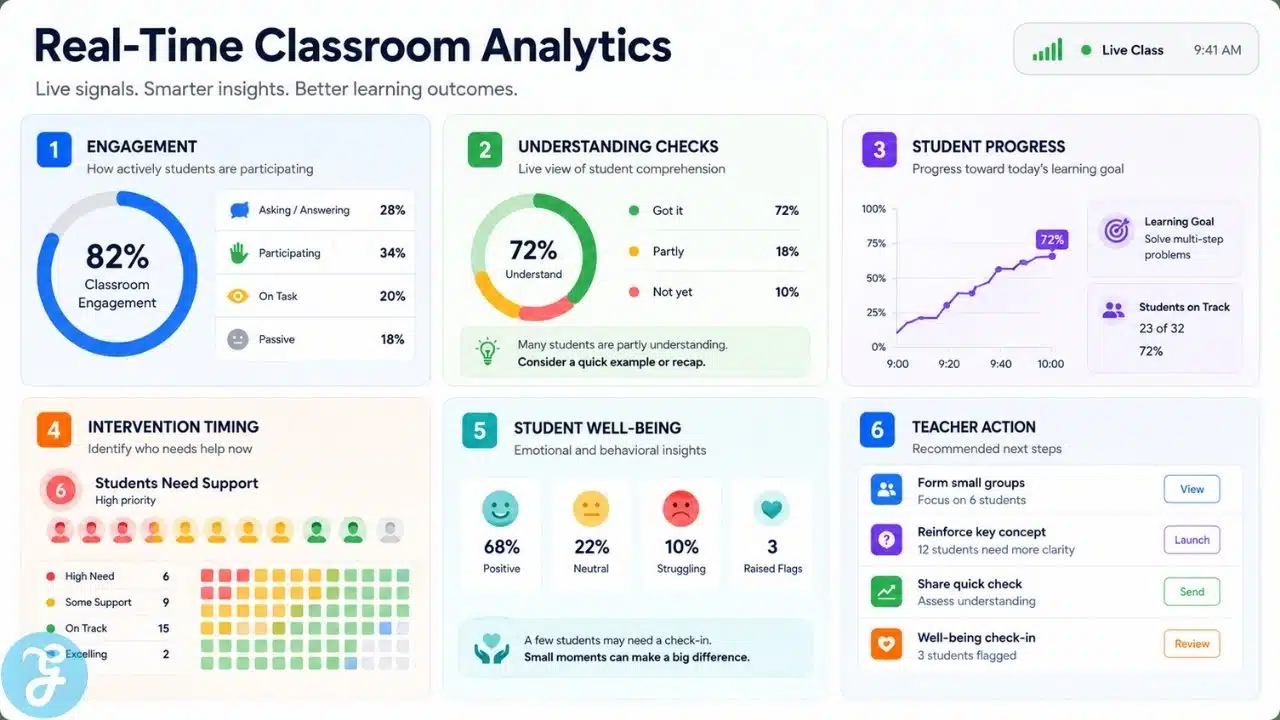
Real-Time Classroom Analytics is booming in the USA because schools are under pressure to respond faster. Teachers need to know which students are confused before the unit test. Administrators need to track absenteeism and engagement before semester failure. District leaders need to support MTSS, learning recovery, intervention, and student well-being without waiting for stale reports.
The U.S. also has the right conditions for this category: a large K-12 market, heavy school software adoption, 1:1 devices, district data systems, venture-backed EdTech companies, and growing AI adoption in education. TIME’s 2025 global EdTech analysis found the U.S. had the largest number of listed EdTech companies globally, while Grand View Research’s U.S. market outlook shows continued growth through 2030.
What’s Special About Them?
The best U.S. companies in this niche usually share four strengths.
- They give teachers usable insight during the learning process, not six weeks later.
- They connect classroom-level data with school or district decision-making.
- They reduce manual data work for teachers.
- They increasingly use AI to summarize patterns, flag needs, and recommend next steps.
That final point matters. Teachers do not need one more dashboard that requires detective work. They need analytics that tell them what is happening, why it matters, and what action makes sense next.
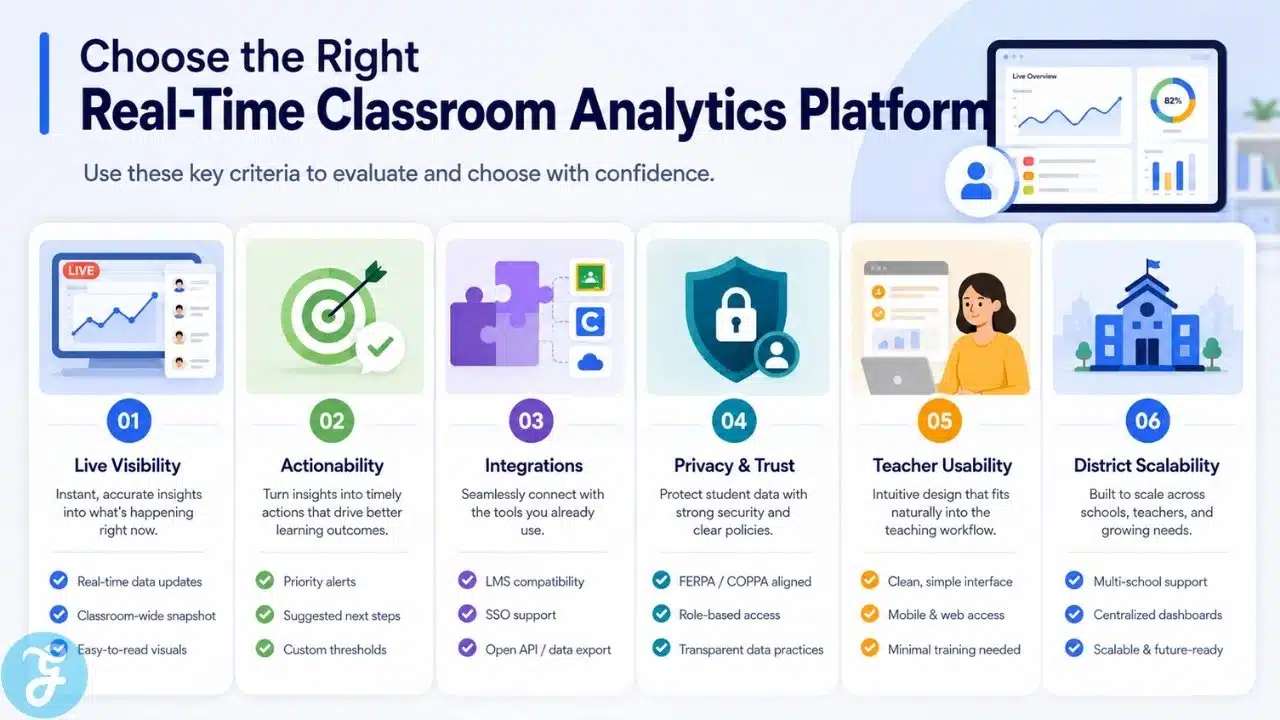
How To Choose A Real-Time Classroom Analytics Platform By Yourself?
Choosing the right platform starts with the classroom problem, not the prettiest demo screen. A dashboard can look fantastic and still be completely useless if it does not match the teacher’s workflow.
The Selection Framework:
- Define The Signal You Need: Do you need academic mastery, device focus, SEL, attendance, video engagement, classroom talk, or intervention data?
- Check Data Freshness: Real-time should mean live or near-live insight, not a weekly report with a nicer font.
- Evaluate Actionability: Look for alerts, grouping, feedback loops, recommendations, and intervention workflows.
- Protect Trust And Privacy: Student data, AI insights, classroom audio, and device monitoring all need careful policy, transparency, and consent.
The Final Checklist
Before choosing a vendor, ask these five questions.
- Does the platform provide live or near-live classroom insight?
- Can teachers act on the data without extra administrative burden?
- Does it integrate with our SIS, LMS, assessment, or device systems?
- Does it protect student privacy and explain AI or monitoring features clearly?
- Does the vendor show real school or district adoption evidence?
The Real Value Is Faster Intervention, Not Prettier Charts
The future of classroom analytics will not be won by the company with the most colorful graphs. It will be won by the company that helps educators act faster, smarter, and with less guesswork.
That is why Real-Time Classroom Analytics matters. It turns classroom activity into timely insight. It helps teachers adjust instruction, support struggling students, identify engagement gaps, monitor well-being, and understand learning while something can still be done.
The uncomfortable truth is that real-time data can also become real-time noise. If schools buy tools without clear workflows, teachers end up with alerts they ignore, dashboards they resent, and another login they did not ask for. The best platforms avoid that by making analytics simple, relevant, and tied directly to action.
The USA leads this niche because it has the strongest combination of EdTech startups, district demand, AI investment, K-12 data infrastructure, and classroom software adoption. But buyers should stay skeptical. The goal is not more data. The goal is better decisions at the right moment.
Frequently Asked Questions (FAQs) About Real-Time Classroom Analytics
What Is Real-Time Classroom Analytics?
Real-Time Classroom Analytics refers to tools that show teachers or school leaders live or near-live data about student understanding, engagement, behavior, well-being, or progress. The goal is to help educators respond quickly instead of waiting for delayed reports.
Which Country Leads In Real-Time Classroom Analytics Startups?
The United States is the strongest country for this niche because it has the deepest cluster of EdTech SMEs and startups building classroom dashboards, AI teaching tools, formative assessment systems, and student data platforms.
How Do Real-Time Classroom Analytics Tools Help Teachers?
They help teachers see who understands the lesson, who is disengaged, who needs support, and where the class may need reteaching. The best tools save time by turning raw data into clear next steps.
Are These Tools Only For Academic Data?
No. Some tools track academic mastery, while others focus on device activity, classroom conversation, student well-being, video engagement, or district-wide student trends.
What Should Schools Check Before Buying These Tools?
Schools should check real-time data quality, teacher usability, integrations, privacy protections, AI transparency, training support, and whether the tool leads to better intervention decisions.