The average household throws away roughly 30% of the food it buys and generates hundreds of pounds of kitchen waste each year, much of it from single-use packaging and disposable products. A zero-waste kitchen doesn’t require a total lifestyle overhaul — it starts with 15 targeted swaps that cut waste at the source. Most of these swaps pay for themselves within a few months, making them smart choices for students, renters, and new homeowners watching their budgets.
Why Does the Zero-Waste Kitchen Movement Matter in 2026?
The zero-waste kitchen concept is straightforward: reduce the trash your kitchen generates by replacing disposable products with durable, reusable alternatives. This matters because kitchens are the single biggest source of household waste in most homes.
According to the U.S. Environmental Protection Agency, food and food-related packaging make up the largest share of municipal solid waste sent to landfills. For students and new homeowners, starting with a low-waste kitchen setup from day one is far easier than trying to change habits later.
The good news: most swaps are simple, affordable, and don’t require any special skills.
What Are the 15 Swaps That Actually Matter?
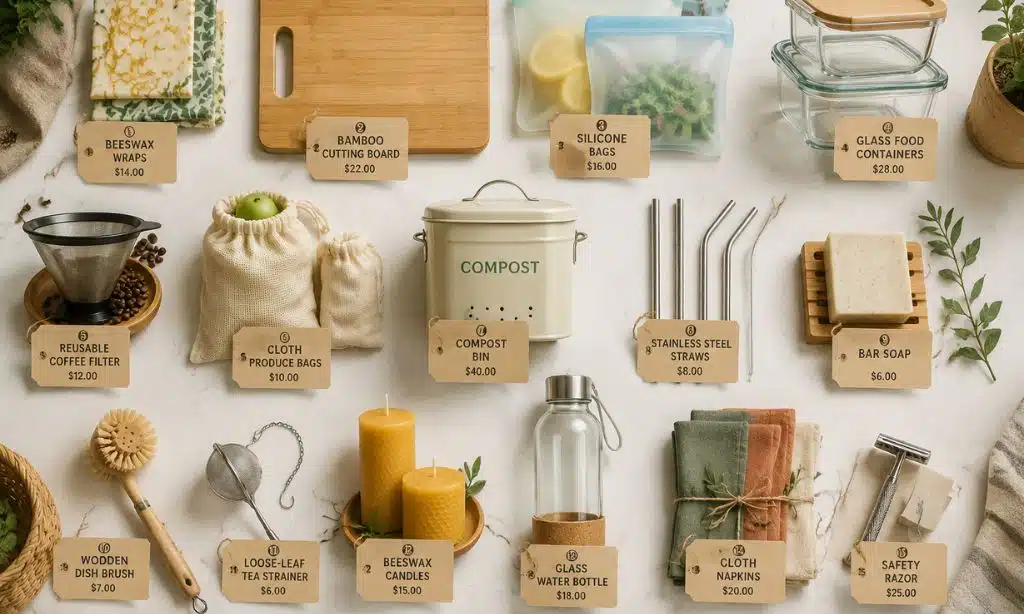
These 15 swaps are ranked roughly by impact and ease of adoption. Prices listed are 2026 U.S. retail estimates.
Food Storage Swaps
| Swap | Replaces | Approx. Cost | Annual Savings Estimate |
|---|---|---|---|
| 1. Beeswax wraps | Plastic wrap | $12–$18 for 3-pack | $20–$40/year |
| 2. Silicone zip bags | Ziploc bags | $15–$25 for 3-pack | $30–$60/year |
| 3. Glass food containers | Disposable plastic containers | $25–$45 for a set | $20–$50/year |
| 4. Cloth produce bags | Plastic produce bags | $10–$15 for 5-pack | $10–$20/year |
| 5. Stainless steel lunch box | Single-use takeout containers | $20–$35 | $50–$100/year |
Beeswax wraps are the most popular starter swap. They mold to bowls and food with the warmth of your hands, wash with cold water, and last up to a year with proper care. Choose X if: you use plastic wrap daily and want an immediate visual reminder of your new habit.
Silicone bags are the better choice for liquids, marinating meat, or freezer storage. They’re dishwasher-safe and last for years.
Common mistake: Buying too many glass containers at once. Start with four to six pieces in two sizes. You can always add more.
Cleaning Swaps
| Swap | Replaces | Approx. Cost | Annual Savings Estimate |
|---|---|---|---|
| 6. Cloth rags or unpaper towels | Paper towels | $12–$20 for 10-pack | $80–$200/year |
| 7. Wooden dish brush | Plastic dish brush | $8–$14 | $10–$20/year |
| 8. Compostable sponges or loofah | Synthetic sponges | $8–$12 for 3-pack | $15–$30/year |
| 9. Bar dish soap or soap block | Plastic-bottled dish soap | $6–$10 | $10–$25/year |
| 10. Reusable spray bottle + concentrate | Single-use cleaning sprays | $10–$15 starter kit | $30–$60/year |
Cloth rags are the highest-impact cleaning swap. Cut up old t-shirts or buy a pack of flour sack towels. They wash and reuse indefinitely.
Bar dish soap eliminates plastic bottles entirely. Brands like Meliora and Public Goods sell concentrated bars that last two to three months with regular use.
Edge case: If someone in the household has a compromised immune system, check with a doctor before switching fully away from antibacterial synthetic sponges.
Shopping and Food Prep Swaps
| Swap | Replaces | Approx. Cost | Annual Savings Estimate |
|---|---|---|---|
| 11. Reusable grocery bags | Plastic shopping bags | $5–$15 for 3-pack | $10–$30/year |
| 12. Compost bin or countertop composter | Throwing scraps in trash | $20–$50 | Reduces food waste cost |
| 13. Loose-leaf tea + infuser | Tea bags (often plastic-sealed) | $8–$15 for infuser | $20–$50/year |
| 14. Reusable coffee filter | Paper filters | $10–$20 | $15–$30/year |
| 15. Bulk buying with refillable jars | Pre-packaged goods | $0–$20 for jars | $50–$150/year |
Composting is the single most impactful habit for reducing kitchen waste by weight. Even a small countertop bin (emptied weekly at a community compost site or backyard pile) diverts a significant amount of organic material from landfills.
Bulk buying works best for pantry staples: oats, rice, pasta, nuts, and spices. Bring your own glass jars or cloth bags to stores with bulk sections. Many co-ops and natural grocery chains tare the container weight before filling.
Decision rule: Choose a reusable coffee filter if you brew coffee daily. At roughly $0.10–$0.15 per paper filter, a reusable filter pays for itself in under three months.
How Much Does Building a Zero-Waste Kitchen Actually Cost?
Starting a zero-waste kitchen doesn’t have to be expensive. The total upfront cost depends entirely on which swaps you prioritize.
Budget breakdown:
- Starter kit (5 core swaps): $50–$80 total
- Beeswax wraps, cloth rags, wooden dish brush, reusable bags, compost bin
- Mid-level setup (10 swaps): $120–$180 total
- Full 15-swap setup: $200–$300 total (one-time cost)
Most households recoup the full cost within 6–12 months through savings on disposables. Students on tight budgets should start with cloth rags and reusable bags, which together cost under $25 and save the most money fastest.
Pro tip: Check thrift stores and Facebook Marketplace for glass jars, cloth napkins, and stainless steel containers before buying new. Zero-waste living and secondhand shopping go hand in hand.
Which Swaps Are Worth It for Students and Renters?
For students and renters, the best zero-waste kitchen swaps are portable, space-efficient, and low-cost. Not every swap makes sense for a small apartment or a shared kitchen.
Best swaps for small spaces:
- Beeswax wraps (flat, easy to store)
- Silicone bags (stackable, flexible)
- Cloth rags (replace paper towels immediately)
- Reusable coffee filter (fits any standard drip machine)
- Loose-leaf tea infuser (small, inexpensive)
Skip for now if: You don’t have outdoor space or a community compost program nearby, a full compost bin may not be practical. Many cities now offer curbside compost pickup — check your local waste management website.
Common mistake for new homeowners: Buying everything at once before knowing your actual cooking habits. Move into the space first, then identify which disposables you’re actually using most.
What Are the Biggest Mistakes People Make When Starting a Zero-Waste Kitchen?
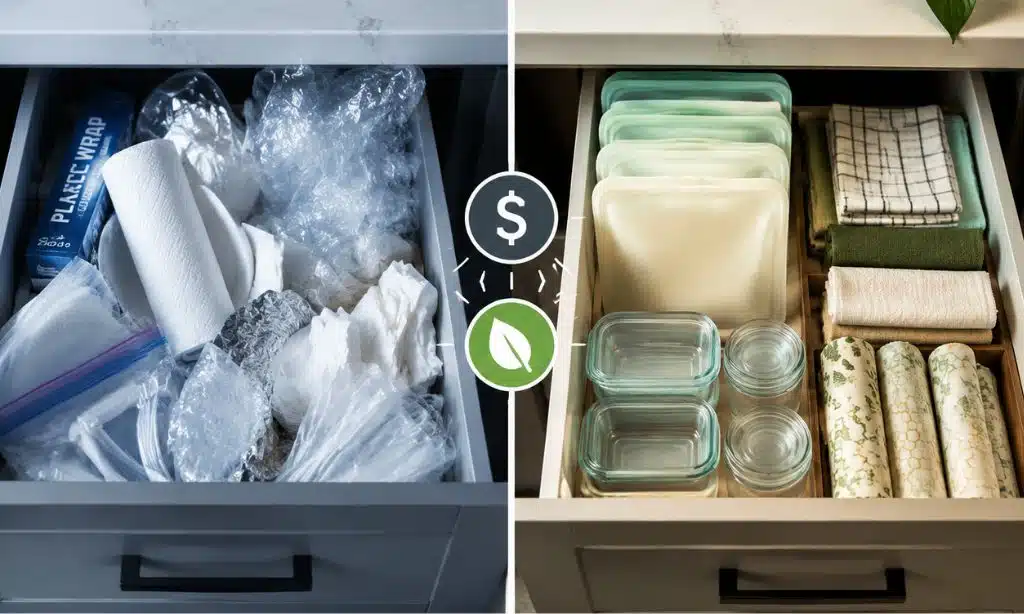
The most common mistake is treating zero-waste as all-or-nothing. Perfection isn’t the goal — consistent reduction is.
Other frequent mistakes:
- Buying “eco” products that still come in plastic packaging. A bamboo toothbrush shipped in a plastic blister pack isn’t a net win.
- Replacing items before they’re used up. Use your existing plastic wrap and bags until they’re gone, then switch. Throwing away usable items to buy “green” replacements creates more waste.
- Ignoring food waste. Packaging waste gets the most attention, but wasted food is one of the largest contributors to kitchen emissions. Meal planning and proper storage matter as much as the containers you use.
- Choosing aesthetics over function. Pretty glass jars mean nothing if they’re inconvenient to use and you go back to plastic bags within a week.
Final Thoughts: Where to Start Today
Building a zero-waste kitchen in 2026 is one of the most practical ways for students and new homeowners to cut costs and reduce their environmental footprint at the same time. The key is starting small and building momentum.
Actionable next steps:
- This week: Replace paper towels with cloth rags and switch to reusable grocery bags. Total cost: under $25.
- This month: Add beeswax wraps, a wooden dish brush, and a bar of dish soap. Total addition: under $40.
- Within 3 months: Set up a compost system (check your city’s program first), switch to silicone bags, and start buying two or three pantry staples in bulk.
- Within 6 months: Assess which single-use products you’re still buying and tackle those next.
A zero-waste kitchen isn’t built in a day. But with 15 targeted swaps, most households can cut their kitchen waste dramatically while spending less money over time. That’s a trade worth making.
Frequently Asked Questions (FAQs)
What’s the single best first swap for a zero-waste kitchen?
Cloth rags to replace paper towels. They’re cheap, immediately useful, and save the most money fastest.
Are beeswax wraps actually sanitary?
Yes, when washed properly with cold water and mild soap after each use. Avoid using them on raw meat.
How long do silicone bags last?
With proper care, silicone bags typically last 3–5 years or longer. Avoid sharp objects and high-heat direct contact.
Can renters compost without a yard?
Yes. Many cities offer curbside compost pickup in 2026. Countertop electric composters (like the Lomi) are also an option, though they cost $300–$500.
Is bulk buying actually cheaper?
Often yes, especially for staples like oats, rice, and nuts. Prices vary by store. Bring a calculator to compare per-ounce costs.
Do reusable bags really make a difference environmentally?
They do, but only if used consistently. A cotton tote bag needs to be used dozens of times to offset its production footprint compared to a single plastic bag, according to lifecycle analysis research.
A reusable grocery bag. It requires no coordination with roommates and takes up almost no space.