

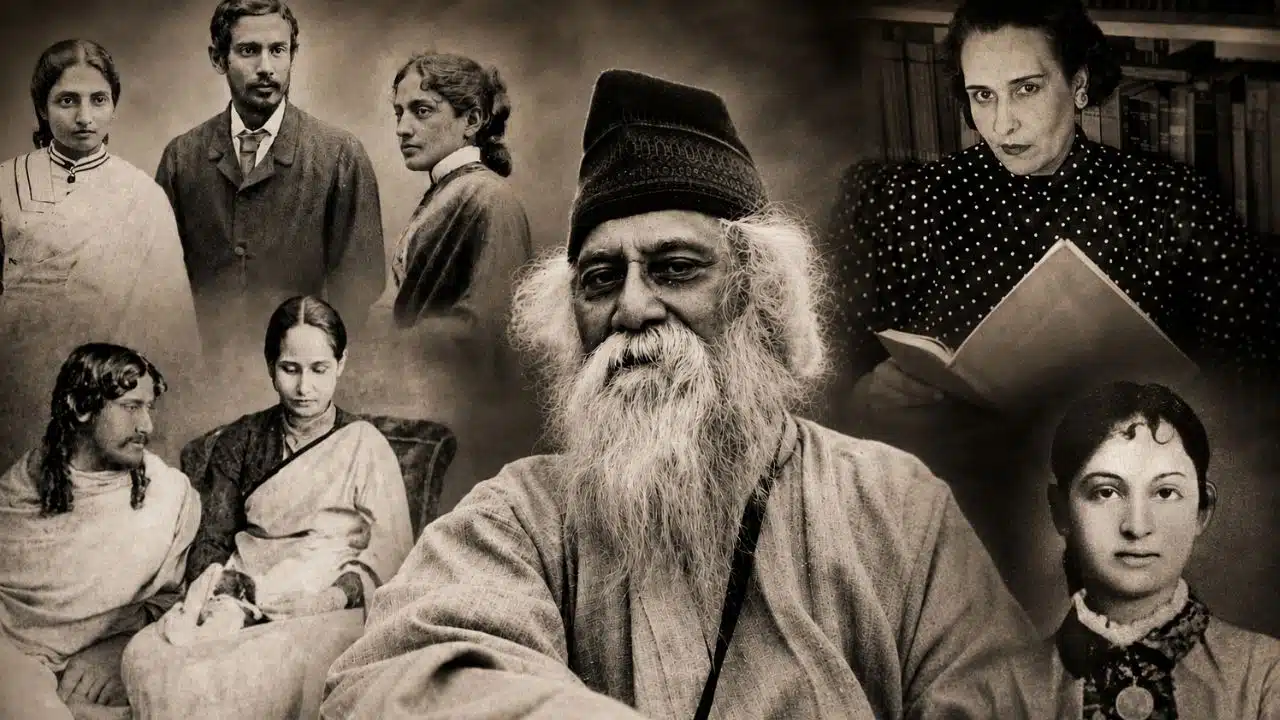
Across the Bengali speaking world and far beyond, mornings carry a familiar rhythm. A soft breeze drifts through open windows into quiet streets, often accompanied by the timeless melodies of Rabindranath Tagore. Every May, readers and listeners across generations return to his songs and poetry, yet his presence refuses to stay confined to a date or geography. His verses live in moments of love, grief, solitude, and reflection. To truly understand his inner world, we must look at the women behind Rabindranath Tagore, the relationships that shaped his emotions, his imagination, and the emotional depth of his art.
History often paints such figures as solitary creators working in total isolation. That narrative remains entirely incomplete. These remarkable women gave his literature its true shape. They were never just passive muses. They challenged his intellect. They offered comfort during his deepest tragedies. They forced him to look at the world differently. His brilliance did not bloom alone. It grew through profound emotional exchanges.
We all recognize the public icon. We respect the sage with the flowing beard. It is time to step away from the stage and enter his private world. His personal letters reveal a very different story. Four specific figures stand out in his journey. A childhood companion shared his earliest secrets. A gentle teacher opened new cultural doors. A devoted partner anchored his restless spirit. A brilliant writer met him as an equal late in life. These untold stories reveal how their presence transformed the poet forever.
Kadambari Devi: The Childhood Confidante
Kadambari Devi arrived at the Jorasanko mansion as a child bride in 1868. She was only nine years old while Rabindranath was seven. This small age gap turned them into natural allies in a vast and busy household. They spent their early years playing on the rooftops and sharing a private world of imagination.
A Playmate and Critic
She became his first audience. Kadambari possessed a sharp intellect and a keen sense for literature. She did not just praise his early verses.
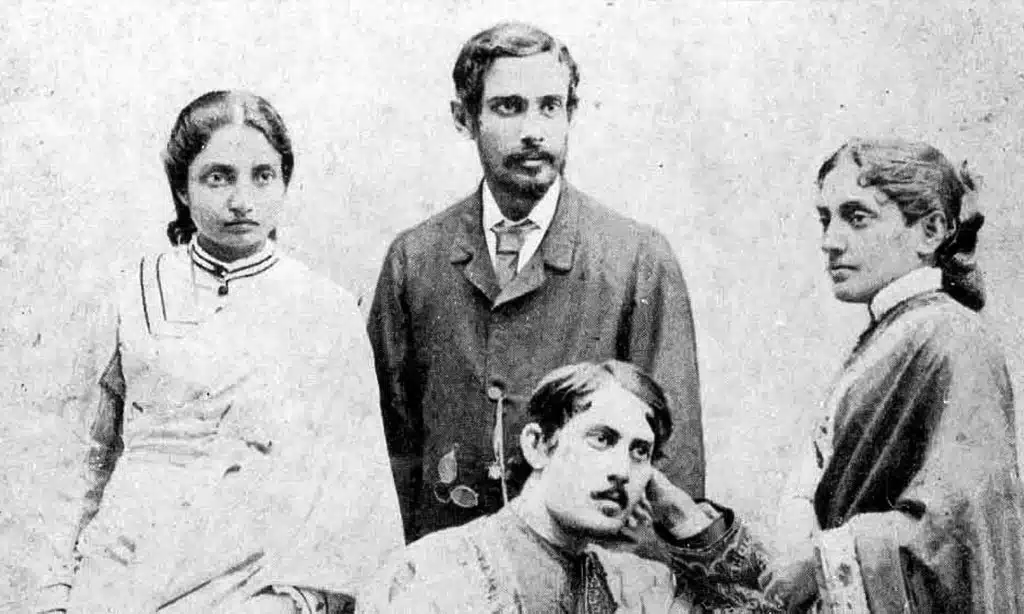
She teased him and challenged him to do better. This playful criticism pushed the young poet to refine his voice. Their bond was deep and intellectual from the very start. She was the one who saw his potential before the rest of the world.
Filling the Maternal Void
Life at Jorasanko changed forever when the poet lost his mother in 1875. He was only fourteen. The house felt empty and cold. Kadambari stepped into this void. She provided the emotional warmth he desperately needed. She looked after his daily needs and encouraged his creative pursuits. Their relationship matured as they grew older. They shared a private world of books and shared thoughts. To many historians she was the true queen of his heart. She understood the man behind the rising literary fame.
The Shattered World
The stability of this world broke in 1883. Tagore married a young girl named Bhavatarini on his father’s orders. The dynamics of the household shifted instantly. Kadambari found herself increasingly isolated. Tragedy struck just four months after the wedding, in 1884. Kadambari took her own life by consuming opium. She was only twenty-five. The Tagore family kept the details quiet to avoid public scandal. But the silence could not hide the poet’s devastation. His inner world collapsed.
A Legacy of Longing
Her death left a permanent mark on his writing. He spent decades trying to process her absence through his art. The famous song Tumi ki keboli chhobi captures this lingering pain. He asks if she is now merely a picture on a wall. He wonders if she has vanished into the stars. Many of his stories featured female characters with her spirit. She was no longer physically present. Yet she remained a constant shadow in his creative mind. This grief gave his work a new depth and maturity. He later wrote to his friend C.F. Andrews about how his world shut its doors against him. He never truly stopped searching for her in his verses.
Nalini: The Woman Who Stayed in His Verses
In 1878, a young Rabindranath traveled to Mumbai before his first voyage to England. He stayed with the Turkhud family to polish his English and social graces. This household was progressive and deeply anglicized. It was here that he met Annapurna Turkhud, the daughter of Dr. Atmaram Pandurang.
A Meeting of Minds in Mumbai
Annapurna was a woman of remarkable poise and education. She was older than the poet and possessed a sophisticated charm that fascinated him. She became his tutor and helped him navigate the complexities of European customs.
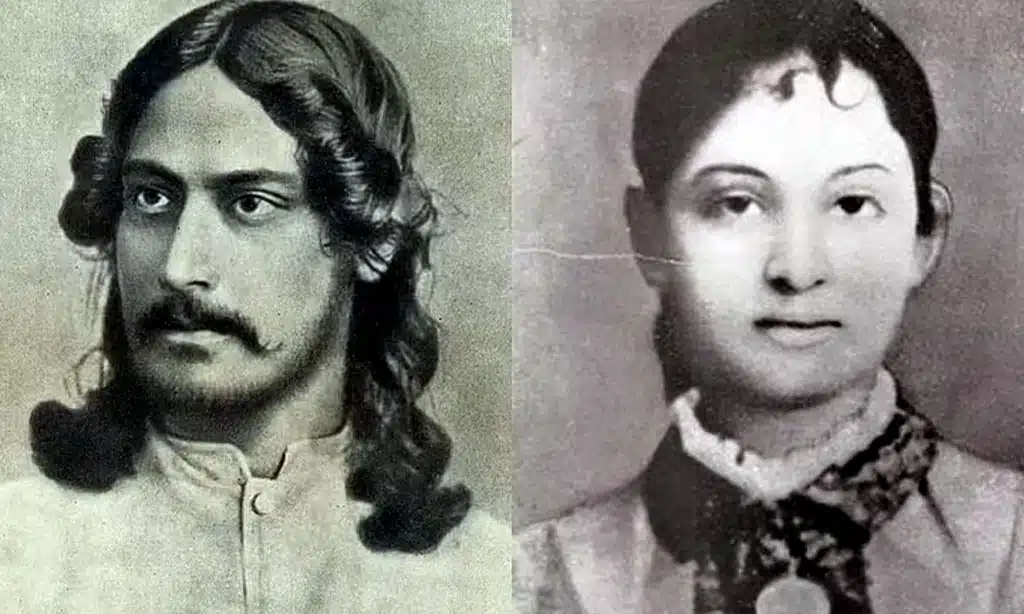
Their interactions were intellectual and filled with a subtle mutual admiration. She represented a world of freedom and confidence he had not yet encountered. This brief stay broadened his cultural outlook and left a lasting impression on his young heart.
The Birth of Nalini
The poet found a special name for her that stayed with him forever. He called her Nalini. This name became a symbol of his affection and the gentle romance of those few months. He expressed his feelings through his early poetry. In the song Shuno Nalini kholo go ankhi, he urged her to wake up as her “Robi” had arrived at her door. The lyrics speak of the rising sun and the end of sleep. This was not a story of grand passion but of a tender and fleeting connection. He immortalized her through these verses.
A Distant and Lingering Light
Their paths separated when he left for London. Annapurna later married and lived in Pune. She passed away at a young age in 1891. Even after many years, she continued to use the name Nalini in her private correspondence. She never forgot the young poet from Bengal. Tagore also carried her memory through the decades. He wrote stories and poems that echoed her elegance and spirit. Their encounter was short but its impact remained a steady and gentle presence in his life. He cherished that distant flame until the very end.
Mrinalini: The Steady Anchor
The marriage between Rabindranath and Mrinalini Devi took place in December 1883. It was a traditional union arranged by the poet’s father. At the time of the wedding she was a child of about ten and he was a young man of twenty two. She entered the Tagore household under her birth name Bhavatarini before being renamed Mrinalini.
A Journey of Intellectual Growth
Mrinalini did not remain a shadow in the background. She was determined to be a true partner to her husband. She dedicated herself to learning and soon mastered several languages including Sanskrit and English.
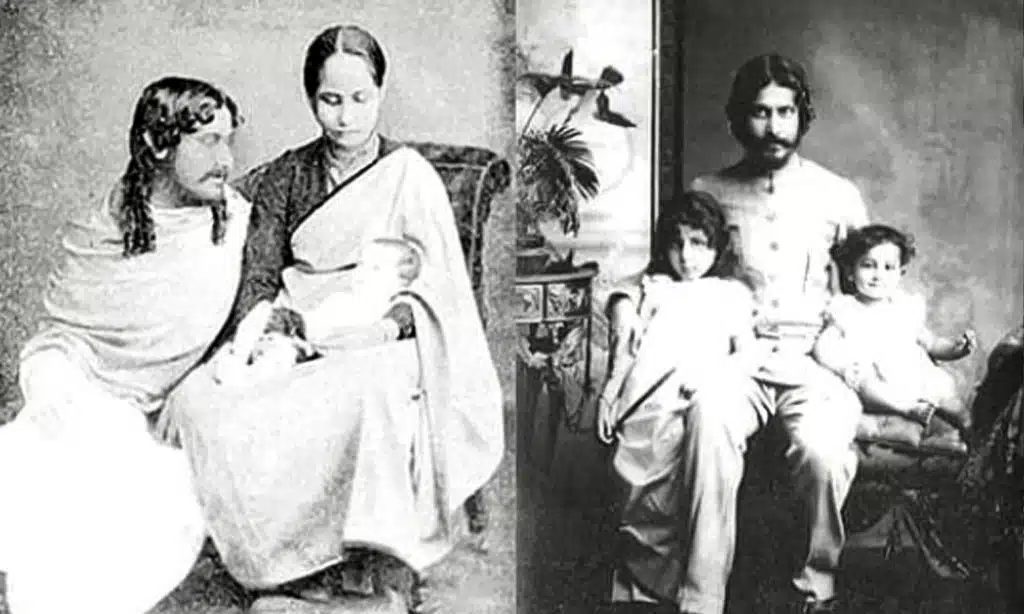
She translated parts of the Ramayana into Bengali and developed a keen interest in literature. This evolution allowed her to engage with the poet on an intellectual level. She transformed herself from a young girl of traditional roots into a sophisticated companion who understood his creative world.
The Pillar of Domestic Peace
She became the grounding force in a life often marked by restlessness and old sorrows. While the poet traveled and wrote she managed the complexities of their household with grace. She provided the stability he needed to focus on his work. Her presence created a sense of home that was both warm and secure. She stood by him as he established the school at Shantiniketan. Her support was quiet and unwavering. She was the one who held the family together through every transition and challenge.
The Tragedy of Smaran
Their life together ended abruptly when Mrinalini fell ill in 1902. She passed away at the age of twenty nine leaving behind five children. Tagore was devastated by this loss. He spent months in seclusion trying to process his pain. This grief found its way into a collection of twenty seven poems titled Smaran. These verses are filled with a deep and quiet tenderness. He wrote of her simple virtues and the immense void her departure left in his soul. This collection remains one of the most moving tributes to a life partner in Indian literature.
Victoria Ocampo: A Late Bloom of Affection
In 1924, Rabindranath traveled to South America but fell ill in Buenos Aires. He found himself stranded and weak in a foreign land. It was during this difficult time that he met Victoria Ocampo, a brilliant young intellectual and writer. She took him into her villa in San Isidro to oversee his recovery.
A Meeting of Spirits
Victoria was far more than a gracious host. She was a powerhouse of the Argentine literary scene and a thinker in her own right. Their connection was built on deep mutual respect rather than the impulsive energy of youth.
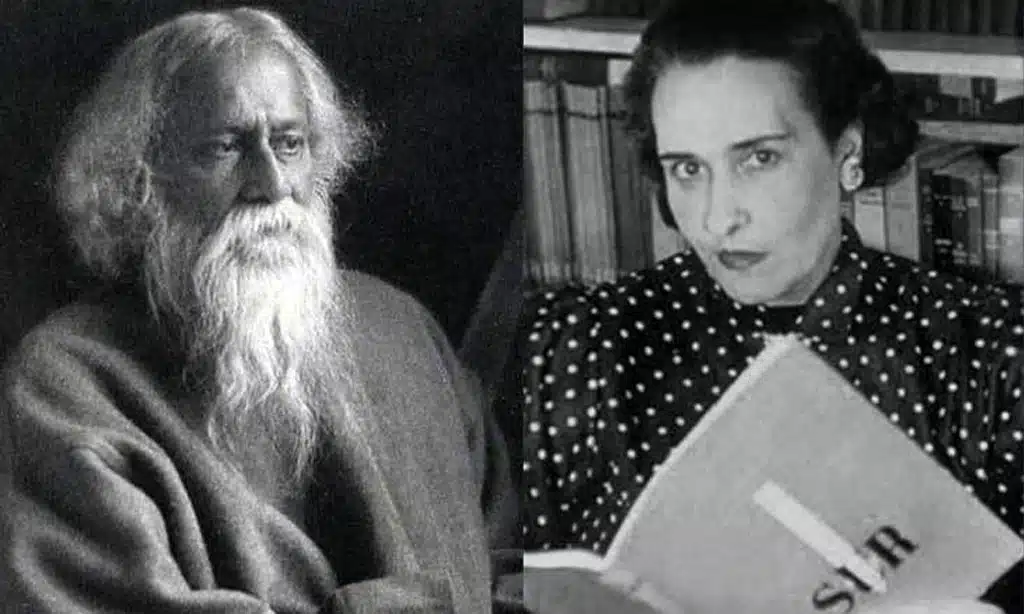
Tagore gave her the Indian name Vijaya. They spent hours discussing philosophy, art, and the challenges of the modern world. She challenged his thoughts and offered him a fresh perspective during the twilight of his life. This was a partnership of equals that transcended language and geography.
Comfort in a Simple Song
The care she provided moved the poet deeply. He felt a profound sense of gratitude for the sanctuary she created for him. Their bond was spiritual and intense. In one of his letters, he described their relationship with beautiful clarity. He wrote that the love between them was as simple as a song. This affection was pure and devoid of the complications often found in younger romances. She understood his need for quietude and intellectual stimulation. Her presence gave him a renewed sense of peace as his health declined.
The Final Creative Spark
This unique friendship ignited a new phase in his artistic journey. He began to explore fresh forms of expression, including his famous sketches and paintings. Victoria encouraged his visual art just as much as his writing. His later poetry took on an intimate and reflective tone. These verses were not driven by the ache of loss but by the warmth of a steady friendship. He dedicated several works to her, acknowledging the role she played in his final years. Their bond showed that the heart remains open to profound connections at any age. He left Argentina with a soul nourished by her thoughtful companionship.
The Heartbeat of His Poetry
The women behind Rabindranath Tagore were never mere background characters in a grand literary play. Kadambari, Nalini, Mrinalini, and Victoria were women of substance and intellect. They possessed their own voices and faced their own struggles. Each one contributed a unique rhythm to the poet’s life. Their influence moved far beyond simple inspiration. They were the critics, the anchors, and the intellectual peers who shaped a global icon.
The genius we celebrate today did not emerge from a vacuum. It was a shared journey built through years of conversation and emotional depth. His verses carry the weight of Kadambari’s early critiques and the tenderness of Nalini’s memory. They hold the quiet strength of Mrinalini’s devotion and the spiritual clarity of Victoria’s companionship. His work is a record of these profound human connections. It proves that the greatest art often grows from the seeds of shared joy and common grief.
We must remember these individuals as we listen to his songs today. They are not lost to history. Their presence lives in the silences between his lines. When a particular verse moves us to tears or offers comfort, we are hearing more than just one man’s voice. We are hearing the echoes of the women who walked beside him. Their stories remain inseparable from his legacy. They are the pulse that keeps his poetry beating in the hearts of readers across the world.
Frequently Asked Questions (FAQs) on Women behind Rabindranath Tagore
Who was the first woman to influence Tagore’s literary style?
While many look to his later years, his elder sister Swarnakumari Devi played a massive role early on. She was an accomplished novelist and editor herself. She paved the way for women in the Tagore family to pursue serious intellectual careers. Her success as a writer gave the young poet a domestic environment where female creativity was both normal and respected.
Did any women from the Tagore family contribute to his music?
Yes, his niece Indira Devi Chaudhurani was instrumental in preserving his legacy. She possessed a rare talent for notations. Tagore often composed tunes and relied on her to document them accurately. Without her meticulous work, many of the songs we hear today might have been lost or altered through oral tradition. She was the gatekeeper of his musical purity.
Who was Ranu Mukherjee and what was her connection to the poet?
Lady Ranu Mukherjee met the poet when she was a young girl. Their relationship was one of deep platonic affection and mentorship. They exchanged hundreds of letters over the years. She was a muse for his later works and brought a youthful energy to his final decades. Their correspondence offers a glimpse into how he viewed the world as an aging artist.
How did the women in his life affect his views on female education?
His interactions with educated women like Annapurna Turkhud and Victoria Ocampo changed his perspective on what women could achieve. He saw firsthand that intellectual companionship was far more valuable than traditional domesticity. This belief led him to prioritize co-education at Shantiniketan. He wanted to create a space where women could study art, dance, and literature as equals to men.
Are there any specific poems dedicated to his daughter Bela?
His eldest daughter Madhurilata, known as Bela, was very dear to him. Her struggle with tuberculosis and her early death caused him immense pain. He wrote several poems during her illness that reflected the helpless grief of a father. These works often explore the fragility of life and the transition from childhood to the unknown. They show a more vulnerable and domestic side of the poet.





















